What license is required to operate a virtual currency exchange in Hong Kong?
TechFlow Selected TechFlow Selected
What license is required to operate a virtual currency exchange in Hong Kong?
Licenses and permits: confusing the two.
 Navigating Web3 tides with focused insights
Author: Liu Honglin, Founder of Shanghai Manqin Law Firm;
Bai Qin, Head of Shanghai Manqin Law Firm's Hong Kong Office
On October 3, 2024, the Securities and Futures Commission (SFC) of Hong Kong updated its official website to include a newly licensed virtual asset trading platform (VATP), HKVAX—the third cryptocurrency exchange officially recognized by Hong Kong regulators following OSL Exchange and HashKey Exchange. According to reporting by Ming Pao, a prominent Hong Kong news outlet, HKVAX has obtained SFC-issued Type 1 (Securities Dealing) and Type 7 (Providing Automated Trading Services) licenses, enabling it to offer over-the-counter (OTC) brokerage services, cryptocurrency trading, and comprehensive virtual asset custody solutions to investors in Hong Kong.
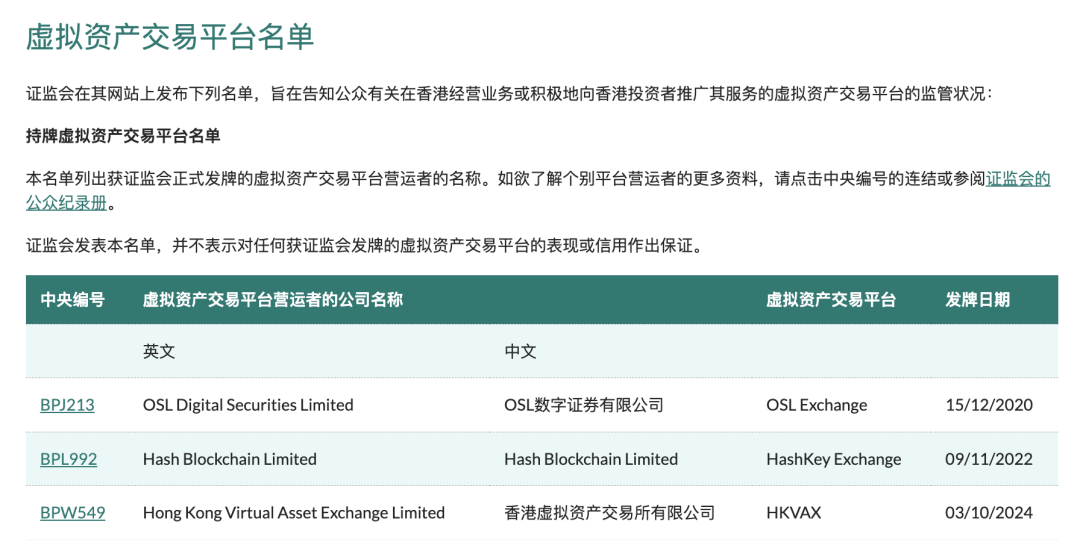
At this point, some may wonder: If I want to operate a compliant cryptocurrency exchange in Hong Kong, should I apply for a Virtual Asset Trading Platform license, or must I obtain Type 1 and Type 7 licenses? Are other exchanges doing the same? Before answering these questions, Manqin lawyers will first walk you through what types of licenses are currently held by existing or deemed-licensed virtual asset platforms in Hong Kong.
Overview of Licensed Virtual Asset Trading Platforms in Hong Kong
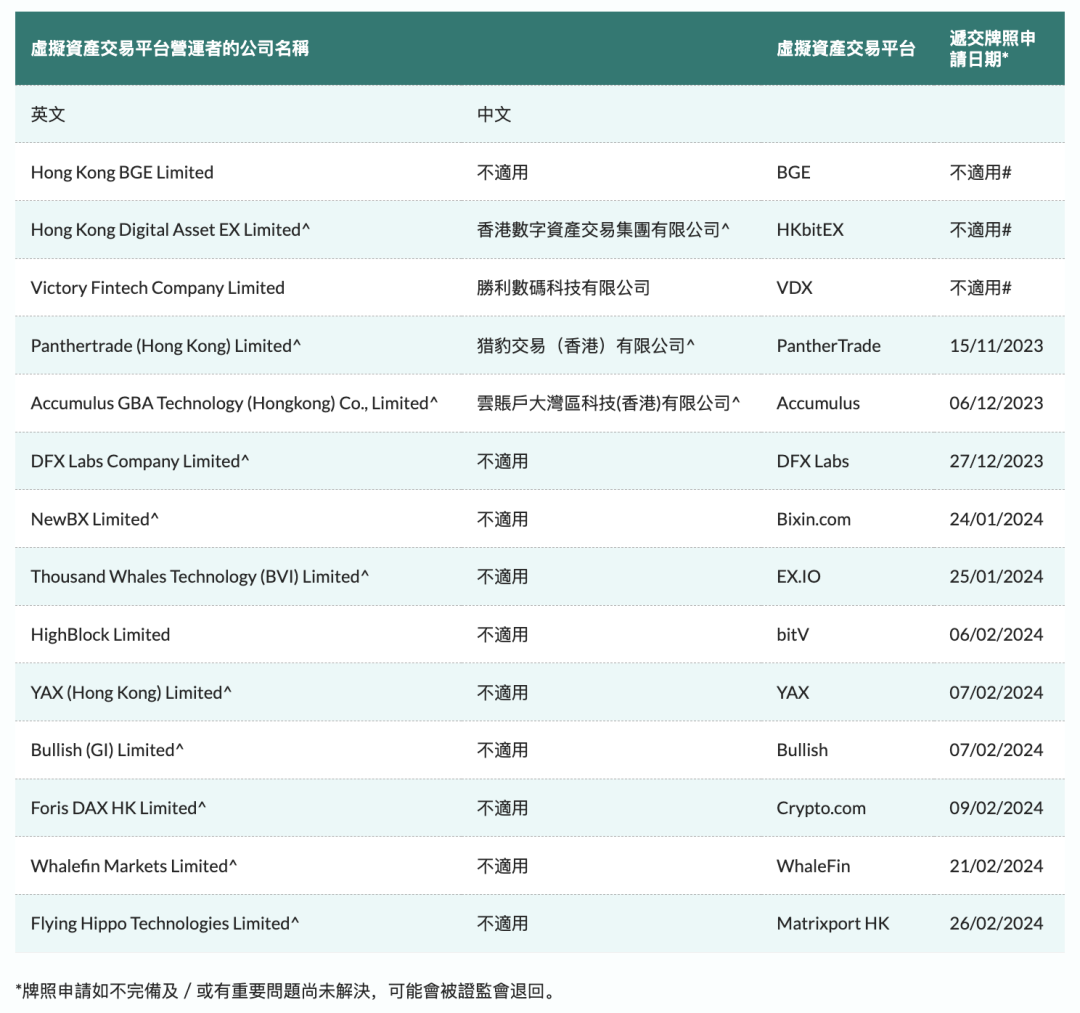
Based on the list of licensed and pending applications for virtual asset trading platforms published on the SFC’s website, Manqin lawyers have compiled a simple summary of current licensing statuses.
-
OSL Exchange: Holds Type 1 and Type 7 licenses, as well as authorization to operate a virtual asset trading platform
-
HashKey Group: Different subsidiaries hold different licenses, including:
-
Hash Blockchain Limited (i.e., HashKey Exchange): Holds Type 1 and Type 7 licenses, plus VATP authorization
-
HBS (Hong Kong) Limited: Holds Type 1 and Type 4 licenses
-
HashKey Capital Limited: Holds Type 4 and Type 9 licenses
-
HKVAX: Holds Type 1 and Type 7 licenses
-
BGE: No licenses held
-
HKbitEX: Deemed authorized to operate a virtual asset trading platform
-
VDX: No licenses held
-
PantherTrade: Deemed authorized to operate a VATP
-
Accumulus: Deemed authorized to operate a VATP
-
DFX Labs: Deemed authorized to operate a VATP
-
Bixin.com: Deemed authorized to operate a VATP
-
EX.IO: Deemed authorized to operate a VATP
-
bitV: No licenses held
-
YAX: Deemed authorized to operate a VATP
-
Bullish: Deemed authorized to operate a VATP
-
Crypto.com: Deemed authorized to operate a VATP
-
WhaleFin: Deemed authorized to operate a VATP
-
Matrixport HK: Deemed authorized to operate a VATP
It is important to note that although most platforms are listed as "deemed licensed," this status indicates they remain under temporary permission. These platforms can only provide virtual asset services under specific restrictions, primarily serving professional investors. Under this arrangement, platforms are prohibited from offering services to retail investors and face significant limitations on their service scope. Specifically, they cannot engage in margin trading, trade virtual asset derivatives (e.g., futures contracts), or offer asset lending, market making, or other high-risk financial activities.
It becomes clear that most current virtual asset exchanges do not actually hold formal SFC-issued licenses; instead, many have applied for—or been granted—authorization to operate a virtual asset trading platform. However, the only three platforms that have received full VATP authorization also happen to possess both Type 1 and Type 7 licenses.
So, what exactly is the relationship between the virtual asset trading platform authorization and the various financial licenses? Is it mandatory to hold Type 1 and Type 7 licenses to obtain VATP authorization?
Virtual Asset Trading Platform Authorization vs. Financial Licenses
In Hong Kong, any centralized virtual asset trading platform that (1) is actively conducting business or (2) is actively marketing its services to Hong Kong investors must obtain a license and regulatory oversight from the Securities and Futures Commission (SFC). This requirement stems from two key pieces of financial legislation:
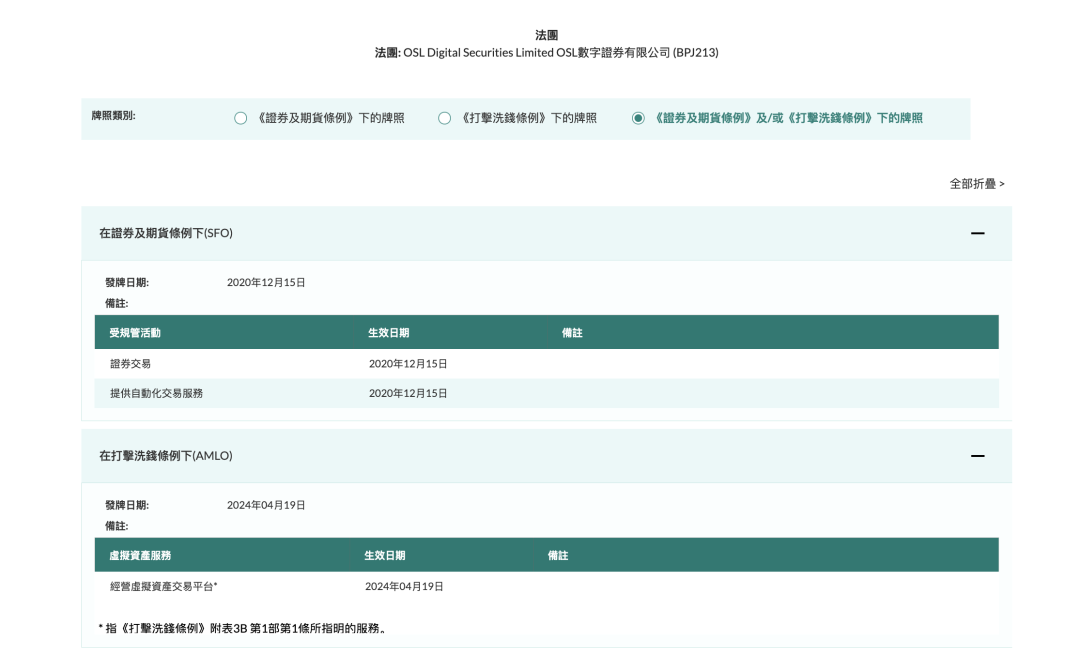
1. The Securities and Futures Ordinance (SFO)
The regulatory framework under the SFO governs centralized platforms involving Type 1, Type 7, and similar licenses, specifically those that:
-
Use automated trading engines to match client orders and provide trading services for security tokens; and
-
Provide custodial services as an ancillary service to trading.
2. The Anti-Money Laundering and Counter-Terrorist Financing Ordinance (AMLO)
AMLO governs the Virtual Asset Trading Platform (VATP) authorization regime, targeting centralized platforms that:
-
Use automated trading engines to match client orders and provide trading services for non-security tokens; and
-
Provide custodial services as an ancillary service to trading.
However, given that the nature of virtual assets can change over time—shifting between security and non-security classifications—the SFC recommends a cautious approach: virtual asset trading platforms should apply for licenses under both the SFO and AMLO regimes to avoid breaching regulatory requirements and ensure uninterrupted operations.
Now, what specific activities do the Type 1 and Type 7 licenses cover? Are additional licenses required beyond these two to operate virtual asset-related businesses in Hong Kong? And why does HashKey also hold Type 4 and Type 9 licenses? To answer these, we need to understand Hong Kong's financial licensing system.
Overview of Hong Kong Financial Licenses
Under Hong Kong’s Securities and Futures Ordinance (SFO), the financial market is divided into several categories, each requiring operators to obtain corresponding licenses. Below are common license types and their applicable business scopes:
-
Type 1 License: Permits securities dealing activities, including buying and selling securities and providing investment services related to securities.
-
Type 2 License: Authorizes futures contract trading.
-
Type 3 License: For leveraged foreign exchange trading platforms.
-
Type 4 License: Allows provision of investment advice related to securities.
-
Type 5 License: Covers advisory services related to futures contracts.
-
Type 6 License: Permits advisory services related to corporate finance, including capital market operations, mergers and acquisitions, and IPOs.
-
Type 7 License: Authorizes the provision of automated trading services via electronic platforms.
-
Type 8 License: For securities financing activities.
-
Type 9 License: Required for asset management companies.
-
Type 10 License: Related to credit rating services.
This raises another question: With so many license options, do I need to apply for all of them if I plan to run a virtual currency-related business in Hong Kong? The answer from Manqin lawyers is: No!
Apply for Licenses Based on Your Business Activities
Previously, Manqin lawyers published an article titled "What Is the Difference Between VASP and VATP When Applying for a Hong Kong Cryptocurrency License? | Manqin Web3 Legal Education", which detailed various virtual currency-related business models. It noted that Virtual Asset Service Providers (VASPs) encompass multiple entities, including but not limited to:
-
Virtual asset fund managers;
-
Virtual asset advisors;
-
Virtual asset custodians;
-
Virtual asset wallet providers; and
-
Financial service providers involved in issuing, offering, or selling virtual assets, such as service providers in ICO projects.
Accordingly, operating virtual asset trading-related businesses in Hong Kong typically involves applying for and holding Type 1, Type 4, Type 7, and/or Type 9 licenses, depending on the nature of services provided:
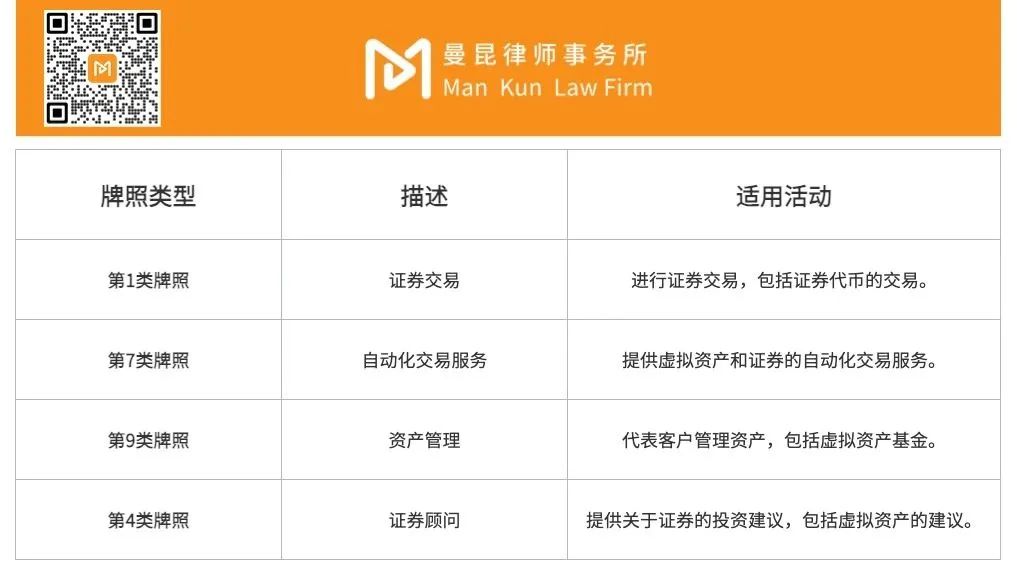
If your goal is simply to operate a cryptocurrency exchange in Hong Kong, in addition to obtaining VATP authorization, you would generally only need to consider Type 1 and Type 7 licenses:
-
Type 1 License applies to platforms trading security-type virtual assets. In the crypto space, certain digital assets may structurally qualify as securities. Therefore, operating a virtual asset exchange may require a Type 1 license to legally trade such assets.
-
Type 7 License is essential for nearly all cryptocurrency exchanges, as these platforms primarily rely on electronic systems to enable automated trading of virtual assets.
Meanwhile, traditional financial institutions looking to enter the virtual asset space—such as Tiger Brokers or ZA Bank—can opt to apply for and hold a Type 1 license that includes virtual asset trading permissions.
Additionally, if your business involves providing investment advice or recommendations on virtual assets, then a Type 4 License becomes necessary. Whether an individual or entity—such as Telegram group administrators sharing crypto investment insights or independent virtual asset advisors—must hold a Type 4 license to operate legally; otherwise, they risk regulatory enforcement actions.
Furthermore, if you intend to legally manage investment portfolios—including virtual assets—and offer associated investment services in Hong Kong, you must apply for a Type 9 Virtual Asset (VA) License. Some firms already holding a Type 9 license can simply upgrade it to include investments in various virtual assets such as Bitcoin, Ethereum, and other cryptocurrencies and tokens. These investments may involve direct ownership of virtual assets or indirect exposure through derivatives and other financial instruments.
Notably, fund managers holding a Type 9 license are permitted to conduct securities trading and provide advisory services without needing separate Type 1 or Type 4 licenses. This suggests that if you aim to establish a diversified firm like HashKey Group—with operations spanning trading platforms, asset management, and advisory services—the most efficient path may be to directly apply for Type 7 and Type 9 licenses along with VATP authorization.
Manqin Lawyers’ Summary
As of early October, only three platforms are fully authorized to directly provide compliant virtual asset trading services to investors in Hong Kong. Most traditional brokers and financial institutions typically partner with these licensed virtual asset platforms to offer indirect crypto trading access to their clients. This highlights a critical reality: being among the first to secure full regulatory compliance grants significant competitive advantage and influence in Hong Kong’s emerging virtual asset trading market.
Join TechFlow official community to stay tuned
Telegram:https://t.me/TechFlowDaily
X (Twitter):https://x.com/TechFlowPost
X (Twitter) EN:https://x.com/BlockFlow_News