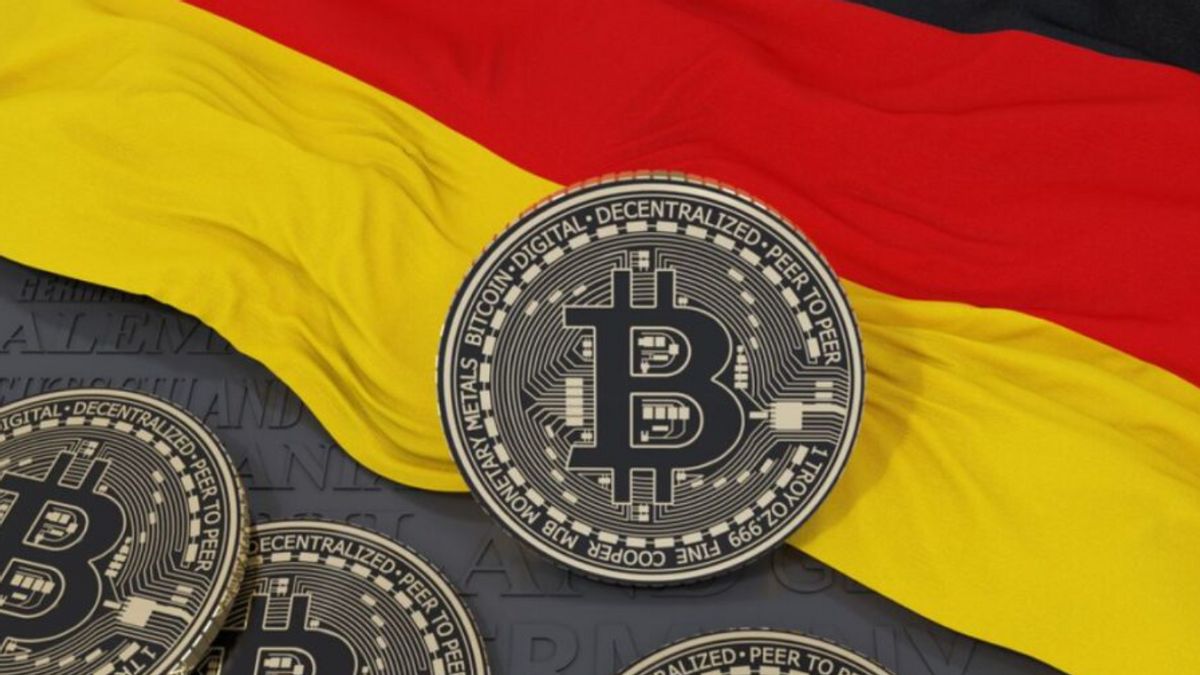
Open and Friendly: Germany's Cryptocurrency Asset Taxation and Regulatory Regime
TechFlow Selected TechFlow Selected
Open and Friendly: Germany's Cryptocurrency Asset Taxation and Regulatory Regime
Germany is the first country in the world to officially recognize the legality of cryptocurrency transactions such as Bitcoin, and ranks second after the United States in the number of Bitcoin and Ethereum nodes.
 Navigating Web3 tides with focused insights
Author: TaxDAO
1. Introduction
Germany maintains a relatively open and friendly stance toward cryptocurrencies. As early as 2013, the German Federal Ministry of Finance began monitoring developments in cryptocurrency and issued relevant policy documents. Germany was the first country in the world to officially recognize the legality of transactions involving cryptocurrencies such as Bitcoin. The number of Bitcoin and Ethereum nodes in Germany ranks second only to that of the United States. Moreover, the German government encourages banks and financial institutions to actively participate in the development of cryptocurrencies, has established a favorable tax regime, and implements corresponding regulation and guidance.
2. Overview of Germany's Basic Tax System
2.1 German Tax Structure
Federal government revenue in Germany primarily comes from tax revenue, other recurring income, and capital project income. Taxes have consistently been the main source of fiscal revenue, accounting for approximately 50%. Since tax reform, tax revenues have grown steadily, increasing their share of total government revenue.
The German tax system is known for its complexity, multi-tiered structure, and high efficiency. As a federal state, Germany’s administrative system consists of three levels: federal, state (Länder), and local. Each level has distinct responsibilities and functions, and bears the costs associated with fulfilling them. Accordingly, Germany operates a three-tiered taxation system, dividing all taxes into two broad categories: shared taxes and exclusive taxes. Shared taxes are collected jointly by two or all three levels of government and distributed according to fixed rules and proportions. Exclusive taxes belong solely to one level of government and are not shared.
Typical shared taxes include value-added tax (Umsatzsteuer) and income tax (Einkommensteuer). These taxes are collected jointly by the federal and state governments and then apportioned between them. VAT revenue is allocated to the states based on predetermined formulas, while income tax revenue is distributed according to population and economic indicators.
Exclusive taxes serve as dedicated revenue sources for specific governmental tiers and are administered independently without intergovernmental sharing. Examples include municipal real estate tax and state-level real property transfer tax. For instance, land tax (Grundsteuer) is levied by local authorities on land and buildings and allows municipalities to set rates independently, reflecting localized policy-making.
2.2 Major Types of Taxes
2.2.1 Corporate Income Tax
Taxpayers subject to corporate income tax are classified as unlimited taxpayers or limited taxpayers. Unlimited taxpayers—companies located in Germany—are liable for tax on their worldwide income. Limited taxpayers—foreign companies—are taxed only on income sourced within Germany. If a double taxation agreement exists between Germany and another country, foreign enterprises may typically benefit from tax relief provisions. The standard corporate income tax rate in Germany is 15%.
2.2.2 Individual Income Tax
German residents are subject to unlimited tax liability, meaning they must declare and pay tax on their global income. Non-residents face limited tax liability, generally requiring tax payments only on income earned within Germany. Taxable income includes earnings from agriculture and forestry, commercial businesses, freelance professions, employment, investments, rental income, and other sources. The system uses a hybrid model combining classification of income types with comprehensive aggregation for progressive taxation. Tax rates range progressively from 14% to 45%, with basic tax-free allowances available.
2.2.3 Value-Added Tax (VAT)
VAT in Germany is a consumption-based turnover tax ultimately borne by end consumers. The standard VAT rate is uniformly set at 19% nationwide, while reduced rates of 7% apply to certain goods such as food and books. Businesses can offset input VAT paid during operations against output VAT when filing returns.
VAT reporting occurs either monthly or quarterly. Newly established companies or those whose average monthly VAT liability in the previous year was below €7,500 may opt for quarterly filings, due by the 10th day of the month following each quarter. Companies exceeding this threshold must file monthly, with deadlines also falling on the 10th of the subsequent month. Additionally, an annual VAT reconciliation must be completed at year-end.
3. Germany’s Cryptocurrency Tax Policies
3.1 Classification of Cryptocurrencies
Since the creation of Bitcoin in 2009, the scale of cryptocurrency-related transactions has expanded rapidly. Against this backdrop, on February 27, 2018, the German Federal Ministry of Finance issued a circular referencing the European Court of Justice ruling in the "Hedqvist case." It adopted the term "virtual currency" (Virtuelle Währungen), stating that the same regulatory treatment applicable to exchanges between Bitcoin and fiat currencies should extend to other virtual currencies traded against traditional money.
The German government applies a broad definition to crypto assets. According to a 2020 publication by the German Federal Financial Supervisory Authority (BaFin), cryptocurrencies are defined more expansively as financial instruments. Although they do not meet the criteria of conventional financial instruments, they possess legal characteristics akin to money—they function as a medium of exchange and can be electronically transferred, stored, and traded. In 2022, the German Federal Ministry of Finance (BMF) clarified that individual units of cryptocurrency constitute assets. They represent the economic capacity to assign benefits linked to a public key to another public key. Their value can generally be determined based on market prices observable via exchanges, trading platforms, or listed entities. The beneficial owner is the person who can initiate transactions, thereby “controlling” which public key receives the virtual currency or tokens. This is typically the holder of the private key. However, control remains unaffected even if transactions are initiated through platforms storing private keys or carried out per the beneficiary’s instructions.[1]
From a tax perspective, Germany treats cryptocurrencies as unique assets possessing dual attributes of currency and property. Major cryptocurrencies like Bitcoin are recognized as legitimate private money—not legal tender—and holding, buying, selling, and using cryptocurrencies are considered lawful activities. Given their nature as assets, profits derived from cryptocurrency transactions are generally subject to personal income tax and capital gains tax regulations, while being exempt from VAT.
3.2 Cryptocurrency Taxation Framework
In Germany, profits from buying, selling, and trading cryptocurrencies are treated as capital gains. Under the German Income Tax Act, capital gains from the sale of privately held cryptocurrencies are tax-exempt if the asset has been held for more than one year. If sold within one year of acquisition, any profit is subject to capital gains tax. Furthermore, individuals earning less than €600 in annual profits from cryptocurrency transactions within a single fiscal year are entitled to full tax exemption under German tax law. This provides a degree of tax relief for small-scale investors and traders.
Regarding mining and staking, income obtained through cryptocurrency mining is generally treated as business income and thus taxable, although expenses incurred during the mining process may be deducted. For staking rewards, if the underlying cryptocurrency has been held for over one year, the received rewards are tax-exempt; otherwise, they are subject to income tax.
For airdrops and forks: Airdropped tokens tied to commercial activity are treated as business income and valued at fair market price upon receipt. If services were rendered in exchange for the airdrop (e.g., promoting a project on social media), such income falls under "other income" as defined in Section 22 Paragraph 3 of the Income Tax Act and must be declared at market value. Forks refer to hard or soft splits in a blockchain. A hard fork results in a new virtual currency. From a tax standpoint, newly created tokens are regarded as separate assets. The original cost basis of the pre-fork token must be allocated between the old and new tokens based on their relative market values at the time of the fork. The act of forking itself does not trigger a taxable event. However, if the newly received tokens are later sold during the holding period, any resulting gain is subject to private disposal taxation.
Additionally, according to the German Federal Ministry of Finance’s guidance document *Einzelfragen zur ertragsteuerrechtlichen Behandlung von virtuellen Währungen und von sonstigen Token* ("Individual Questions on the Income Tax Treatment of Virtual Currencies and Other Tokens"), exchanges between cryptocurrencies and fiat currencies are exempt from VAT. This means no VAT arises from purchasing or selling cryptocurrencies themselves, further reducing the tax burden on crypto transactions. However, if cryptocurrencies are used to purchase goods or services, any appreciation realized may be subject to income tax.
4. Development and Refinement of Germany’s Crypto Regulatory Framework
The German Federal Financial Supervisory Authority (BaFin) formally defined cryptocurrencies as "crypto values," treating them as a new type of financial instrument, and introduced "cryptocurrency custody services" as a novel financial service. As per BaFin regulations, effective January 1, 2020, any company wishing to provide cryptocurrency custody services—including cryptocurrency exchanges or custodians—must obtain prior authorization from BaFin.
In 2020, Germany implemented the Fifth EU Anti-Money Laundering Directive (AMLD5), imposing strict AML/CFT obligations on cryptocurrency exchanges and wallet providers. These requirements include customer due diligence, reporting of suspicious transactions, and implementation of internal control mechanisms to ensure market transparency and compliance.
In May 2021, the German Bundestag passed the Electronic Securities Act (*Gesetz zur Einführung von elektronischen Wertpapieren*, eWpG). The eWpG defines crypto securities and classifies them as a subset of electronic securities. The introduction of this law marked a significant step forward in Germany’s digital finance landscape, supporting technology neutrality, enhancing financial market efficiency, and reducing operational costs. The legislation also aligns with the German government’s broader blockchain strategy and commitment to technological neutrality.
In November 2021, Germany’s newly formed federal government referenced cryptocurrencies in its coalition agreement, advocating for a level playing field between traditional finance and innovative business models. The coalition called for establishing a new dynamic to ensure comprehensive and risk-appropriate regulation of emerging business models.
In 2022, the German Federal Ministry of Finance released its first national cryptocurrency tax guidance, *Einzelfragen zur ertragsteuerrechtlichen Behandlung von virtuellen Währungen und von sonstigen Token*. Covering tax scenarios related to mining, staking, lending, hard forks, and airdrops—details of which were outlined earlier—this guidance further strengthened Germany’s crypto regulatory framework and demonstrated the government’s proactive approach to cryptocurrency oversight.
5. Conclusion and Outlook
In terms of tax policy, Germany demonstrates an inclusive and accommodating attitude toward cryptocurrencies, aiming to balance innovation incentives with risk management. This is evident in exemptions for small gains, tax benefits for individual investors, and VAT exemptions. Going forward, Germany is likely to continue refining its cryptocurrency tax policies to keep pace with market evolution and international cooperation needs.
On the regulatory front, Germany’s cryptocurrency regulatory environment is considered among the most investor-friendly in Europe, offering a secure and transparent ecosystem for crypto investors. With the rapid advancement of cryptocurrency markets and underlying technologies, Germany’s regulatory framework will need to remain adaptive to address emerging challenges and opportunities. Germany may deepen collaboration with other nations and international organizations to promote harmonization of global regulatory standards.
In summary, the development of Germany’s cryptocurrency tax and regulatory systems is providing increasingly clear direction and incentives for the domestic crypto industry. We believe Germany is well-positioned to cultivate a healthy ecosystem conducive to the growth of cryptocurrencies, ultimately contributing to the prosperity of its national economy.
Join TechFlow official community to stay tuned
Telegram:https://t.me/TechFlowDaily
X (Twitter):https://x.com/TechFlowPost
X (Twitter) EN:https://x.com/BlockFlow_News
 TaxDAO