Arbitrage trading, the invisible force behind the boom in the crypto market
TechFlow Selected TechFlow Selected
Arbitrage trading, the invisible force behind the boom in the crypto market
Arbitrage trading has long been a key driver in global finance, and its application in the cryptocurrency market marks a significant evolution of this strategy.
 Navigating Web3 tides with focused insights
Authors: Chi Anh, Ryan Yoon & Yoon Lee
Translation: TechFlow
Key Takeaways:
-
Carry Trades in Finance and Cryptocurrency: Carry trades involve borrowing low-yield currencies to invest in higher-yielding assets. This strategy is widely used in both traditional and crypto markets, where traders enhance liquidity and influence currency valuations. In cryptocurrency, this often means borrowing stablecoins to invest in decentralized finance (DeFi). While returns can be high, significant risks arise due to market volatility.
-
Market Dynamics and Risks: Carry trades improve market liquidity but can exacerbate volatility during crises, increasing market instability. In crypto markets, they may contribute to speculative bubbles. Therefore, risk management is critical for investors and institutions using this strategy.
-
Future Trends and Challenges: Innovations such as yield tokenization and decentralized liquidity are shaping the future of carry trading in crypto. However, the potential rise of anti-carry mechanisms presents challenges, requiring more resilient financial products.
1. The Market Impact of Carry Trades
Carry trading is a fundamental strategy in global finance, where investors borrow in low-interest-rate currencies to invest in higher-yielding assets. The core objective is to profit from interest rate differentials, which can vary significantly depending on the currencies and assets involved.

An example of carry trade in traditional markets
Source: Jefferies & Co, Tiger Research
For instance, an investor might borrow Japanese yen at approximately 0.1% interest and invest in Mexican bonds yielding around 6.5%, generating roughly a 5% return without using personal capital. Carry traders provide liquidity across markets through borrowing and investing, aiding price discovery and contributing to financial market stability.
However, this liquidity provision comes with risks—especially when market conditions shift unexpectedly, such as during financial crises or sudden monetary policy changes. During periods of market stress, like the 2008 global financial crisis, carry trades can quickly unravel, leading to sharp reversals in currency values and substantial investor losses.
When exchange rates remain stable, carry trades can be highly profitable. But during market turbulence, these positions may be rapidly unwound. In such cases, investors typically rush to sell high-risk assets and repurchase the borrowed currency, triggering severe market adjustments. This chain reaction amplifies volatility and can create a vicious cycle of asset price declines and forced liquidations.
2. Applying Carry Trades in the Cryptocurrency Market
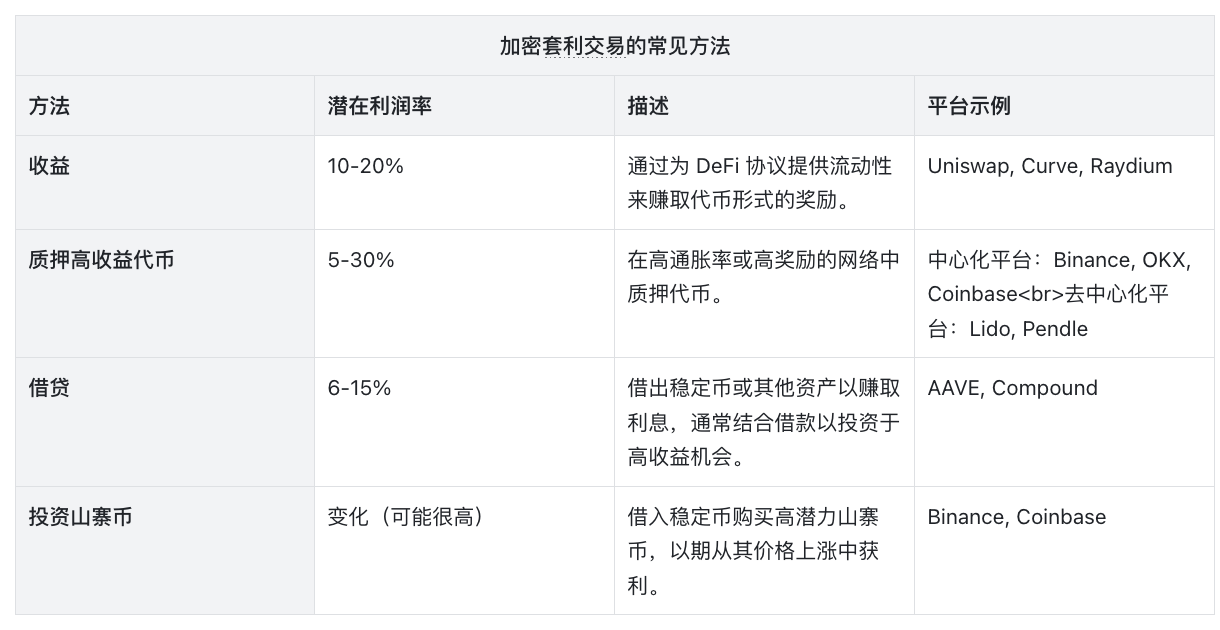
Numbers in the table represent averages from multiple platforms. Actual figures may vary based on market conditions, platform-specific operations, and data collection timing. Readers are advised to verify current data and conduct independent research before making decisions.
Table: Tiger Research, created with Datawrapper
The concept of carry trading holds significant relevance in the cryptocurrency market.
A typical strategy involves borrowing USDT at a 5.7% annual percentage yield (APY) and investing it into a DeFi protocol offering 16% returns. Assuming stable asset values, this could yield about a 10% margin. Compared to Mexican bonds, which offer around 6% returns, crypto-based carry trades typically promise higher margins due to increased market volatility.

Data from AAVE shows current lending rates, highlighting how stablecoins have become central to crypto carry trades by providing stable, low-cost borrowing options. For example, DeFi protocols offered over 20% APY in 2021, making stablecoins ideal low-cost funding tools for carry traders.

In 2022, Anchor Protocol offered a fixed 20% APY on UST. However, markets are not risk-free. The collapse of the Terra/Luna ecosystem in 2022 serves as a stark warning. Many carry traders had borrowed stablecoins to invest in Terra’s Anchor Protocol, attracted by its promised 20% yield. When $LUNA’s value plummeted, these carry trades were forced to unwind rapidly, resulting in mass liquidations and heavy losses.
This case illustrates the inherent risks of carry trading in crypto, where borrowing stablecoins to invest in high-yield assets has become common. The volatility of crypto assets can magnify the impact of these trades far beyond what is typically seen in traditional finance.
At the same time, this challenge presents important opportunities. The market could develop innovative financial products tailored to the needs of crypto carry trading—such as advanced risk management tools and yield optimization platforms. However, firms must adopt flexible strategies to respond quickly to market fluctuations given the high volatility of crypto assets.
3. How Do Traditional and Crypto Carry Strategies Differ?
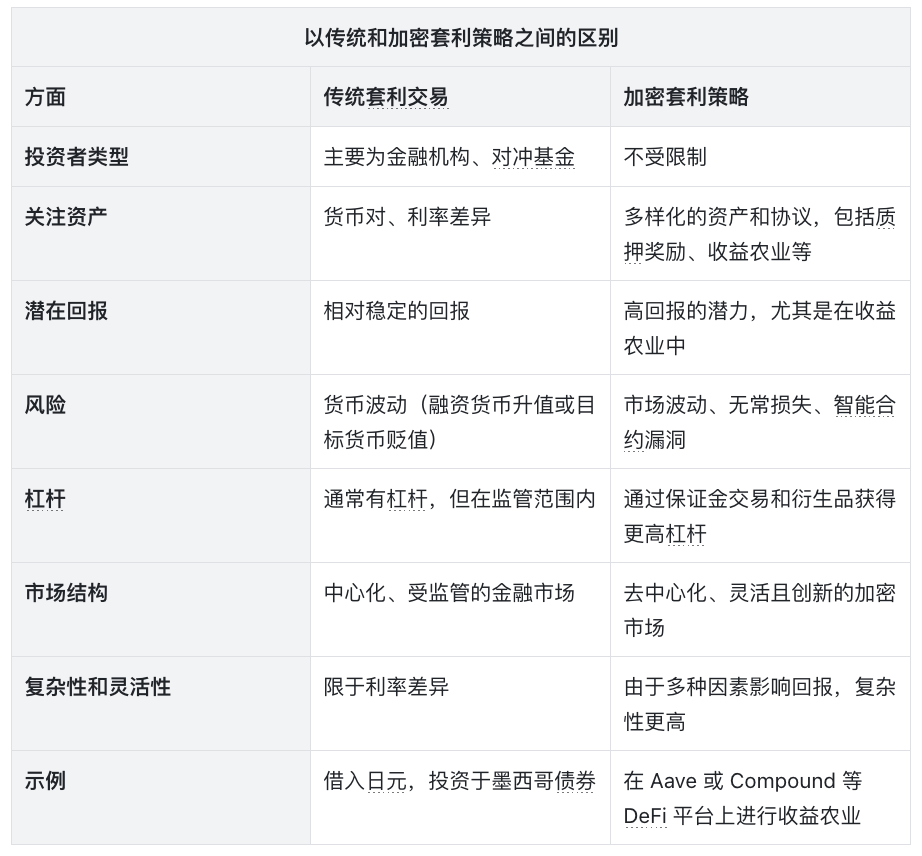
Source: Tiger Research, created with Datawrapper
While both traditional and crypto carry trades rely on interest rate differentials, they differ significantly in terms of investor profiles, target assets, and risk levels. Traditional carry trades are typically dominated by institutional players such as funds and financial institutions, whereas crypto carry trading offers opportunities for retail investors.
In terms of assets, traditional carry trades focus primarily on regulated currency pairs, generally offering stable returns with moderate risk. In contrast, crypto carry strategies leverage diverse platforms, allowing greater flexibility and higher potential returns—but also significantly increased risk. The use of leverage, yield farming, and staking rewards adds complexity to crypto carry trading, making it a potentially lucrative yet riskier investment approach.
In the fast-moving crypto market, decision-makers must carefully weigh these factors when considering carry trades.
4. What Is the Impact of Carry Trades on the Crypto Market?
4.1. Self-Reinforcing Mechanisms and Market Momentum
Carry trades create a self-reinforcing mechanism that drives market rallies. As previously mentioned, carry trades involve borrowers leveraging low-yield assets to access high-yield opportunities. When market sentiment is positive, this can trigger a cycle: rising prices attract more traders, further enhancing profitability. Specifically:
-
More investors borrow stablecoins to invest in the market for profit.
-
Increased borrowing of stablecoins pushes up market prices.
-
As prices rise, more investors join, creating a self-reinforcing loop.
However, this cycle introduces notable risks in the volatile crypto market. Sudden market shifts—such as a decline in the value of invested assets or a spike in borrowing costs—could force rapid unwinding of these trades. Such mass exits may trigger liquidity crunches and sharp price drops, further destabilizing the market. While carry trades can boost liquidity and generate returns, they may also lead to sudden and severe market disruptions.
4.2. Enhancing Liquidity in the Crypto Market

During the DeFi Summer of 2021, Total Value Locked (TVL) in DeFi experienced significant growth
Source: DeFiLlama
Crypto carry trades, especially those involving stablecoins, significantly enhance market liquidity. Stablecoins like USDT, USDC, and DAI are frequently used in carry trades, supplying essential liquidity to DeFi platforms—including lending protocols. This inflow of capital facilitates smoother trading and improves price discovery efficiency, benefiting the broader crypto market.
In 2023, daily trading volume for stablecoins exceeded $80 billion, underscoring their crucial role in maintaining crypto market liquidity. Moreover, improved liquidity attracts institutional investors, who typically favor highly liquid markets. This, in turn, brings in additional capital and promotes market stability.
5. Emerging Trends in Carry Trading
5.1. The Rise of Yield-Bearing Tokens
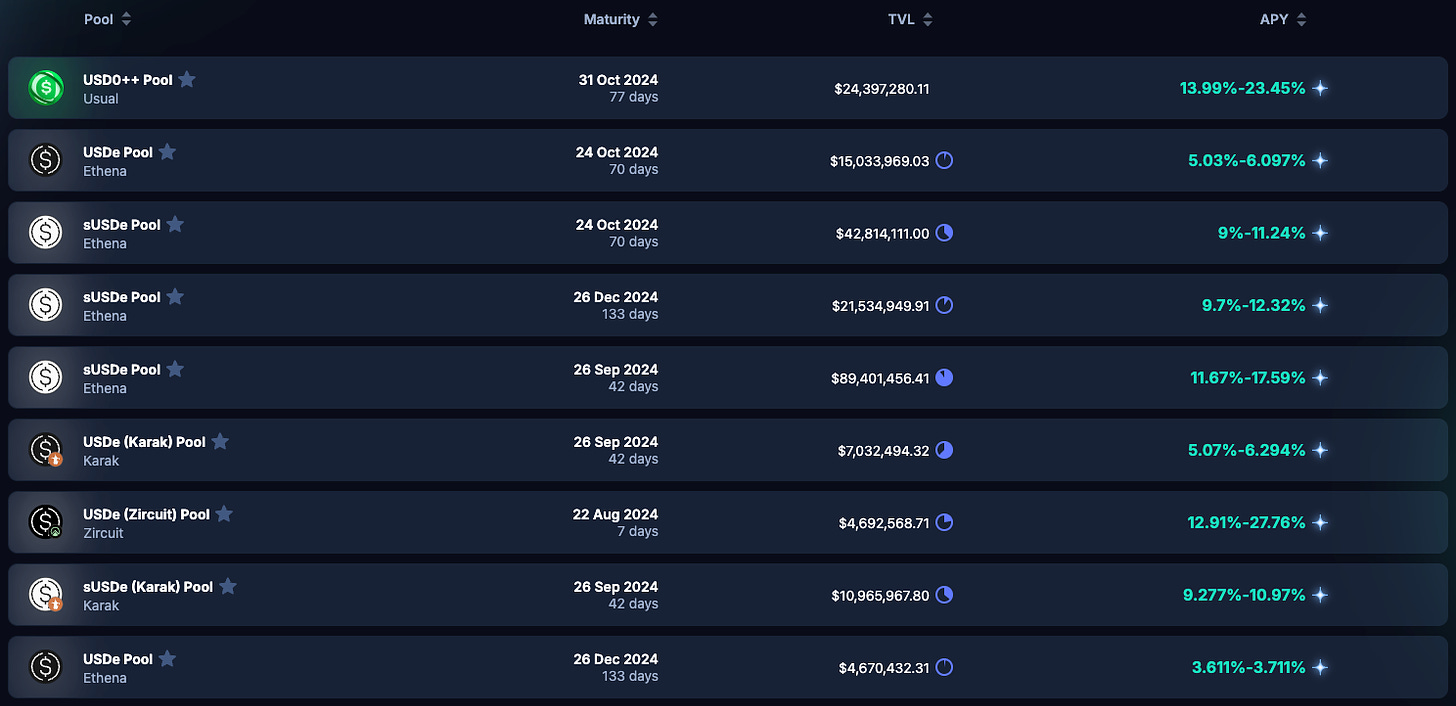
Stablecoin APY on Pendle Protocol, Source: Pendle
As the crypto market evolves, new trends are emerging in carry trading. One such trend is yield-bearing tokens, where investors can separate and trade future yields from principal—platforms like Pendle enable this. This innovation allows for more sophisticated carry strategies, enabling investors to hedge or speculate on future yields.
5.2. Potential Anti-Carry Mechanisms in Crypto Markets
Anti-carry mechanisms refer to market expectations that future volatility will exceed current levels. This presents unique challenges in crypto markets, particularly for carry trades. When price volatility increases, the efficiency of carry trades declines, as these strategies usually involve borrowing low-yield assets to invest in high-yield ones. With rising liquidity costs and amplified risks related to leverage, such strategies may not only become less profitable but also dangerous.
However, deflationary characteristics of crypto assets like Bitcoin—limited supply—may allow them to perform well in anti-carry environments. Unlike fiat currencies vulnerable to inflation, Bitcoin and similar assets can serve as stores of value and hedges against the depreciation of traditional investments. In this context, they may emerge as strong alternatives to traditional carry trade strategies.
6. Conclusion
Carry trading has long been a key driver in global finance, and its application in crypto markets marks a significant evolution of this strategy. Going forward, carry trading will evolve amid innovation, regulatory changes, and ongoing interactions between traditional and crypto markets. As more crypto ETFs enter the market, the boundary between traditional finance and digital finance continues to blur, offering institutional investors new avenues to access high yields in crypto. This shift could channel capital from traditional finance into crypto, further legitimizing and expanding the market's reach.
Nonetheless, crypto businesses and investors must carefully balance the risks and rewards of carry strategies while closely monitoring emerging trends that could reshape the landscape. The possibility of anti-carry mechanisms—driven by regulatory shifts or changing market dynamics—adds complexity. This complexity will challenge conventional approaches but also create new opportunities for agile participants. By identifying these evolving trends and maintaining flexibility, market players can better seize the unique opportunities arising from the convergence of traditional and crypto finance.
Join TechFlow official community to stay tuned
Telegram:https://t.me/TechFlowDaily
X (Twitter):https://x.com/TechFlowPost
X (Twitter) EN:https://x.com/BlockFlow_News
 @tiger_research