HTX Growth Academy: Macro Research Report on the Crypto Market: What Impact Will a 50-Basis-Point Fed Rate Cut Bring?
TechFlow Selected TechFlow Selected
HTX Growth Academy: Macro Research Report on the Crypto Market: What Impact Will a 50-Basis-Point Fed Rate Cut Bring?
The Federal Reserve's interest rate cut policy has created new opportunities for the crypto market, but while investors enjoy the benefits of market gains, they should also remain vigilant against potential risks.
 Navigating Web3 tides with focused insights
1. Introduction
On September 19, 2024, the Federal Reserve announced a 50-basis-point cut to the federal funds rate, lowering it to 4.75%-5.00%. This marked the first rate reduction since March 2020. The magnitude of this cut is relatively rare; historically, the Fed typically adjusts rates by 25 basis points. However, under specific economic conditions, a 50-basis-point cut reflects the Fed's growing concerns about the current economic landscape. Global financial markets reacted strongly, with varying degrees of volatility across equities, bonds, precious metals, and cryptocurrency markets. As an emerging asset class, the crypto market has gradually gained acceptance within mainstream finance in recent years—particularly following the approval of Bitcoin ETFs and increasing institutional participation—expanding its influence and scale. Against a backdrop of slowing global growth, rising inflation pressures, and heightened geopolitical uncertainty, the impact of the Fed’s rate cut on the crypto market warrants close attention.
2. Background of Rate Cuts and the Fed’s Policy Shift
1. The Fed’s Previous Rate Hike Cycle and Context for Easing
Starting in March 2022, the Federal Reserve initiated a 17-month tightening cycle to combat persistently high inflation, raising interest rates by a cumulative 525 basis points. The final hike brought the federal funds rate to 5.25%-5.50%, the highest level in 23 years. However, with signs of slowing U.S. economic growth, weakening labor market data, and inflation gradually coming under control, the Fed implemented an unusual 50-basis-point rate cut in September 2024, marking the beginning of a new accommodative monetary policy phase.
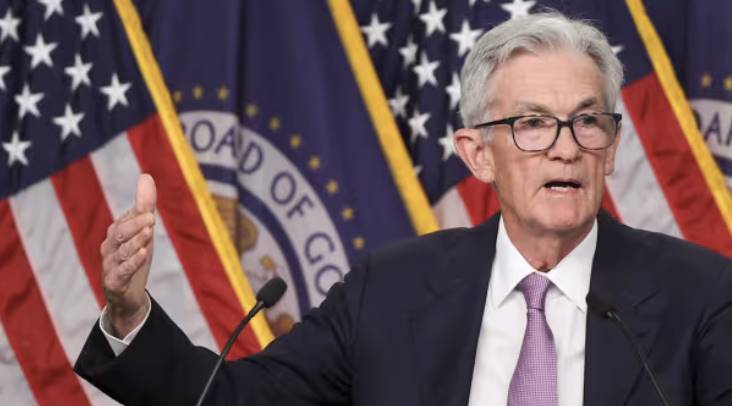
This move signals a shift in the Fed’s policy focus—from prioritizing inflation control toward stimulating economic growth and stabilizing the labor market. At the post-decision press conference, Chair Jerome Powell stated that the Fed would continue monitoring incoming economic data and remain flexible in adjusting the pace of policy. While this policy pivot introduces new uncertainties into the market, it also implies lower funding costs and increased liquidity, which could provide short-term tailwinds for the crypto market.
2. Historical Precedents and Impacts of Fed Rate Cuts
Historically, cuts of 50 basis points or more by the Fed have occurred during periods of economic or financial crisis—such as the dot-com bust in 2001, the 2007 financial crisis, and the onset of the pandemic in 2020. Therefore, the size of this latest cut exceeded expectations at many Wall Street firms and was widely interpreted as a sign of deepening concern over the U.S. economic outlook. Typically, rate cuts reduce borrowing costs, stimulate consumption and investment, and boost market liquidity. However, they may also reignite inflationary pressures, leading to complex medium- to long-term consequences. From a monetary policy standpoint, rate cuts directly diminish the appeal of traditional low-risk assets like bonds, redirecting capital toward higher-risk assets such as equities, real estate, and cryptocurrencies. Consequently, rate cuts often provide a short-term upward impulse to risk assets.
3. Short-Term Impact of the Fed’s Rate Cut on the Crypto Market
1. Increased Liquidity Driving Up Crypto Asset Prices
Monetary easing translates into greater market liquidity. With lower borrowing costs, capital flows more easily into capital markets—especially into high-risk, high-potential-return asset classes like cryptocurrencies. Historically, each time the Fed adopts an accommodative stance, the crypto market tends to exhibit strong upward momentum. Immediately after the rate cut announcement, Bitcoin surged past the key support level of $60,000 and briefly exceeded $62,000, while Ethereum (ETH) broke above $2,400. This indicates that market anticipation of increased liquidity boosted demand for Bitcoin, particularly amid growing expectations of dollar depreciation. Investors increasingly view digital currencies like Bitcoin as effective hedges against inflation and currency devaluation. Beyond Bitcoin, altcoins also benefited from the liquidity influx. In the trading sessions following the announcement, ZetaChain rose 20.6%, Saga climbed 13.7%, and Nervos Network gained 11%. Smaller-cap crypto assets tend to be more volatile, and in environments of abundant liquidity, investors are generally more willing to take on risk in pursuit of higher returns.
2. Rising Investor Risk Appetite
A rate cut does more than just increase liquidity—it also boosts investor risk appetite. In high-interest-rate environments, investors typically favor stable fixed-income products. When rates fall, however, risk assets such as stocks and cryptocurrencies become more attractive destinations for capital. For the crypto market, this inflow not only drives price appreciation but may also accelerate broader market expansion. In the short term, elevated risk appetite provides support for prices of Bitcoin and other major cryptocurrencies. Institutional involvement further stabilizes price movements, attracting additional capital. That said, rising risk appetite can backfire if economic prospects deteriorate. Should recession fears intensify, investors might rapidly pull capital out of high-risk assets, triggering sharp volatility in the crypto market. Thus, while the rate cut has bolstered investor confidence in the near term, ongoing uncertainty about the future economic environment continues to weigh on price trajectories.
4. Long-Term Impact of the Fed’s Rate Cut on the Crypto Market
1. Liquidity Cycles and Growth Opportunities for Crypto Markets
Fed easing typically increases liquidity, supporting high-risk assets. As institutional interest in cryptocurrencies grows, accommodative monetary policy further fuels market expansion. Bitcoin, the flagship crypto asset, is increasingly seen as “digital gold” with inflation-hedging potential. In future easing cycles, Bitcoin and other major digital assets are likely to continue benefiting from enhanced liquidity. Especially after the launch of Bitcoin ETFs, institutions now have easier access to crypto exposure. With looser monetary policy reducing returns on traditional financial instruments, more institutional capital may flow into Bitcoin and other cryptocurrencies, driving sustained market growth.
However, the crypto market’s growth depends not only on liquidity but also on technological innovation and regulatory developments. Platforms like Ethereum have laid the foundation for explosive growth in decentralized finance (DeFi) and NFTs. As liquidity expands, innovative financial products within DeFi—such as lending and yield farming—will likely evolve further, providing new momentum for market development.
2. Inflation Pressures and Policy Reversals
While rate cuts can boost liquidity in the short run, they may also exacerbate inflation. Since 2022, U.S. inflation has remained elevated. Although previous rate hikes helped moderate price pressures, the stimulus from lower rates—through increased consumer spending and borrowing—could reignite inflation. Over the longer term, if inflation resumes its upward trend, the Fed may be forced to raise rates again, negatively impacting the crypto market. Higher rates mean tighter liquidity, prompting investors to shift capital from high-risk assets back into safer fixed-income instruments or dollar-denominated holdings, resulting in outflows and price declines in crypto markets.
Additionally, rising inflation affects consumer purchasing power and investor sentiment. If the Fed must adopt a more hawkish stance to counter inflation, the crypto market could face significant downward pressure. Hence, future policy shifts will profoundly influence the long-term direction of the crypto market.
3. Recession Risks and Crypto Market Resilience
Although the Fed’s rate cut provides short-term stimulus, the crypto market may struggle to sustain gains if recession risks grow. Historically, during economic downturns, investors retreat from risky assets and flock to safe havens like the U.S. dollar and gold. Despite its potential as an inflation hedge, the crypto market remains highly volatile. During recessions, investor interest in high-volatility assets may wane, leading to price corrections. For example, in early 2020 amid the pandemic shock, Bitcoin plunged below $4,000—but later rebounded strongly in the second half of the year as the Fed eased policy and market sentiment recovered.
Therefore, the long-term trajectory of the crypto market hinges on the health of the global economy. If the outlook worsens, investors may reassess crypto’s risk profile and redeploy capital into more stable traditional assets.
5. Impact of the Fed’s Rate Cut on Crypto Submarkets
1. Bitcoin: The Rise of a Safe-Haven Asset
As the leader of the crypto market, Bitcoin’s price performance often serves as a leading indicator of overall market sentiment. With the Fed’s rate cut fueling expectations of dollar depreciation, investor interest in Bitcoin has grown. Widely regarded as digital gold, Bitcoin becomes more attractive as an inflation hedge during periods of monetary easing. As institutional capital flows in—especially via Bitcoin ETFs—investors gain easier access to Bitcoin exposure, potentially driving continued price appreciation. Nevertheless, Bitcoin’s price remains sensitive to macroeconomic trends. Should the global economy enter a recession, demand for Bitcoin could decline, increasing its price volatility.
2. Altcoins: High Volatility, High Reward
In the wake of Bitcoin’s price rise, altcoins often experience even greater volatility. The liquidity boost from the Fed’s rate cut channels more capital into higher-risk altcoins. Due to their smaller market caps, altcoins are more sensitive to changes in market liquidity than Bitcoin. For instance, after the rate cut announcement, altcoins like ZetaChain, Saga, and Nervos Network saw sharp short-term rallies. This reflects investors’ willingness to chase higher returns when risk appetite rises. Yet, this same volatility makes altcoin prices highly susceptible to shifts in market sentiment. Should market conditions change or liquidity dry up, altcoin prices could correct rapidly.
Investors entering the altcoin space must carefully navigate market swings. In times of economic deterioration or rising inflation, sentiment may quickly shift from risk-on to risk-off, putting downward pressure on altcoin valuations. Thus, while the rate cut provided a short-term lift, long-term success requires vigilance regarding global economic and financial trends.
3. Decentralized Finance (DeFi) and Stablecoins: New Growth Engines
Decentralized Finance (DeFi) represents a major innovation within the crypto ecosystem, offering decentralized lending, trading, and asset management services. With the Fed’s rate cut boosting market liquidity, the DeFi ecosystem stands to benefit from lower borrowing costs and increased participation. Just as lower rates encourage borrowing in traditional finance, in DeFi, users may leverage cheaper credit for margin trading or yield-generating strategies, accelerating ecosystem growth. Additionally, activities like liquidity mining and yield farming may attract more capital due to improved market conditions, injecting fresh energy into the entire DeFi space.
Stablecoins, a unique crypto asset class pegged to fiat currencies like the U.S. dollar, serve as a stability mechanism within the crypto market. During periods of heightened volatility, stablecoins often act as safe-haven assets. After the rate cut, investors may use stablecoins for arbitrage opportunities or as hedging tools. Consequently, demand for stablecoins is likely to grow amid rising liquidity and market turbulence.
4. Accelerated Institutional Participation
With the Fed’s rate cut and expanding global liquidity, institutional interest in the crypto market continues to rise. Since the introduction of Bitcoin ETFs, institutions have gained simpler, regulated avenues to invest in digital assets, further advancing market maturity. Institutional inflows not only drive price gains but also enhance market stability and credibility. Though the crypto market remains known for its volatility, increasing institutional involvement may gradually reduce price swings. Over time, this could improve mainstream adoption and support broader market expansion.
6. Influence of Geopolitical and Global Economic Factors
Beyond U.S. monetary policy, global economic conditions and geopolitical risks significantly affect the crypto market. Currently, slowing global growth, escalating trade tensions, and regional conflicts contribute to market uncertainty. As a decentralized, borderless asset class, cryptocurrencies are often viewed as a hedge during times of geopolitical stress. In countries with strict capital controls, investors may shift funds into Bitcoin and other cryptos to avoid local currency depreciation and financial restrictions.
However, weak global economic performance could also hurt the crypto market. If recession risks mount and investor risk appetite declines, capital may flow into traditional safe-haven assets like the U.S. dollar and gold, leading to outflows and price drops in crypto markets. Thus, while cryptocurrencies can partially offset geopolitical risks, the overall health of the global economy remains a critical determinant of market trends.
7. Outlook: Opportunities and Challenges Ahead
1. Opportunities for the Crypto Market
The liquidity boost from the Fed’s rate cut presents short-term growth opportunities for the crypto market. With institutional capital flowing in more rapidly, crypto asset prices are poised for further gains. Bitcoin’s status as digital gold is likely to strengthen, drawing in more long-term investors. Innovative sectors like DeFi and NFTs will also benefit from increased liquidity and ongoing technological progress. As more users and capital enter these spaces, they will help drive broader industry expansion. Moreover, with stablecoins and decentralized lending platforms gaining traction, the crypto ecosystem will continue to mature.
2. Challenges Facing the Crypto Market
Despite the short-term benefits of the Fed’s rate cut, the market faces multiple long-term challenges. First, persistent inflation and potential policy reversals by the Fed could create uncertainty in market sentiment. If the Fed resumes hiking rates, reduced liquidity could trigger sharp price swings. Second, a worsening global economic outlook may exert downward pressure on crypto markets. As high-volatility assets, cryptocurrencies are vulnerable to shifts in investor risk appetite during recessions. Additionally, geopolitical tensions and regulatory uncertainty will continue to shape market dynamics.
3. Regulatory Risks and Compliance
As the crypto market evolves, global regulators are paying closer attention. Governments worldwide are developing regulatory frameworks to prevent money laundering, tax evasion, and other illicit activities. While regulation can bring transparency and legitimacy, uncertain or overly restrictive policies may stifle innovation. Compliance will be a key factor in future market development. Projects and platforms must ensure adherence to national regulations—particularly concerning user privacy, fund security, and anti-money laundering (AML) requirements. As oversight tightens, compliant projects will gain a competitive edge.
8. Conclusion
The Federal Reserve’s 50-basis-point rate cut marks a significant shift in U.S. monetary policy, triggering substantial volatility across global financial markets. For the crypto market, the cut offers short-term growth opportunities, with Bitcoin, altcoins, DeFi, and stablecoins all benefiting from increased liquidity and rising risk appetite. However, the market also faces challenges stemming from inflation, slowing global growth, and evolving regulatory landscapes. Going forward, the crypto market will remain influenced by macroeconomic trends, monetary policy, and geopolitical risks. While short-term sentiment is positive, investors must closely monitor global economic developments, policy shifts, and regulatory changes to navigate potential market volatility.
Overall, the Fed’s rate cut opens new doors for the crypto market. Yet, while investors enjoy the upside of rising prices, they must remain vigilant about underlying risks. The path to crypto market maturity remains fraught with challenges—but driven by growing liquidity, technological innovation, and institutional adoption, its future holds considerable promise.
Join TechFlow official community to stay tuned
Telegram:https://t.me/TechFlowDaily
X (Twitter):https://x.com/TechFlowPost
X (Twitter) EN:https://x.com/BlockFlow_News
 @HTXAcademy