Gamifying On-Chain Experiences: Making Fun a KPI to Attract More Users
TechFlow Selected TechFlow Selected
Gamifying On-Chain Experiences: Making Fun a KPI to Attract More Users
Explore the principles of game design and event planning, and how to transform on-chain tasks into more meaningful and engaging interactive experiences.
 Navigating Web3 tides with focused insights
Author: rileybeans
Translation: TechFlow
On-chain quests have always troubled me. Though incomplete and underexplored, they are extremely popular among certain groups. It’s time to reexamine the intrinsic meaning behind on-chain quests, rather than treating them merely as click farms.
Since Joseph Pine and James Gilmore coined the term “experience economy” in 1998, its pace of development has only accelerated. With the rapid growth of the internet, alongside social algorithms, artificial intelligence, prediction markets, and cryptocurrency, this new experience economy is flooded with low-quality content—but it remains repairable. Against the backdrop of late-stage capitalism's collapse, beyond experiential products like Airbnb, Top Golf, and spacious Apple Stores, a new experience economy is being built for a new generation on-chain.
Constructing new quests by blending fun with deeper experiences may indeed offer cheaper, more compassionate solutions to the epidemic of loneliness, pointing toward a path of purpose-seeking.
This article explores how principles from game design and event planning can transform on-chain quests into more meaningful, engaging interactive experiences—connecting our physical selves with the emerging digital world.
Yet, as a community builder and lifelong gamer, I believe we’ve stalled in making quests truly meaningful. As emerging technologies become increasingly accessible, we now have the opportunity to build more integrated and interoperable creative experiences that combine real-world journeys with our digital identities.
As Daisy Alioto aptly described at this year’s FWB FEST, the emerging "taste economy" offers opportunities to develop design patterns that are more adventurous and collaborative. In my view, no design pattern is more ripe for reinvention than the quest.
But designing communities for this new internet requires a blend of emerging skills far beyond creating an attractive app with slick backend tech or an ordinary social club. Combining expertise in event design and interfaces, game design, storytelling, and human psychology creates the right ingredients to make quests both enjoyable and free of unnecessary friction.
Before we proceed, one thing must be clear: listing NFTs as bait so bounty hunters can swoop in like vultures is absolutely not a complete or meaningful quest. Quest platforms are well aware of this reality, which is why completing this cycle requires creative work from individual communities.
Now, this isn’t necessarily the fault of the market or builders. Getting these things right takes time, especially when dealing with new interfaces.
Game Design for Events
For non-gamers, most non-first-person shooter (FPS) games today fall into two categories: open-world and linear games. In open-world games, players freely explore vast lands, cities, or virtual environments—much like exploring a new town on vacation. In linear games, players follow a sequence of steps—go here, do this, talk to that person—all in order.
Both types translate well to in-person events.
However, for these game designs to shine, skilled storytellers must craft a coherent, engaging, and carefully constructed narrative. The four stages of game storytelling can guide their decisions:
-
Introduction: Arrive in a new area (including travel and acclimation time), meet new people
-
Expansion: Click or complete objectives, collect items, learn mechanics, and introduce themes
-
Progression: Craft items, use tools, interact with the world
-
Climax: Skill test, boss battle (or in our case, a hackathon judging session)
Event designers can leverage these building blocks—and corresponding blockchain infrastructure—to create livelier, seamless, interoperable experiences where communities thrive. This kind of gamification goes beyond leveling up in a noisy Discord server through added distractions. Instead, it pulls us out of algorithmic echo chambers and creates rich opportunities for connection—similar to those formed in classic online games like World of Warcraft—but now possible in person or on-chain.
For example, at the next 30,000-member event, organizers could host a Raid (a scavenger hunt culminating in a challenging puzzle) requiring collaboration. Or use technology that detects your phone’s proximity to resources (goods), automatically unlocking a chest once enough items are collected. Through balanced positive and negative feedback loops, players of all skill levels find their place. Such cooperative gameplay benefits communities—it’s additive, not extractive.
Now let’s see how these game elements actually manifest in event-based quests.
Quest Design for Events
Each narrative stage in gaming is mirrored in quest design, making conversion into various quest formats straightforward. For a full list of nonviolent game design patterns, refer to Patrick Littell’s highly valuable free book on the subject.
The four fundamental quest game elements are:
-
Exploration: New areas, new characters
-
Expansion: Discovery panels, crafting, new skills
-
Utilization: Claim rewards, merchandise, and items
-
Mastery: Access to next event or level-up
As we know, crypto has so far remained largely stuck on just one part of the quest model: expansion. I’d argue that the collection phase is the most boring part of any quest. If our imagination stops at the most monetizable aspect of a quest, that speaks volumes about our intentions. But we can integrate the other steps of the model. Events incorporating all quest elements leave lasting memories. After all, the primary goal of any event should be to create experiences worth retelling again and again.
This year, FWB Fest '24 was the only event to properly implement this idea, hosting a scavenger hunt where nearly all IYK tags were placed within walking distance of natural social gathering spots. Notably, they designed the hunt without requiring attendees to pay fees or download new apps. This expanded experience added a social dimension to the quest, distributing rewards to successful content creators, players, and auxiliary activity stations to recognize their efforts.
Another promising project for quest design is Amelia Guertin's Soulmates. Soulmates is a matchmaking questionnaire designed to bring people together at crypto events. Despite growing loneliness, Amelia shows that meeting and dating new friends can be awkward—but still fun when enhanced with pre- and post-feedback loops.
Event Designers Need Game Design Skills
The event space around emerging tech often surprises me—and usually not in a good way. From overbooking speakers to scattering side events across sprawling cities, events often become points of contention. So before discussing what problems quests solve, we must ensure we’re not adding further disruption to already overcrowded cities, making events less satisfying.
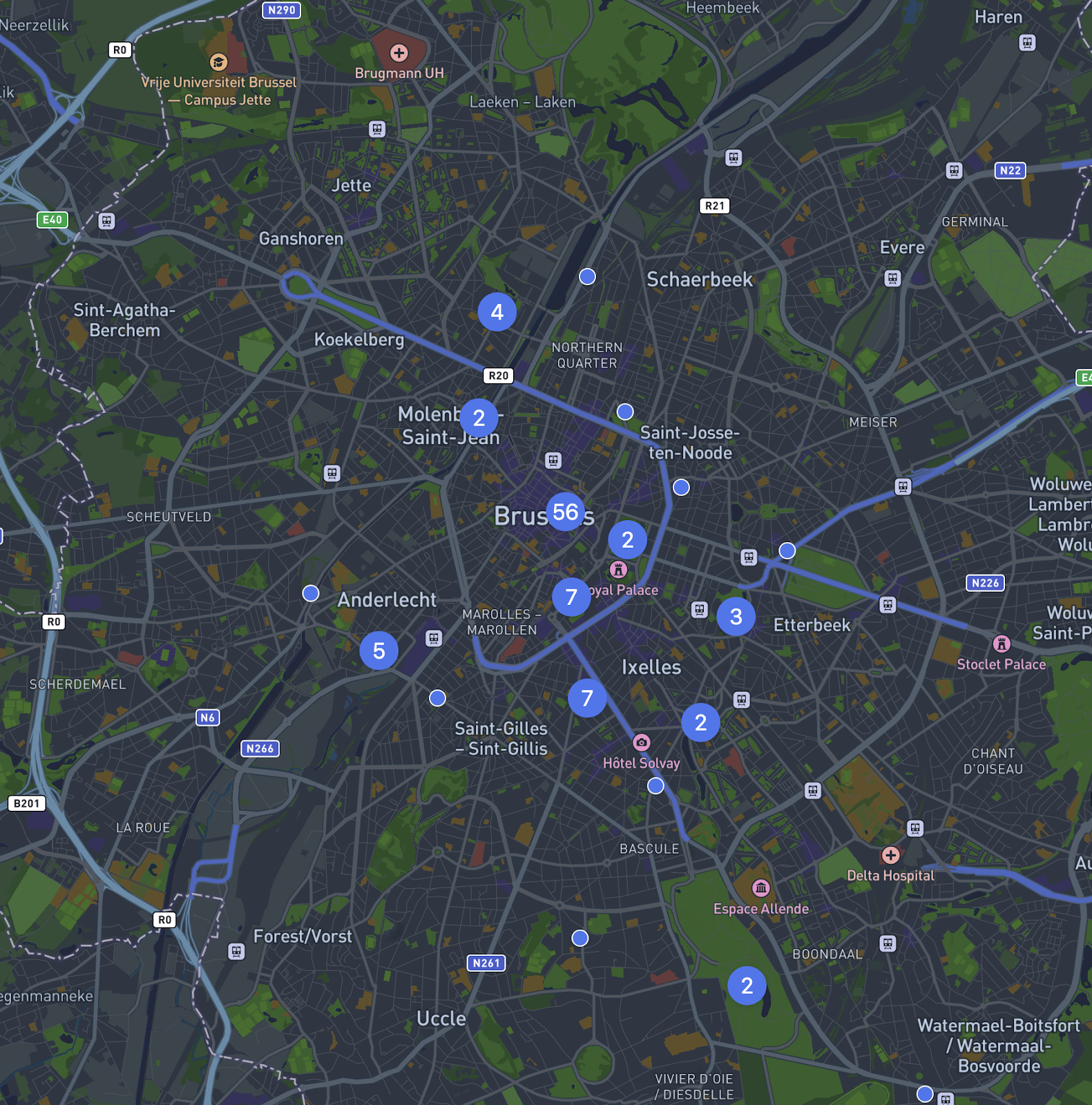
Imagine running around Brussels trying to attend all key events!!
Take, for instance, the list of fewer than 400 ETHCC '24 side events compiled with help from Michael Williams, product lead at Serotonin, and supported by the Serotonin platform. This indicates a massive number of events—especially considering around 5,000 attendees, compared to large conventions like DragonCon, which draws ~70,000 annually while hosting only a few official side events. Most of these require significant travel, coordination, and time management.
The good news is that by building tighter, more diverse on-chain event experiences, we can start measuring enjoyment while integrating technology that helps creators earn more. Let’s dive into how event designers can build better quests and events.
How Quests Foster Better On-Chain and Off-Chain Economies
Though internet users may feel fatigued by endless social apps and constant demands to participate, community joy genuinely requires some challenge. Unfortunately, all quests demand effort—we can't escape that reality. The good news? Quests are also work that both sides love. As I say, “I don’t invest in money, I invest in love”—and that love is mutual.
Whether joining a running club, chess club, or survival club, quests provide opportunities to introduce gamification through resources (virtual or real), narratives, and character progression—elements that translate well between in-person and on-chain collaboration.
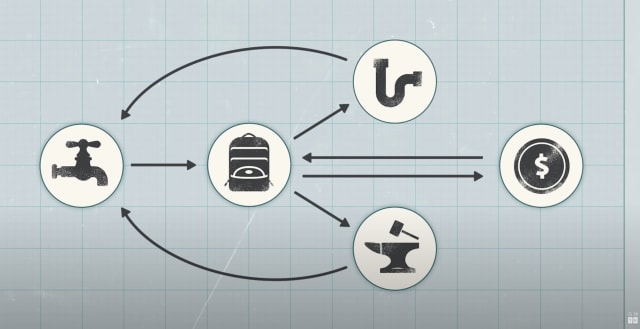
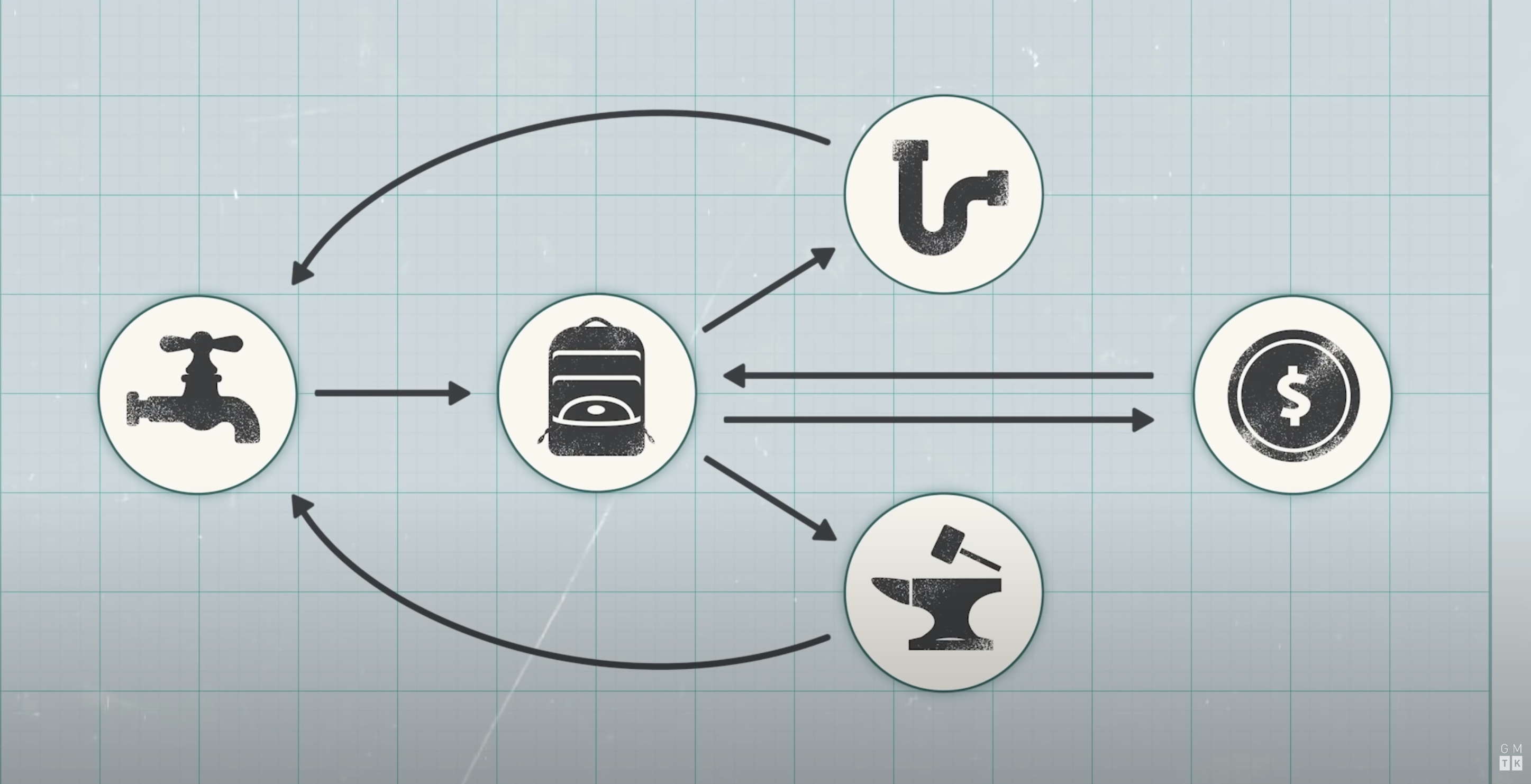
Still from Game Maker's Toolkit YouTube series: How Video Game Economies Are Designed
These mechanisms enable the collaborative control required by the emerging experience economy:
-
Click: How can we turn token distribution mechanisms into secure offline experiences? Is it necessary? Can it be done during pre-event orientation?
-
Inventory: How can we use ERC6551 token-bound accounts to improve user experience for loyalty quests? How can contracts reward players, enhancing capabilities once sufficient items are collected? Does this appropriately constrain players, or create unnecessary offline friction?
-
Converters: How can one resource be exchanged for another (often via consumption) to upgrade? Can earned persuasion checks allow better access to offline goods? How does this affect event or game progression?
-
Sinks: Can we remove resources from the economy, or adjust a limiter/slowdown metric to increase difficulty? Efficiency enthusiasts love this trick!
-
Trading Systems: Can we create more engaging in-game and offline store/merchandise booth experiences? I love arbitrage scenarios like “stores in this map section are cheaper”! Crypto excels here but is often limited by capital and, frankly, diversity of imagination. These are questions and mechanisms frequently considered by game designers, event planners, and TGE (token generation event) teams. Yet they haven’t been applied at real scale using interoperability, chain abstraction, affordable L2 alternatives, smart wallets, payment agents, and widespread AI agents.
An in-game side quest might ask you to collect 20 stars; an in-person quest might require collecting 20 social connections. Their triggers look entirely different, as do other mechanics—but feedback loops are usually similar. Only this time, the community defines the meta-rules of the game and manages changes to the game or algorithm, creating fairer, more consistent experiences.
By the way, quests offer unique opportunities for content creators to spread information about communities, games, or events. I can hardly estimate how many hours I’ve spent reading articles about Overwatch meta shifts or Elder Scrolls quest guides—surely tens of thousands.
Treat Fun as a KPI
Even if you’re not a gamer, watching enough Twitch streams or having kids will give you insight into modern video game fun. However, determining what behavior is fun in real life or on-chain is far more complex.
That said, placing fun first—measuring or building around it—is the hard part. Games, and related quests, “are fun because they are the fun we experience through play,” said writer and video game designer Ian Bogost in his 2014 talk at WIRED by Design. Considering the communal aspect of games, he added: “Fun comes from the attention and care you give something that offers enough freedom—enough play—that your attention matters.”
Events have long been a crucial component of Web3 development. It’s also why we’re beginning to see more brands attempt to measure fun. In my opinion, this is deeper than previous cyclical measurements of vibe. When we can measure how happy people are in real life on-chain, the leverage is infinite. For developers like Winny, founder of Chipped Social, whose motto is “fun as a KPI,” a simple tap of an NFC-chip nail tracks how often you meet new friends. For many, this feels like a luxury—akin to constantly attending global events. That’s precisely why Chipped succeeds: it enables infinite interactions beyond crypto events.
Luckily, our ecosystem includes several top-tier event builders. Each understands “fun as a KPI” and knows how to integrate into the experience economy. Communities currently doing this well include Lens/AAVE, FWB, Boys Club, and Allships—all masters at stimulating the senses, staying authentic and consistent, and guided by wonder.
Final Thoughts: Seeking Meaning
All these words point to such a simple concept. What do I really want?
Honestly, I wish there were more puzzle games. I want to think more often with friends. I want to vote them off the island. Actually, I want more Crypto The Game. But seriously, take inspiration from them: host a side-quest event filled with friends and rivals.
It sounds absurd, true or not, that Ethereum originated from dissatisfaction with a World of Warcraft patch. And yet we still haven’t paid homage to the source material by creating truly fun on-chain quests.
Layer3 isn’t just a quest platform; it’s a tool we should use alongside others to complete feedback loops woven through narrative (both positive and negative, equally important) and achieve interoperability across communities—for maximum fun. Token incentives are just one layer of a complete quest experience.
Why are on-chain quests better than relying solely on XP and endless Google Sheets passed around group chats? Because on-chain quests provide a full marketing channel without forcing users, players, or community members into pay-to-win dynamics. They help build a transferrable, interoperable autonomous digital identity—and serve as a medium for fun. The key shift is moving the narrative from “complete this quest to get an airdrop” to “complete this quest hoping to have fun,” which is clearly not the focus of an industry thus far dominated by financialization and monetary obsession.
You see, quests are fun—especially when done with friends. The question isn’t whether, but when we’ll start seeing uniquely video-game-like experiences emerge in real life, combining on-chain and off-chain technologies, surpassing even Pokémon GO.
Join TechFlow official community to stay tuned
Telegram:https://t.me/TechFlowDaily
X (Twitter):https://x.com/TechFlowPost
X (Twitter) EN:https://x.com/BlockFlow_News
 @t2wrld