Interpreting Visa's Stablecoin Report: Use Cases Beyond Speculation Emerge in Emerging Markets, Nearly Half of Users Hold Dollars via Stablecoins
TechFlow Selected TechFlow Selected
Interpreting Visa's Stablecoin Report: Use Cases Beyond Speculation Emerge in Emerging Markets, Nearly Half of Users Hold Dollars via Stablecoins
Stablecoins have established themselves as a meaningful settlement medium, comparable to established transfer networks, no longer used solely for crypto speculation.
 Navigating Web3 tides with focused insights
By TechFlow
The stablecoin business is attracting an increasing number of traditional enterprises.
Take Visa, the giant in settlement and payments within the Web2 world. Today, it is gradually extending its operations into the stablecoin space.
Leveraging its existing network, Visa currently supports over 50 wallet partners, enabling fast and seamless issuance of Visa credentials, allowing stablecoin users to make quick and secure payments at more than 130 million merchants globally.
Visa is also piloting the use of stablecoins like USDC to expand settlement capabilities for global issuing and acquiring banks, offering greater flexibility for modern treasury operations.
How does such an industry leader view today’s stablecoin market?
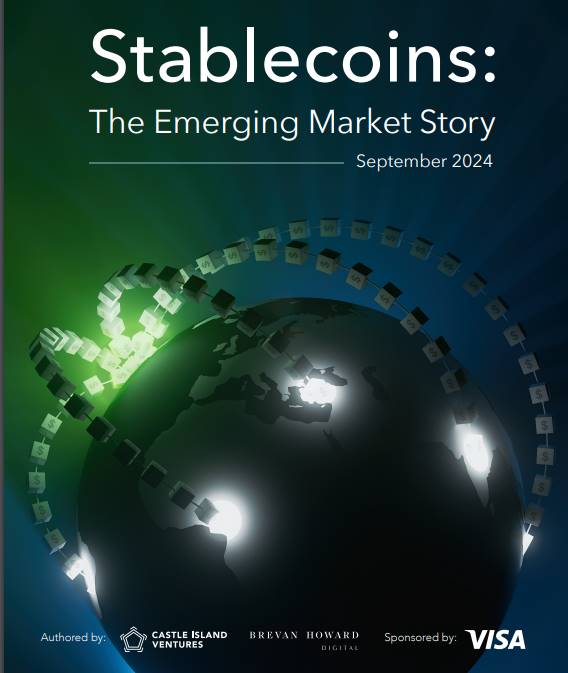
Recently, Visa jointly released a research report on the stablecoin market with Castle Island (venture capital), Brevan Howard Digital (asset management), and Artemis (on-chain data analytics), conducting an in-depth investigation into the current macro landscape, supply-demand dynamics, and adoption trends of stablecoins.
Notably, the report focuses on five emerging markets—Brazil, Turkey, Nigeria, India, and Indonesia—combining user survey results with on-chain estimates and qualitative insights from companies operating in these regions to provide a comprehensive understanding of global stablecoin usage.
TechFlow has analyzed and summarized the key findings from this report as follows.
Key Conclusions
-
On-chain data confirms growing stablecoin usage, whether measured by monthly active addresses, total supply, or settlement value;
-
Stablecoins have established themselves as a meaningful settlement medium, comparable to established money transfer networks;
-
Stablecoins are no longer used solely for crypto speculation. 47% of surveyed crypto users listed saving in U.S. dollars as their primary stablecoin use case, 43% cited efficient currency exchange, and 39% mentioned earning yield;
-
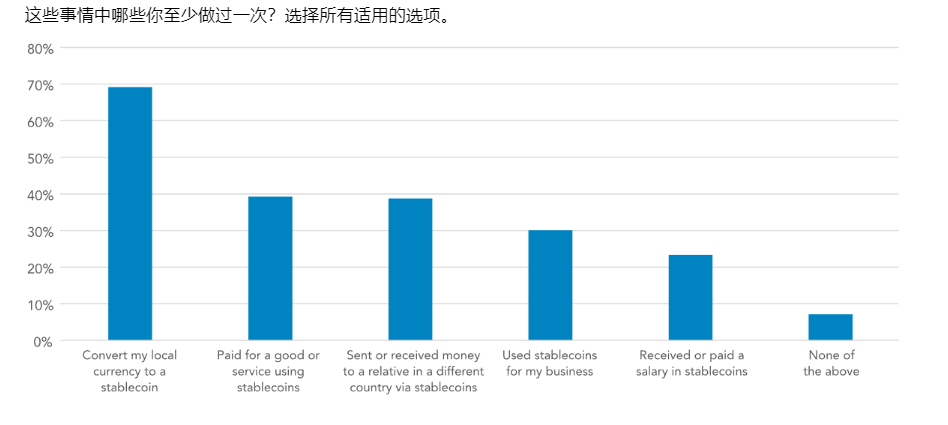
When asked about non-crypto stablecoin activities, the most popular use was currency substitution (69%), followed by paying for goods and services (39%) and cross-border payments (39%);
-
About 99% of all stablecoins are pegged to the U.S. dollar. Discussions around U.S. stablecoin regulation must recognize that large numbers of individuals and businesses in emerging markets rely on these networks for savings, cross-border payments, remittances, and corporate cash management;
-
When discussing the benefits of stablecoins, we must acknowledge the potential welfare gains for billions of users in emerging markets who gain effective access to alternative hard currencies;
Market Landscape: Beyond Speculation – A New "Lifeline" for Emerging Markets
Key Takeaways
-
Stablecoins are the true "killer application" of cryptocurrency
-
The current circulating value of stablecoins exceeds $160 billion, up from just a few billion in 2020. Over 20 million addresses transact in stablecoins on public blockchains each month. In the first half of 2024 alone, stablecoin settlement volume surpassed $2.6 trillion
-
The divergence between stablecoin activity and the broader crypto market cycle clearly shows that stablecoin adoption has moved beyond serving only crypto-native users and trading use cases.
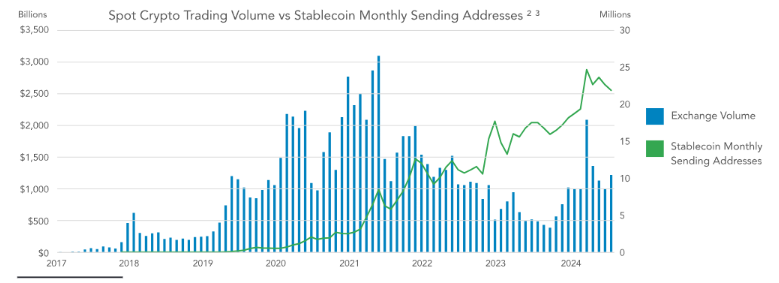
(The chart above shows that even when CEX trading volumes are low and the crypto market is in a downturn, the number of monthly sending addresses for stablecoins continues to rise—indicating stablecoin adoption extends far beyond crypto trading/speculation.)
Especially in emerging markets, stablecoins are used for currency substitution (escaping volatile or depreciating local currencies), as alternatives to dollar-denominated bank accounts, B2B and consumer payments, earning various forms of yield, and trade settlements. They are particularly attractive in high-inflation countries, or where access to banking services in USD is limited or unavailable, or where fiat transaction networks are inefficient or costly.
Macro Overview: The Rise of Stablecoins and the “Dollarization” of Blockchains
Key Takeaways
-
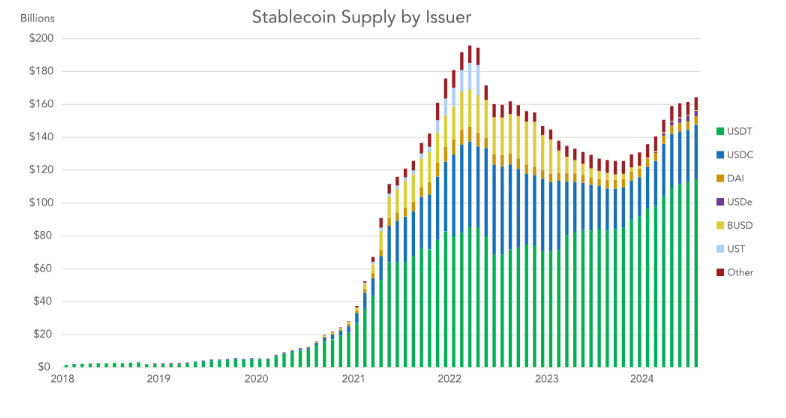
Since 2017, the total supply of stablecoins has grown rapidly, peaking at approximately $192 billion in March 2022
-
The collapse of Terra’s UST and the subsequent credit crunch suppressed native crypto yields and reduced trading volumes; after the crisis largely subsided, stablecoin supply began recovering in December 2023, as major crypto assets rebounded ahead of the approval of U.S. Bitcoin ETFs
-
As both crypto-native and sovereign interest rates rose, some stablecoin issuers began experimenting with models to pass yield back to holders, either programmatically on-chain or via third-party yield-sharing arrangements
-
Most notably, Ethena’s USDe—a synthetic dollar token whose yield derives from basis trades between Bitcoin and Ethereum futures and spot prices—ranks fourth in supply with over $3 billion
-
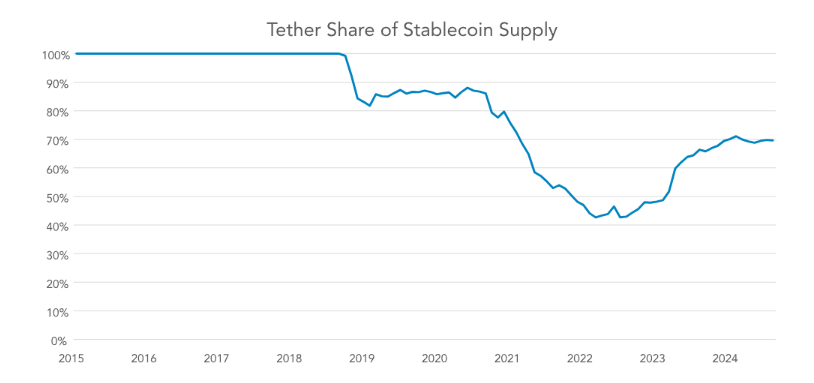
USDT, originally issued on the Bitcoin Omni protocol, was the first stablecoin to achieve breakout success. Tether has remained the largest and most widely used stablecoin
-
Circle's USDC saw significant growth, causing Tether’s dominance to fall below 50% in 2022. Since then, Tether’s market share has recovered and stabilized around 70%
-
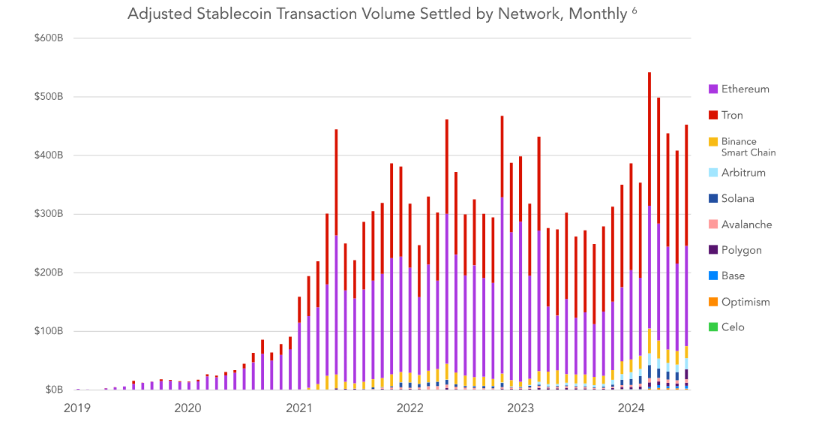
In 2023, people conducted $3.7 trillion worth of transactions using these stablecoins
-
By mid-2024, $2.62 trillion in transactions had already been conducted. If the trend continues, annual volume could reach $5.28 trillion
-
While the broader crypto market struggled in 2022 and 2023 (with many crypto prices falling and exchange trading volumes declining), stablecoin usage continued to grow steadily
-
As of June 2024 by settled value, the most popular blockchains are Ethereum, Tron, Arbitrum, Coinbase’s Base, Binance Smart Chain, and Solana
-
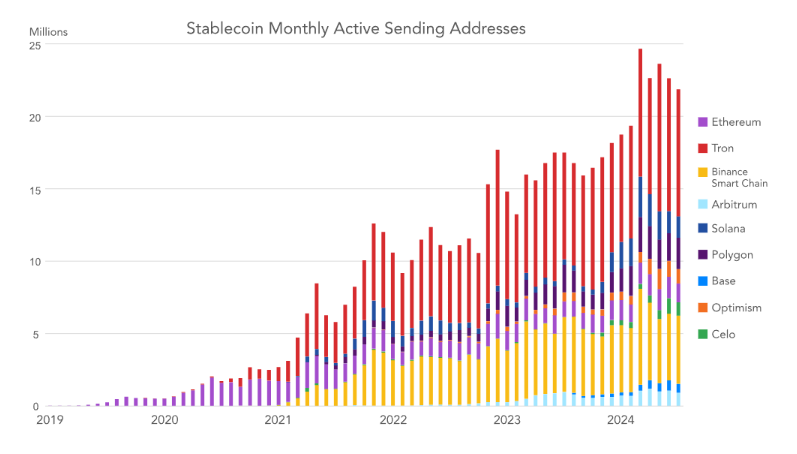
The most frequently used blockchains for sending stablecoins are Tron, Binance Smart Chain, Polygon, Solana, and Ethereum. Ethereum typically carries higher fees, resulting in fewer transactions and addresses compared to Tron or Binance Smart Chain, yet it remains the leader in settlement value
-
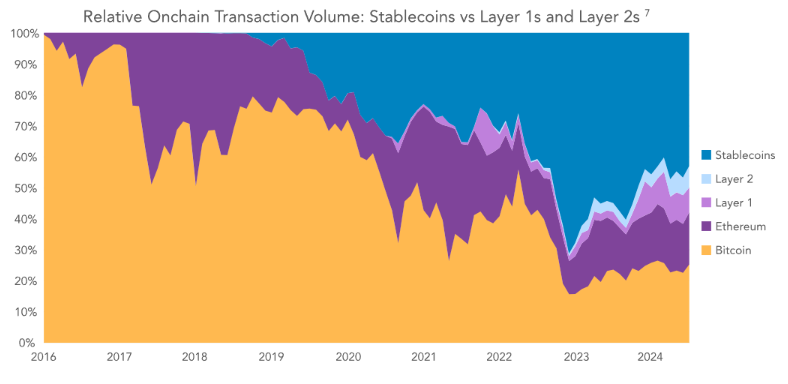
The "dollarization" of blockchains is becoming evident — historically, Bitcoin and Ethereum were the main mediums of exchange on public blockchains, but stablecoins—and almost exclusively dollar-pegged stablecoins—have steadily gained market share
-
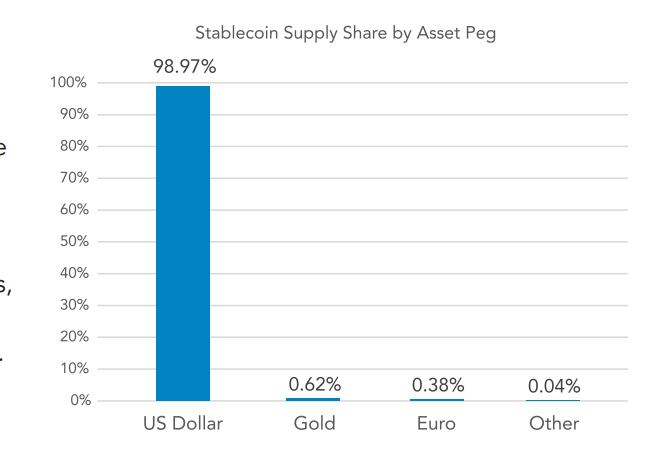
Among fiat-pegged options for stablecoins, the U.S. dollar dominates overwhelmingly. The euro ranks second, with a supply of $617 million as of June 2024, accounting for just 0.38% of the entire stablecoin market
-
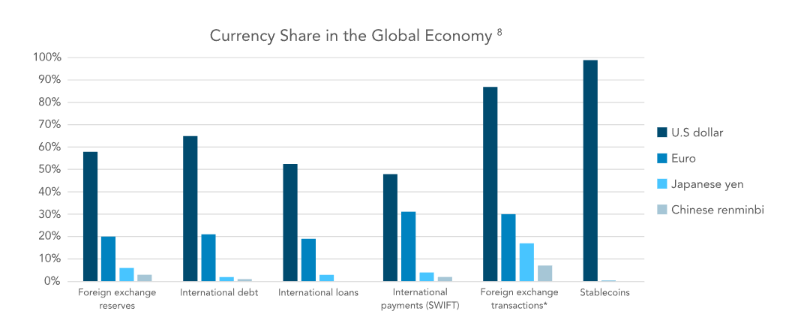
The U.S. dollar is the global reserve currency, but in no other category of usage does it dominate as completely as it does in stablecoins.
There have long been calls for stablecoins pegged to alternative currencies, but they haven’t gained traction. The overwhelming dominance of USD in the stablecoin space likely reflects the fact that most jurisdictions do not impose local barriers to using dollar-pegged stablecoins, and users simply prefer the most liquid tokens like USDT and USDC.
User Adoption Insights: Nearly Half Use Stablecoins Primarily to “Save in Dollars”
Methodology
A survey was conducted among approximately 500 people each in Nigeria, Indonesia, Turkey, Brazil, and India, totaling 2,541 adult respondents.
The sample was limited to existing crypto users to better understand how these individuals interact with stablecoins.
Key Findings
-
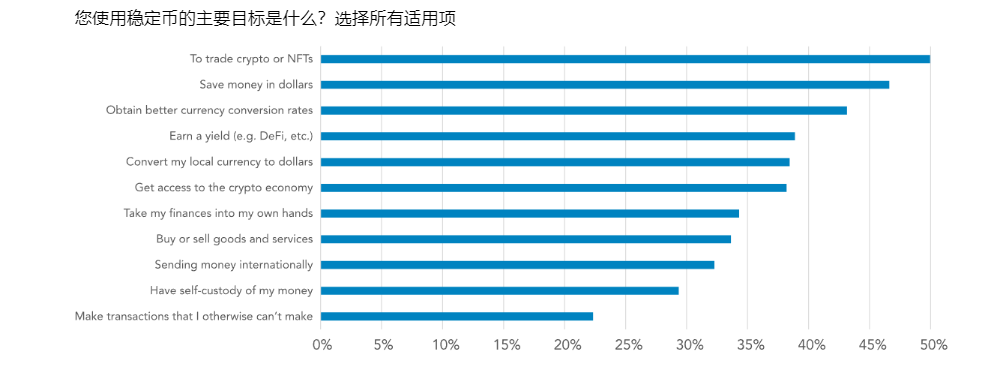
While the most common motivation for using stablecoins is accessing crypto (50%), non-crypto uses such as holding U.S. dollars (47%), earning yield (39%), and transactional purposes are also highly popular
-
Stablecoins are preferred over traditional dollar banking due to higher yields, greater efficiency, and lower risk of government interference
-
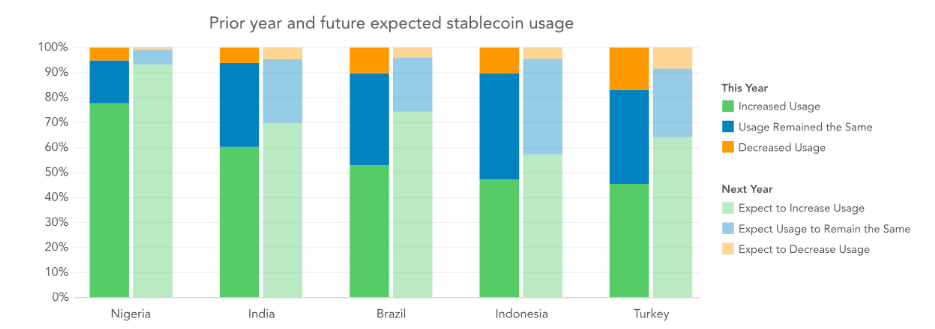
57% of users reported increased stablecoin usage over the past year, and 72% expect to increase usage going forward
-
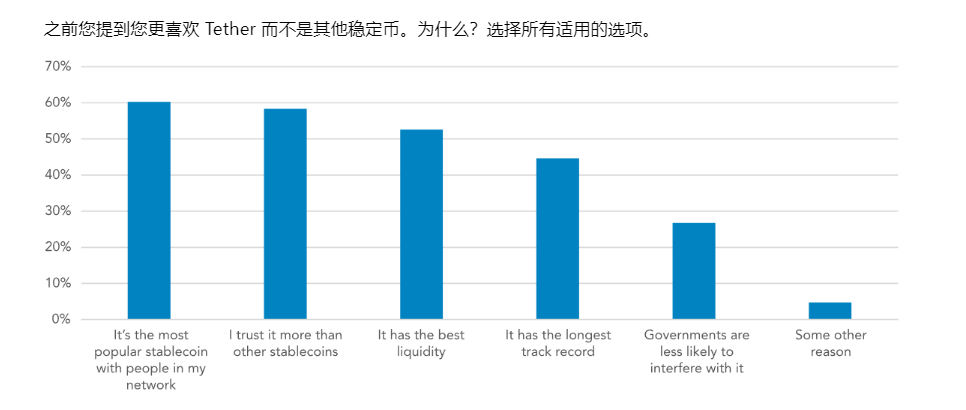
The primary reasons for preferring Tether include its network effects, user trust, liquidity, and proven track record relative to other stablecoins
-
Among non-trading use cases, currency conversion (to USD) is the most frequently reported activity, followed by purchasing goods/services, cross-border payments, and receiving or making salary payments
-
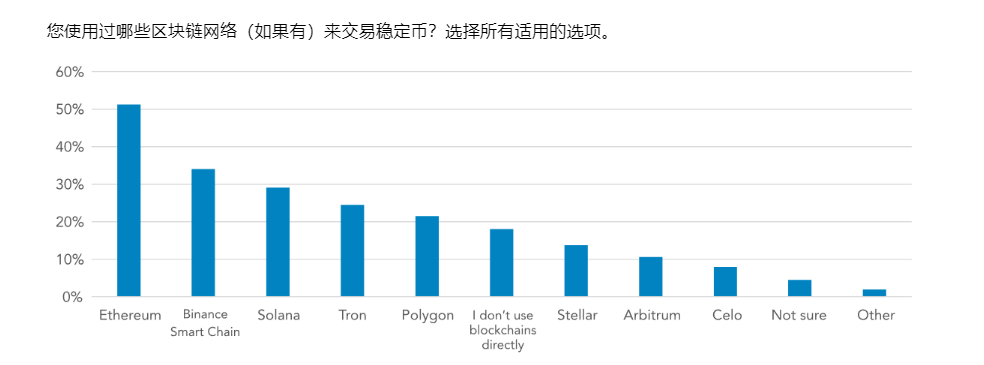
Ethereum is the most popular blockchain among surveyed users, followed by Binance Smart Chain, Solana, and Tron
-
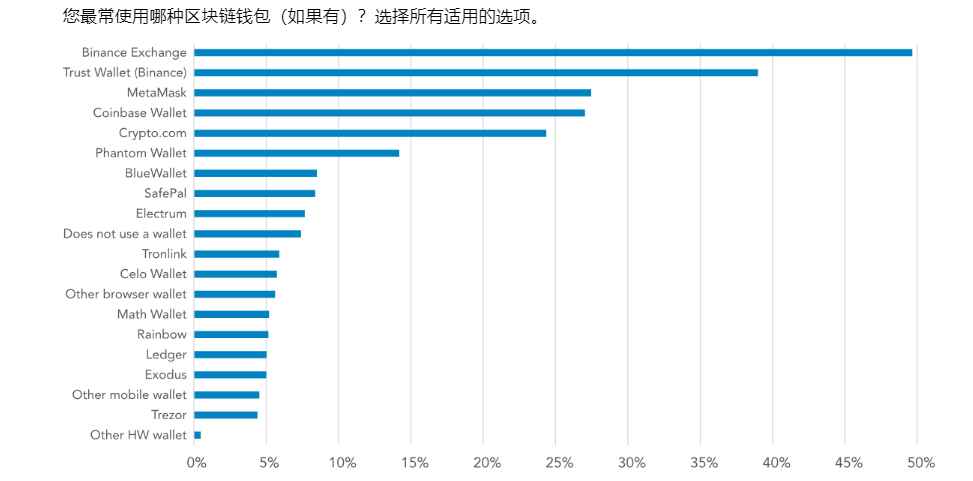
The most popular wallets among respondents are Binance (exchange), followed by Trust Wallet, MetaMask, Coinbase Wallet, Crypto.com, and Phantom Wallet. A clear long-tail distribution is observed in wallet usage
Detailed Survey Results
-
Trading cryptocurrencies or NFTs is the top goal among stablecoin users in the sample, but non-crypto use cases are close behind
-
Overall, 47% of respondents listed saving in U.S. dollars as one of their primary goals, 43% cited better exchange rates, and 39% mentioned earning yield
-
The findings are clear: in the surveyed countries, non-crypto use cases constitute a significant portion of stablecoin usage patterns.
The most popular use is currency exchange, followed by shopping and cross-border transactions. Notably, a majority of respondents across all surveyed countries reported having used stablecoins for non-crypto transactional purposes.
-
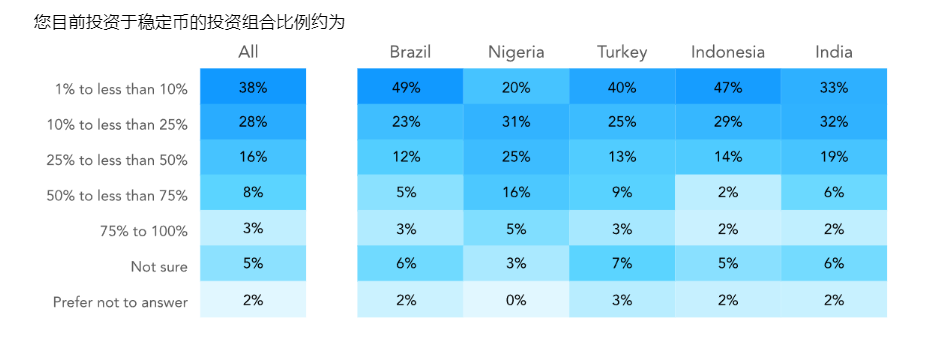
At the country level, the penetration of stablecoins in users’ portfolios varies significantly
-
Nigerians show much higher adoption than the rest of the sample, followed by Turkey and India. Among Indian users, wealthier respondents indicated holding a larger share of stablecoins in their financial portfolios
-
Nigerian users exhibit the highest affinity toward stablecoins among all surveyed nations. They trade most frequently, hold the largest portfolio share in stablecoins, report the highest share of non-crypto transactional usage, and express the highest self-perceived knowledge about stablecoins
-
In Turkey, the most common goal is earning yield, followed by trading crypto. For Indonesians, it’s better exchange rates, followed by crypto trading and saving in USD. For Nigerians, saving in USD is the top priority, followed by crypto trading and better exchange rates
-
The income-based findings in India are striking: wealthier respondents hold higher stablecoin allocations in their portfolios, use them across a wider range of use cases—including non-crypto ones—and are more likely to trust stablecoins over traditional bank accounts
Age Factor: A Favorite Among the Young
-
Younger users adopt stablecoins at higher rates. They are more likely to experiment with multiple stablecoins and maintain a larger share of stablecoins in their overall financial portfolios
-
In terms of fiat conversion frequency, 34% of young users (18–24 years old) convert weekly, and 38% do so monthly, compared to 15% weekly and 46% monthly among the oldest group (55+)
-
Across all non-crypto use cases—paying for goods/services, remittances, and receiving salaries—younger age groups show higher stablecoin usage rates
Tether Dominates, But Switching Is Possible
-
Many users stick with USDT out of habit, but would switch if consensus emerged around an alternative stablecoin within their networks
-
Some users also reported they would abandon Tether if it were banned or faced government intervention. Additionally, the lack of yield is a potential driver for switching to alternative stablecoins
Wallet Usage: Ethereum Is Expensive But Widely Used
-
Ethereum is the most popular blockchain across all regions, followed by Binance Chain, Solana, and Tron
-
This result may seem surprising given Ethereum’s historically high fees for small retail payments
-
The most popular non-custodial wallets are Trust Wallet, MetaMask, and Coinbase Wallet
-
Half of all respondents use Binance exchange as a wallet—more than any single non-custodial wallet. Notably, 39% of Nigerian respondents reported using Phantom Wallet
Join TechFlow official community to stay tuned
Telegram:https://t.me/TechFlowDaily
X (Twitter):https://x.com/TechFlowPost
X (Twitter) EN:https://x.com/BlockFlow_News
 深潮TechFlow