








Will changing the pricing mechanism of Blobs truly allow ETH to overcome its challenges?
TechFlow Selected TechFlow Selected
Will changing the pricing mechanism of Blobs truly allow ETH to overcome its challenges?
Ethereum's future lies in a new summer of application-layer innovation driven by technological iterations such as chain abstraction, smart wallet transformation of EOA addresses, modularity, and single-block finality—not in collecting more DA taxes today.
 Navigating Web3 tides with focused insights
By NingNing
Before the Cancun upgrade, during peak L2 periods, gas consumption accounted for 15.5% of Ethereum mainnet's total gas usage, remaining above 10% most of the time. After the Cancun upgrade, L2 gas consumption share plummeted dramatically and has fluctuated around 1% since August.
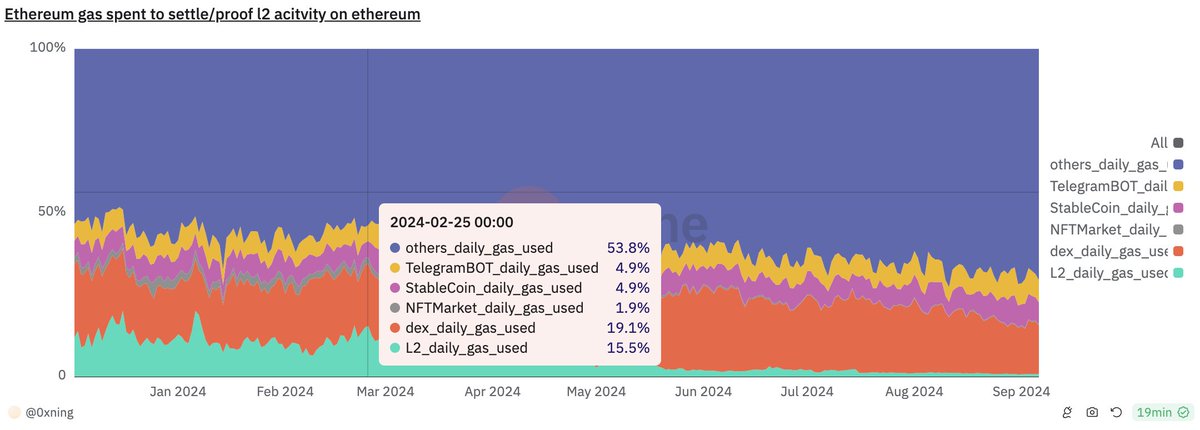
Originally, in response to Celestia's data availability (DA) pricing competition and optimistic expectations for explosive growth in app-specific rollups, the Cancun upgrade's EIP-4844 introduced dedicated blob space within blocks to store L2 state data, while also designing a blob pricing mechanism aimed at reducing DA fees paid by L2s.
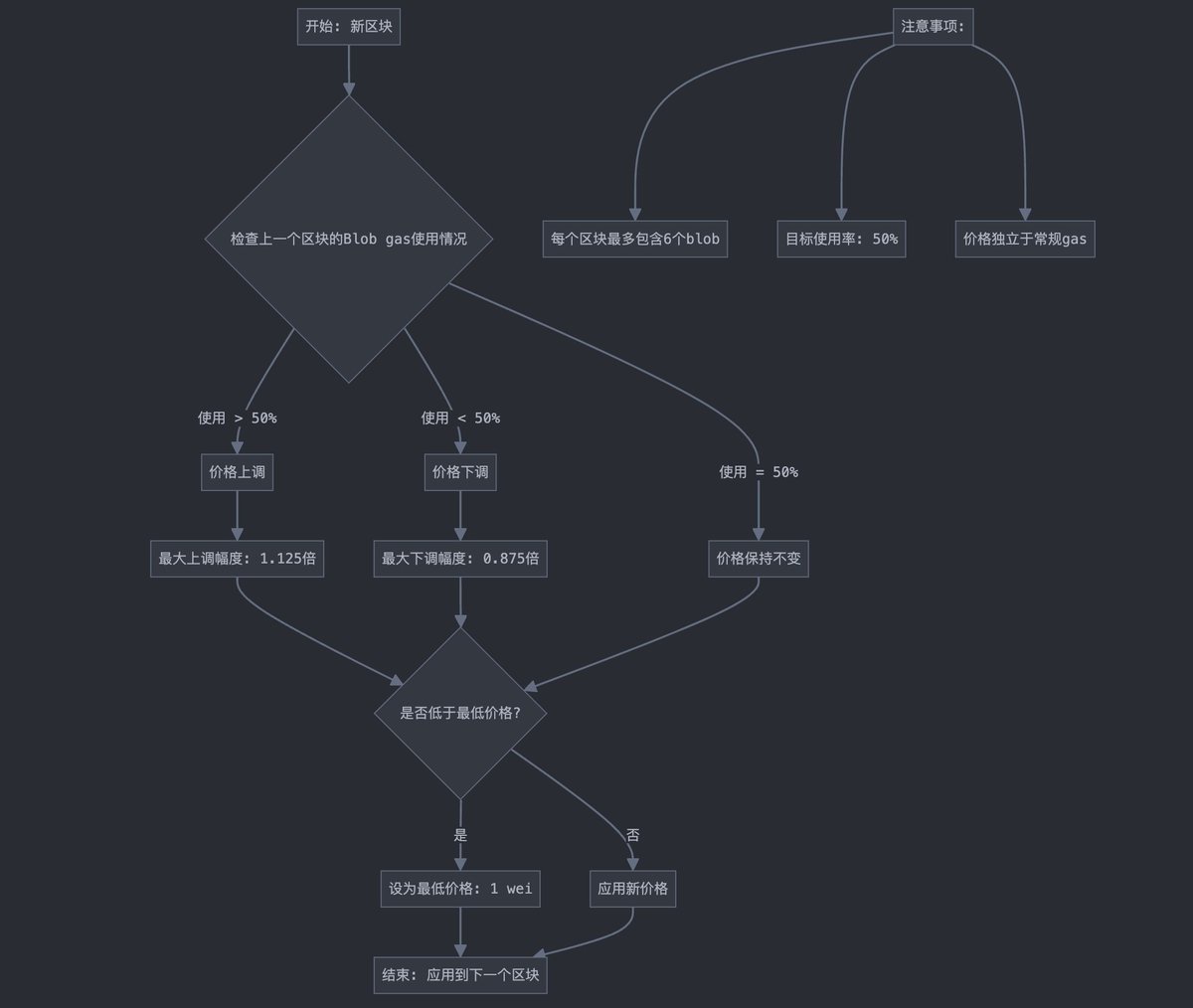
For example, the base fee for blob space starts at just 1 wei, increasing by 12.5% per block when demand exceeds supply—making it extremely difficult to establish an effective market price for blob space.
What no one anticipated was that the expected surge in application-specific rollup adoption would come to an abrupt halt.
These two factors together have led to the current situation where Ethereum mainnet is effectively hemorrhaging value to subsidize L2s. As a result, some voices within the Ethereum community are now calling for changes to the blob pricing mechanism—proposing higher DA taxes on L2s, greater ETH burning, and returning Ethereum’s supply to a deflationary state.
How should we interpret these calls from the Ethereum community? Personally, compared to reclaiming leadership in stablecoin payment networks or reestablishing Ethereum’s dominance in long-tail asset issuance and trading markets, this does seem like a shortcut to enhance Ethereum’s value capture. However, as opposing voices in the community point out, it risks being short-sighted—allowing short-term token price fluctuations in secondary markets to excessively influence protocol development direction is not healthy.
It's unclear why, but compared to other PoS chain communities, the Ethereum community harbors an almost pathological obsession with deflation, subconsciously equating it directly with rising token prices. In reality, even after its halving, Bitcoin still maintains an annualized inflation rate of 0.84%. Meanwhile, native tokens of other major PoS L1s (Solana, Polkadot, Cosmos) typically have annual inflation rates ranging between 7% and 15%.
Between what's easy and what's right, we should choose what's right; between the wide gate of short-term gains and the narrow gate of long-termism, we should choose the narrow path. Ultimately, Ethereum’s future lies in a new Summer of application-layer innovation driven by technical advances such as chain abstraction, smart wallet evolution for EOAs, modularity, and single-block finality—not in extracting more DA taxes today.
Join TechFlow official community to stay tuned
Telegram:https://t.me/TechFlowDaily
X (Twitter):https://x.com/TechFlowPost
X (Twitter) EN:https://x.com/BlockFlow_News
 @0xNing0x






