








US Judge Rejects SEC's Security Classification of BNB: Legal Rationale Behind the Court Ruling and Compliance Pathways for Web3 Practitioners
TechFlow Selected TechFlow Selected
US Judge Rejects SEC's Security Classification of BNB: Legal Rationale Behind the Court Ruling and Compliance Pathways for Web3 Practitioners
The SEC accused Binance and related parties of violating multiple provisions of the Securities Act and the Securities Exchange Act, including issuing and selling crypto assets without registration, operating an unregistered cryptocurrency trading platform, and making false statements and fraudulent representations to investors.
 Navigating Web3 tides with focused insights
By: Aiying
TechFlow has analyzed the Binance case several times before, but this time the court's dismissal of certain SEC claims deserves a fresh look. Let’s go straight to reviewing the key points of the legal filing:
Case Background
The SEC accused Binance and related parties of violating multiple provisions of the Securities Act and Securities Exchange Act, specifically including unregistered issuance and sale of digital assets, operating an unregistered cryptocurrency trading platform, and making false statements and fraudulent representations to investors.
Main Points:
Binance Background: Binance is a company registered in the Cayman Islands that has operated an international digital asset trading platform since 2017. Changpeng Zhao is its founder and CEO. BAM Trading operates the Binance.US platform in the United States and was established in 2019.
SEC Allegations: Unregistered issuance and sale of digital assets such as BNB (Binance Coin), BUSD (Binance USD stablecoin), Simple Earn, and BNB Vault programs.
-
Operating Binance.com and Binance.US platforms without registration.
-
Changpeng Zhao, as controlling person, bears responsibility for the operations and violations of these platforms.
-
BAM Management and the trading platform made false and misleading statements to investors, constituting fraud.
Court's Preliminary Ruling:
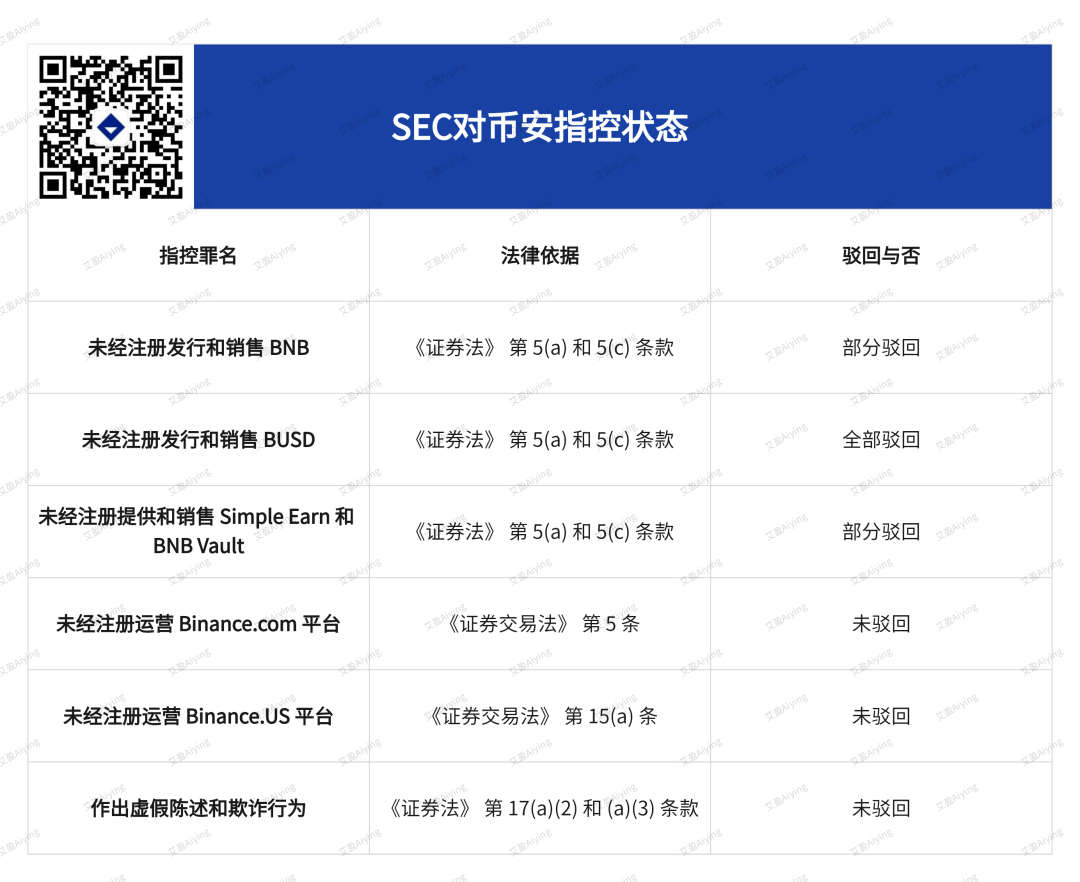
The court ruled that most of the case may proceed, but partially dismissed some claims—specifically the second claim (related to BUSD) and parts of the first and third claims.
Securities Act & Securities Exchange Act
The SEC alleges Binance and related parties violated multiple provisions of the Securities Act of 1933 and the Securities Exchange Act of 1934. The main statutory provisions cited are:
Securities Act of 1933
-
Sections 5(a) and 5(c): These prohibit the offer or sale of securities through interstate commerce (including online) unless registered with the SEC. The SEC alleges Binance offered and sold digital assets such as BNB, BUSD, Simple Earn, and BNB Vault without registration, thereby violating these sections.
Securities Exchange Act of 1934
-
Section 5: Requires any securities exchange operating in the U.S. to register with the SEC. The SEC alleges Binance and BAM Trading operated Binance.com and Binance.US without such registration.
-
Section 15(a): Requires brokers or dealers to register with the SEC. The SEC alleges Binance.com and Binance.US operated as unregistered brokers or dealers.
-
Section 17A(b): Requires clearing agencies (entities handling settlement and recordkeeping of securities transactions) to register. The SEC alleges Binance.com and Binance.US functioned as unregistered clearing agencies.
Securities Act of 1933, Sections 17(a)(2) and (a)(3):
-
Sections 17(a)(2) and (a)(3): Prohibit fraudulent conduct and making untrue statements in connection with the offer or sale of securities. The SEC alleges BAM Management and BAM Trading made false and misleading statements to investors, violating these provisions.
Here’s a summary table showing the current status:
Legal Reasoning Behind Court's Dismissal of Certain Claims
-
Dismissal of BUSD-related claim (Second Claim): The court found that the SEC failed to sufficiently demonstrate that BUSD meets the definition of an "investment contract." The court noted that the SEC’s description of how BUSD was issued, sold, and generated returns differed significantly from its successful analysis of BNB. The SEC did not adequately show how BUSD satisfies all elements of the Howey Test; thus, this claim was dismissed.
-
Dismissal of part of the Simple Earn claim (Part of Third Claim): The court held that the SEC’s allegations regarding the Simple Earn program do not meet the investment contract standard. While the SEC mentioned keywords like “profit potential,” “pooling of funds,” and “managerial expertise,” the court found these assertions insufficient to establish that Simple Earn constitutes an investment contract. Therefore, this portion of the claim was dismissed.
-
Dismissal of BNB secondary market sales claim (Part of First Claim): The court dismissed allegations concerning secondary market sales of BNB, reasoning that the SEC failed to adequately explain how BNB tokens sold by non-Binance sellers on secondary markets qualify as “securities.” The court observed that the SEC’s allegations primarily focused on Binance’s own sales activities, but provided inadequate legal or factual basis to extend liability under the Securities Act to third-party resales in the secondary market.
Key Takeaways for Web3 Projects Serving U.S. Users
For Web3 entities operating in the U.S. or serving American users, how can they avoid scrutiny or litigation from the SEC? Aiying summarizes the following best practices:
1. Clearly Define Token Utility and Functionality
-
Utility First: Ensure your token has clear functional use within the project—such as paying transaction fees, accessing platform services, or participating in community governance. The primary purpose should be closely tied to actual platform operations rather than serving mainly as an investment vehicle.
-
Minimize Speculative Appeal: Avoid overemphasizing price appreciation or investment returns in marketing. Instead, highlight the token’s real-world utility within the ecosystem to reduce the risk of it being classified as a “security” by the SEC.
2. Transparent Issuance and Management Processes
-
Avoid ICO Pitfalls: If conducting a token sale—especially an ICO—ensure compliance with applicable laws. Consider private placements (e.g., only to accredited investors) or registered offerings to maintain regulatory compliance.
-
Transparent Governance: Clearly disclose how project funds will be used, ensure transparent fund management aligned with initial promises, and provide regular financial updates and development progress reports to avoid attracting SEC scrutiny due to opacity.
3. Comply with Applicable Laws and Regulations
-
Register or Qualify for Exemption: When operating in the U.S., ensure your project complies with SEC requirements for securities offerings. If your token may be deemed a security, consider formal registration or applying for a legal exemption.
-
AML and KYC Compliance: Adhere to anti-money laundering (AML) and know-your-customer (KYC) regulations. Implement robust identity verification during user registration and trading to prevent illicit activities.
4. Work With Legal and Compliance Experts
-
Hire Legal Counsel: Collaborate throughout development and token issuance with experienced cryptocurrency legal advisors. They can help assess legal risks and ensure compliance at every stage.
-
Dedicated Compliance Team: Establish or hire a dedicated compliance team to monitor global regulatory changes and adapt your project accordingly.
5. Clear Marketing and Communication Strategy
-
Careful Promotion: In marketing materials, avoid language that could frame the token as an investment contract. Do not promise high returns or emphasize speculative value. Focus instead on technological innovation, community benefits, and practical token uses.
-
Educate Users: Publish educational content to help users understand the token’s functions and use cases, reducing the risk of legal issues arising from misunderstandings or unrealistic expectations.
6. Prudent Governance and Operational Model
-
Decentralized Governance: If claiming decentralization, ensure governance is genuinely decentralized, allowing users meaningful participation in decision-making and minimizing centralized control by founders or developers. This reduces the likelihood of the SEC treating the project as a centrally managed “security.”
-
Community-Driven Development: Build strong community support and empower users through voting mechanisms, reducing reliance on core team members and reinforcing true decentralization.
7. Lawful Secondary Market Operations
-
Mitigate Market Manipulation Risks: Avoid manipulating prices in secondary markets. Ensure all trading is fair and transparent. Regularly monitor trading activity to prevent behaviors that might attract SEC attention.
-
Compliant Listings: Before listing tokens on exchanges, confirm the platforms comply with local laws—especially when listing in the U.S., prioritize exchanges already compliant with SEC regulations.
8. Prepare for Future Legal Challenges
-
Develop Contingency Plans: Prepare in advance for potential legal actions—including selecting defense counsel and crafting communication strategies with regulators. Being ready allows for swift response if investigated.
-
Engage Regulators Proactively: In changing regulatory environments, cooperate with authorities and demonstrate willingness to adjust your project to meet new rules. This proactive stance can reduce conflict and potentially lead to settlements.
Join TechFlow official community to stay tuned
Telegram:https://t.me/TechFlowDaily
X (Twitter):https://x.com/TechFlowPost
X (Twitter) EN:https://x.com/BlockFlow_News
 Aiying Compliance









