








Whale accumulation slows as Bitcoin struggles at $61,000 resistance level
TechFlow Selected TechFlow Selected
Whale accumulation slows as Bitcoin struggles at $61,000 resistance level
Analysts believe the market is gradually recovering.
 Navigating Web3 tides with focused insights
By Mary Liu, Bitpush News
Financial markets were relatively calm on Tuesday, with no significant market catalysts emerging ahead of this week's Jackson Hole global central bank symposium.
According to Bitpush data, Bitcoin briefly surged above $61,000 early Tuesday but failed to sustain the momentum, retreating to the $59,000 support level during afternoon trading. At the time of writing, Bitcoin was trading at $59,341, up 0.36% over the past 24 hours.
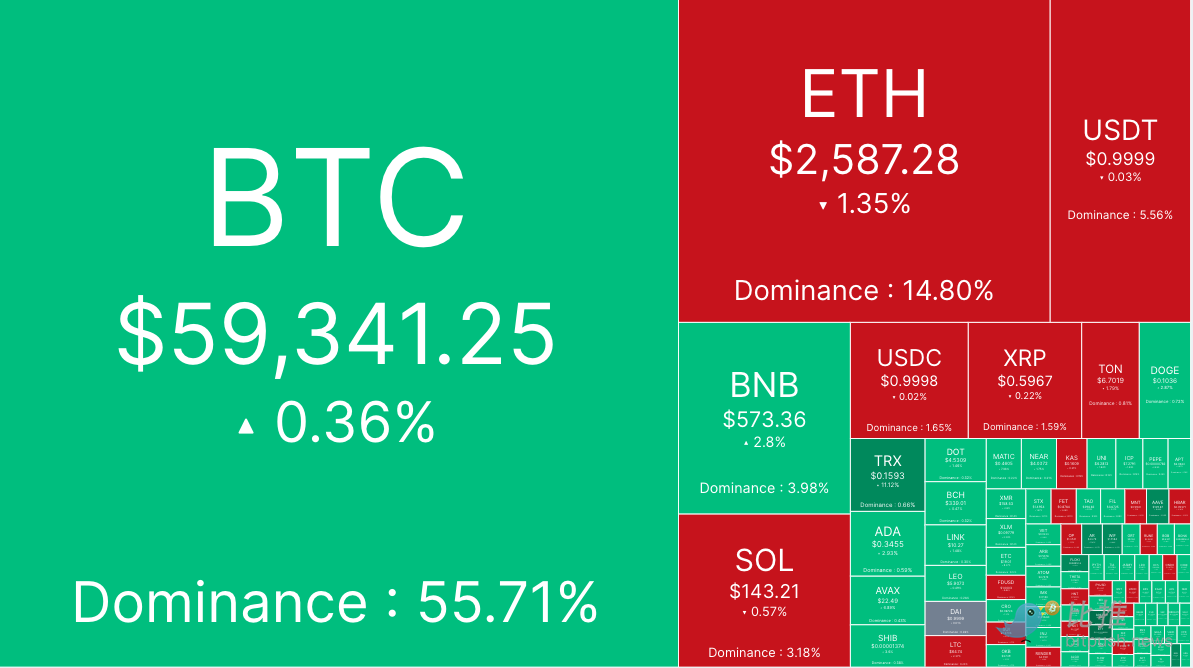
Additionally, most altcoins within the top 200 by market capitalization saw gains. The meme coin Brett (BRETT) led the rally, rising 18%, followed by BitTorrent (BTT) and BinaryX (BNX), which increased by 16.4% and 12.3% respectively. Litecoin (LTC) experienced the largest decline, dropping 3.3%, while dYdX (DYDX) fell 3.2% and MANTRA (OM) declined 2.6%. The total cryptocurrency market cap currently stands at $2.11 trillion, with Bitcoin’s market dominance at 55.7%.
In U.S. equities, the S&P 500 and Nasdaq Composite closed down 0.20% and 0.33% respectively, while the Dow Jones Industrial Average ended flat.
Whale Accumulation Slows
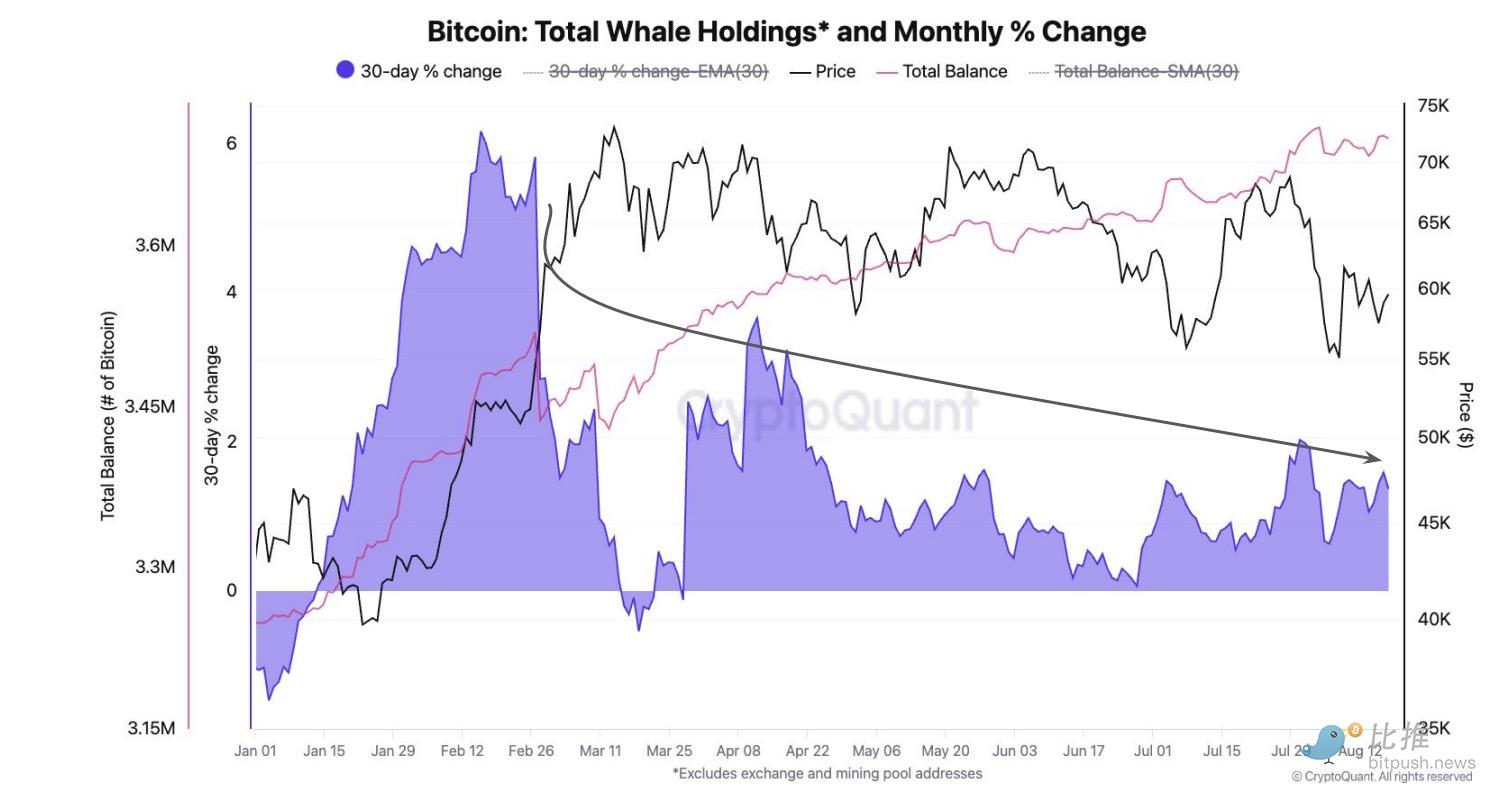
CryptoQuant, a blockchain analytics firm, stated that most demand indicators currently show weakness. Data from CryptoQuant reveals that large BTC holders—commonly referred to as whales—have significantly slowed their accumulation pace since reaching an all-time high in March.
The report noted: "The 30-day percentage change in whale holdings has dropped from 6% in February—the fastest rate since February 2019—to just 1% today. Historically, monthly growth in whale holdings exceeding 3% has been associated with rising Bitcoin prices, but that is not the case now."
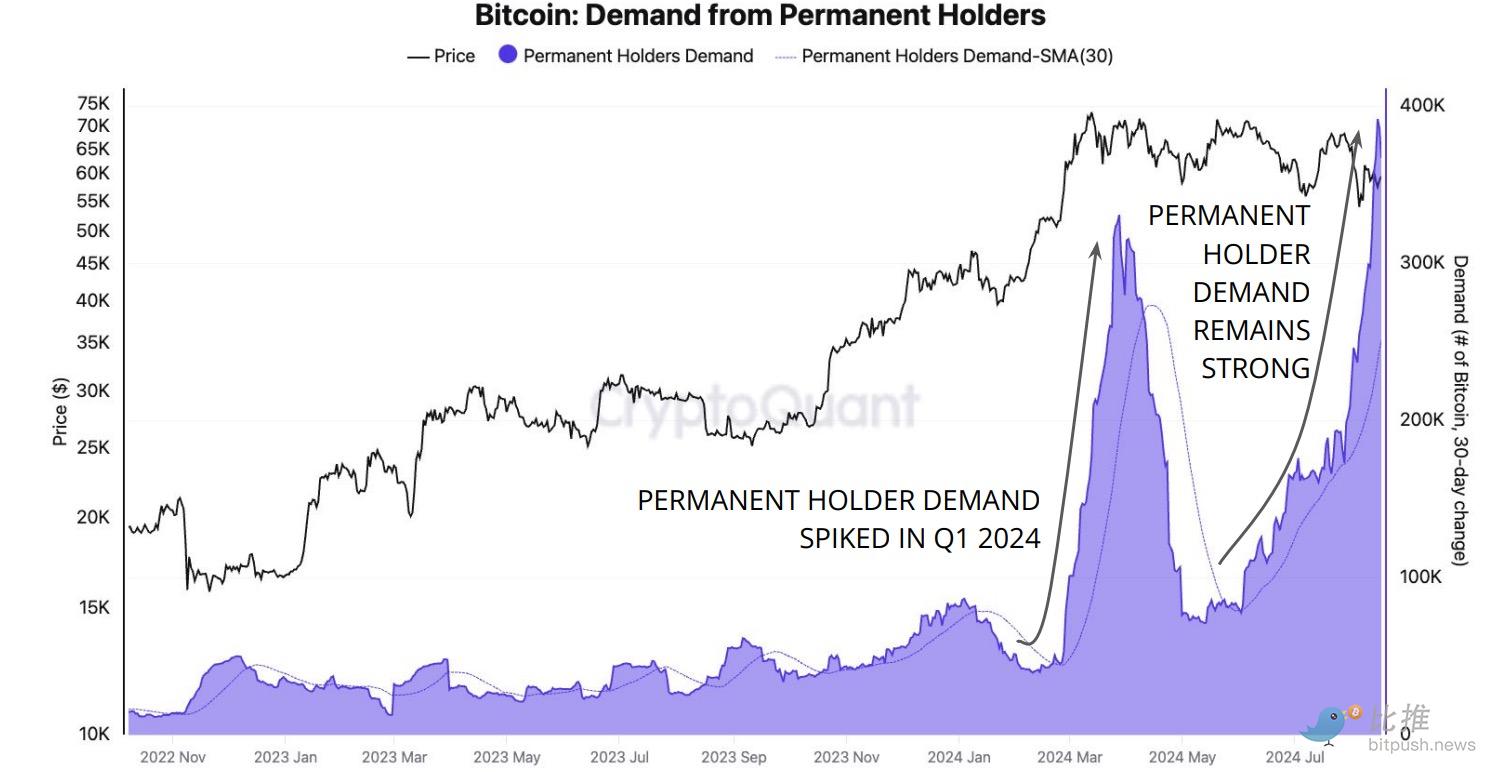
However, one exception to the broader market's 'summer slump' is the so-called “permanent holders”—entities that only buy and never sell BTC.
The report added: "Despite an overall slowdown in Bitcoin demand growth, permanent holders continue to accumulate BTC at unprecedented levels. The total balance held by these entities is growing at a record pace of 391,000 BTC per month. Their rate of accumulation is even faster than during Q1 2024 when Bitcoin prices exceeded $70,000."
Analysts: Market Is Gradually Recovering
Analysts at Bitfinex believe the market is gradually warming up. After significant outflows in early August, spot Bitcoin ETFs recorded a net inflow of $32.4 million last week—unlike Ethereum ETFs—indicating sustained interest from passive investors. Bitcoin has repeatedly broken above the ~$60,000 range low.
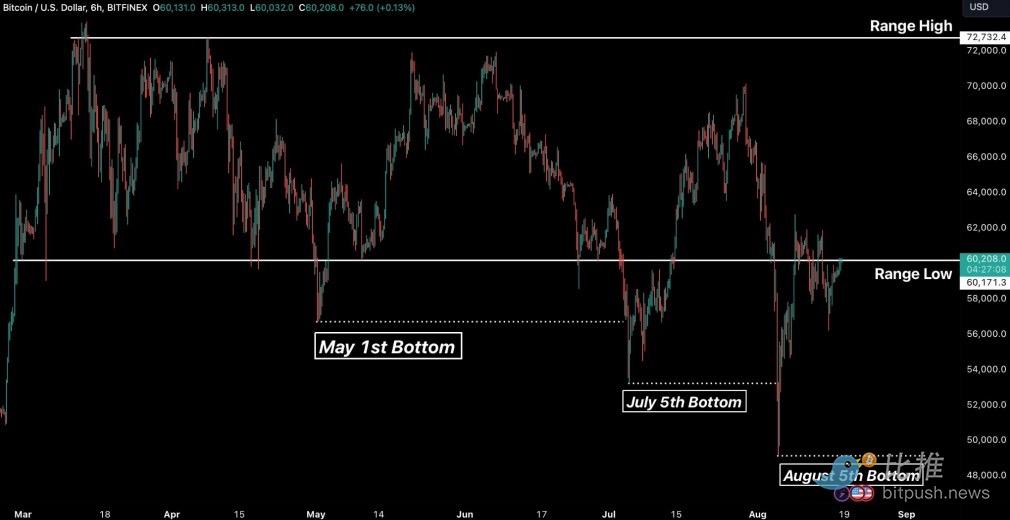
They observed: "There has indeed been some buying the dip and profit-taking activity in ETFs over the past week, with investors stepping in below $50,000 and then taking partial profits. This contrasts sharply with Ethereum ETFs, which continued to see net outflows this week despite ETH’s price decline being much steeper than BTC’s."
Inflows into BlackRock’s iShares Bitcoin ETF (IBIT) and Fidelity’s Bitcoin Fund (FBTC) have helped prevent further downside losses. Bitfinex refers to this as “passive” demand—a term they use to describe systematic ETF inflows made irrespective of price.
Analysts said: "The divergence in investment flows between BTC and ETH ETFs reflects broader market confidence in Bitcoin as an asset, despite challenges such as potential supply overhangs from large holders like the U.S. government and Mt. Gox. The contrasting fates of BTC and ETH ETFs highlight different market dynamics. While Bitcoin ETFs have successfully attracted consistent inflows, Ethereum ETFs have struggled to maintain momentum. The exhaustion of Grayscale’s ETH supply could be a turning point for Ethereum ETFs, but the next few months will be critical in determining whether demand can support this market."
The report adds: "It is also worth noting that BTC is currently attempting to break above the lower bound of a four-month trading range. As such, we are at a resistance level, and no explosive moves should be expected in the near term due to the lack of any immediate catalysts. Summer lethargy and thin liquidity remain widespread."
Bitfinex noted that by examining Bitcoin’s historical performance post-halving, the chart below “suggests that despite recent pullbacks, BTC is still following a trajectory similar to previous bull and halving cycles.”
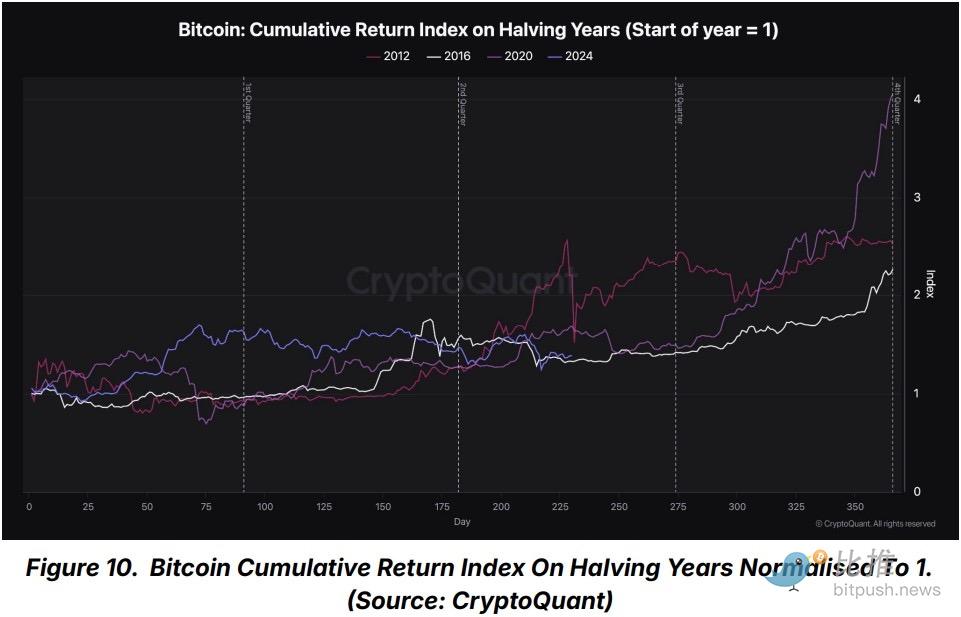
They stated: "These patterns indicate that halving cycles typically experience strong rebounds even after short-term declines. As of day 230 of the 2024 halving year (August 17), the year-to-date standardized return stood at 1.38 (38%)."
They pointed out: "At the same stage following the 2016 and 2020 halvings, our return ratios reached 1.32 and 1.68 respectively. Therefore, the current correction is not unusual. Although the recent drop below $50,000 may represent the traditional final shakeout after a halving, we remain on track to follow prior bull market trajectories, potentially undergoing one final adjustment in Q3, aligning with the path seen after the 2020 halving."
Bitfinex analysts concluded: "Thin summer liquidity is expected to persist. The broader macroeconomic environment, including potential Federal Reserve rate cuts, will also play a crucial role in shaping future BTC and ETH ETF flows. Investors should closely monitor these developments, as they may offer further insights into market direction."
Join TechFlow official community to stay tuned
Telegram:https://t.me/TechFlowDaily
X (Twitter):https://x.com/TechFlowPost
X (Twitter) EN:https://x.com/BlockFlow_News
 比推 BitpushNews









