Should stablecoins be anonymous? What does the Swiss Financial Market Supervisory Authority's stablecoin guidance reveal?
TechFlow Selected TechFlow Selected
Should stablecoins be anonymous? What does the Swiss Financial Market Supervisory Authority's stablecoin guidance reveal?
Stablecoins are the digital version of Swiss bearer deposit accounts.
 Navigating Web3 tides with focused insights
Author: JP Koning
Translation: Luffy, Foresight News
Before Switzerland introduced anti-money laundering laws, anyone could walk into a Swiss bank and open an account without showing any form of identification. The bank would then issue a bearer savings passbook, known as an inhabersparheften. At the time, banks considered possession of the passbook as proof of ownership of the underlying funds in the account. Account holders could keep the passbook or, if they wished, transfer it to someone else without notifying the bank, and that person could withdraw the funds from the account.
In essence, Swiss banks were issuing their own form of cash.
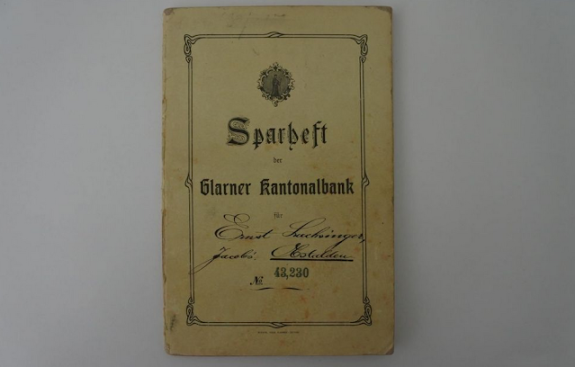
Over time, as society became more aware of money laundering, the use of Swiss bearer passbooks came under legal restrictions. In 1977, banks were required for the first time to verify the identity of customers opening accounts. Additionally, anyone wishing to withdraw more than 25,000 Swiss francs had to be identified by the bank. However, the passbooks still retained a significant degree of anonymity. Between account opening and withdrawal, the passbook could continue circulating among individuals without any identity checks.
In 2003, the Swiss government banned the issuance of new bearer passbooks, and existing ones were canceled when presented at a bank’s physical counter. Bearer passbooks could still circulate anonymously like cash, but due to ongoing cancellations, by 2019 they represented just 0.002% of total assets held in Swiss bank accounts.
Thus, Swiss bearer passbooks came to an end. But in the meantime, a similar financial instrument has emerged: stablecoins.
To obtain stablecoins, you deposit funds with an issuer who verifies your identity at the time of deposit. After that, stablecoins can circulate freely without any further checks. You can send them to a friend, who can forward them to a relative overseas, who might then pass them on to a drug dealer—none of these subsequent participants need to provide identification to the issuer. Like the Swiss banks that once issued bearer passbooks, stablecoin issuers do not know who they are dealing with down the line.
So why, if Swiss bearer passbooks have long been prohibited, are stablecoins growing rapidly?
This is precisely the point raised last month by Switzerland’s financial regulator, FINMA, which announced it will no longer tolerate anonymous transfers of stablecoins. The new guidance states that the identity of anyone holding a stablecoin must be “fully verified” by the issuing institution. This means not only you, but also your friend, his relative, and even the drug dealer in the transaction chain must provide identification.
To justify this new policy, FINMA invokes the principle of technological neutrality. My understanding of technological neutrality is that simply because a financial product (in this case, a payment instrument) appears on a new medium or substrate (i.e., blockchain), it does not mean it should be exempt from the same rules that apply to equivalent products issued on older substrates (such as bank passbooks). Same function, same regulation.
Until now, stablecoin issuers like Tether have tried to resist these identification requirements by arguing that only the primary holder of a stablecoin—the one who initially deposited funds to receive the tokens—is their customer, and thus they owe due diligence obligations only to that initial party. Secondary, tertiary, and subsequent holders are not considered “customers,” so issuers claim they don’t need to know who they are.
But FINMA does not accept this argument—and rightly so. FINMA asserts that all holders (not just primary ones) have a “permanent business relationship” with the issuer and therefore must be identified. You can certainly understand why FINMA wants to address this issue. If traditional Swiss banks see stablecoins receiving special treatment, they may all rush to adopt this new form of base money.
At first glance, FINMA’s guidance may not seem like a big deal. Currently, only two Swiss franc stablecoins fall under this rule, and both are small in scale. Bitcoin Suisse’s XCHF has less than 1 million Swiss francs in circulation, and Centi’s CCHF is roughly the same size.
However, as a key player in the global financial system, FINMA is likely to be followed by other regulators. More importantly, FINMA is a member of the Financial Action Task Force (FATF), a cooperative body representing anti-money laundering agencies from 38 major countries. FATF promotes global AML standards by blacklisting countries that fail to adopt them. If FINMA’s stablecoin policy signals a new approach being adopted by FATF, widespread implementation can be expected.
What surprises me is that it took a major global regulator so long to issue a concrete ruling on stablecoin anonymity. It’s about time. Standard anti-money laundering practices require financial institutions to verify who is using their platforms, and stablecoin issuers should not be allowed to ride free.
Join TechFlow official community to stay tuned
Telegram:https://t.me/TechFlowDaily
X (Twitter):https://x.com/TechFlowPost
X (Twitter) EN:https://x.com/BlockFlow_News
 @jp_koning