








An Economist's Perspective: Is Trump's Bitcoin Strategy Feasible or Just an Election Tactic?
TechFlow Selected TechFlow Selected
An Economist's Perspective: Is Trump's Bitcoin Strategy Feasible or Just an Election Tactic?
Should the majority of citizens pay for the minority? The government cannot make investment trust decisions on behalf of citizens.
 Navigating Web3 tides with focused insights
By Chloe, PANews
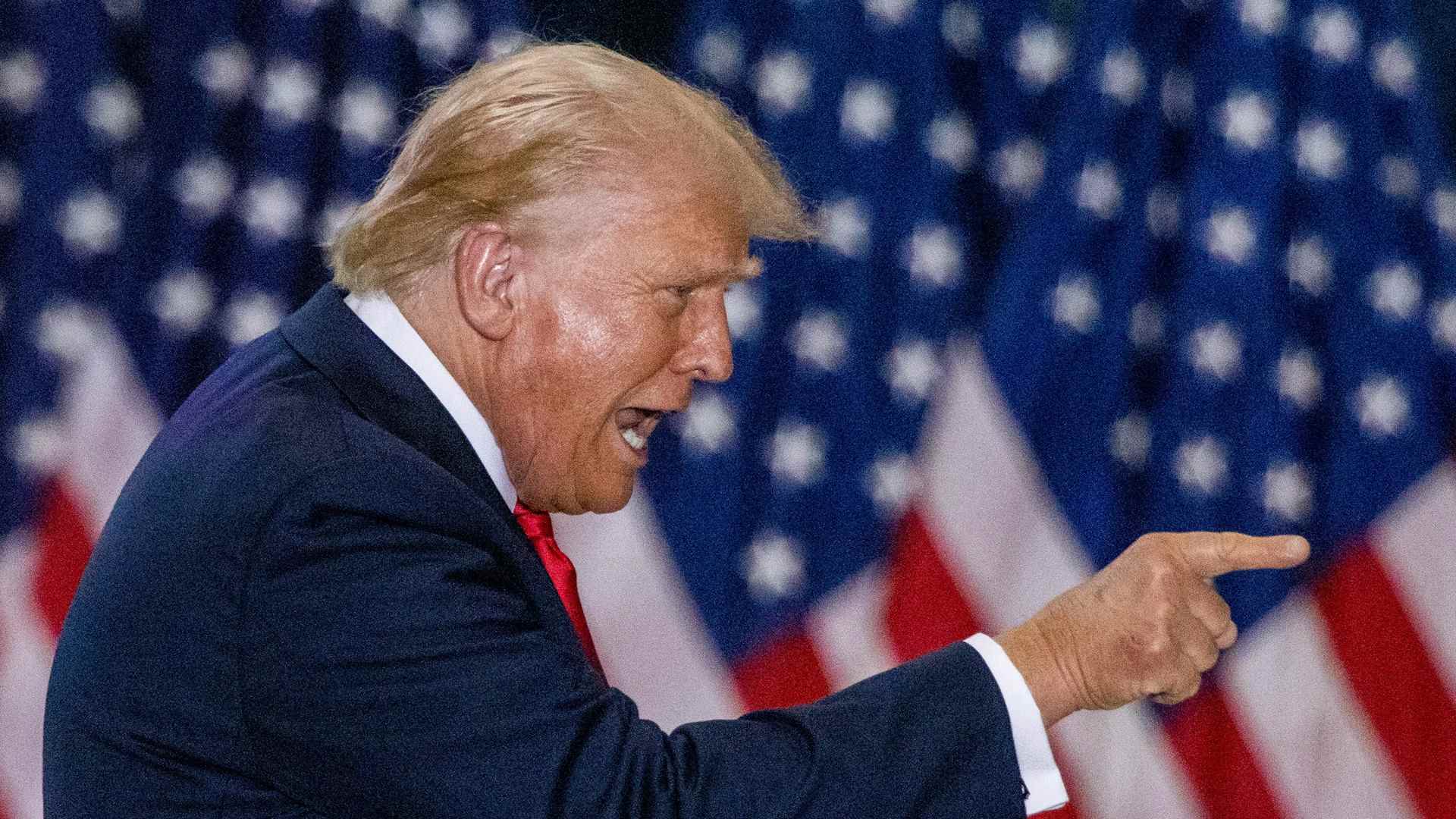
Donald Trump delivered a speech at the 2024 Bitcoin Conference, declaring that the United States should establish a "national Bitcoin reserve" to counter inflation—prompting thunderous cheers from the audience. "For too long, the U.S. government has violated a core principle of every Bitcoin holder: never sell your Bitcoin," he said. "The Republican policy is to retain 100% of all Bitcoin currently held or acquired by the U.S. government."
In a recent interview with livestreamer and internet personality Adin Ross, Trump also warned the current administration against selling any of America’s Bitcoin holdings. He argued that if the U.S. fails to innovate in digital assets, other nations will surpass it—and pointed out that America's key geopolitical rivals are already making significant progress in cryptocurrency and artificial intelligence.
However, economists interviewed by U.S. media outlet Wired argue that Trump’s plan to stockpile Bitcoin offers little real economic benefit. "I don’t see any tangible economic upside—except maybe motivating hardcore Bitcoin fans to vote for Trump," said James Angel, a financial markets economist at Georgetown University.
Trump’s Bitcoin Reserve Proposal to Pay Off U.S. Debt Rests on Two Key Assumptions
Trump praised the Bitcoin industry extensively during his conversation with Adin Ross. Meanwhile, Senator Cynthia Lummis, a fellow Republican, unveiled a legislative draft called the “2024 Bitcoin Act” on July 31, proposing a Bitcoin purchase program under which the U.S. could buy up to 200,000 BTC annually for five years—totaling one million BTC.
These Bitcoins would be held by the U.S. government for at least 20 years and could only be used to repay national debt. After that period, no more than 10% of the holdings could be sold within any two-year window.
According to financial markets economist James Angel, Trump’s argument that investing in Bitcoin can offset inflation-driven declines in purchasing power relies on two uncertain assumptions: first, that Bitcoin’s price will rise; second, that the U.S. government can successfully liquidate its Bitcoin holdings into dollars without crashing the market.
"When the government buys Bitcoin, it pushes prices up—making it look like they’ve made a huge profit. But once they actually start selling to cash out, they’ll push prices back down," Angel explained. While Trump initially proposed halting sales of existing government-held Bitcoin, he vaguely promised over time to increase the nation’s Bitcoin holdings.
If Trump expands the Bitcoin reserve, he must identify new funding sources to acquire additional Bitcoin. Yet readily available options—such as raising taxes, increasing debt, or printing more dollars—are inconsistent with goals of reducing inflation and national debt, not to mention contradicting Trump’s own tax-cut promises.
Cynthia Lummis’ “2024 Bitcoin Act” draft notes that the U.S. Treasury holds substantial gold reserves, valued at historical cost rather than current market prices—possibly based on a statutory rate of $42.22 per ounce, far below today’s market value. Updating the valuation of these gold certificates to reflect current prices could significantly boost the Federal Reserve’s balance sheet. For instance, revaluing gold from $42.22 to approximately $2,000 per ounce would add trillions of dollars in asset value. Lummis suggests using this newly recognized “paper” value as a funding source to purchase Bitcoin.
"Money has to come from somewhere," Angel emphasized.
Even if Trump limits purchases to Bitcoin obtained through law enforcement seizures, his administration must still consider the opportunity cost of holding Bitcoin. Unlike bonds or other income-generating assets, Bitcoin produces no yield, meaning the cost of holding it is high.
George Selgin of the Cato Institute, a libertarian think tank, argues that the central question is what benefit the U.S. government gains from holding Bitcoin. If the government chooses not to sell seized Bitcoin, those assets remain illiquid and generate no return. The proceeds from such sales could otherwise be used for various public purposes—reducing federal liabilities or funding government programs, for example.
Will the Majority Subsidize the Minority? Governments Shouldn’t Make Investment Bets on Behalf of Citizens
George Selgin supports Bitcoin, but opposes the idea of governments speculating in it on behalf of citizens. "Governments are rarely savvy investors," he said. "It makes no sense for a government to act like an investment trust or mutual fund managing portfolios for its people."
Michael Green of asset management firm Simplify noted that while the ambition to build a Bitcoin reserve is welcomed by many Bitcoin holders and industry executives, it may come at a cost to the broader population—especially if the government expands its position. "The only way the U.S. government can buy Bitcoin is by taking it from existing holders," Green explained. But if the government uses tax revenue or bond issuance to fund purchases, it effectively forces taxpayers to subsidize a tiny minority of individuals.
"It’s like the U.S. government promising to buy California real estate at inflated prices—unfairly benefiting homeowners there. There’s really no difference here," Green said.
Moreover, the larger the government’s Bitcoin position becomes, the more dependent it grows on mining companies that maintain the network. In the near future, the mining industry could evolve into another special interest group. Over-centralization risks creating a scenario where, if the sector faces crisis, the U.S. government would feel compelled to step in with a bailout.
Neither Trump nor Lummis has responded to criticism of the Bitcoin reserve proposal. Angel believes that even if Trump wins the election, establishing a strategic Bitcoin reserve remains unlikely. "Trump is a master provocateur—he appeals to emotions and rallies crowds. This is purely electoral theater. I suspect this plan will end up like Trump Airlines, Trump Casinos, or Trump University—just another bubble that bursts."
Bitcoin Supporters Know Trump Is Courting Their Vote
Ultimately, participants in the Bitcoin community are well aware that Trump is seeking their support. Jameson Lopp, an early Bitcoin advocate and founder of cryptocurrency custody firm Casa, said that Trump elevating Bitcoin to a major campaign issue marks a "historic" shift in political discourse.
Still, he added, "Trump is clearly pandering to us, and his tone comes across as condescending." Lopp also highlighted the stark reversal in Trump’s stance. "Although Trump once dismissed Bitcoin as a 'scam,' he now clearly recognizes its political value. By doing so, he stands to win over a sizable voter bloc for whom Bitcoin is a top priority."
As for whether this translates into economically sound policies that truly benefit American citizens—we’ll have to wait until after Trump potentially returns to the White House to find out.
Join TechFlow official community to stay tuned
Telegram:https://t.me/TechFlowDaily
X (Twitter):https://x.com/TechFlowPost
X (Twitter) EN:https://x.com/BlockFlow_News
 PANews









