








Menlo Gate has allocated 59,000 BTC to creditors, with 45% held by long-term investors
TechFlow Selected TechFlow Selected
Menlo Gate has allocated 59,000 BTC to creditors, with 45% held by long-term investors
Mt. Gox distribution begins, with creditors showing a preference for long-term holding, potentially alleviating selling pressure.
 Navigating Web3 tides with focused insights
Written by: UkuriaOC, CryptoVizArt, Glassnode
Translated by: Mars Finance, MK
After more than a decade of prolonged legal proceedings, the long-awaited distribution of recovered Bitcoin from the infamous Mt. Gox exchange collapse is finally underway for creditors. Psychologically, this marks the final chapter in closing a major market uncertainty that has weighed on the industry since 2013.
Summary
After many years, Mt. Gox creditors have begun receiving Bitcoin recovered from the notorious hack. To date, 59,000 BTC has been distributed to creditors through Kraken and Bitstamp exchanges out of the total 142,000 BTC recovered.
The proportion of Bitcoin held by new investors is gradually decreasing and now stands well below peak market levels, indicating a behavioral shift toward holding.
Long-term holder (LTH) groups face relatively low and declining distribution pressure. Currently, long-term investors hold approximately 45% of network wealth—a share still elevated compared to levels seen at previous macroeconomic cycle peaks.
Mt. Gox Distributions Are Underway
Following over ten years of legal disputes, the long-anticipated distribution of Bitcoin to creditors of the collapsed Mt. Gox exchange is now progressing. This represents a historic milestone for the Bitcoin industry, particularly for patient and determined creditors who fought hard and ultimately chose to receive compensation in BTC rather than fiat currency.
From a psychological standpoint, this step symbolizes the end of a major market uncertainty that has burdened the industry since 2013.
Over 141,686 BTC has been recovered in total, with nearly 59,000 BTC already reallocated to creditors, and an additional 79,600 BTC expected to be distributed soon.
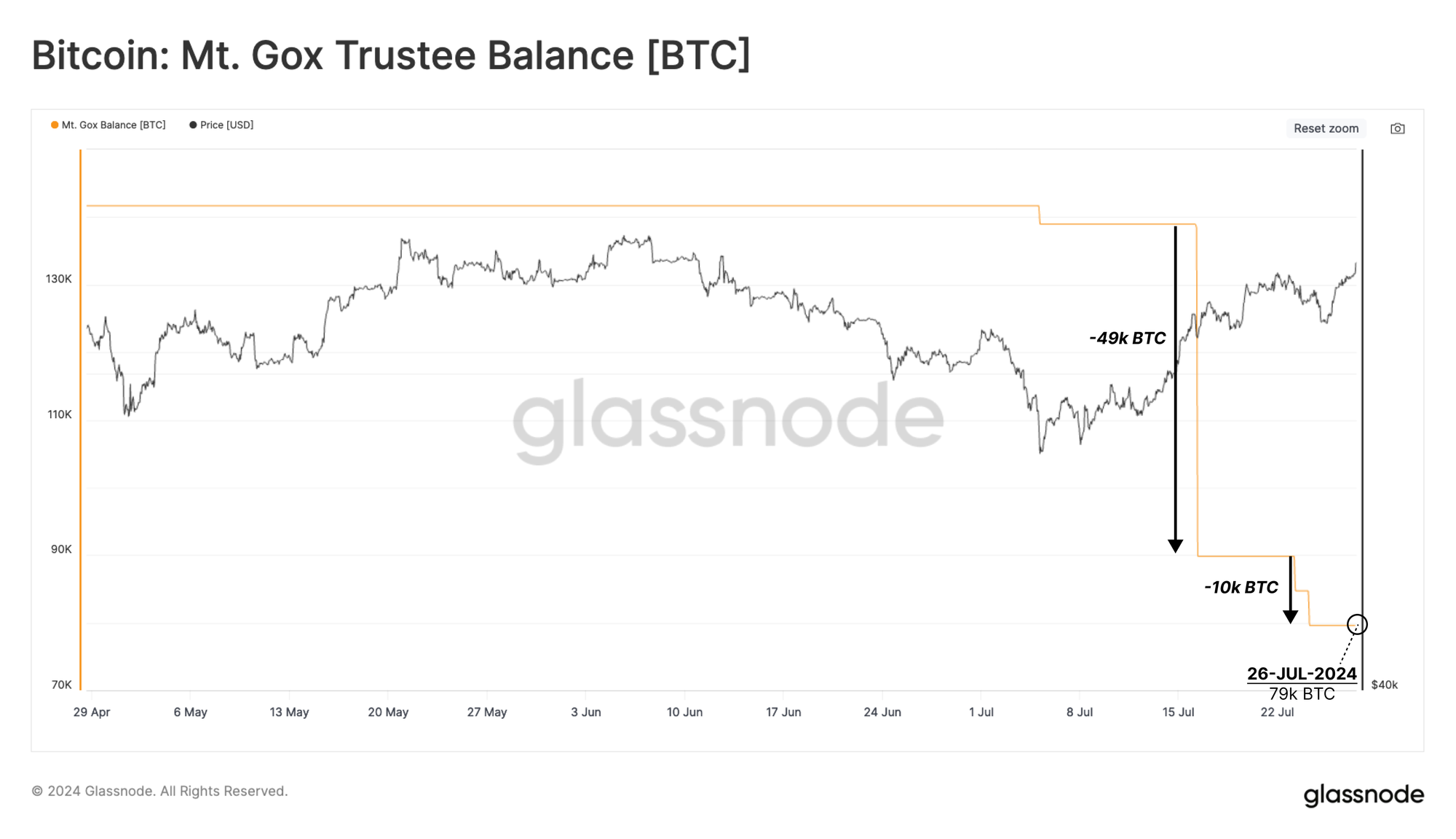
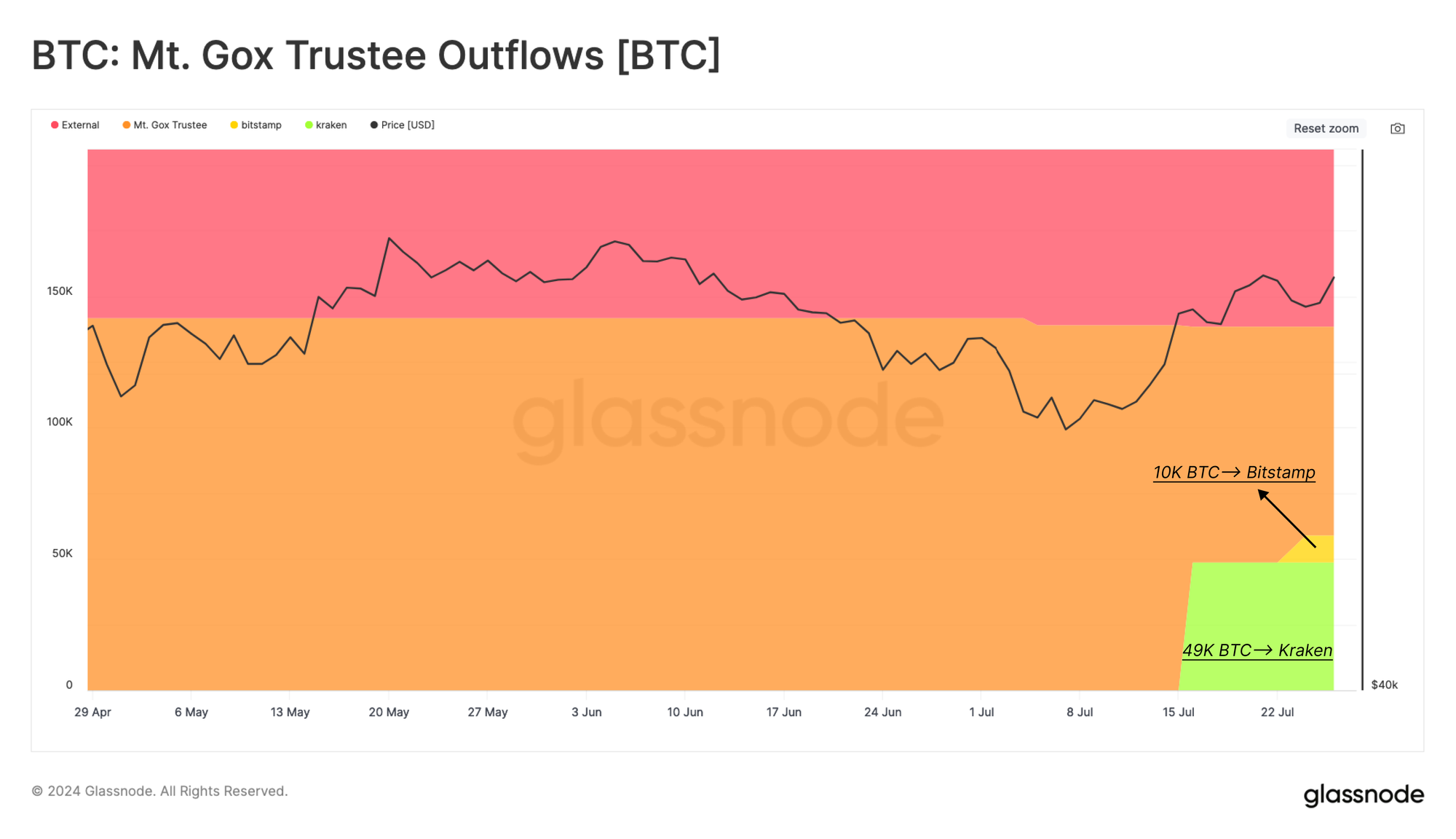
Kraken and Bitstamp have been selected as the exchanges responsible for redistributing creditor funds. Kraken has received 49,000 BTC, while Bitstamp has received the first batch of 10,000 BTC.
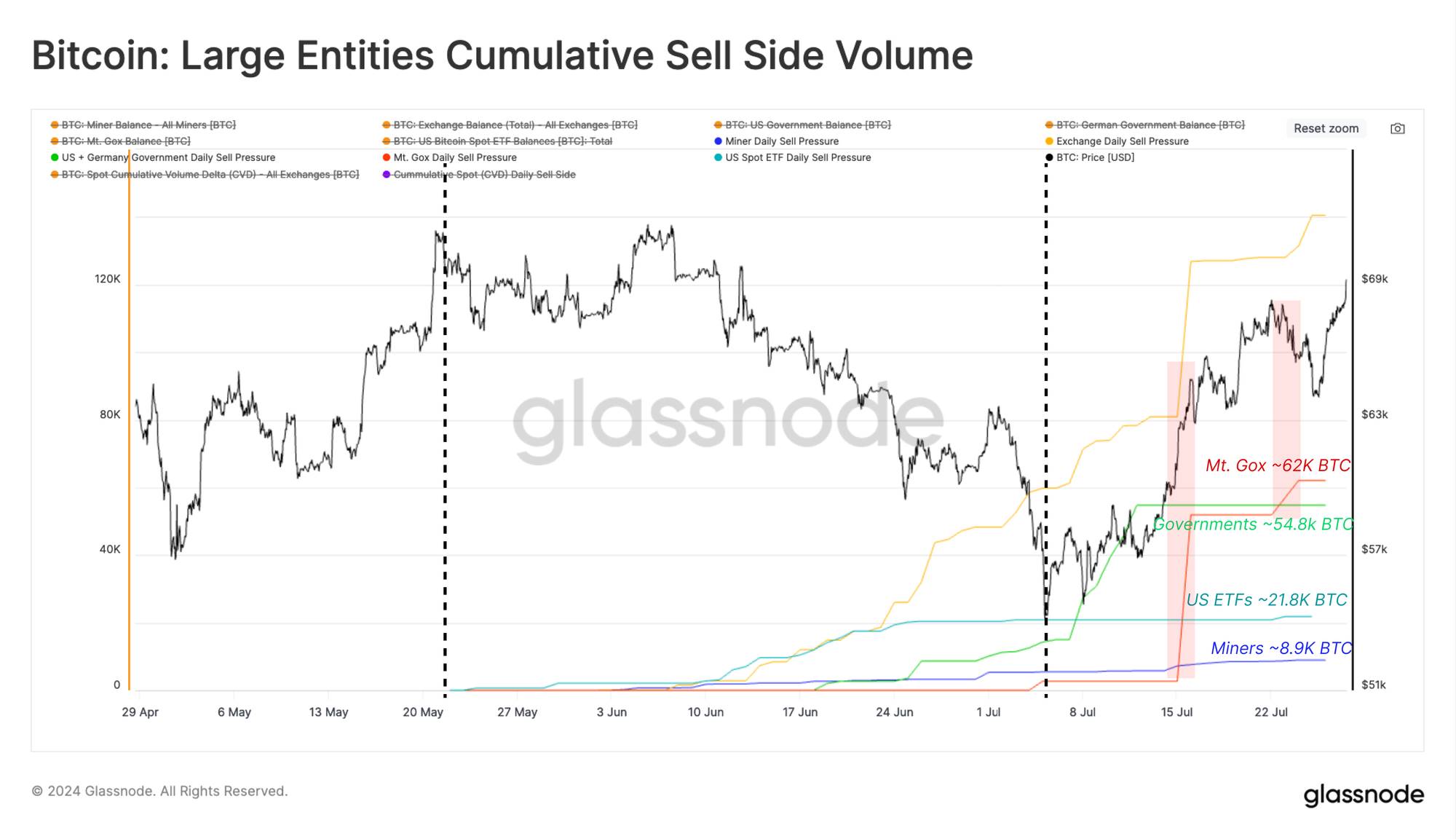
When comparing the scale of Mt. Gox asset distributions to large entity outflows over the past two months, these distributions clearly exceed ETF inflows, miner issuance, and even the German government’s BTC sales.
However, it's important to note that creditors have a long history of recovering funds, which may provide insight into their future behavior:
-
Creditors opted to receive Bitcoin instead of fiat, a choice enabled by new provisions under Japanese bankruptcy law.
-
Multiple entities have competed for creditor claims throughout the decade-long legal process.
-
Given the time elapsed since the Mt. Gox collapse, many creditors who did not sell their claims may still be active participants in the Bitcoin ecosystem.
Therefore, the actual likelihood of these distributed coins being sold on the open market appears relatively low—though this remains somewhat speculative and difficult to assess definitively.
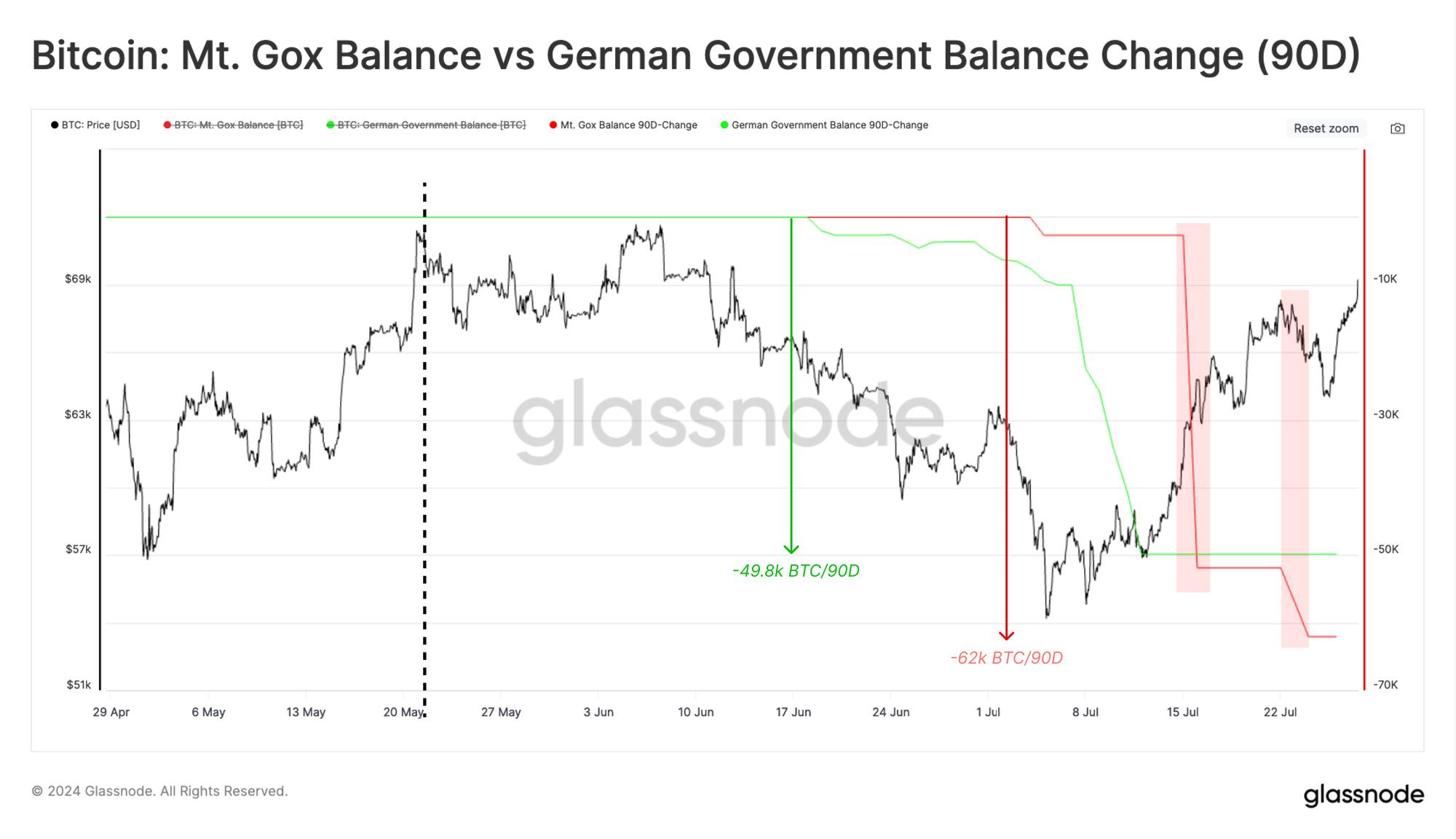
In late June, the German government sold over 48,000 BTC within a month. Despite this large-scale supply, the market absorbed it and subsequently rebounded from $53,000 to above $68,000.
During the Mt. Gox distribution period, Bitcoin prices fluctuated between $68,000 and $66,000, potentially indicating weaker-than-expected market performance or relatively elastic demand conditions.
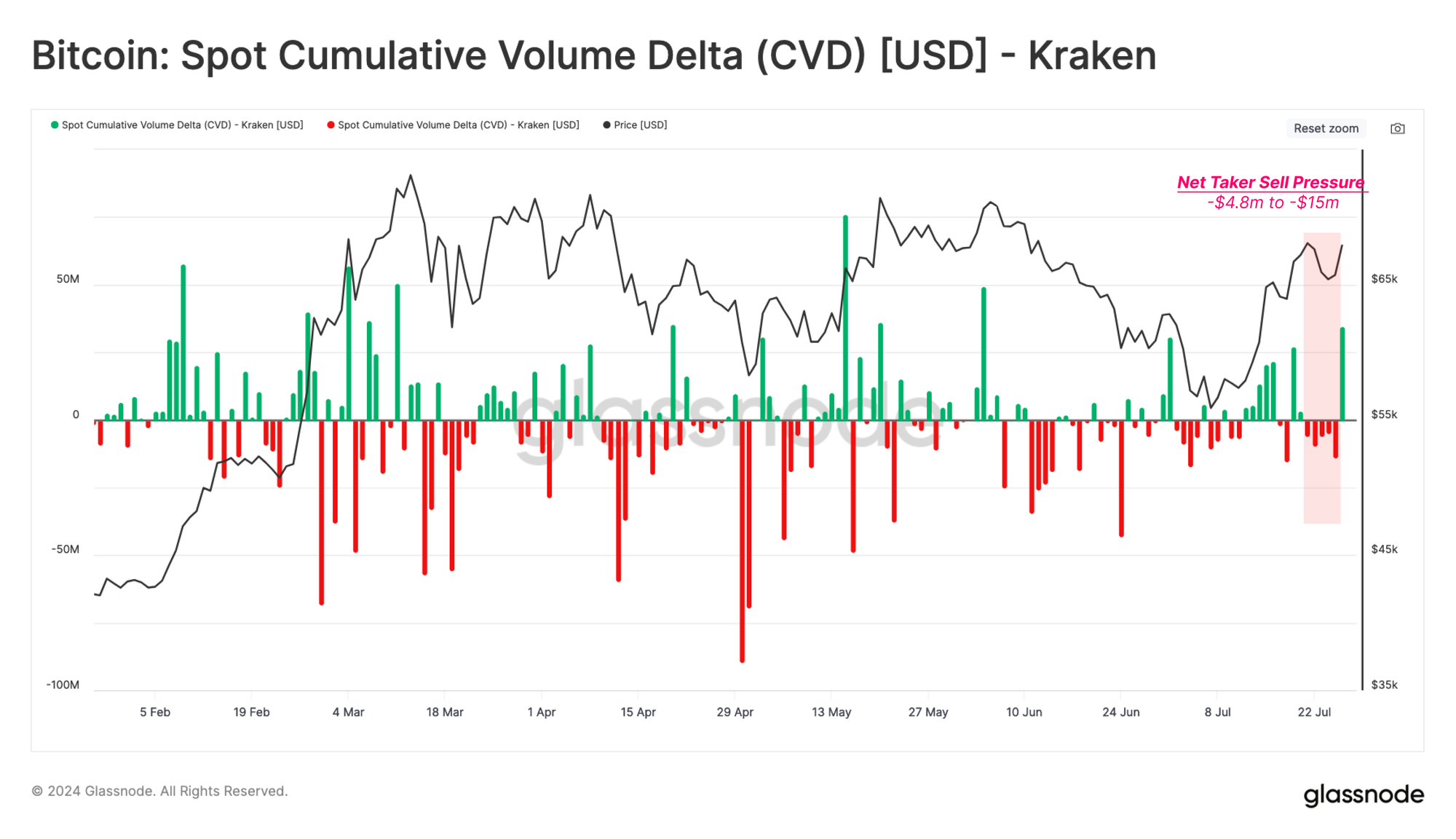
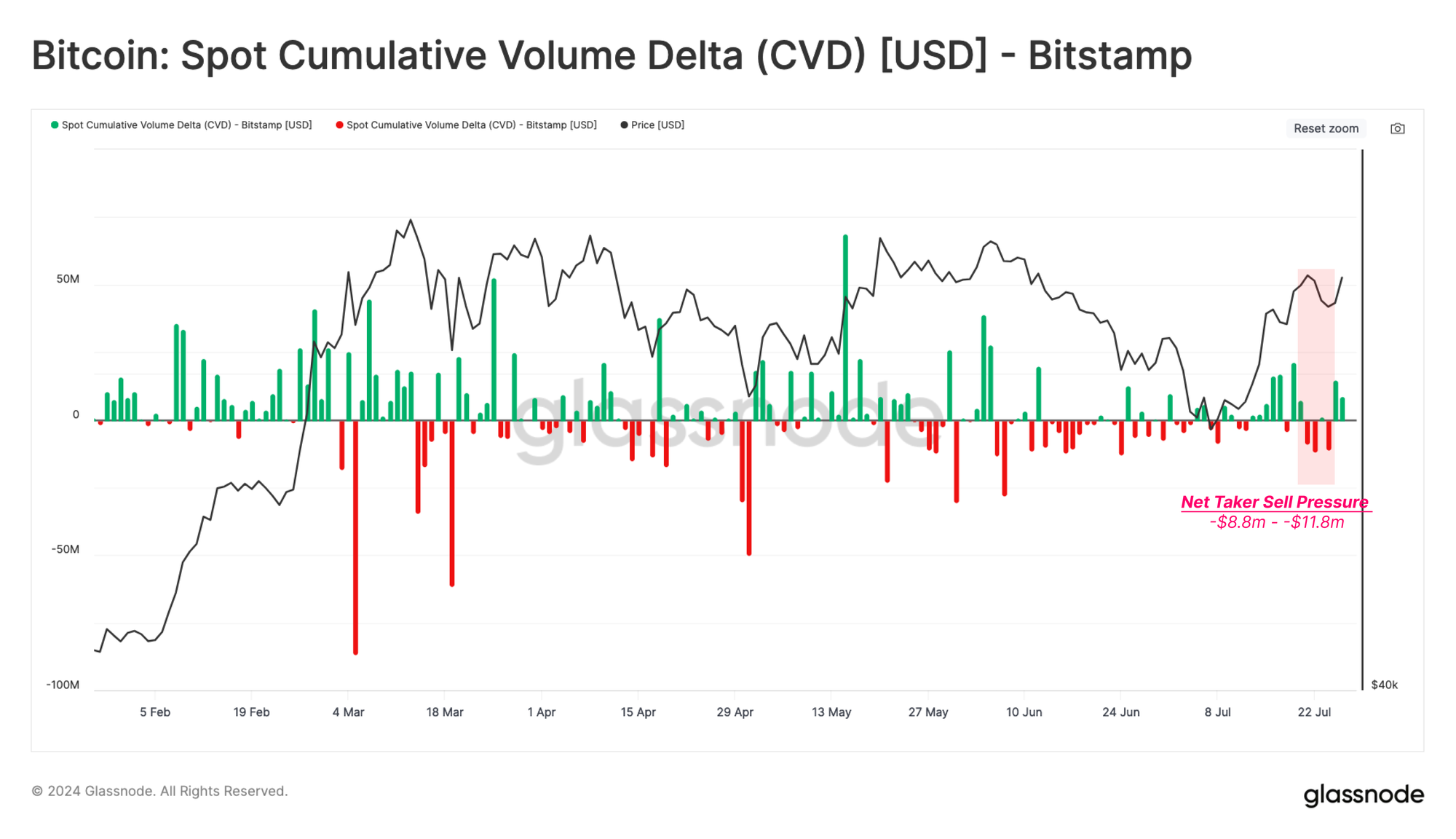
Considering that Kraken and Bitstamp are both destination exchanges for the redistribution, we further examine this using the spot Cumulative Volume Delta (CVD) metric.
The CVD metric measures the net difference between buy and sell volumes (market orders only) on centralized exchanges.
Analyzing Kraken’s CVD data, we observe a slight increase in selling pressure during the distribution phase, though it remains within typical daily ranges.
A similar pattern is observed on Bitstamp, where seller dominance has slightly increased.
This further supports the view that creditors likely adopt a long-term holder mindset. If true, given the substantial price appreciation since 2013, creditors would have strong profit-taking incentives—an aspect worth monitoring.
Holding Strong
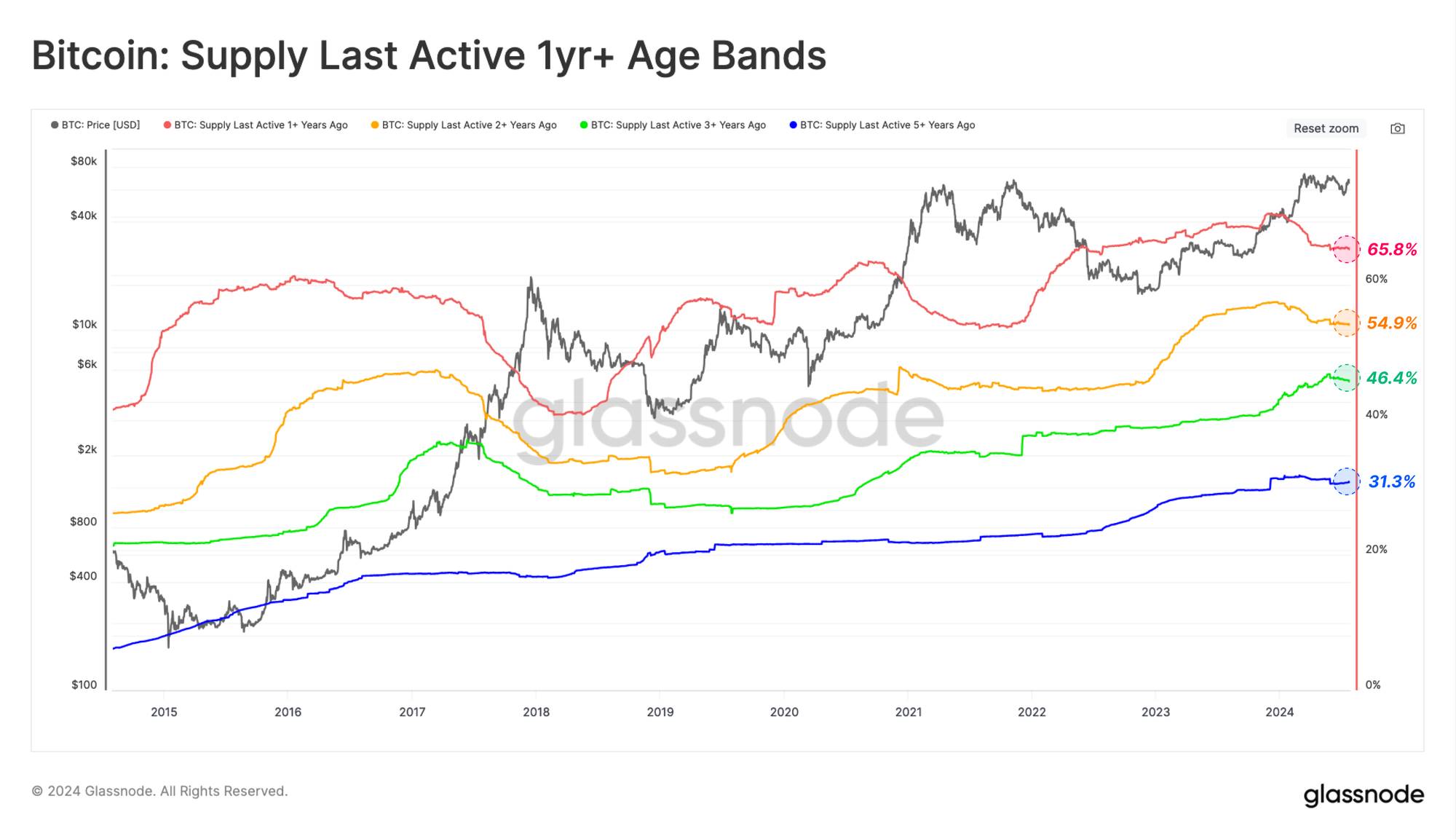
During Bitcoin bull markets, rising prices naturally bring selling pressure as higher valuations incentivize long-term holders to realize profits from part of their holdings. This is clearly visible in the significant declines in the proportions of supply last transacted over one year and two years ago during March and April.
This reflects how long-term investors satisfied new market demand by selling and spending tokens prior to Bitcoin reaching its all-time high (ATH) of $73,000. Recently, the rate of decline in these metrics has slowed, suggesting a resurgence in long-term holding strategies.
-
Supply last transacted over one year ago: 65.8%
-
Supply last transacted over two years ago: 54.9%
-
Supply last transacted over three years ago: 46.4%
-
Supply last transacted over five years ago: 31.3%
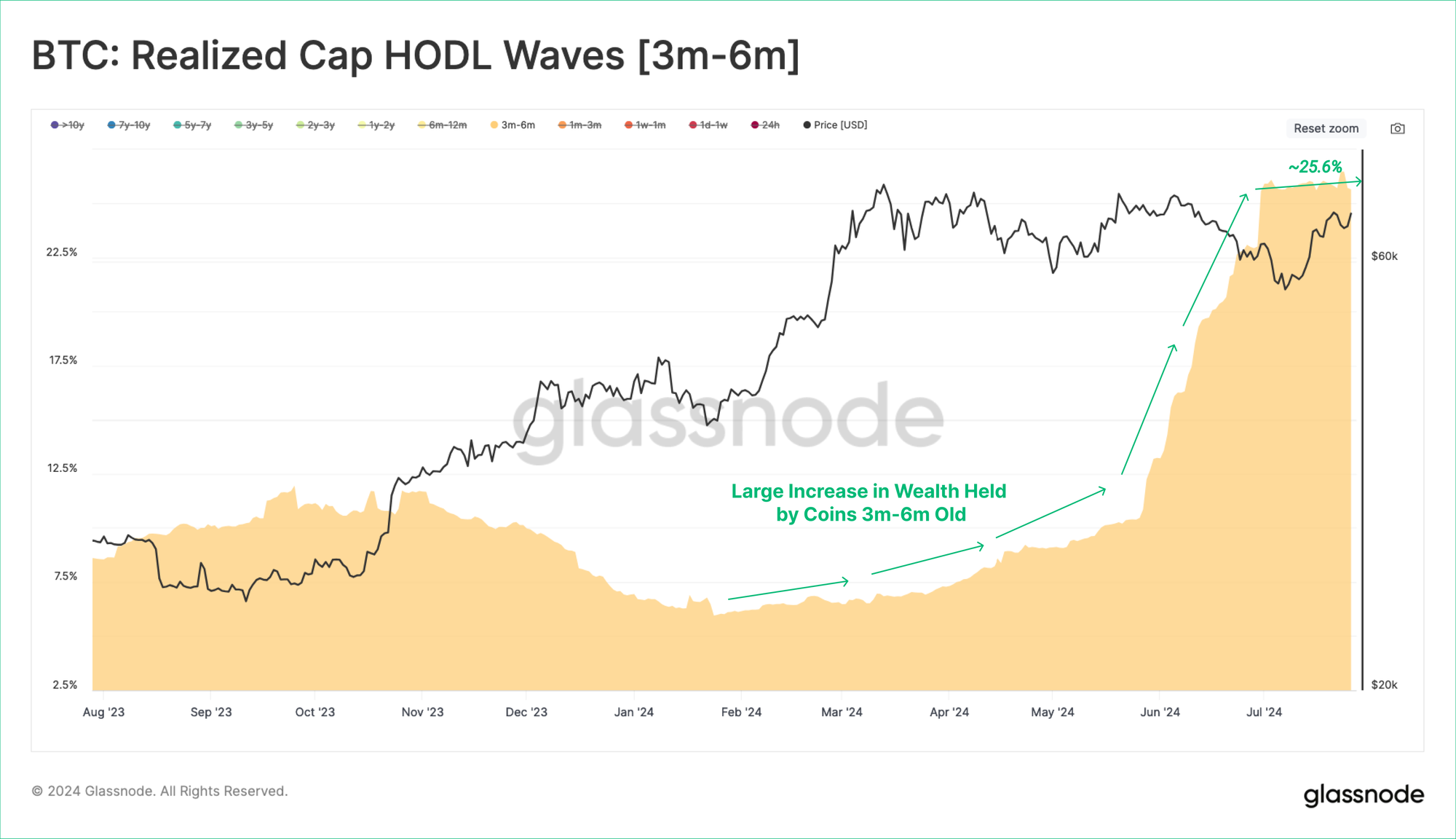
The HODL Wave metric by realized market cap helps distinguish dollar-denominated wealth locked in tokens held for the past three months. This allows us to evaluate waves of demand from new investor inflows.
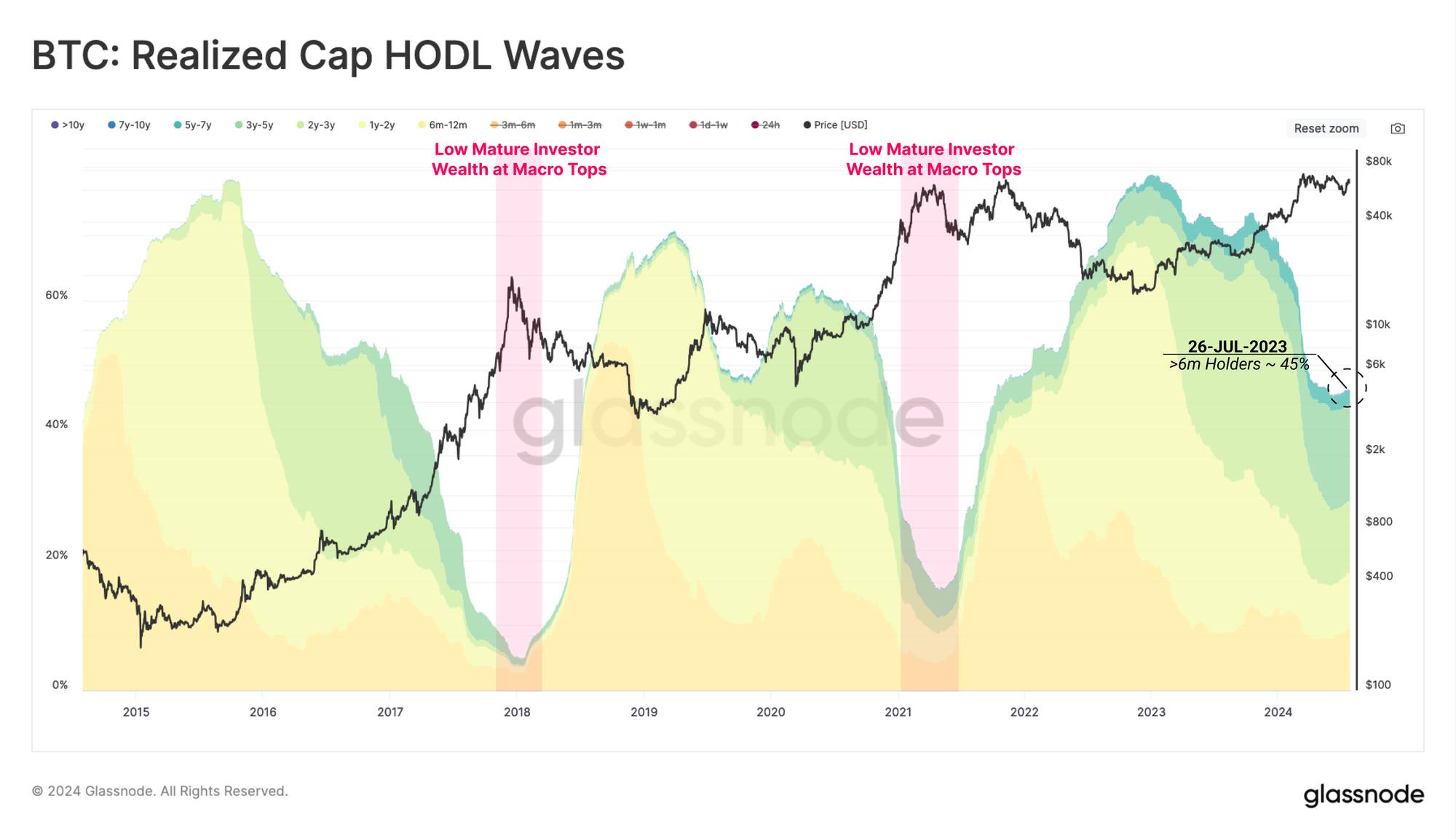
Bull market peaks typically coincide with saturation in wealth held by new buyers, signaling the beginning of large-scale unwinding by long-term holders.
Currently, the proportion of wealth held by new investors is declining and far below levels seen at macro market peaks. This highlights a broad shift in investor behavior toward long-term holding, even as new demand has generally cooled since Bitcoin reached its $73,000 ATH.
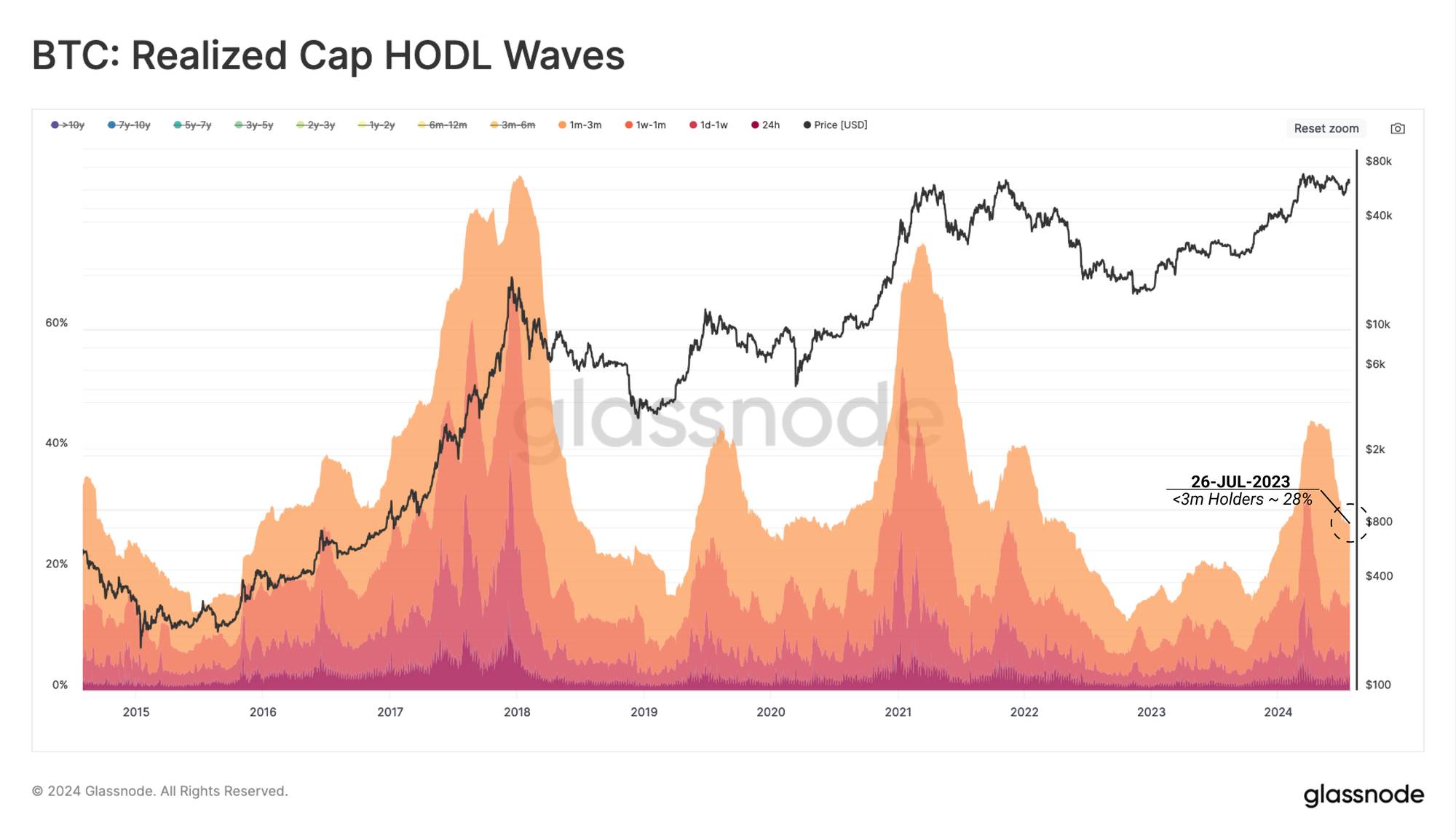
Examining those who have held tokens for 3 to 6 months, we see a relatively significant increase in their share of network wealth. This again suggests that investors active earlier this year are largely choosing to pause trading and enter a more mature holding phase.
This implies that long-term holding is likely becoming the dominant strategy among short-term holders.
Turning to long-term holders, we can analyze investor behavior in supply acquired six months ago.
Currently, long-term investors hold 45% of network wealth—higher than during previous macro cycle peaks. This underscores that LTHs are adopting a HODL strategy, patiently waiting for higher prices before shifting into a more aggressive market posture.
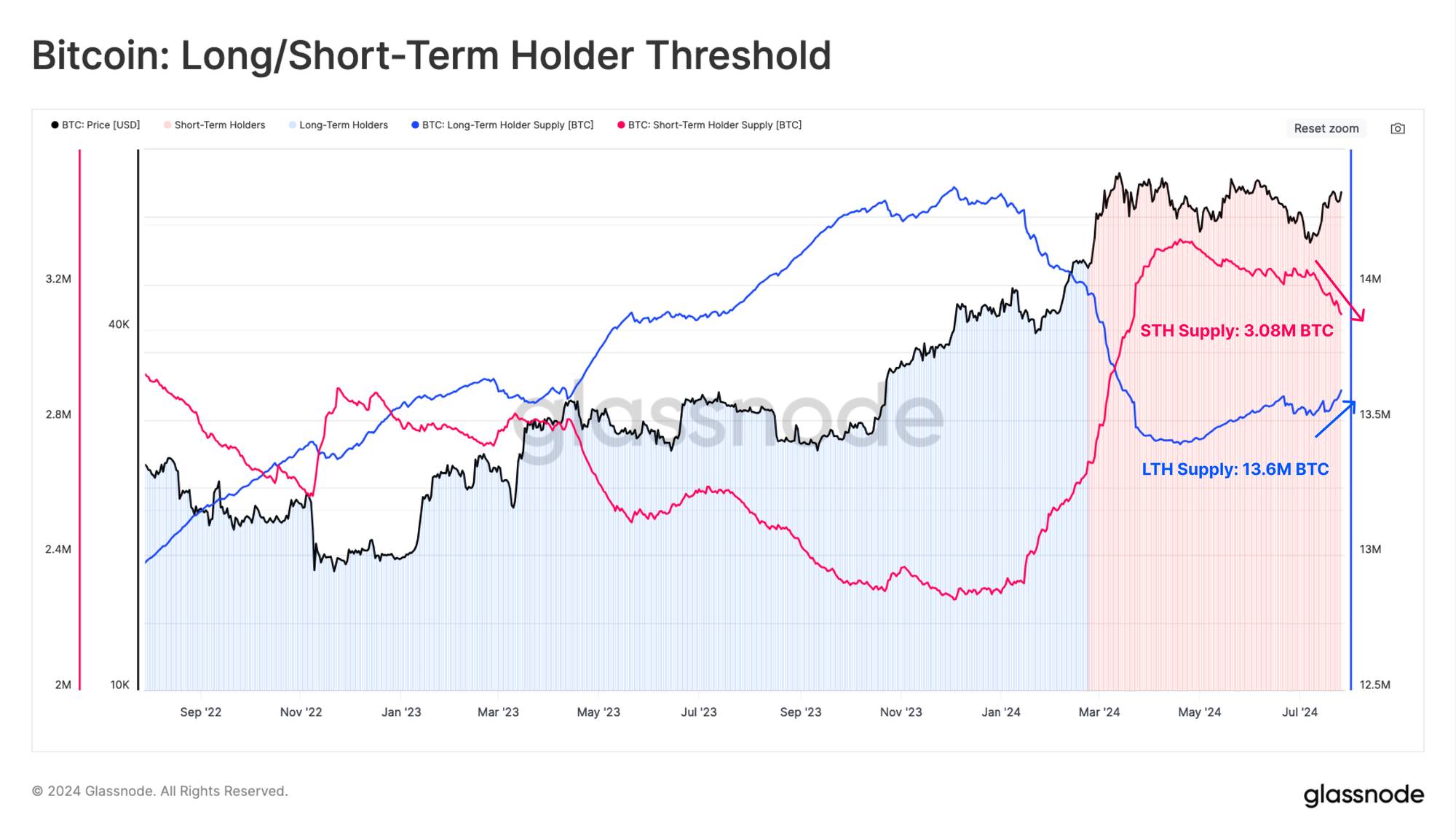
Comparing total holdings between long-term and short-term holders, we observe a new market divergence forming: LTH supply is increasing while STH supply is decreasing.
The chart below illustrates the approximate age boundary between LTH and STH, defined around late February 2024 when prices were near $51,000. Many tokens purchased during the peak of ETF speculation could soon transition into LTH status, potentially accelerating this divergence.
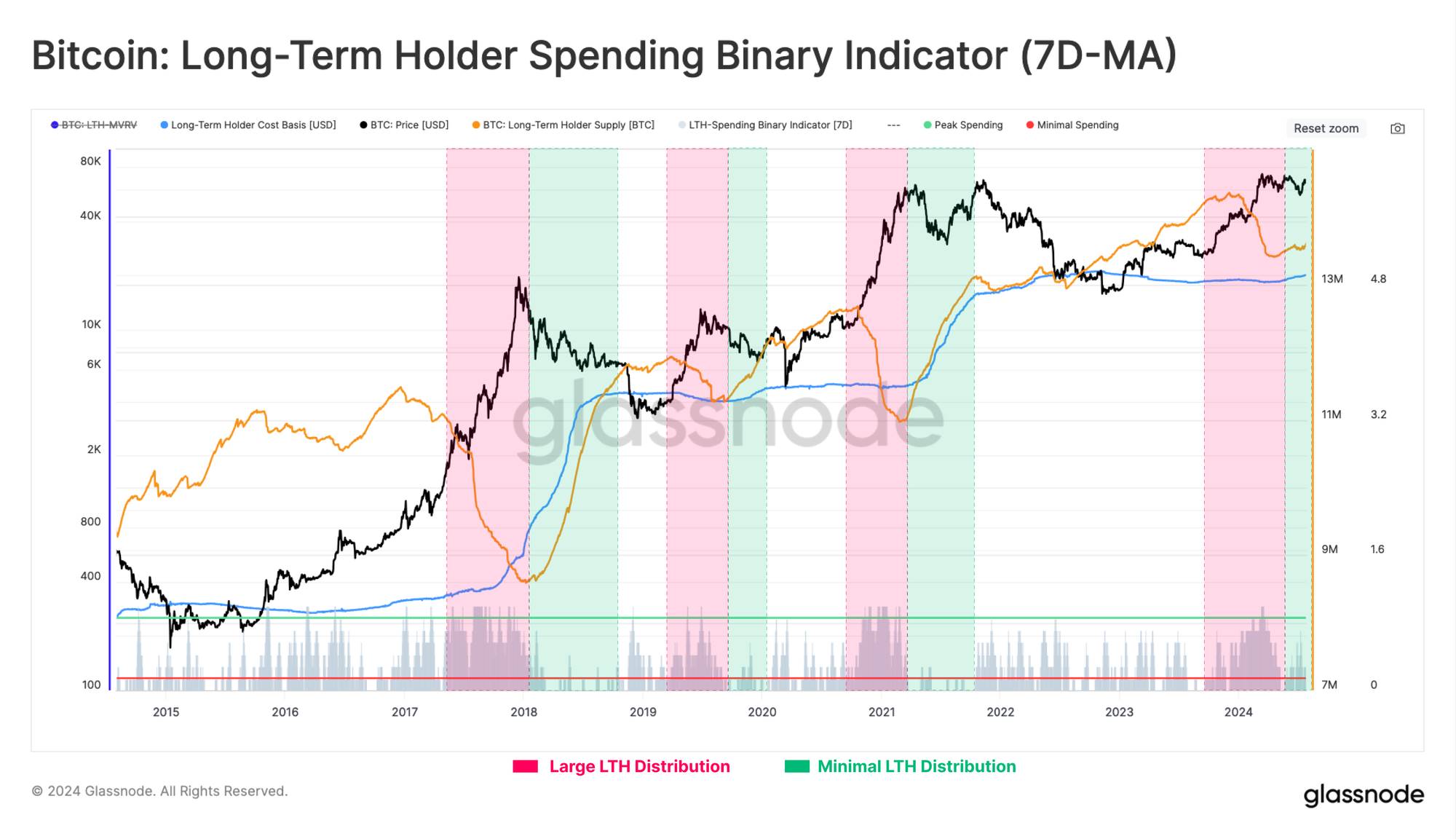
Finally, we can describe and visualize HODLer distribution pressure using the Long-Term Holder (LTH) Binary Spend metric.
Distribution pressure within the LTH cohort remains relatively low and is declining. This further confirms our general view that Bitcoin supply continues to be dominated by long-term, high-conviction investors. For now, HODLing remains the preferred strategy.
Summary and Conclusion
The long-awaited Mt. Gox distribution has finally begun—a major victory for creditors who insisted on receiving BTC instead of fiat. However, given the massive price appreciation over the past decade, recipients may face some selling pressure.
Nonetheless, creditors appear more aligned with HODLers or long-term investors, which may mitigate the extent of selling pressure in the coming weeks.
Meanwhile, long-term holders continue to grow their balance sheets, maintaining a high share of network wealth relative to prior macro peaks. This indicates that seasoned investors remain committed to holding through volatility, and the dominant market mechanism has firmly shifted to HODLing.
Join TechFlow official community to stay tuned
Telegram:https://t.me/TechFlowDaily
X (Twitter):https://x.com/TechFlowPost
X (Twitter) EN:https://x.com/BlockFlow_News
 @glassnode









