








Silicon Valley Turns Right: Peter Thiel, a16z, and the Political Ambitions of Cryptocurrency
TechFlow Selected TechFlow Selected
Silicon Valley Turns Right: Peter Thiel, a16z, and the Political Ambitions of Cryptocurrency
Just as software is eating the world, Silicon Valley's "Kingmakers" are taking over Washington.
 Navigating Web3 tides with focused insights
By Jack, BlockBeats
The liberal paradise is turning right.
Overnight, Silicon Valley’s public opinion began shifting toward the Trump camp. After Harris became the presumptive Democratic presidential nominee, Silicon Valley grew increasingly divided. Open support for Trump was once taboo in Silicon Valley, but now this blue stronghold is动摇 due to frustration with Biden and the Democratic administration.
Over the past two years, tech giants in Silicon Valley have become more overtly involved in politics. Just as “software eats the world,” these kingmakers are reshaping Washington's power structure through capital and influence.
The Great Contrarian and His Hyper-Trumpism
At the 2016 Vanity Fair New Establishment Summit, Amazon CEO Jeff Bezos, when asked about Peter Thiel’s support for Trump, responded: “Remember, Peter Thiel is a contrarian, and contrarians are often wrong.” He added that if it were up to him, he wouldn’t ask Thiel to leave Amazon’s board.
Even among Silicon Valley’s elite, Peter Thiel stands alone. His alliance with Zuckerberg is considered one of the most powerful partnerships in Silicon Valley history, and the influence of the "PayPal Mafia" permeates every corner of the tech industry. Yet in the summer of 2016, Thiel found himself in a "to-be-or-not-to-be" dilemma. By publicly supporting Trump, he alienated much of Silicon Valley. Over the next four years, his relationship with Facebook’s board deteriorated, culminating in his departure from the social network in May 2022.
But this wasn’t the end for Thiel. After leaving Facebook, he pursued a more covert and radical form of power, emerging as a new political force extending his influence from Silicon Valley to Washington. Through a series of efforts, he propelled his protégé J.D. Vance into the political spotlight, becoming a key architect behind Silicon Valley’s quiet rightward shift.
“The Contrarian”
In Silicon Valley, Peter Thiel is better known as “The Contrarian”—he almost always holds views opposite or at least different from the mainstream, seizing high-reward opportunities through such non-consensus thinking. Beyond founding PayPal, he was Facebook’s first outside investor, Silicon Valley’s “Bitcoin godfather,” and an early backer of Tesla, SpaceX, and Airbnb—companies widely misunderstood or undervalued in their early days, yet Thiel was consistently among the first to support them.
Thiel’s success goes far beyond simple contrarianism. A philosophical thread running through his life is his belief that people today no longer hold genuine opinions.
During his time at Stanford, Thiel grew angry and frustrated by what he saw as campus absurdities driven by diversity culture. Together with his friend David O. Sacks, he co-authored a 250-page treatise titled *The Diversity Myth: Multiculturalism and the Politics of Intolerance at Stanford*. In it, Thiel criticized Stanford’s false diversity culture for distracting students from truly important issues and spreading dangerous ideas throughout society. He argued that while campus culture appeared diverse, everyone actually thought the same.
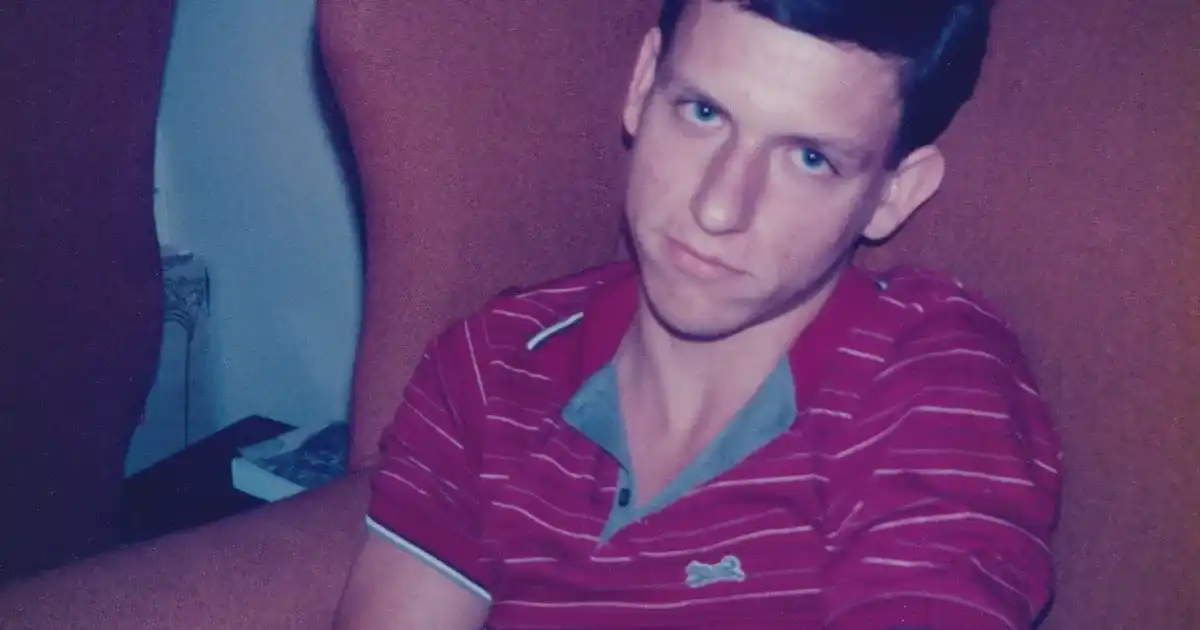
Young Peter Thiel, image source: New York Magazine
For Thiel, this conformity is the root cause of societal bubbles. Thus, whenever people wholeheartedly believe something, one should immediately distance oneself. Guided by this theory, Thiel sold PayPal before the dot-com bubble burst and successfully avoided the 2008 subprime crisis. Now he warns that popular tech trends are overhyped, advising entrepreneurs to think contrarily and avoid buzzwords like big data and cloud computing—because “trendy” usually means many others are doing the same thing.
In venture capital, Thiel rejects the lean startup philosophy of “move fast and validate ideas,” instead advocating long-term foresight to predict the future, thereby avoiding endless trial and error. He claims 75% of the value generated by companies in Founder’s Fund will come from cash flows ten years out.
In 2016, Peter Thiel spotted another rare contrarian opportunity.
For years, Thiel had served as a bridge between Silicon Valley and conservatives. At the time, left-leaning liberals still dominated Silicon Valley, with most tech employees supporting and donating to Democrats. Thiel noticed that many in Silicon Valley felt deeply offended by Trump’s MAGA slogan, interpreting “Make America Great Again” as a denial of Silicon Valley’s contributions to American progress. What intrigued Thiel, however, was precisely this pessimism.
Thiel has long favored more pessimistic presidential candidates. He dislikes, even scorns, the optimism of traditional politicians, seeing them as painting America as a shining city on a hill, akin to Reagan. “If you’re too optimistic, it only means you’re detached from reality,” he believes. Thiel thinks the era of great men achieving greatness in government is over. Today’s federal institutions are a “geriatric center-left regime,” bound by rules and stifling innovation.
In contrast, Trump’s America is a fractured landscape. To Thiel, MAGA is the most pessimistic campaign slogan in a century because it acknowledges that America is no longer great—a shocking admission for a presidential candidate. While Washington insiders shunned this political outsider, Thiel donated $1.25 million to Trump and spoke in his support at the 2016 Republican National Convention.
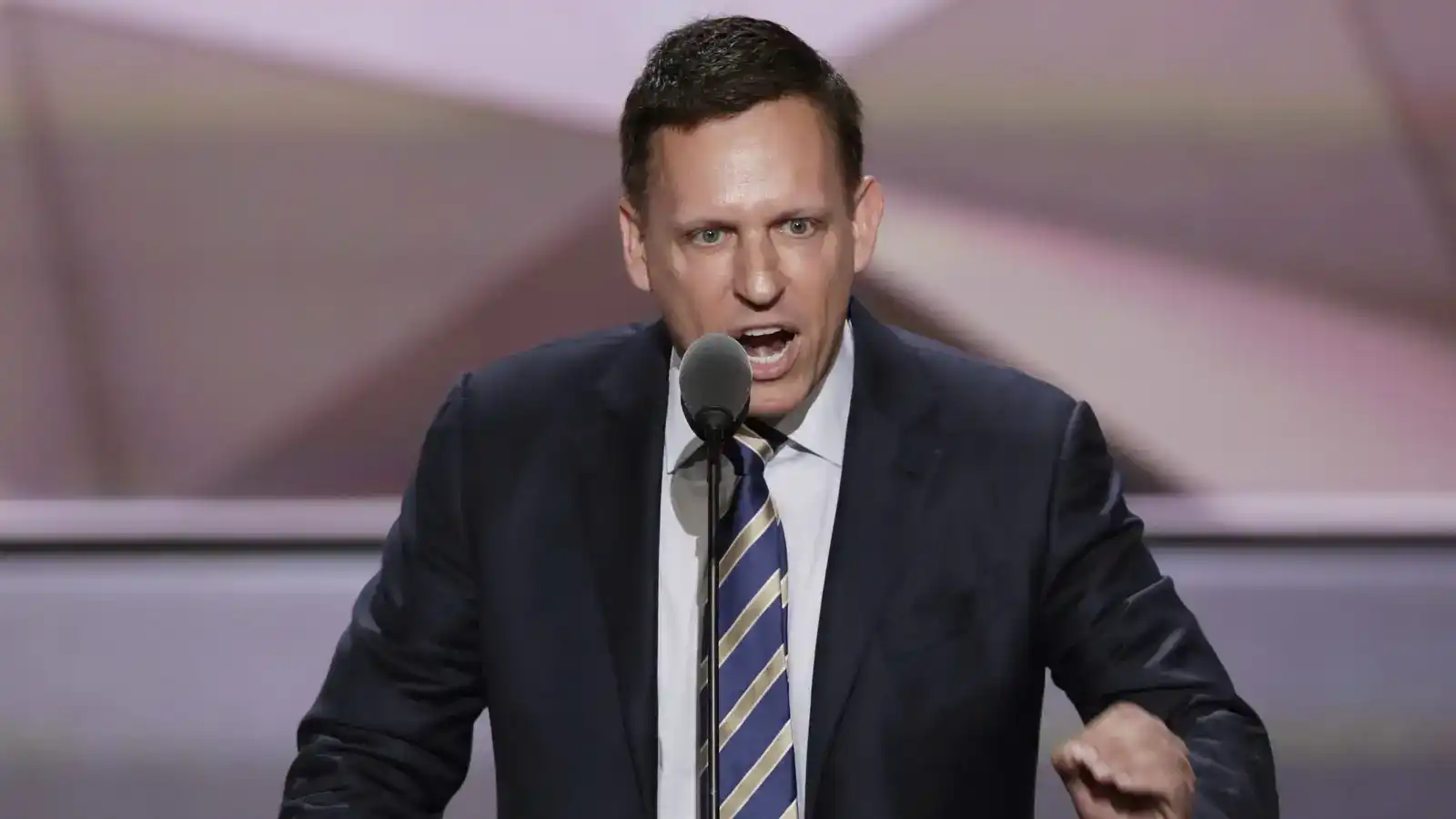
Peter Thiel speaking at the 2016 Republican Convention, image source: Quartz
This move put Thiel at odds with Facebook’s Democratic board members and liberal employees. Some executives believed Thiel had crossed a line. After the convention, Thiel received an email from board member and Netflix CEO Reed Hastings, calling his decision a “disastrous misjudgment.”
Yet to Thiel, supporting Trump was almost his “least contrarian” choice, given it enjoyed “half the country’s approval.” Thereafter, Thiel drifted further from Silicon Valley. In 2018, he moved his home and investment firm to Los Angeles. Time proved the great contrarian’s judgment of “Trumpism” remarkably prescient. Though the political return on his bet came differently than expected, it was substantial.
Trumpism Beyond Trump
In a media interview last November, Peter Thiel openly expressed “buyer’s remorse” regarding the former Trump administration and admitted supporting Trump was a bad bet. Thiel told The Atlantic he had hoped Trump would conduct a “national liquidation” after taking office—cutting regulations and dismantling the administrative state to rebuild the nation. “But it was crazier and more dangerous than I imagined. They couldn’t even make basic government functions work—it was worse than my low expectations.”
Thiel has always been drawn to outsiders. In his view, disruptors and revolutionaries are almost always outsiders—this was his main reason for backing Trump. But soon after Trump took office, Thiel realized this administration wasn’t nearly as radical as he’d hoped.
During the 2016–2017 transition, Thiel maintained an office at Trump Tower and submitted to Trump a cabinet nomination list with over 50 senior government positions. The goal was to “disrupt the administrative state.” Many nominees were either extreme libertarians or outright reactionaries—even by Trump administration standards, the list was too radical.
One example: the position of chief science advisor. Thiel recommended William Happer, a prominent climate change skeptic who compared demonizing fossil fuels to Hitler’s treatment of Jews. Ultimately, aside from his protégé Michael Kratsios being appointed Chief Technology Officer, none of Thiel’s other candidates found roles in the Trump administration. Soon after, Steve Bannon, closely tied to Thiel and formerly White House Chief Strategist, was ousted from the White House.
According to Puck, Thiel’s relationship with Trump has been exaggerated by media and Silicon Valley observers. In reality, Thiel was never part of Trump’s innermost circle of business leaders. He built a good rapport with Trump’s son-in-law Jared Kushner, but lacked the access of long-time allies like Tom Barrack or Robert Wood Johnson IV—the old-money establishment.
Thus, during Trump’s 2020 re-election campaign, Peter Thiel chose to stay on the sidelines.
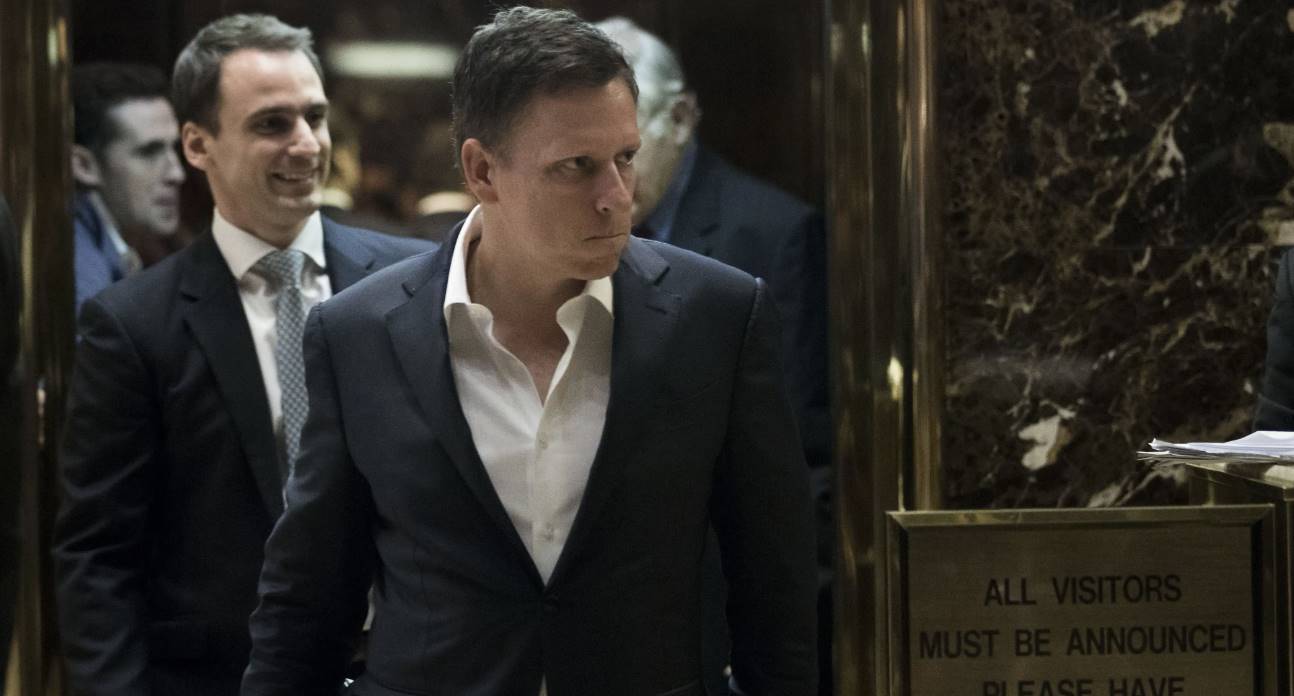
Peter Thiel leaving Trump Tower, image source: POLITICO
Yet Thiel never abandoned the ideology symbolized by Trump—Trumpism. This anti-establishment belief in total disruption to rebuild society remains central to Thiel. He is willing to find a path forward and a reliable successor for this ideology, regardless of whether Trump himself is involved.
The good news is that in the years after Trump entered the White House, Thiel’s stature rose sharply within conservative circles. The death of major Republican donor Sheldon Adelson in early 2021 and the arrest of Tom Barrack later that summer created a vacuum for Thiel to expand his influence within the party.
As reported by The New York Times, throughout 2021 and 2022, Republican politicians clamored for invitations to Thiel’s home or at least a phone call. Republicans saw a clear path: Thiel could offer “rescue” to struggling candidates, providing enough funds to fend off Democratic attacks.
According to Puck, Senate Republican leader Mitch McConnell repeatedly asked Peter Thiel in 2022 to intervene and save J.D. Vance and Blake Masters’ disastrous campaigns in Ohio and Arizona—but was consistently rebuffed. McConnell was baffled—why would Thiel pour around $20 million into both during the primaries only to abandon them in the general election?
Thiel had his reasons. In early 2022, he joined forces with Rebekah Mercer and others to form Rockbridge, a secretive conservative donor coalition aimed at “disrupting and advancing the Republican agenda” and reshaping the American right outside the party machinery. As a venture capital guru, Thiel certainly wants to win—but his goal isn’t just another Republican seat. He seeks disruption, pushing the GOP further right and purging moderate establishment figures. Either go bankrupt or redefine the industry—that’s Thiel’s investment philosophy.
Learning from the 2016 experience, Peter Thiel significantly shifted his political strategy. He began treating candidates like startup founders, investing heavily early in promising individuals. Reports indicate Thiel donated over $20 million in the midterms, backing 16 Republican candidates. As the godfather of Silicon Valley, Thiel replicated the PayPal Mafia playbook in Washington—taking on protégés, demanding loyalty. With expectations of the GOP gaining more congressional seats, Thiel focused on placing loyalists within the party.
In the 2022 midterms, Thiel’s two most loyal protégés were Masters and Vance. The former was an executive at Thiel’s family office and co-author of Silicon Valley’s entrepreneurial bible *Zero to One*. The latter authored the bestseller *Hillbilly Elegy* and was a former employee at Thiel’s Mithril Capital.
In early 2022, The Washington Post Magazine published a feature titled “J.D. Vance’s Path to Radicalization,” detailing Vance’s evolution from renowned author to far-right politician. From hearing Peter Thiel’s “life-changing” speech at Yale, to working at Thiel’s Mithril Capital in 2017, to launching Narya Capital in 2020 with Thiel’s funding—Thiel played a pivotal role at every stage of Vance’s journey.
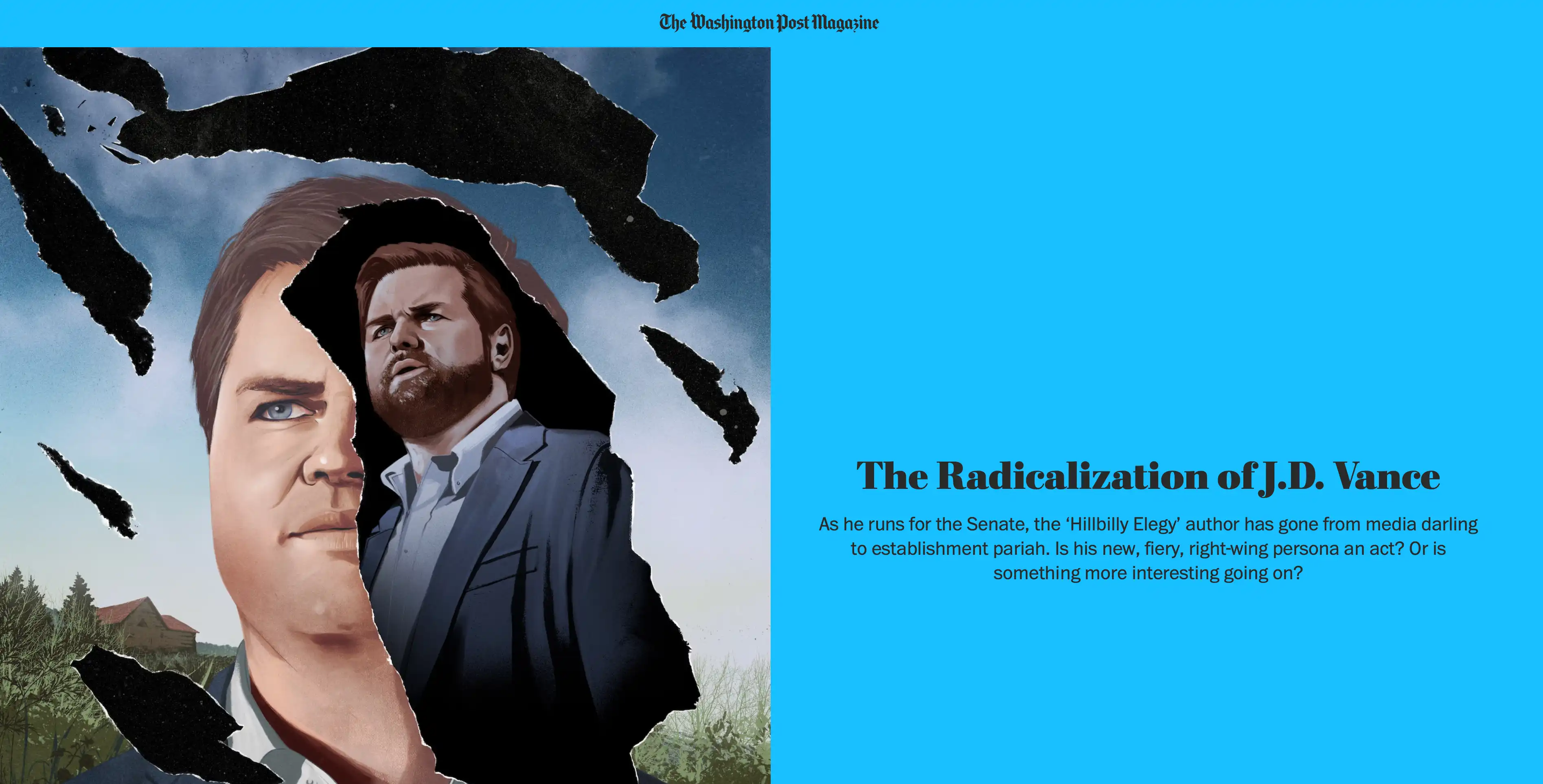
Washington Post special issue on J.D. Vance
In the final moments of the campaign, with Thiel’s help, Vance won Trump’s endorsement and secured victory in Ohio with an additional $1.5 million injection from Thiel. By funneling “emergency political funds” into inexperienced right-wing protégés like Vance and Masters, Thiel ensured their absolute loyalty—not to McConnell, but to himself. In a sense, they became extensions of Thiel’s ideology. For example, after Facebook investigated Thiel’s Palantir in 2018 over the Cambridge Analytica scandal, Vance’s criticism of Facebook reflected Thiel’s external pressure on Zuckerberg to shift rightward.
Unlike Musk’s high-profile presence on Twitter, Peter Thiel operates behind the scenes. Once a top-ten national chess player, he now skillfully deploys political pawns to achieve his goals. Many underestimate Thiel’s will and ruthlessness. As a German descendant, his thinking carries distinct Prussian traits—cold, iron-willed, even extreme. Thiel’s influence extends far beyond money. His decade-long brutal revenge against Gawker News serves as a stern warning to all enemies. In Silicon Valley, no one dares claim they aren’t afraid of Peter Thiel. Now, he aims to use this iron-fisted power to reshape America—even if it costs him lifelong friends.
In 2022, The Washington Post noted that Thiel and Musk herald a new generation of tech billionaires whose vast wealth and unique ideologies are shifting from building companies to reshaping the next generation of right-wing political leaders—and transforming both the GOP and Silicon Valley. Two years later, Thiel expressed “great satisfaction” at Vance becoming the vice-presidential nominee. Just as people say Trump transformed the Republican Party, Thiel believes he has reshaped Trumpism. Perhaps, in his eyes, surpassing Trumpism leads straight to Thielism.
Addicted to the Ring
Peter Thiel has always loved imagining parallel worlds. He read countless sci-fi and fantasy novels as a child, but only *The Lord of the Rings* captivated him—he’s read it over ten times (a three-volume epic). Thiel is obsessed with Tolkien’s Middle-earth. You could even say he lives in his own fantasy world: both Palantir, founded in 2003, and Narya Capital, helped launch in 2020 for Vance, derive their names from *The Lord of the Rings*.
Vivek Ramaswamy, former CEO of biotech firm Roivant Sciences (who launched an anti-ESG investment firm with Thiel’s backing), told media that Peter Thiel firmly believes in the massive potential of creating parallel economies—serving Americans dissatisfied with today’s corporate America will become the backbone of the next generation of major companies, yet almost no one seriously pursues this opportunity.
To Thiel, these parallel economies mirror Tolkien’s Middle-earth: a battleground for ultimate power where there’s no government, and exceptional individuals rise to fulfill their destinies. Here also dwell immortal elves, living in enchanted valleys protected by magical powers, separate from humans.
Peter Thiel resembles a power-seeker in Middle-earth, yearning for the One Ring that rules all.
After 9/11, the U.S. ramped up security nationwide, making airport screenings tedious. Thiel found it absurd that one terrorist could reduce societal efficiency so drastically. He wanted to use PayPal’s fraud-detection technology to identify criminals online early, thus founding data-mining company Palantir. Its name and logo were inspired by the evil wizard Saruman’s “palantír”—a crystal ball enabling surveillance and communication across any corner of the world.
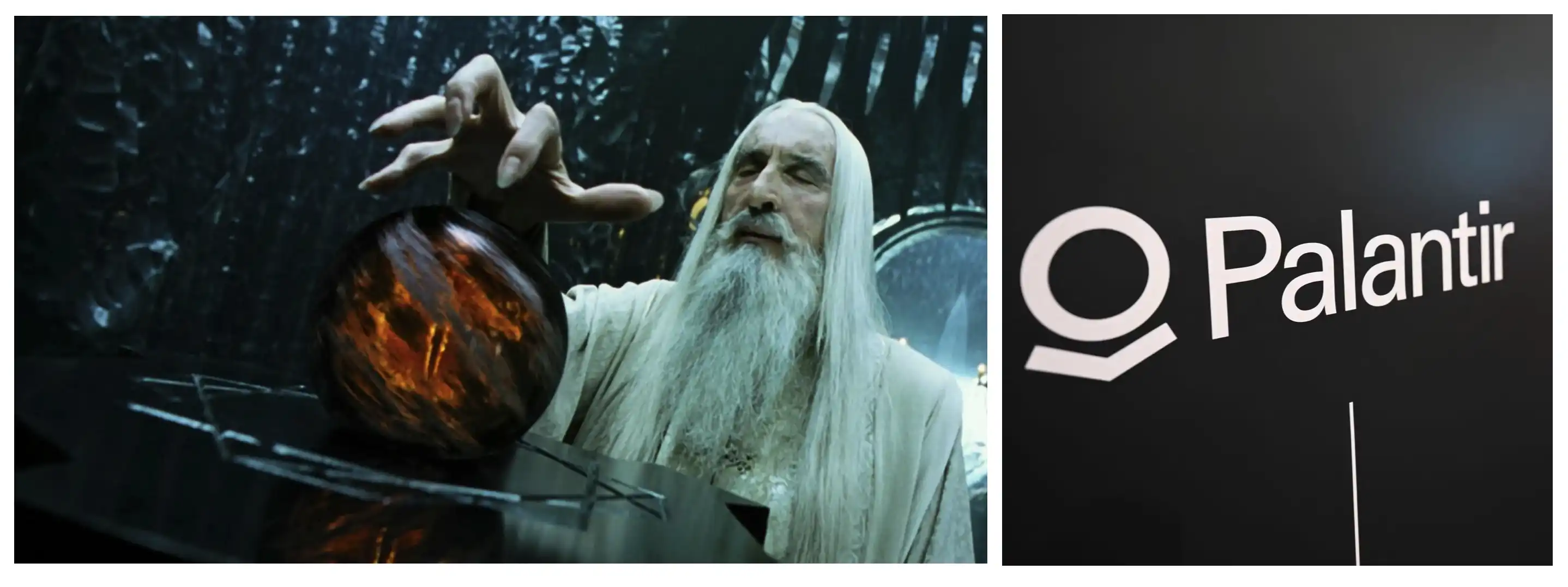
The palantír in *The Lord of the Rings* film and Palantir’s logo
In its early stages, Palantir received backing from the CIA’s investment arm, In-Q-Tel, but lost out to major rivals like Amazon and Google. However, Trump’s presidency turned things around. Palantir began winning large government contracts. Thanks to his campaign investments, Thiel gained leverage to promote his product within the U.S. military. He repeated PayPal’s playbook, expanding Palantir’s clients to governments and intelligence agencies worldwide.
At a recent lecture at Cambridge University, several audience members protested, accusing Palantir of serving as a malicious data contractor for Israel’s military in the current Israel-Hamas war and charging Peter Thiel with “blood on his hands.” Thiel replied: “I have a theory—we obsess over whether technology is good or evil, but most technology is actually useless. In that sense, useless technology is ‘bad.’ Today people complain about Palantir—at least it proves Palantir’s technology is useful. In a world where most tech is useless and fake, even if you’re evil, you’re not useless. In a completely incompetent world, you’re even ‘good.’”
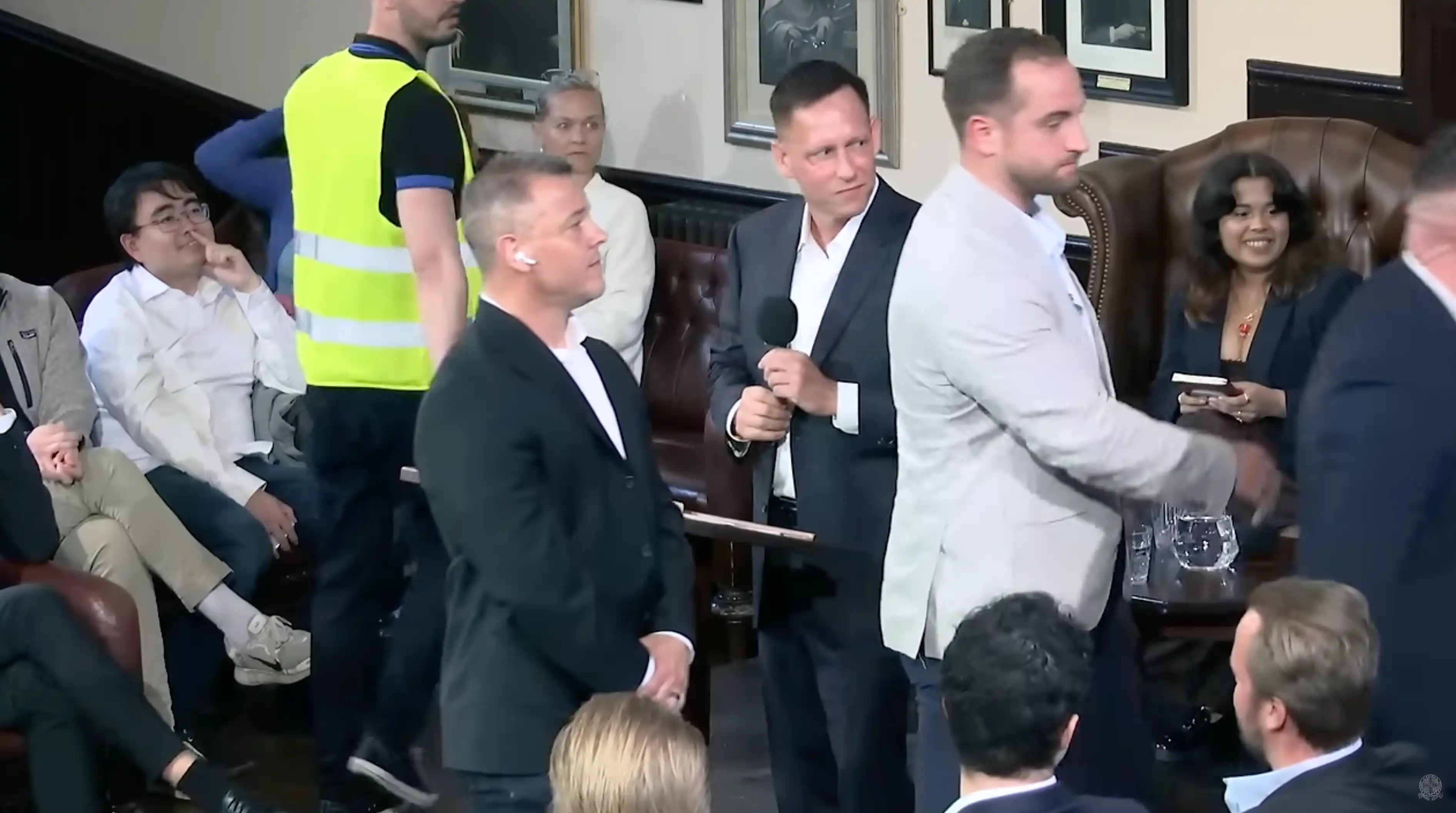
Peter Thiel’s recent lecture at Cambridge interrupted by protests
Thiel doesn’t mind being seen as a villain. In 2016, supporting Trump, he said: “Silicon Valley wants a villain, and the Republican Party wants a hero.” Clearly, he felt the role suited him perfectly. Discussing *The Lord of the Rings*, he suggested elves are essentially immortal humans, then asked, “Why can’t we be elves?” On his quest for immortality, Thiel is often labeled a vampire by public opinion.
Peter Thiel believes behind every successful company lies a “secret obvious yet unnoticed,” and he chases “non-consensus” truths—disruption and development. He argues today’s America suffers from innovation stagnation, blaming decades of pursuit of diversity: “We wanted flying cars, but got 140 characters.”
Yet Thiel is no visionary like Jobs; he cannot clearly chart a course for the future.
Many who know Peter Thiel say he doesn’t even know what he truly wants. Setting aside his philosophy, Thiel is indeed a super-contradiction: a gay man who founded a right-wing newspaper at Stanford criticizing multiculturalism and feminism; in *Zero to One* he champions monopolistic companies and autocratic rule, yet publicly opposes Big Tech monopolies; he advocates technological libertarianism but believes democracy and freedom are incompatible.
Peter Thiel is more like an arsonist—he’ll do whatever it takes to alter the trajectory of a person, a company, or even a society, but he won’t take responsibility for where the ship ultimately sails. Before Silicon Valley Bank collapsed, Founder’s Fund was among the first to exit. In New Zealand, filming location of *The Lord of the Rings*, Thiel spent millions buying a 500-mile estate. In a 2016 interview, OpenAI CEO Sam Altman revealed that in case of global catastrophe, he’d flee there with Thiel. Yes, if Peter Thiel truly sets the world on fire, you might have nowhere to run—while he already has an escape plan ready.
Woke, Wealth Tax, Lina Khan: Biden’s “Authoritarianism” Turns Silicon Valley
In September 2021, The Washington Times published an article titled “Democratic Authoritarianism’s Overreach Threatens Americans’ Livelihoods,” accusing radical Democrats of deliberately suppressing minority voices in public discourse, using science to enforce school policies, undermining parental rights, and ignoring harms caused by mask mandates and gender identity education to young children.
The term “authoritarianism” originated during the Cold War to describe similarities among Nazi Germany, fascist states, and the Soviet Union—authoritarians suppress opposition parties and control citizens’ public and private lives through state propaganda and mass media. Early in Biden’s term, this word appeared only occasionally in conservative outlets like The Washington Times and far-right forums, suggesting political correctness, content censorship, and big government constitute America’s “new authoritarianism.”
But in a recently updated podcast episode, A16Z co-founder Ben Horowitz began describing Biden’s Democratic administration as “authoritarian.” He argued that over the past four years, a far-left faction within the Democratic Party seized regulatory vacuums under Biden’s appointments, aggressively targeting Silicon Valley and its portfolio startups. As a result, A16Z—once a Democratic supporter—has now shifted allegiance to Trump in this election cycle.
At this year’s Axios Tech Conference, Peter Thiel’s friend and Craft Ventures founder David Sacks declared he “disagrees more with Biden than with Trump,” shortly before inviting Trump onto his co-hosted popular podcast, *All-In Podcast*.
While Peter Thiel’s personal influence matters, Silicon Valley has no shortage of kingmakers. Behind these powerful individuals defecting en masse lies Silicon Valley’s eroding efficiency under Woke culture and the deep conflict between Biden’s big-government policies and billionaire economics.
“No, Mr. President, They Are Not Your Children”
“My son died,” Elon Musk said during a live interview this week. “He was killed by the Woke-Mind virus (referring to Dead Naming).” In the interview, Musk openly discussed his eldest son’s transition. During the pandemic, Musk’s son Xavier struggled with gender dysphoria. Eventually, Musk signed documents approving his son’s gender transition surgery based on incomplete information and fears of suicide. Later, Musk blamed U.S. schools’ gender identity education for the situation.
A year ago, the White House’s official X account posted an audio-video clip where Biden said: “These [minority LGBTQ+] are our children, our neighbors—not someone else’s children.” The next day, Musk replied: “You are the government. They are not your children.” The audio came from Biden’s remarks at that month’s “Pride Month” event at the White House, during which transgender model Rose Montoya bared her chest at the White House, sparking a media storm.
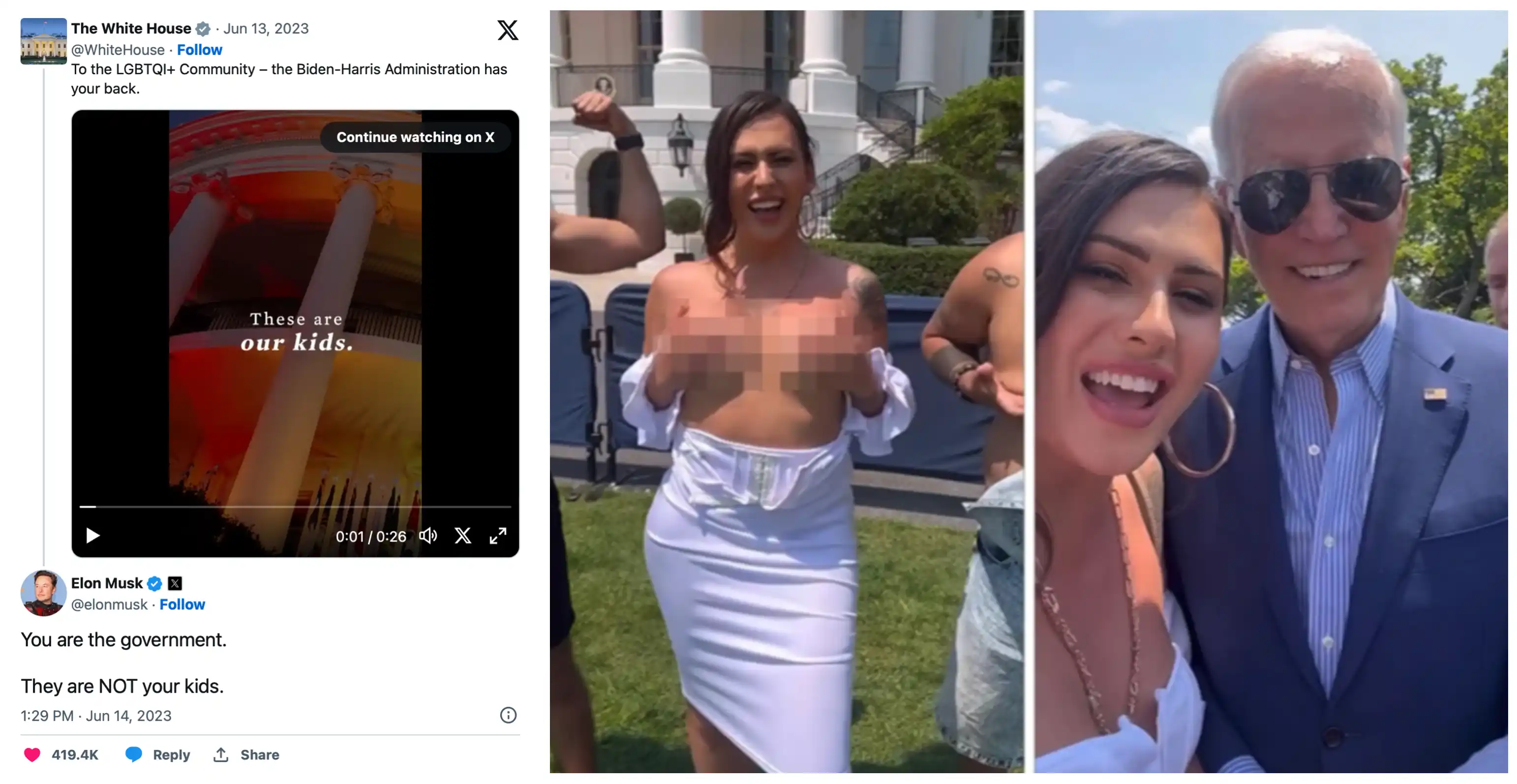
Photos from the “White House Pride Month” event and official tweet
Over the past two years, whether K–12 schools should teach gender identity and whether schools must notify parents when students want to change gender identity has become one of America’s most contentious topics.
During the 2022 midterms, Virginia Democratic gubernatorial candidate Terry McAuliffe claimed parents shouldn’t be involved in K–12 public education, stating: “I’m not going to let parents come into classrooms. Parents shouldn’t tell schools what to teach.” Conservatives frequently passed opposing legislation. In March, Florida Governor Ron DeSantis signed a Parental Rights in Education law banning instruction on gender identity in public schools from kindergarten through third grade, leaving decisions about when to introduce such topics to parents.
Polls show most Americans, regardless of political affiliation, support this bill. In multiple federal lawsuits, Florida parents accused schools of following “gender-affirming” programs allowing students to choose pronouns or gender identities without parental consent, helping students deceive parents or defy their wishes.
In April that year, Biden spoke at the annual teacher event, saying: “They are not someone else’s children. When they’re in the classroom, they’re like your children.” The following year, he reiterated: “There’s no such thing as ‘someone else’s children.’ Our nation’s children are all our children.” Biden’s statements were seen as attacks on conservative and parent-led opposition movements. Right-wing media criticized this as “replacing familial bonds with loyalty to the ‘Woke cause’ to control the younger generation.”
Since the MeToo movement, “Woke culture” has spread widely in the U.S., peaking during Black Lives Matter. After Biden took office, Woke culture veered toward extremism, amplified by mainstream media like CNN and social platforms like Twitter, becoming hyper-sensitive in public discourse. Subsequently, “cancel culture” emerged as a perceived tool for far-left groups to attack others. During the pandemic, U.S. netizens mocked CNN and MSNBC’s coverage of Black community riots—reporters standing amid burning buildings describing them as “burning but largely peaceful protests.”
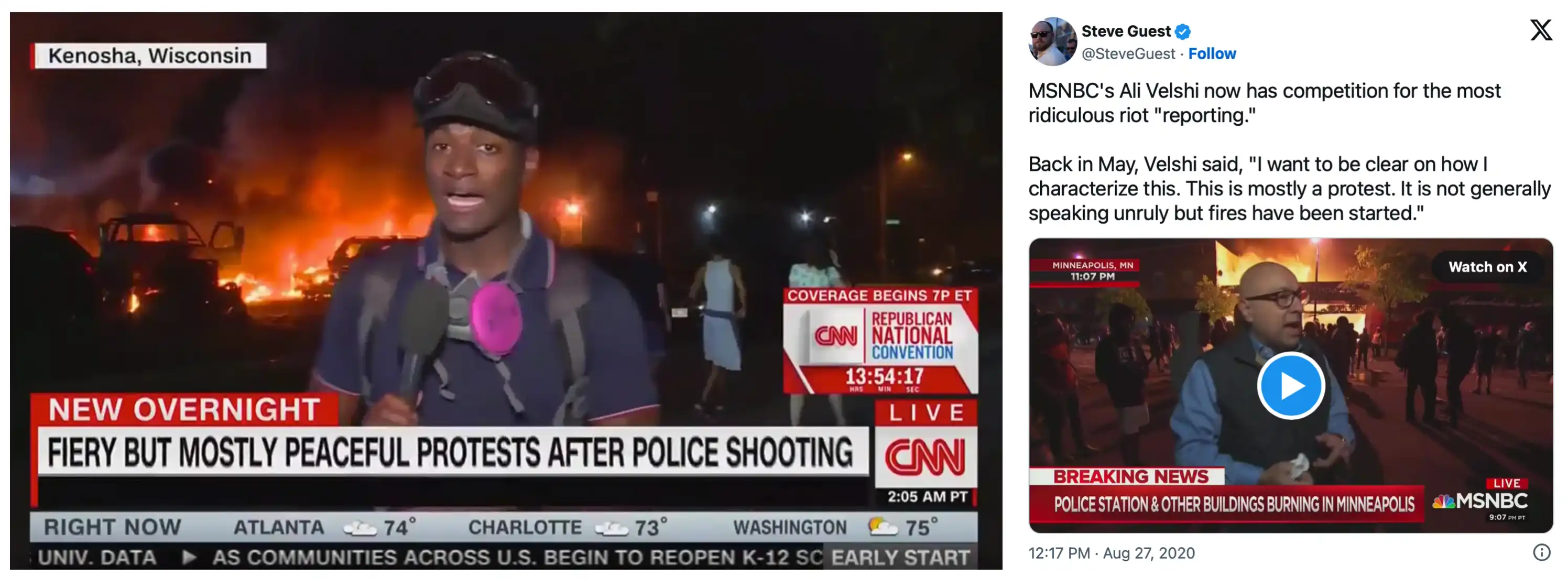
Media coverage during Black Lives Matter
On Wall Street, Woke culture also drew criticism from some traditional leftists. In an interview earlier this year, “boy genius” Bill Ackman expressed disappointment with the Democratic Party’s evolution: “Today, if you say something offensive, you might lose your job instantly—you might get ‘canceled’... I’m a ‘Clinton Democrat.’ I don’t want anything to do with today’s Democrats.” That month, New York Magazine published a deep dive titled “Bill Ackman’s War Against Harvard, MIT, and D.E.I.,” covering his “reckoning” against MIT’s chair and his wife for abusing D.E.I. initiatives for personal gain.
Under Biden’s leadership, Woke culture impacted U.S. corporations and startups via D.E.I. (Diversity, Equity, and Inclusion) initiatives. Disgust toward D.E.I. gradually became an open secret in Silicon Valley. Many entrepreneurs and executives believe D.E.I. prevents optimal hiring and business decisions, ultimately hurting profitability. Some tech firms even tried eliminating D.E.I. hiring programs. Last month, Scale AI founder Alexandr Wang posted on X, replacing D.E.I. hiring with M.E.I. (Merit, Excellence, Intelligence), earning strong support from tech giants like Musk.
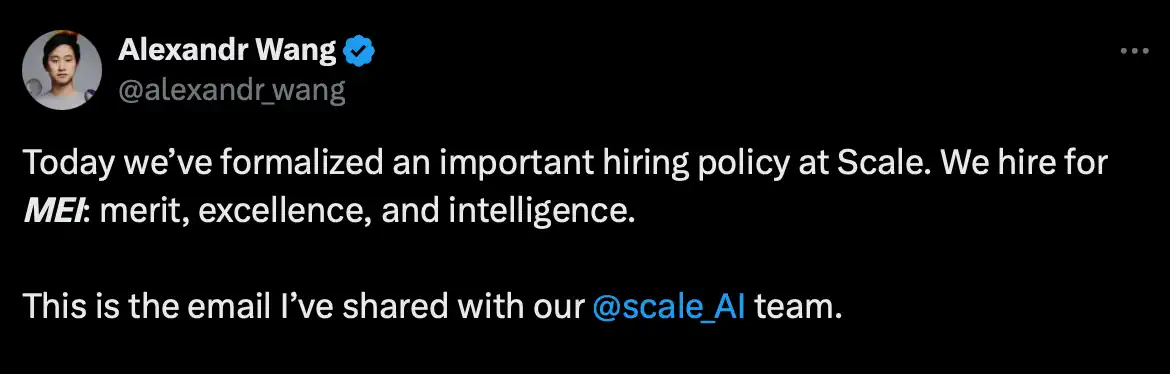
On the “anti-D.E.I. front,” Peter Thiel has been highly vocal, repeatedly declaring “D.E.I. is communism.” In his recent Cambridge University speech, Thiel again referenced his college-era book *The Diversity Myth*, arguing D.E.I. diverts attention from critical issues like economic development and technological innovation, reducing societal efficiency.
According to The Washington Post, since 2021 Thiel has focused on changing American culture, funding “anti-Woke” causes including right-wing film festivals and conservative dating apps. Musk calls Woke culture a “Woke-Mind virus” and attempted to maintain neutral discourse by acquiring Twitter—a move receiving “spiritual support” from Thiel. His son’s transition deeply affected Musk, prompting fierce criticism of California’s minor gender transition medical policies. California Governor Gavin Newsom’s signing of AB-1955 was seen as the direct catalyst for Musk’s announcement to relocate X and SpaceX headquarters out of California.
Big Government Bet: The Tax Stick Swings at Silicon Valley’s Rich
After taking office, the U.S. federal government launched a “spending spree,” passing a $1.9 trillion economic relief package in its first year. The Washington Post, in an article titled “Biden Bets on Bigger Government, and Pandemic Helps Him,” described Biden as an ambitious president presiding over the largest federal expansion in half a century.
Due to economic shutdowns and social unrest, millions of Americans lost jobs, softening public resistance to big government. In a late February poll, the stimulus plan garnered about 65% public support. Biden sought to exploit this sentiment as an opportunity to rapidly advance his big-government agenda.
Upon entering the White House, Biden was portrayed as attempting the second “Great Society” program in U.S. history. In the early 1960s, President Johnson’s Great Society marked the federal government’s last major expansion attempt, but intense opposition arose under Vietnam War pressures. After Reagan’s 1980s election, his strong anti-Washington stance set a decades-long political tone against government expansion. Yet Biden gambled the pandemic could rewrite history, letting him achieve what other Democratic presidents could not.
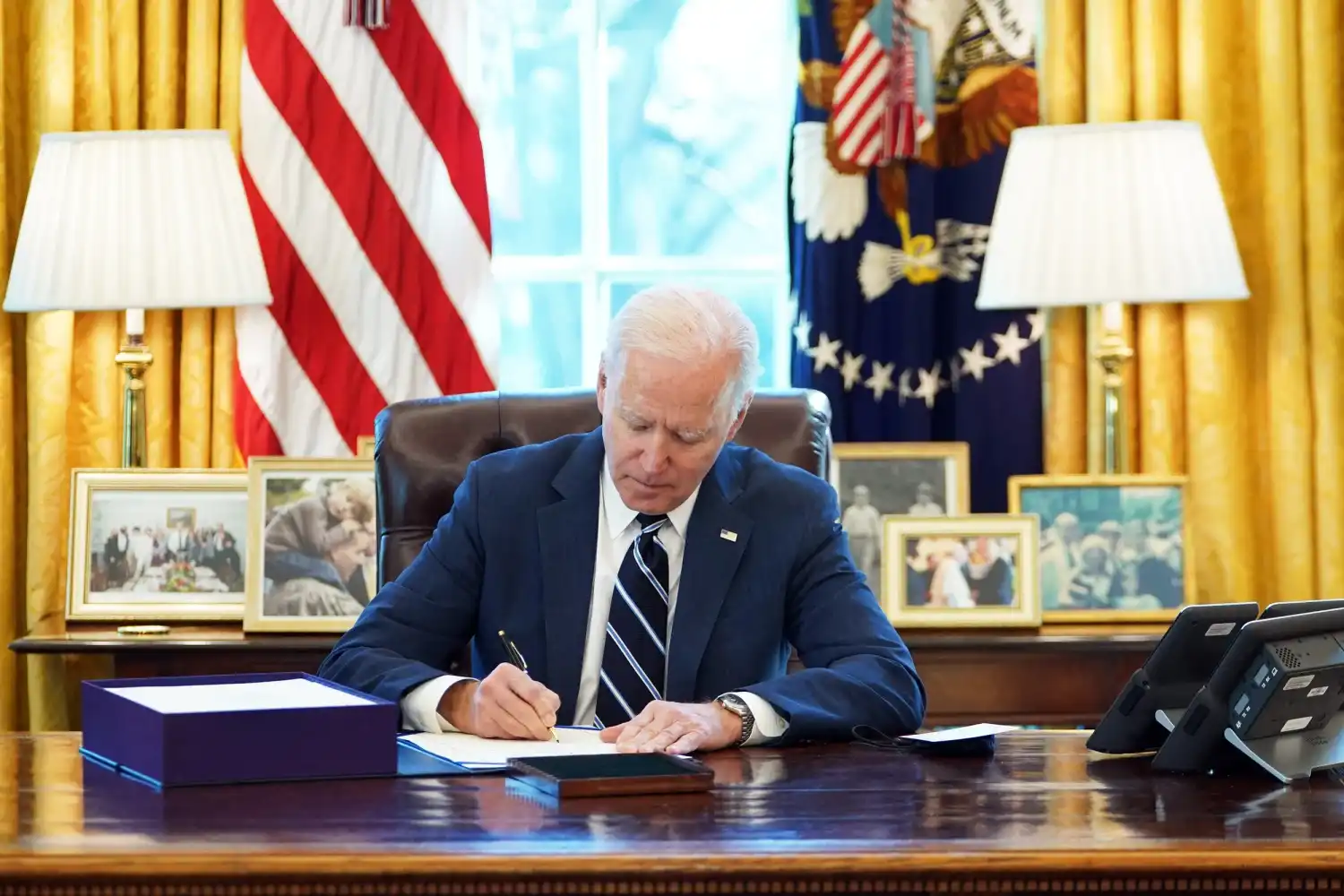
Biden signs $1.9 trillion stimulus plan, image source: CNBC
The following year, the Biden administration rolled out a $2 trillion infrastructure plan to support its “Build Back Better” agenda, further expanding government’s role in the economy. Beyond social spending, Biden also significantly increased defense budgets, raising defense expenditures to $800 billion in early 2023—an increase of 3.2% from the previous fiscal year—dubbed one of the largest peacetime defense budgets in U.S. history. Meanwhile, federal employees received a 5.2% pay raise—the largest for civil servants in 43 years since a 9.1% raise in 1980.
High spending demands high taxes. The $2 trillion infrastructure plan couldn’t rely solely on government debt. Biden targeted U.S. corporations and the wealthy. Corporate tax became the primary funding source—raised from 21% to 28%, fossil fuel subsidies eliminated, global minimum tax increased from 13% to 21%, and multinational companies forced to pay U.S. tax rates. This marked the first significant hike in federal tax rates since 1993, directly reversing Trump’s 2017 trend of slashing corporate taxes.
Additionally, the wealthy and investors became revenue targets, funding social priorities within the infrastructure plan. When unveiling the 2023 budget, Biden proposed a new tax on billionaires—imposing a 25% minimum tax on individuals with net assets exceeding $100 million, including standard taxable income and annual gains on “tradable assets” like stocks, bonds, mutual funds, and other securities. Dubbed the “Billionaire Minimum Income Tax” by the White House, this marked the first explicit proposal for a wealth tax, expected to generate $360 billion for the federal government over the next decade.
According to a 2021 ProPublica report, Biden’s wealth tax would require tech titans like Bezos and Musk to pay $35–50 billion in taxes. That year, headlines about “Musk paying an $11 billion tax bill” sparked widespread discussion—the largest single personal tax payment in U.S. history.
After increasing the 2025 budget to $7.3 trillion, Biden again proposed taxing unrealized gains, planning to tax unrealized gains on trusts, businesses, and other non-corporate entities without confirmed events in the past 90 years. Due to complexities in asset valuation and liquidity, plus immense implementation challenges, this conceptual measure was rarely used in past U.S. tax frameworks. If enacted, this proposal would raise the top marginal rate on long-term capital gains and dividends to a staggering 44.6%—the highest in U.S. history.
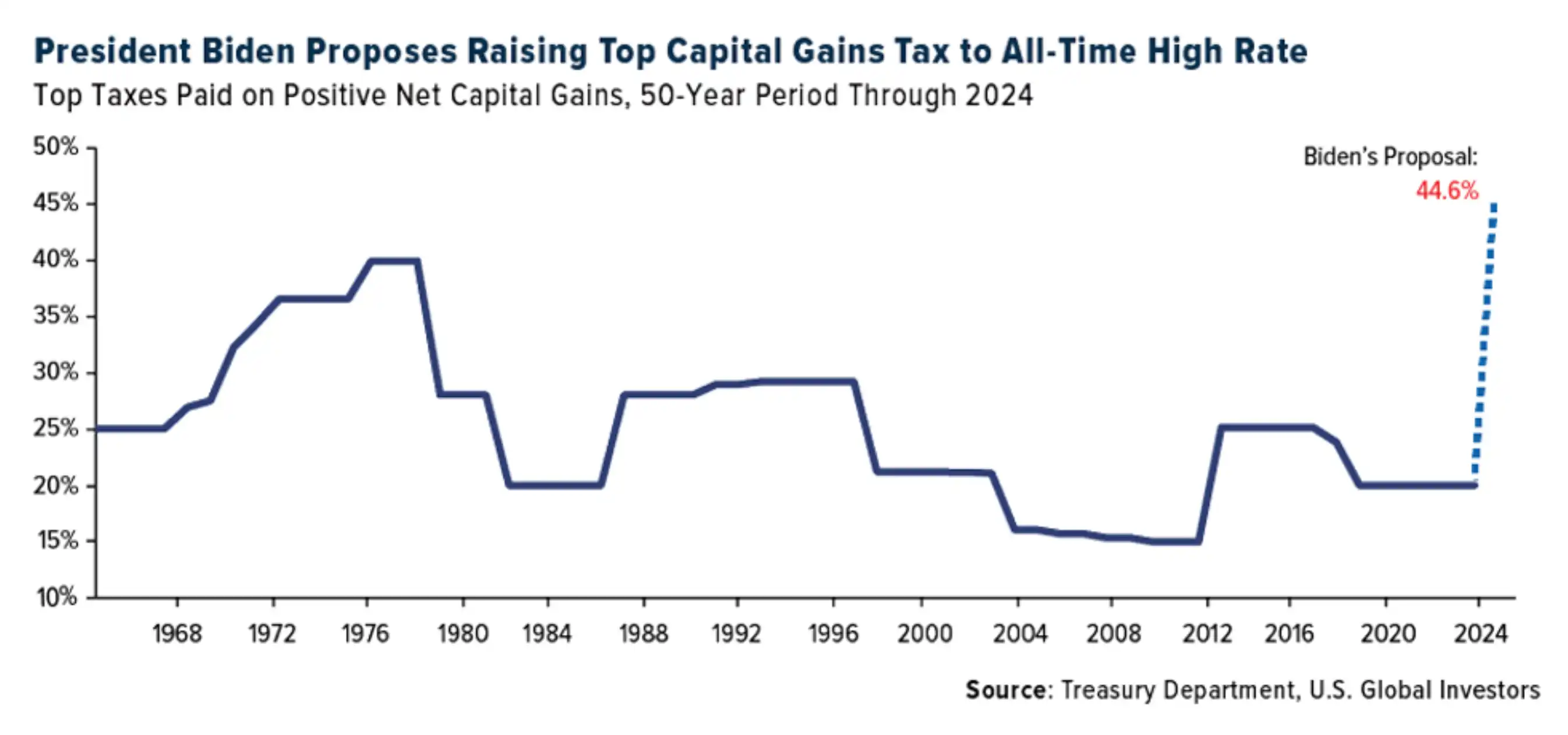
Under new rules, U.S. capital gains tax will hit record highs, image source: U.S. Treasury Department
Taxing unrealized gains means individuals or corporations (with net assets above $100 million) holding tradable assets like stocks and bonds must pay a 25% minimum tax when asset values rise—even if those assets haven’t been sold. For the venture capital world, where valuation growth is foundational, this amounts to a declaration of war.
Bill Ackman, commenting on this tax plan, stated Democrats shouldn’t push a policy that “destroys the U.S. economy”: “If someone invests $1 billion in your startup and you own 50% of the company, you instantly incur a $100 million tax liability... Every U.S. startup would go bankrupt. No one would want to start a company in America anymore.” In a recent podcast episode, both A16Z co-founders echoed similar concerns.
David Sacks, at this year’s tech conference, said this tax could kill the practice of granting stock options to startup founders and employees, calling it “a key reason for Silicon Valley to seriously consider who they vote for.” Investors believe this tax policy would severely distort U.S. investment behavior, especially concerning small-cap stocks and startups—engines of economic growth and innovation reliant on risk-takers betting on future returns. But when unrealized gains are taxed, investors will shy away from growth-oriented firms, which typically experience greater valuation volatility compared to larger, mature companies.
Opposition to the unrealized gains tax isn’t limited to the wealthy. Polls show over two-thirds of Americans—including 76% of independents—reject such taxation, believing the federal government shouldn’t interfere with private property. Some mainstream media argue the deeply divided Congress lacks votes to approve this policy.
Regulatory Gang: Bullying Big Tech, Killing Small Tech
In 2007, Obama hosted a private dinner in Woodside, California with several Silicon Valley CEOs. During the meal, Apple CEO Steve Jobs secretly showed Obama the prototype of the first iPhone. The former Democratic president joked: “If legal, I’d buy a boatload of Apple stock. This is going to be huge.”
Over the past decade, Silicon Valley’s tech sector maintained close ties with Democrats. Former Democratic Vice President Al Gore joined venture firm Kleiner Perkins in 2007. Later, companies like Apple, Google, Airbnb, and Uber hired numerous ex-Obama administration officials.
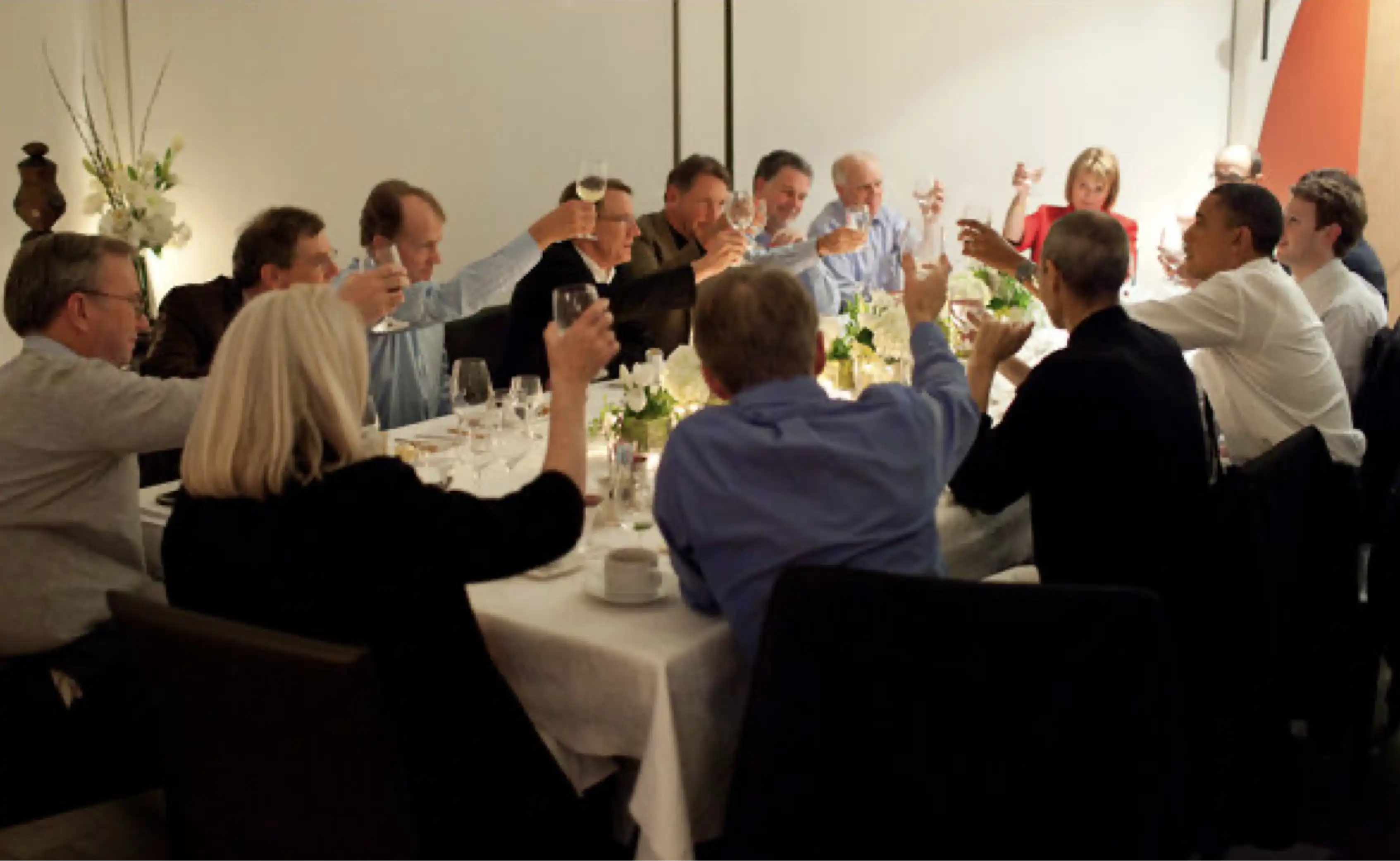
Obama’s private dinner in Woodside, California with Jobs, Zuckerberg, Schmidt, and other tech titans, image source: The New York Times
Yet under Biden, Silicon Valley’s cozy relationship with the White House abruptly cooled. The administration adopted a hardline stance toward Big Tech. Many VCs believe Biden’s Democrats shifted further left, “demonizing” successful entrepreneurial billionaires, driving a wedge with the tech industry—because “nobody likes being repeatedly told they’re evil.” In May, Sequoia partner Shaun Maguire publicly accused Biden of career-long “hypocrisy” on X.
Join TechFlow official community to stay tuned
Telegram:https://t.me/TechFlowDaily
X (Twitter):https://x.com/TechFlowPost
X (Twitter) EN:https://x.com/BlockFlow_News
 BlockBeats









