OORT Datahub: Leading the Decentralized Data Collection and Annotation Industry
TechFlow Selected TechFlow Selected
OORT Datahub: Leading the Decentralized Data Collection and Annotation Industry
OORT DataHub improves efficiency by simplifying and accelerating the data collection and annotation process.
 Navigating Web3 tides with focused insights
Imagine a world where computers can learn and adapt like humans. They can make autonomous decisions, recognize patterns, and continuously improve task efficiency. This is all made possible by artificial intelligence—AI is transforming industries across the board, enhancing efficiency, driving innovation, and accelerating development.
But here's the catch: AI isn't magic. It requires vast amounts of data to learn, and raw data by itself holds little value. Data must be organized, categorized, and interpreted to become meaningful for machines. This process is known as AI data labeling.
AI data labeling is akin to teaching machines how to see, hear, and understand things. For example, if you want a self-driving car to stop when it encounters pedestrians or red traffic lights, you need to label these objects in the images and videos used for training. This involves manually identifying and marking pedestrians and red lights within images and video footage. By providing such annotated data to train AI models, the car learns to recognize and respond to pedestrians and traffic signals in real-world scenarios.
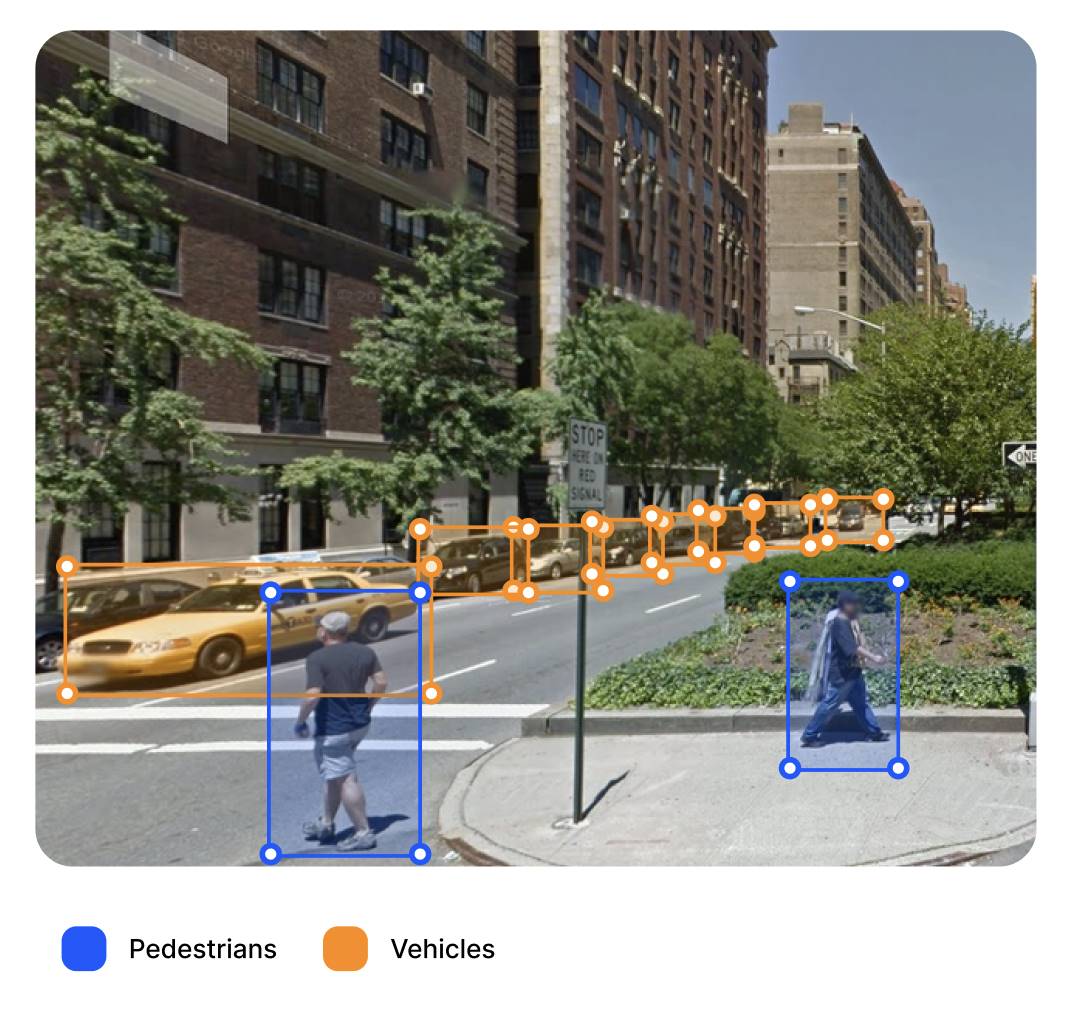
Figure 1. Example of data labeling: pedestrians marked in blue, vehicles in orange, used to train AI models for object recognition.
Market Analysis
AI data labeling is crucial for creating new products and services across industries such as healthcare, retail, automotive, and banking. As demand grows, industry revenue has significantly increased and is expected to continue rising. With more companies adopting AI and developing new learning methods, the need for data labeling continues to surge.
The global market for data labeling solutions and services is projected to grow from $11.6 billion in 2022 to $46.9 billion by 2030, with an estimated compound annual growth rate (CAGR) of 19.5%.
(Source: https://www.kbvresearch.com/data-labeling-solution-and-services-market/)
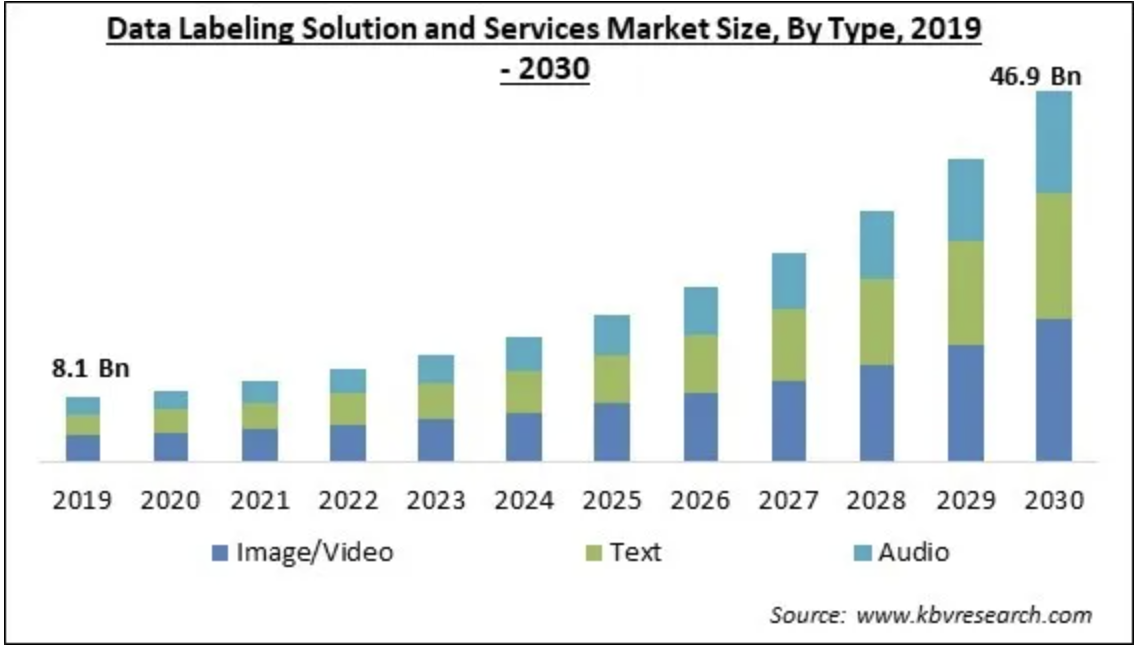
Figure 2. Data labeling market size
How OORT Datahub Is Revolutionizing the Data Labeling Industry
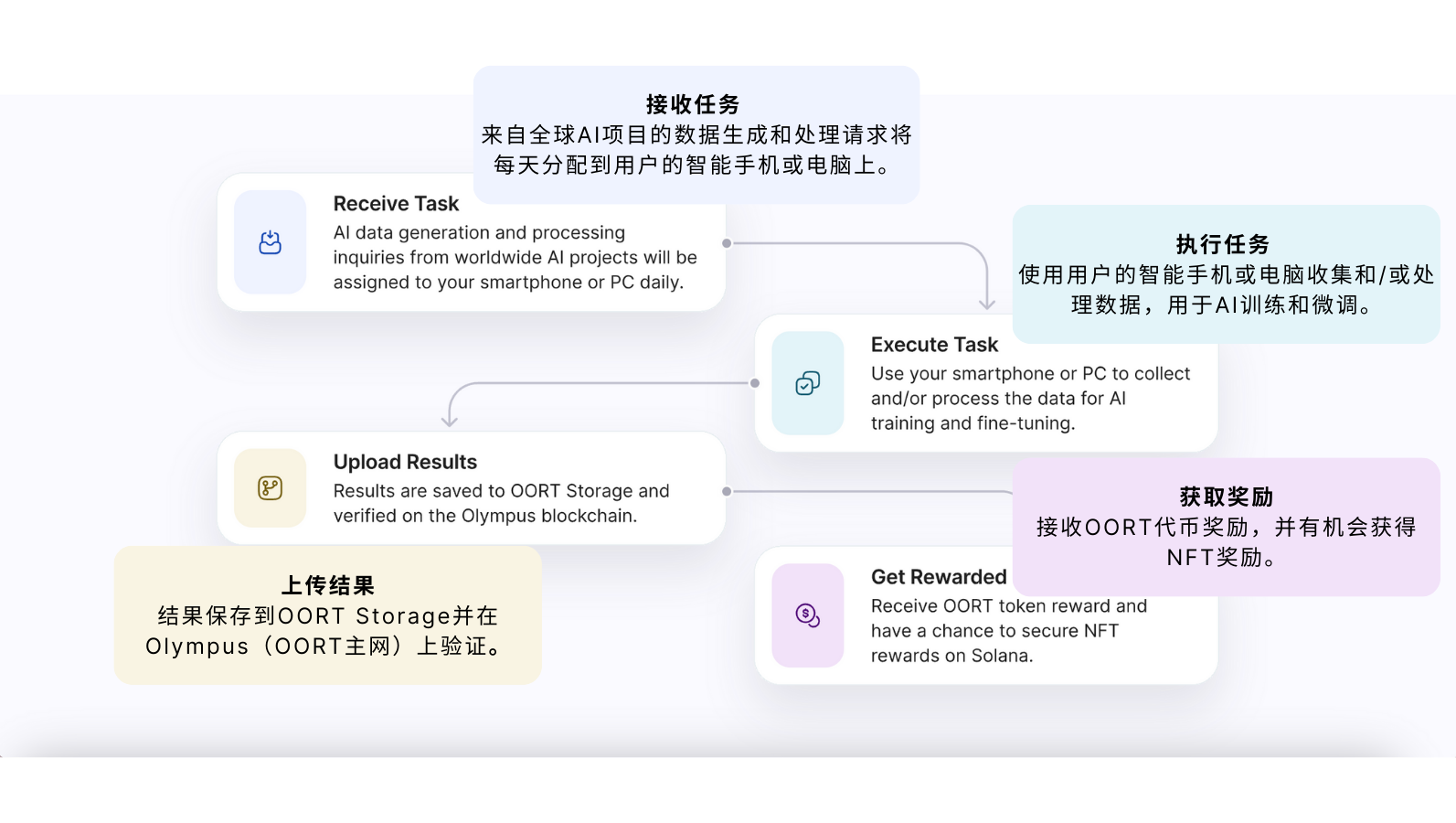
Figure 3. How OORT Datahub works
Notes:
a. OORT Storage: Enterprise-grade decentralized storage solution.
b. Olympus Blockchain: OORT’s Layer-1 blockchain used to record and verify data collection and labeling processes.
Traditional data labeling is highly labor-intensive and lacks transparency, often resulting in extremely low wages for workers. Blockchain technology and cryptocurrency offer powerful tools to address these issues. By leveraging blockchain and crypto, AI data labeling becomes more secure and accessible globally. OORT Datahub pioneers this new approach, known as decentralized data labeling. Figure 4 provides a detailed comparison between OORT Datahub and traditional data labeling platforms.
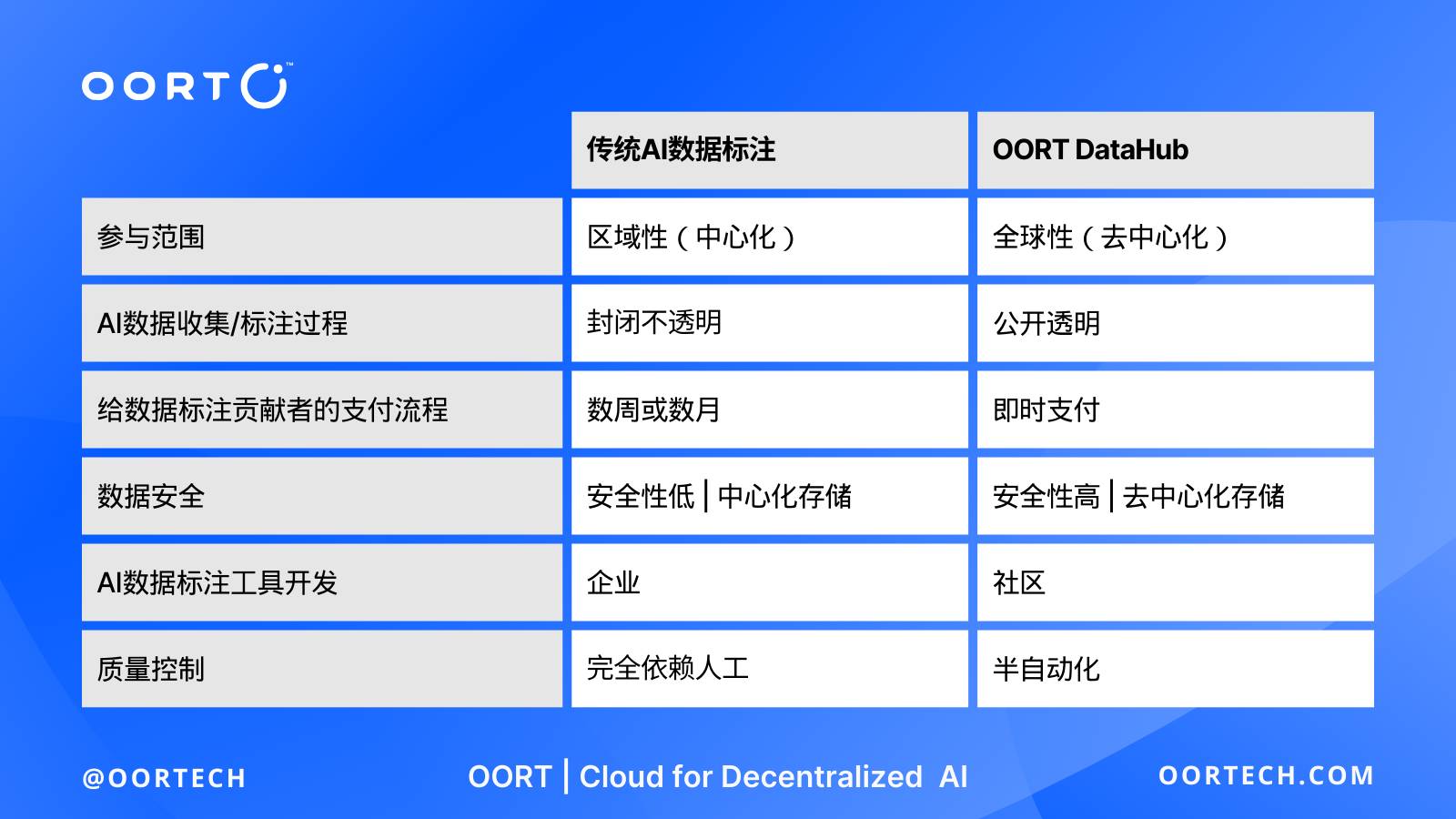
Figure 4. Comparison between OORT Datahub and traditional data labeling platforms
Global Participation
Decentralized data labeling enables people around the world to participate and earn cryptocurrency through their contributions. This approach overcomes limitations of traditional platforms—for instance, Toloka only recruits data collectors and labelers from specific countries, and cross-border payments are difficult. Just as individuals can transact globally using Bitcoin, contributors on OORT Datahub can easily earn extra income from anywhere in the world.
Transparency
Blockchain enhances transparency throughout the AI data labeling process. Every step—from task completion to payment—is recorded and verified on the blockchain. This transparency reduces errors and disputes in data labeling, building greater trust between AI projects and contributors. In OORT Datahub, OORT leverages its high-performance Layer-1 blockchain—the Olympus Protocol—to ensure full transparency in the data preprocessing workflow.
Data Security
All AI data on DataHub is stored in OORT Storage, OORT’s enterprise-level decentralized storage solution. Both raw and labeled data are encrypted and sharded across multiple locations, ensuring protection against tampering or unauthorized access. In contrast, data managed by centralized cloud platforms is more vulnerable to hacking due to potential security flaws.
Instant Payments
Cryptocurrency-based payments accelerate the payout process, making cross-border transactions faster and cheaper. Smart contracts enable efficient task allocation, and payments to contributors are completed within minutes after task completion. In contrast, traditional methods are slow and complex, often taking weeks or even months. More importantly, OORT Datahub introduces a novel reward mechanism: participants receive NFTs as additional rewards. These NFTs grant holders rights to share in future data revenue, offering users higher income potential.
Community Tool Development
OORT DataHub encourages community members to collaboratively develop small tools for AI data collection and labeling. With participation from developers, data experts, and AI projects, these tools become more efficient and practical.
Quality Control
Data quality has always been a major challenge in the data labeling industry. Low-quality data severely impacts AI training performance. A key feature of OORT DataHub is its Proof-of-Honesty (PoH) consensus algorithm—a semi-automated, human-involved quality control mechanism. This algorithm quickly verifies the accuracy of submitted data labels, avoiding the manual verification processes used by traditional companies, which are prone to oversights and human error.
In summary, OORT DataHub improves efficiency by streamlining and accelerating the data collection and labeling process. Leveraging blockchain technology and decentralized storage, it also enhances security and privacy in data preprocessing, encouraging broader global participation and contribution.
Join TechFlow official community to stay tuned
Telegram:https://t.me/TechFlowDaily
X (Twitter):https://x.com/TechFlowPost
X (Twitter) EN:https://x.com/BlockFlow_News
 @oortech