








Wall Street Journal: The Ordinary People Who Donated Cryptocurrency to Trump
TechFlow Selected TechFlow Selected
Wall Street Journal: The Ordinary People Who Donated Cryptocurrency to Trump
Why did they choose to donate cryptocurrency to Trump?
 Navigating Web3 tides with focused insights
By Caitlin Ostroff
Translated by Luffy, Foresight News
Many cryptocurrency enthusiasts follow a common rule: HODL. It's a crypto slang term meaning to keep buying and holding even when markets go wild.
Yet when former President Donald Trump became the first major-party presidential candidate to accept cryptocurrency donations in May, dozens of ordinary investors quickly answered the call.
Trump’s recent embrace of crypto donations marks a sharp reversal from his stance years earlier as president, when he mocked cryptocurrencies as “made up.” His campaign revealed last week that it had raised millions of dollars in cryptocurrency by the end of June, mostly from industry heavyweights and professional investors—but also including everyday individual investors. Some say they want to help Trump gain broader support. Here are their stories:
Ricky DiMartino, Dallas
Ricky DiMartino, 40, a media specialist for a Christian nonprofit, donated $500 worth of bitcoin to Trump in mid-June. Four years ago, he bought bitcoin for the first time after hearing a college friend post on Facebook that its value would rise.
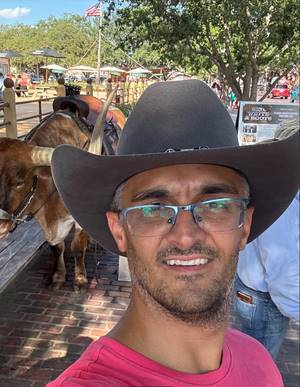
In mid-June, Ricky DiMartino donated $500 worth of bitcoin to Trump
DiMartino bought a small amount of bitcoin through Cash App. He likes bitcoin because it is not controlled by governments and transactions don’t require third-party approval.
The Dallas resident voted for Trump in both 2016 and 2020. When he saw the campaign accepting cryptocurrency donations, he made his first contribution to the former president.
"I really wanted to send Trump a message—that bitcoin is good for the people, good for America, and good for him," DiMartino said. "Since he used to criticize bitcoin, I hope he can now see its benefits."
Rob Licker, Long Island, New York
Rob Licker, a ticketing agent for the Long Island Rail Road, chose to donate $100 worth of the cryptocurrency XRP to Trump instead of bitcoin.
The 52-year-old entered the world of crypto after watching a Netflix documentary in 2017. He views bitcoin as an investment similar to gold—its value rises partly due to scarcity. Only 21 million bitcoins will ever exist, and over 90% have already been mined.
Licker says he voted for Trump in 2016 but supported Biden in 2020. Rising grocery and energy prices made him rethink his support for Democrats, and this time he plans to vote for Trump again.
Due to inflation, Licker said he had to sell some of his bitcoin. Wanting to preserve what remains, he chose to donate XRP, a token issued to facilitate cross-border payments. Licker says he won’t back a candidate solely based on crypto policy, but he’s pleased that Trump is accepting digital assets—and surprised that Democrats aren't doing the same.
Given that Democrats supported internet development under former President Bill Clinton in the 1990s, Licker says he expected the Biden administration to take a similar approach toward crypto.
"I thought Biden would support crypto more, but I was wrong," he said.
Gerard Guillemette, Boise, Idaho
Gerard Guillemette, a 61-year-old engineer in Boise, Idaho, differs from Licker in that he has been spending his bitcoin whenever possible. While some investors believe bitcoin’s value will rise, Guillemette treats it as a means of payment.

Gerard Guillemette supports Trump and bitcoin
He previously donated bitcoin to the Atlas Society, a nonprofit focused on Ayn Rand’s philosophy, and used bitcoin to buy a scarf from a British soccer club.
He had previously contributed to Trump’s campaign and other Republican political action committees. When he saw Trump publicly embracing cryptocurrency, his support for the Republican candidate merged with his passion for bitcoin.
"It’s the convergence of shared interests," he said. "When you start using something, you encourage its continued use, regardless of who provides it. If people stopped eating McRib sandwiches, McDonald’s would stop selling them—but they haven’t, so McDonald’s keeps making them."
Join TechFlow official community to stay tuned
Telegram:https://t.me/TechFlowDaily
X (Twitter):https://x.com/TechFlowPost
X (Twitter) EN:https://x.com/BlockFlow_News










