Hong Kong's Stablecoin Issuer "Sandbox" Is Here: Who Are the Top Contenders and What’s the Outlook for the Sector?
TechFlow Selected TechFlow Selected
Hong Kong's Stablecoin Issuer "Sandbox" Is Here: Who Are the Top Contenders and What’s the Outlook for the Sector?
After entering the "sandbox," these three institutions can test their intended business models within a specified scope and engage with the HKMA on how to comply with the proposed regulatory regime for stablecoins in the future.
 Navigating Web3 tides with focused insights
By: Weilin, PANews
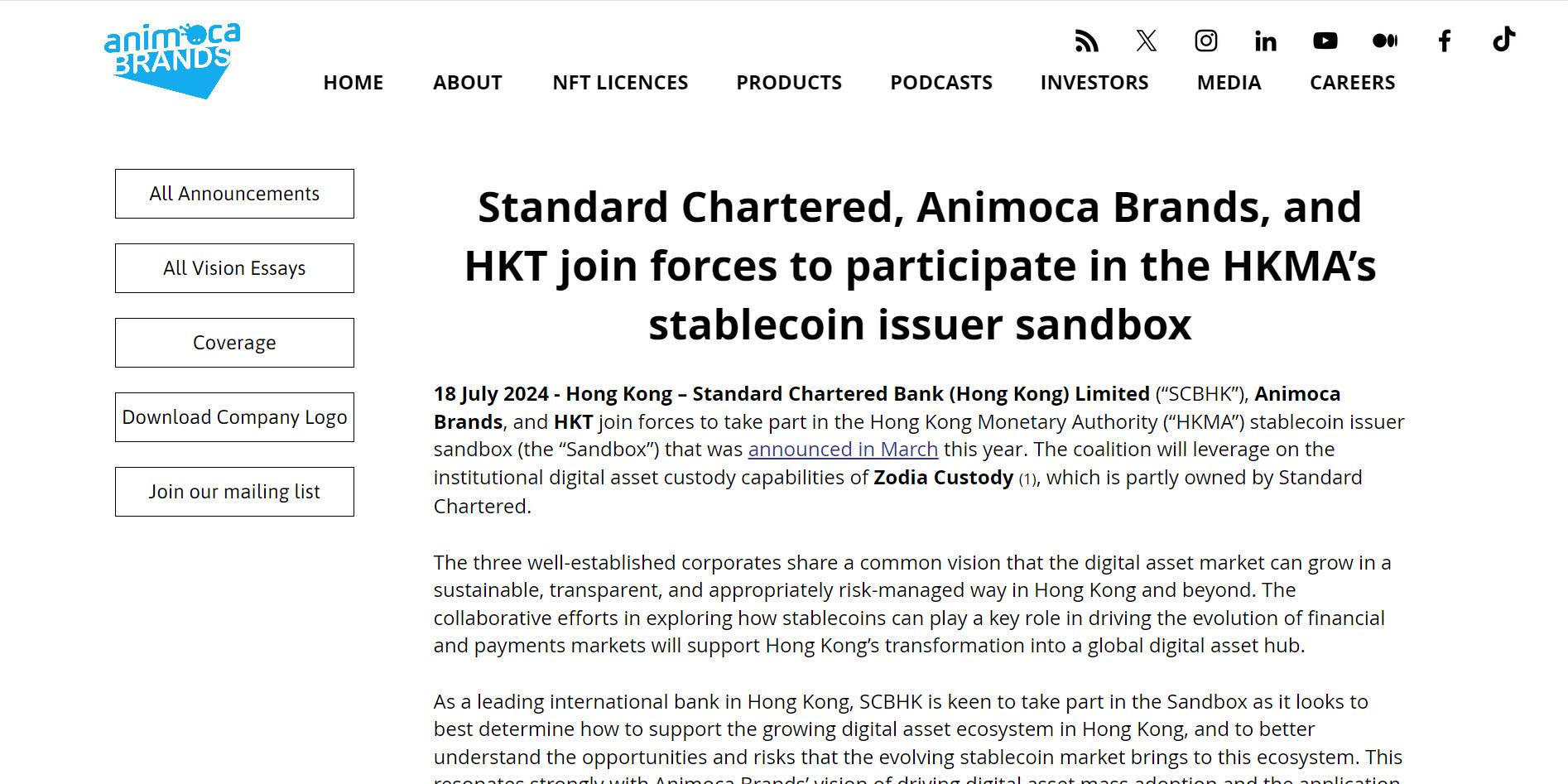
On July 18, the Hong Kong Monetary Authority (HKMA) announced the first batch of three participants in its stablecoin "sandbox," including JD B-chain Technology (Hong Kong) Limited, Circular Coin Innovation Technology Limited, and a joint application by Standard Chartered Bank (Hong Kong) Limited, Animoca Brands Limited, and Hong Kong Telecom Limited (HKT).
Earlier this year in March, the HKMA launched a "sandbox" for stablecoin issuers. It received dozens of inquiries from institutions, with several well-prepared ones submitting formal applications. Once inside the sandbox, these three institutions can test their intended business models within defined parameters and engage with the HKMA on how they might comply with the proposed regulatory regime for stablecoins.
In terms of background, the three participants differ significantly—so which one holds stronger credentials? Jeffery Ding, an analyst at Hashkey, said that stablecoins in Hong Kong are set to “bloom in multiple forms,” positioning the region as the world’s first jurisdiction to support banks issuing stablecoins. Digital banks and insurers have already begun moving forward, establishing more collaborations with sandbox participants.
Sandbox List Released: Which Applicant Has the Strongest Credentials?
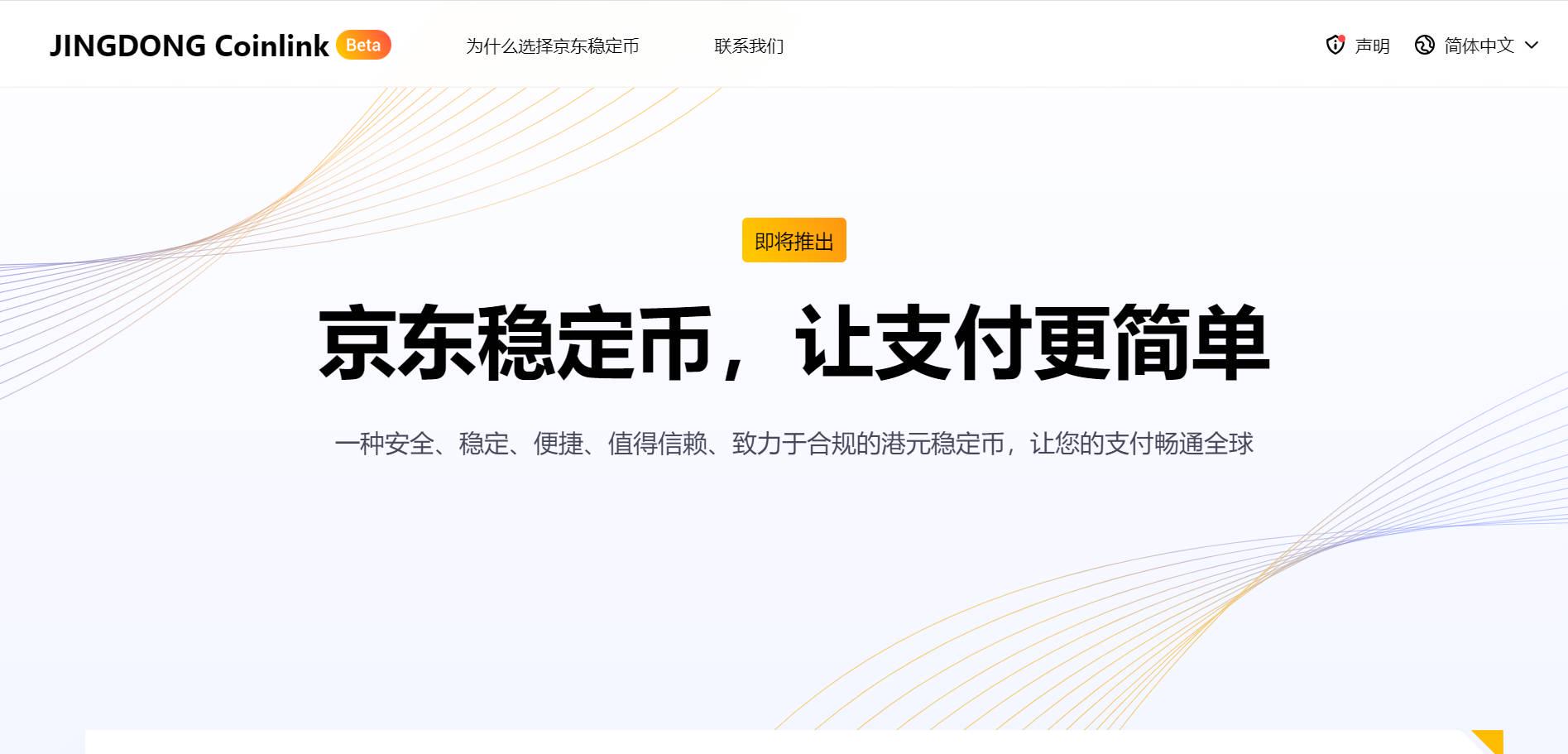
JD B-chain Technology is backed by its parent company, JD Technology, which has roots in e-commerce. The company was officially registered in March 2024 and focuses primarily on digital currency payment systems and blockchain infrastructure development. According to LinkedIn, CEO Liu Peng currently serves as Vice President at JD Technology and has extensive experience in fintech, having previously worked at Tencent, Huawei, Ant Group, and JD. JD B-chain Technology has already obtained licenses from the Securities and Futures Commission (SFC) in Hong Kong for Type 1 (securities trading), Type 4 (advising on securities), and Type 9 (asset management).
Circular Coin Innovation Technology has expertise in DeFi, digital payments, and fintech. The company develops and operates various DeFi applications, offering users services such as decentralized exchanges, lending, and yield farming. Through technological innovation, it provides cryptocurrency payment solutions supporting multiple cryptocurrencies for payment and settlement. The firm is actively advancing the research and issuance of HKDR, a Hong Kong dollar-pegged stablecoin.
Standard Chartered Bank (Hong Kong) Limited, Animoca Brands Limited, and HKT are teaming up—a powerful alliance. Standard Chartered Bank (Hong Kong) is setting up trading desks for Bitcoin and Ethereum, making it one of the first global banks to enter spot crypto trading. Additionally, through its subsidiary Zodia Custody, the bank has launched cryptocurrency custody services in Hong Kong, primarily targeting institutional investors. In blockchain applications, Standard Chartered (Hong Kong) successfully completed its first cross-blockchain platform pilot transaction linking Hong Kong's eTradeConnect with the People's Bank of China's Trade Finance Platform (PBCTFP).
As for Animoca Brands Limited, the well-known Hong Kong-based leader in blockchain gaming and digital entertainment, the company reported significant financial growth in the first quarter of 2024. Its booking revenue reached $90 million, up 72% from $52 million in the same period of 2023. Of this, $65 million came from digital asset consulting services, including token advisory, trading, and blockchain node operations.
Hong Kong Telecom Limited (HKT) is one of the largest integrated telecommunications service providers in Hong Kong, founded in 1925.
Adequate Reserves Required; Only Licensed Fiat-Backed Stablecoins Can Be Offered to Retail Users
Stablecoins represent one of Hong Kong’s key commitments and initiatives to support Web3 development.
Since January 2022, Hong Kong regulators have been advancing stablecoin policy. In January 2022, the consultation process summarized feedback received and clarified the preliminary direction of the regulatory framework. On December 27, 2023, the Financial Services and Treasury Bureau (FSTB) and the HKMA jointly issued a consultation paper on the proposed regulatory regime for stablecoin issuers, seeking further public and industry input. On March 12, 2024, the HKMA unveiled its "Stablecoin Issuer Sandbox" policy, allowing testing of stablecoin issuance within a regulatory sandbox. On July 17, 2024, the consultation summary was released, compiling public opinions and proposing legislative recommendations for implementing the stablecoin issuer regulatory regime in Hong Kong. The next step involves submitting legislation to the Legislative Council for review and issuing relevant guidelines.
One key requirement for approval into the sandbox is that applicants must propose specific use cases and explain how their stablecoin business can practically address pain points in economic activities, bringing tangible benefits and new opportunities to Hong Kong’s economy and financial ecosystem. The primary use cases proposed by the first wave of sandbox participants include payments, supply chain management, and capital markets. Other proposed use cases include Web3, gaming, and virtual asset trading.
As early as December 27, 2023, HKMA Chief Executive Eddie Yuen wrote that stablecoins could serve as an interface between traditional finance and the virtual asset market. If stablecoins gradually become a popular payment method among the general public, the integration between digital payments and the real economy may deepen. In such a scenario, whether stablecoins truly meet the conditions for “stability” becomes critically important.
From a holder’s perspective, if a stablecoin issuer fails to maintain sufficient reserve assets to uphold the coin’s stable value or cannot redeem the coins at par value within a reasonable timeframe, not only would holders suffer financial losses, but their daily payment needs could also be disrupted, potentially disturbing economic activity. Moreover, to meet redemption demands, stablecoin issuers might need to sell off reserve assets in financial markets to raise cash, which could negatively impact financial stability.
Under the HKMA’s proposed regime, any entity wishing to issue fiat-referenced stablecoins (i.e., "fiat-backed stablecoins") in Hong Kong must apply for a license from the HKMA. Issuers will be required to have a physical presence in Hong Kong, appoint local management, and meet minimum capital requirements. Licensees must establish effective stabilization mechanisms—for example, maintaining fully backed reserves composed of high-quality, highly liquid assets (such as bank deposits or short-term debt securities in the corresponding currency) under proper custodial arrangements—to ensure users can convert stablecoins into fiat currency at face value whenever desired. Licensees must also comply with governance, risk management, anti-money laundering (AML), and counter-terrorism financing (CFT) requirements.
Additionally, the HKMA plans to set rules for other market participants interested in offering stablecoin purchase services. Notably, only licensed issuers’ fiat-backed stablecoins will be permitted for sale to retail investors.
Given practical needs for the effective operation of the sandbox, entry thresholds are substantial, and only applicants fully meeting the above criteria will be admitted. Before the new legislation is enacted, the HKMA will continue handling sandbox inquiries and applications.
Moreover, participation in the sandbox is not a prerequisite for future applications for a stablecoin issuer license. Institutions in the sandbox must strictly adhere to its rules—for example, they must not raise funds from the public or offer any investment products under the name of the sandbox, nor use public funds during the initial phase.
Future Trends: Stablecoins Poised for Diversified Growth, Inter-Institutional Collaboration to Expand
In response to the consultation summary published by the FSTB and HKMA on the proposed regulatory regime for stablecoin issuers, Jeffrey Ding, Chief Analyst at HashKey Group, noted that Hong Kong now imposes strict regulations on fiat-backed stablecoin issuers, requiring full backing by high-quality, highly liquid reserve assets. As for widely adopted stablecoins like USDT and USDC, their ability to operate in Hong Kong going forward will depend on whether they can successfully transition under the new rules. One challenge: only issuers with a physical entity in Hong Kong will be eligible to apply. Another consideration: viewed against the backdrop of Europe’s MiCA stablecoin regulations, only those issuers who place reserves in banks may gain regulatory recognition amid the shifting landscape—posing obstacles for some existing players.
On the other hand, Hong Kong may witness a diversified landscape where multiple types of stablecoins coexist—banks issuing their own, exchanges launching theirs. Should banks successfully roll out their own stablecoins, Hong Kong would become the first jurisdiction globally to allow this, setting a precedent for global stablecoin regulation.
The launch of the sandbox has drawn attention from industry professionals and institutions alike. Paul Yau, CEO of ZA Bank, said the bank is currently discussing cooperation with nearly 10 stablecoin firms and expects more projects to emerge. Zhang Yu, COO of OneInfinity by OneDegree—a Hong Kong-based digital asset insurer—said the company has developed customized insurance and risk management solutions to help stablecoin issuers mitigate associated risks. Moses Ma, Senior Partner at KPMG China’s Hong Kong banking practice, pointed out that introducing a regulatory regime for stablecoin issuers could drive innovation and practical adoption of stablecoins in Hong Kong.
Join TechFlow official community to stay tuned
Telegram:https://t.me/TechFlowDaily
X (Twitter):https://x.com/TechFlowPost
X (Twitter) EN:https://x.com/BlockFlow_News
 PANews