








Biden drops out: Where do Harris and other potential Democratic presidential candidates stand on cryptocurrency?
TechFlow Selected TechFlow Selected
Biden drops out: Where do Harris and other potential Democratic presidential candidates stand on cryptocurrency?
The Democratic Party's presidential candidate will be decided at the party convention held in Chicago from August 19 to 22.
 Navigating Web3 tides with focused insights
Source: unchainedcrypto
Translation: 0xjs@Jinse Finance
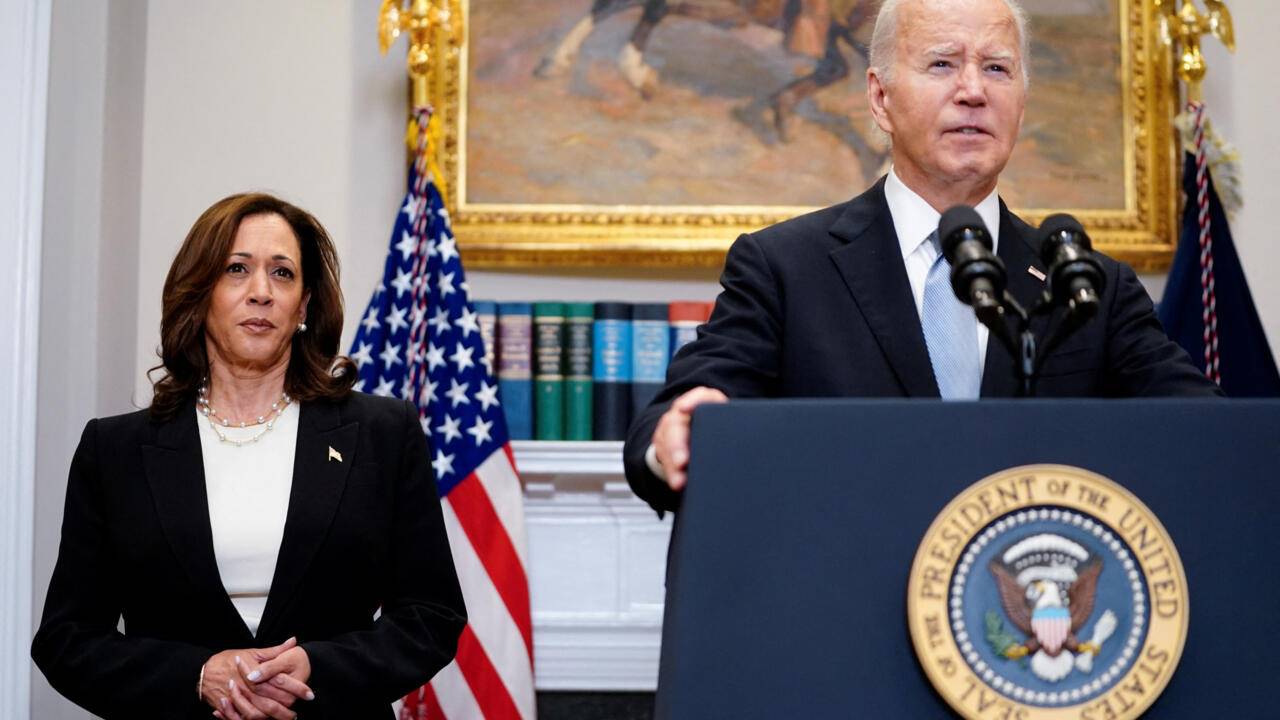
On July 21, U.S. President Joseph Biden unexpectedly announced he would step down as the Democratic Party's presidential candidate and endorsed Vice President Kamala Harris to become the Democratic nominee.
This has forced the cryptocurrency industry to now consider her impact, along with other potential Democratic candidates, on the sector.
Although Harris is now the overwhelming favorite to secure the nomination, her position on the ticket remains uncertain—particularly as some Democrats worry about her chances of defeating Republican candidate Donald Trump in the general election.
The Democratic presidential nominee will be formally decided at the party’s convention in Chicago from August 19 to 22.
Below are the most likely Democratic presidential candidates’ stances on cryptocurrency:
Vice President Kamala Harris
Harris has never voted on any major cryptocurrency policy matters during her time in Congress, and as vice president, she has remained largely silent on the technology.
Given her tenure as a senator and attorney general in California, some view her as friendly to Silicon Valley and potentially favorable toward the crypto industry. (Translator’s note: Financial disclosures show that neither Harris nor her husband, Douglas Emhoff, have invested in cryptocurrencies; they prefer U.S. Treasury bonds and emerging market funds. However, during her 2020 campaign, Harris hired Ryan Montoya, former CTO of the NBA’s Sacramento Kings, as her scheduling and advance director. Under Montoya’s leadership, the Kings became the first professional sports team in the world to accept Bitcoin.)
However, if she becomes president and chooses to continue the Biden administration’s cautious approach and the SEC’s adversarial stance toward the industry, little may change.
California Governor Gavin Newsom
Newsom has been Biden’s top surrogate, but many believe he has long been running a shadow campaign for president. On cryptocurrency, Newsom has taken concrete steps shaping crypto regulation in California. In May 2022, he signed an executive order establishing a licensing framework for crypto companies in the state. Although he initially vetoed a bill in September 2022 aimed at creating such a framework, he later signed the Digital Financial Assets Law in October 2023—a move some say positions California to compete with New York’s BitLicense regulatory regime.
Among potential candidates, Newsom likely has the deepest understanding of the crypto industry, suggesting he could make more informed policy decisions and would at least be willing to collaborate with the industry on national policy and education. However, several other governors are considered more likely to win support from Democratic donors and ultimately defeat Trump.
Michigan Governor Gretchen Whitmer
Whitmer is seen as a potential candidate because she could help secure a key battleground state. She has not discussed any personal stance on cryptocurrency, nor has she advanced significant crypto policy initiatives in Michigan. This suggests that if she becomes president, she might respond reactively to crypto policy issues—or simply lack interest in the topic altogether. While states like California have implemented regulatory frameworks for the industry, there is no indication Whitmer would prioritize similar actions.
Illinois Governor JB Pritzker
With an estimated net worth of $3.5 billion, Pritzker is someone who could self-fund a presidential campaign. If any potential candidate could be described as “pro-crypto,” it might be Pritzker—at least prior to the 2022 collapse of FTX, when his office remained largely silent on crypto. In a 2021 Facebook post, however, Pritzker welcomed CoinFlip, a crypto ATM company, to expand its presence and workforce in Chicago, stating, “The future of crypto is in Illinois.”
Moreover, under Pritzker’s leadership, Illinois has been an early adopter of cryptocurrency. It’s also not unusual that his office stopped promoting the industry after the FTX scandal erupted, as many legislative bodies—including Congress—quickly paused advancing crypto policies until more was known about what happened at FTX. Nevertheless, if the crypto industry hopes to see someone become the Democratic presidential nominee or even Harris’s running mate, Pritzker may be the best option.
Pennsylvania Governor Josh Shapiro
Like Whitmer, Shapiro is considered a possible presidential candidate due to his role as governor of a crucial swing state. During his tenure, Pennsylvania’s Department of Banking and Securities decided to include “cryptocurrency” within the definition of “money” under the state’s money transmission law—a shift from the 2019 policy before Shapiro became governor. While Shapiro hasn’t taken any major action on crypto, he also hasn’t made negative remarks about the industry—even after crypto mining firms exploited state tax incentives originally intended to support data center development. Therefore, he may be open to exploring a regulatory framework for crypto at the state level.
Potential U.S. Senators or Cabinet Officials
While governors may face long odds in securing the presidential nomination, two U.S. senators and one cabinet official have notable positions on cryptocurrency worth briefly reviewing.
Senator Cory Booker (D-NJ)
Booker co-sponsored the 2022 Digital Commodities Consumer Protection Act, which would empower the Commodity Futures Trading Commission (CFTC) to regulate digital assets as commodities. He also voted in favor of a resolution to overturn the SEC’s SAB 121, a rule requiring crypto exchanges and custodians to record customers’ crypto assets as liabilities on their balance sheets—a measure strongly opposed by the crypto industry. Ultimately, President Biden vetoed the resolution. According to Open Secrets, Booker received $17,500 in contributions from the crypto industry in 2024.
Senator Mark Kelly (D-AZ)
Alongside Booker, Kelly was one of twelve Democratic senators who voted to overturn SAB 121. According to the same Open Secrets report, Kelly received $3,323 in campaign contributions from the crypto industry in 2024.
Transportation Secretary Pete Buttigieg
To date, Buttigieg, as Transportation Secretary, has not commented on cryptocurrency or expressed any public stance indicating his views on the matter.
Join TechFlow official community to stay tuned
Telegram:https://t.me/TechFlowDaily
X (Twitter):https://x.com/TechFlowPost
X (Twitter) EN:https://x.com/BlockFlow_News
 @Unchained_pod









