








What Is the Fed's "Project 2025" Monetary Policy Proposal All About?
TechFlow Selected TechFlow Selected
What Is the Fed's "Project 2025" Monetary Policy Proposal All About?
Under a free banking system, neither interest rates nor the money supply are controlled by the government, and the Federal Reserve is effectively abolished.
 Navigating Web3 tides with focused insights
Author: Nicholas Jasinski
A widely circulated conservative policy agenda for the next presidential administration would impose significant constraints on the Federal Reserve's mandate and monetary policy tools.
The so-called "Project 2025," proposed by the Heritage Foundation, a conservative think tank, includes key recommendations for the Fed such as focusing exclusively on controlling inflation, shrinking its balance sheet, and ending its role as lender of last resort. Further proposals suggest returning the U.S. to the gold standard or abolishing the Federal Reserve altogether.
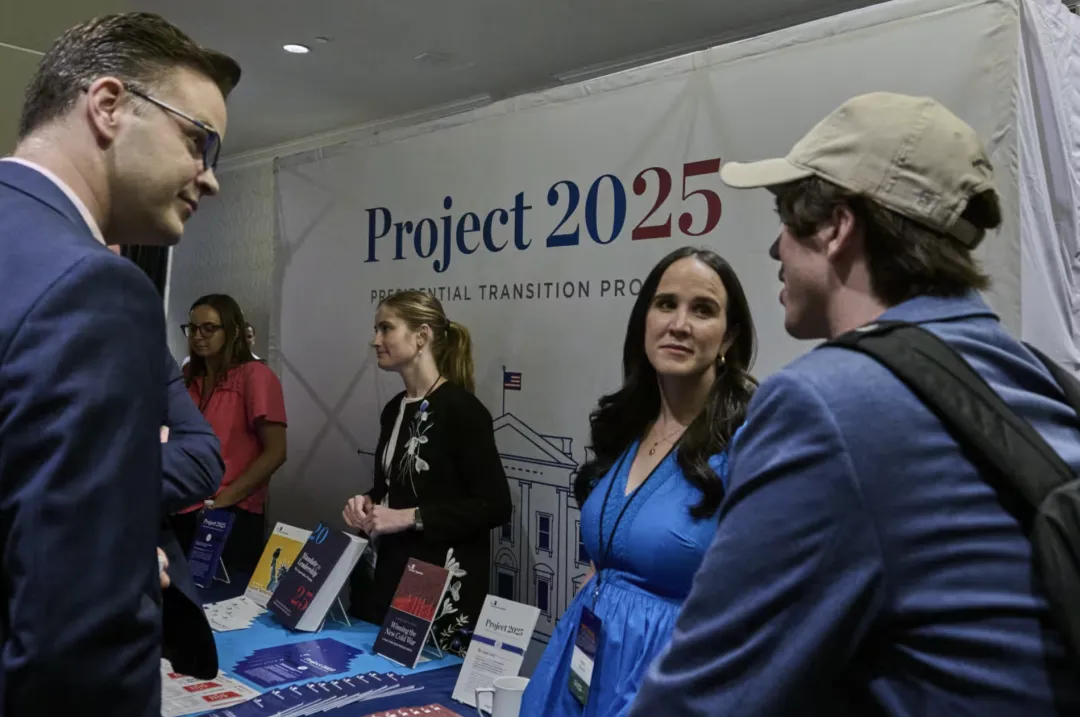
Project 2025’s broad policy agenda is laid out in a roughly 900-page book titled *Mandate for Leadership: The Conservative Promise*. Edited by Paul Dans and Steven Groves—both of whom served in the Donald Trump administration—the book features contributions from around 400 conservatives who offer detailed recommendations for the White House and every federal agency.
The chapter on the Federal Reserve harshly criticizes what it describes as the Fed’s “incompetent” management of the nation’s money supply and financial regulation since Congress created it in 1913. The report argues that the Fed’s responsibilities have expanded significantly over time and claims the central bank faces political pressure to stimulate economic growth ahead of elections and to finance government budget deficits.
The book states: “A core problem with government control of monetary policy is that it faces two inevitable political pressures: the pressure to print money to subsidize government deficits, and the pressure to print money to artificially stimulate the economy until the next election. These pressures will always exist in the hands of self-interested politicians, so the only permanent remedy is to take the steering wheel of money away from the Fed and return it to the people.”
Project 2025 makes several sweeping recommendations regarding the Fed. First, it calls for eliminating the dual mandate—the current objective of ensuring both price stability and maximum employment. The book argues this creates a destructive bias toward inflation in the name of avoiding recessions.
It reads: “Supporters of this broader mandate claim that monetary policy is necessary to help the economy avoid or escape recessions. This compromising view is wrong. In fact, the same loose monetary policies also lead to a series of failures that ultimately trigger recessions. In other words, the dual mandate may inadvertently worsen recessions rather than fix them.”
Instead, the book argues the Fed should focus solely on curbing inflation. Changing the dual mandate would require congressional legislation. In recent weeks, Fed officials have increasingly emphasized the labor market aspect of the dual mandate. Since 2022, inflation has slowed significantly—though it remains above the Fed’s 2% annual target—while the labor market has begun cooling from overheated levels.
Project 2025 recommends gradually reducing the size of the Fed’s balance sheet assets—currently over $7 trillion—and restricting future asset purchases to U.S. Treasury securities only. After the 2007–08 financial crisis, the Fed implemented multiple rounds of quantitative easing, causing its balance sheet to balloon rapidly. During the pandemic, the Fed again expanded its balance sheet by injecting liquidity into the U.S. banking system through large-scale purchases of Treasuries and mortgage-backed securities. In June 2022, the Fed began gradually shrinking its balance sheet—a process known as quantitative tightening (QT).
The authors of Project 2025 argue that quantitative easing inflated federal budget deficits at the expense of other borrowing in the economy, while purchases of mortgage-backed securities drove up home prices and rents by suppressing mortgage rates.
Additionally, the book recommends eliminating the central bank’s lender-of-last-resort function. During periods of severe financial stress, the Fed has provided liquidity to banks and other financial institutions to prevent bank runs and contain the spread of crises throughout the financial system.
Project 2025 contends this creates moral hazard and excessive speculation, leading to the emergence of “too big to fail” institutions.
The book states: “This amounts to a permanent bailout program and encourages banks and non-bank financial institutions to engage in reckless lending and even speculation. Not only does this amplify economic cycles, but it could also lead to financial crises requiring bailouts, such as those seen in 1992 and 2008.”
Other broader but politically less feasible suggestions in the book include transitioning to a free banking system, restoring the gold standard, and adopting more formulaic or rules-based approaches to monetary policy.
The book explains: “Under a free banking system, neither interest rates nor the money supply would be under government control. The Federal Reserve would effectively be abolished, and the Treasury Department would largely limit itself to managing government finances.”
Due to concerns that the federal government might monitor financial transactions, Project 2025 also opposes the creation of a central bank digital currency (CBDC), which the Fed has been researching for years.
Trump accepted the Republican nomination this week and is poised to return to the White House in November. He has recently tried to distance himself from the plan, although it was prepared by numerous former Trump administration officials and advisers.
The chapter on the Federal Reserve was primarily written by economist Paul Winfree, who currently leads the Center for Economic Policy Innovation in Washington, D.C., and previously served as Director of Economic Policy Research at the Heritage Foundation during two separate stints (2015–2016 and 2018–2022). During the Trump administration, Winfree held several positions in the White House, beginning with the 2016 presidential transition team, followed by roles as Deputy Assistant to the President for Domestic Policy, Deputy Director of the Domestic Policy Council, and Director of Budget Policy.
Other contributors to the Fed chapter include economists Alexander Salter, Peter St. Onge, and Judy Shelton—all of whom were nominated by Trump to serve on the Federal Reserve Board in 2019 but were not confirmed by the Senate.
Join TechFlow official community to stay tuned
Telegram:https://t.me/TechFlowDaily
X (Twitter):https://x.com/TechFlowPost
X (Twitter) EN:https://x.com/BlockFlow_News












