








J.D. Vance's Rise to Vice Presidential Candidate: A Right-Wing Cultural Narrative of Poverty and Bitcoin
TechFlow Selected TechFlow Selected
J.D. Vance's Rise to Vice Presidential Candidate: A Right-Wing Cultural Narrative of Poverty and Bitcoin
No poor person dislikes Bitcoin, except Lang Xianping.
 Navigating Web3 tides with focused insights
By TechFlow

On July 15, Donald Trump selected Ohio Senator J.D. Vance as his vice-presidential running mate for the 2024 election.
Suddenly, social media feeds were flooded with posts.
On one hand, J.D. Vance is crypto-friendly.
According to disclosed personal financial reports, as of 2022, he held between $100,000 and $250,000 worth of Bitcoin on Coinbase.
J.D. Vance has repeatedly voiced support for cryptocurrencies. In 2022, when the Canadian government froze bank accounts linked to Ottawa trucker protests, he posted: "This is why cryptocurrencies thrive—when your political views are wrong, the government cuts off your access to banking services."
He has also criticized SEC Chair Gary Gensler for politicizing cryptocurrency regulation.
On the other hand, many people—including this author—have read J.D. Vance’s book *Hillbilly Elegy*, and reading it helps explain why Trump won in 2016.
When discussing internal American societal tensions or grassroots discontent, most intuitively think of Black and Latino communities. But reality differs: according to research, white working-class Americans are the most pessimistic demographic.
Vance grew up within this underclass, born into a poor industrial town in America's "Rust Belt," in an ordinary working-class family.
Globalization led to manufacturing offshoring; once-thriving industries rapidly declined, plunging local lives into a vicious cycle: fathers trapped in poverty, alcoholism, drug abuse, domestic violence—all passed down to the next generation.
A life devoid of hope breeds resentment and anger. Trapped by survival, their thinking becomes rigid—especially among youth full of passion but starved of social connections. Even if they want change, no one shows them where to begin. They’re forced to repeat their parents’ paths. No matter how hard they try, it’s futile. Born poor, inheriting poverty—like original sin, haunting locals for life.
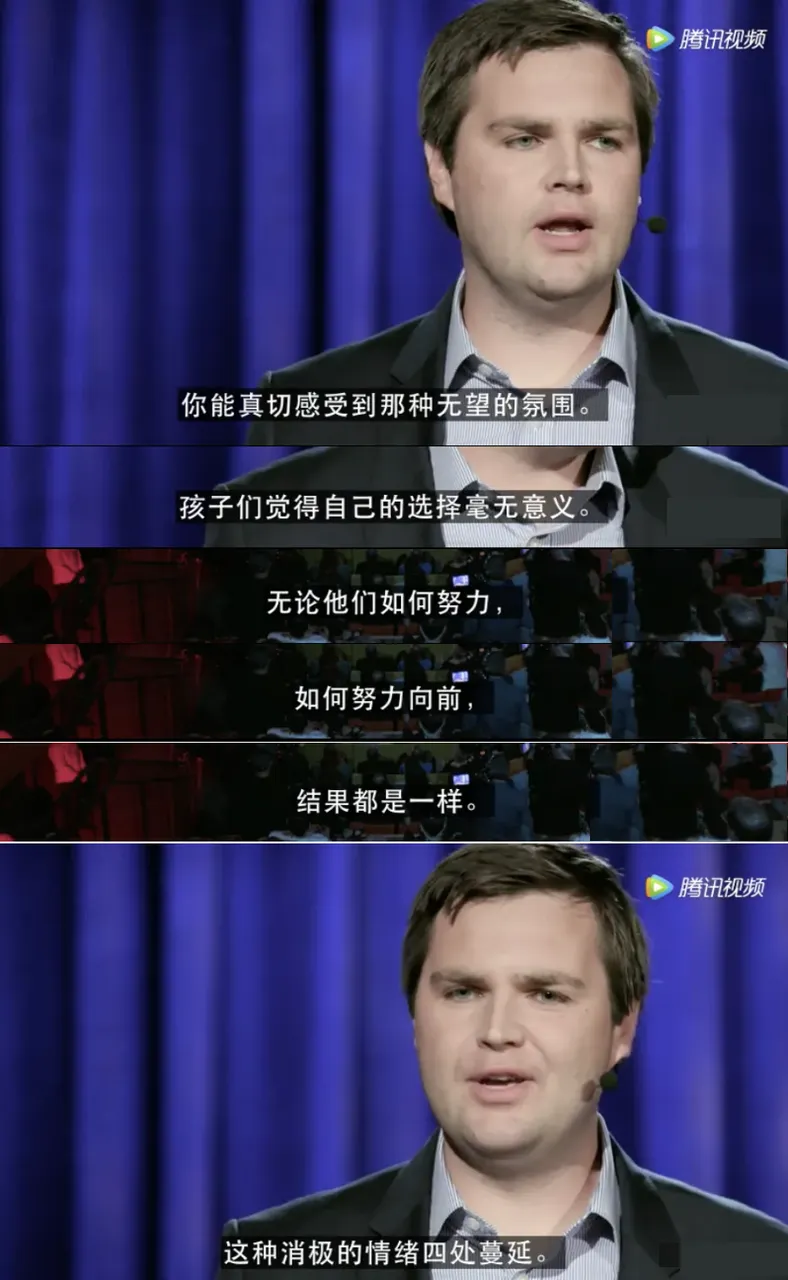
Vance’s childhood was chaotic. Not only did his biological father leave, but his mother struggled with drug and alcohol addiction. Fortunately, Vance’s grandmother loved him deeply and had vision. To prevent her grandson from reliving the previous generation’s hardships, she did everything possible to create a relatively stable home. After his mother entered rehab, Vance lived with his grandmother for three years, experiencing warmth and harmony.
His grandmother encouraged Vance to change his fate through education: “If you want a job that lets you spend weekends with your family, you need to go to college and achieve something.”
After high school, Vance received admission offers from Ohio State University and Miami University. But for someone from a poor background, tuition was unaffordable. So he chose an indirect path—enlisting in the Marine Corps.
After returning from military service, he resumed studies, working multiple part-time jobs to pay tuition. In August 2009, Vance graduated from Ohio State with excellent grades.
Soon after, he was admitted to Yale Law School with a full scholarship. At Yale, Vance met a pivotal mentor—Amy Chua, author of *Battle Hymn of the Tiger Mother* and then a contract law professor.
Chua found Vance’s experiences fascinating and strongly urged him to write about rural life in Ohio. Initially resistant, Vance eventually began writing pieces for Chua, who responded positively.
Later, Chua introduced Vance to a literary agent, launching his career as an author.
In 2016, *Hillbilly Elegy: A Memoir of a Family and Culture in Crisis* was published—right during Trump’s presidential campaign—and quickly topped Amazon’s U.S. bestseller list. New York Times critic Jennifer Senior wrote: “Vance offers a compassionate, insightful sociological analysis of how disenfranchised white Americans propelled Trump’s rise.”
Trump’s son, Donald Jr., loved the book and later became close friends with Vance. Though at the time, Vance was still a vocal Trump critic, calling him a “complete con artist,” a “moron,” even comparing him to “America’s Hitler.” Yet during this year’s Republican primaries, Vance called Trump the “greatest president” he’d ever encountered.
From underclass roots to bestselling author and senator, Vance’s story resembles a cinematic version of the American Dream.
Yet in a TED Talk, Vance said: “For those of us lucky enough to achieve the American Dream, the demons we’ve faced still chase us closely. No matter my talents, without the help of many kind people, they would have gone to waste.”
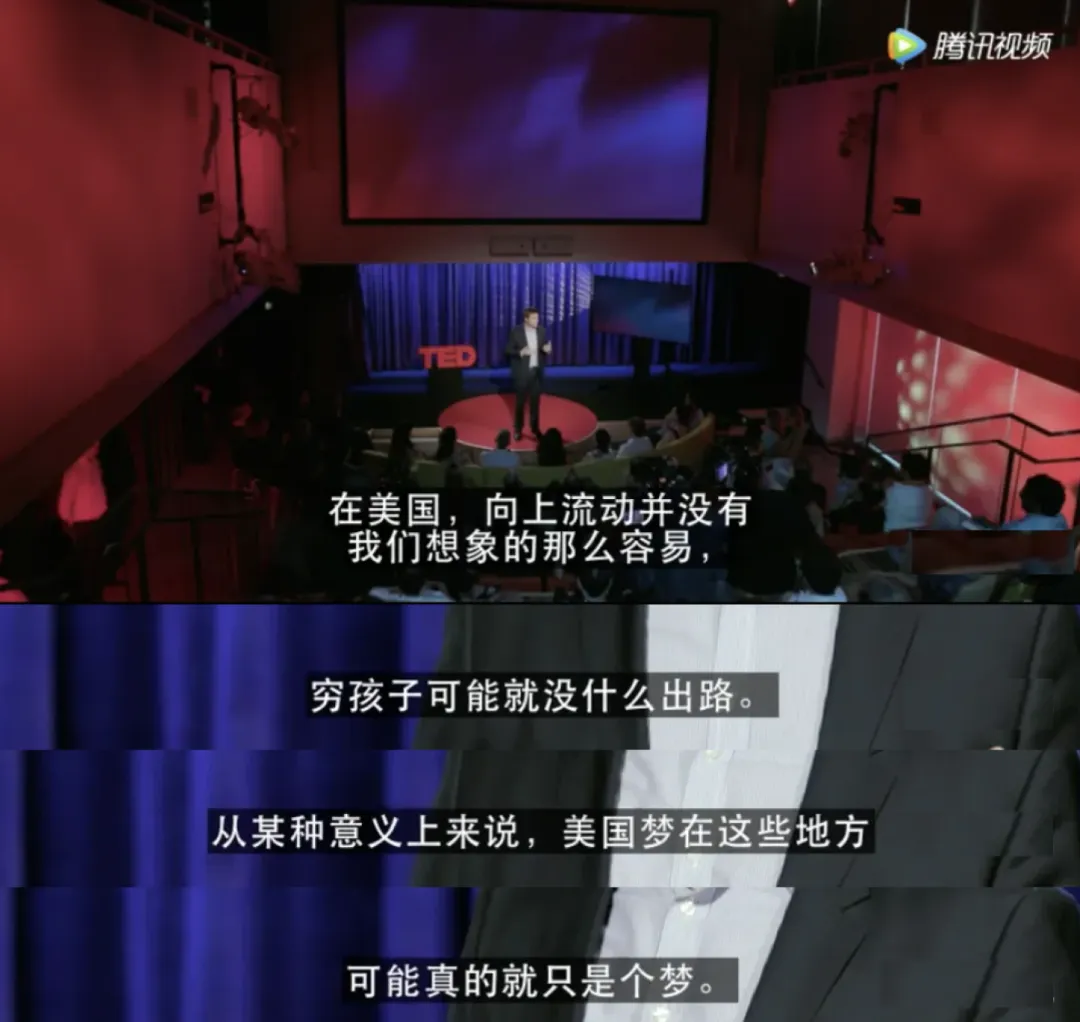
Perhaps, as Vance suggests, his success involved luck and mentors—a mere survivor escaping the game of survival.
Goodness is often abstract; evil, concrete and clear. For the poor, poverty is like original sin—rooted in the dark corners of the world and the human soul. Being born poor means information isolation, rigid thinking, poor judgment, inability to recognize opportunities or leverage social resources—all while being mocked as “a bunch of lazy idiots.” This poverty and helplessness gets inherited across generations, silently growing into quagmires that devour the futures of the unfortunate.
So what does this have to do with Bitcoin?
Believe me, no poor person dislikes Bitcoin—unless they’re Lang Xiping.
Ideologically, Bitcoin carried a right-wing, “anarchist” value system from day one. Given Vance’s role today as a leading figure of the American right, his affinity for Bitcoin is easy to understand.
In the 18th century, economist Richard Cantillon proposed a famous theory later known as the Cantillon Effect: simply put, those who receive new money first benefit more than those who get it later.
Money printing makes the rich richer and the poor poorer. When large amounts of new money enter an economy, the first recipients—typically the wealthy—spend it before prices rise, investing in real estate, precious metals, art, and other assets.
By the time this money trickles down to the poor (if it ever does), inflation has significantly eroded its value. As prices rise, the rich see income growth and rising asset values, while the poor suffer declining real incomes due to soaring living costs.
This may be one of capitalism’s inherent flaws. Nearly all current economies treat money printing as the ultimate solution—and in the short term, it works.
The only way for society’s poorest to reclaim power from the top 1% is to eliminate their ability to manipulate fiat currency.
Can Bitcoin challenge centuries of capitalist monetary dominance without bloodshed?
If Bitcoin’s core is freedom, will it ultimately exacerbate or alleviate inequality?
I don’t know. Suddenly, I recall a line from *Dying to Survive*: There’s only one disease in this world—poverty.

Join TechFlow official community to stay tuned
Telegram:https://t.me/TechFlowDaily
X (Twitter):https://x.com/TechFlowPost
X (Twitter) EN:https://x.com/BlockFlow_News
 深潮TechFlow











