








Data Analysis: Germany's Bitcoin Sales May Not Be the Primary Cause of Recent Price Drop
TechFlow Selected TechFlow Selected
Data Analysis: Germany's Bitcoin Sales May Not Be the Primary Cause of Recent Price Drop
Although the German government's sell-off had some impact, it was not the main reason for Bitcoin's recent price decline (at least not directly).
 Navigating Web3 tides with focused insights
Author: Jan Wüstenfeld
Translation: Felix, PANews
Germany's sale of Bitcoin has been a hot topic recently. Over the past month, starting around June 19, Saxony in Germany began transferring and selling Bitcoin from wallets linked to the German Federal Criminal Police Office (BKA). The BKA had seized nearly 50,000 Bitcoins (worth approximately $2.12 billion) from the operators of Movie2k.to, a movie piracy website active in 2013.
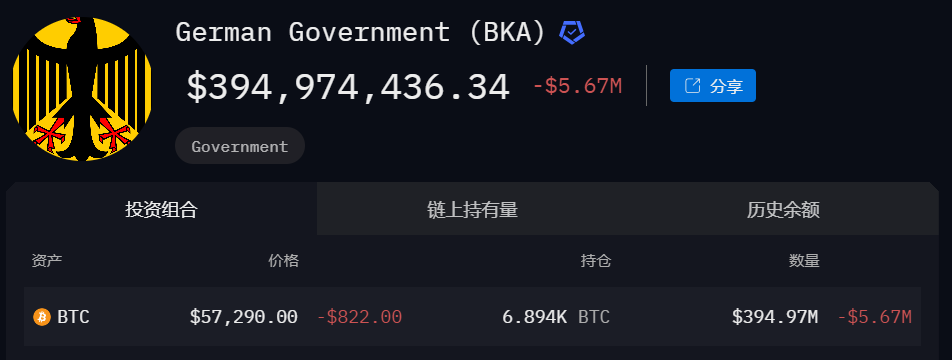
The BKA received these Bitcoins in mid-January after the suspect “voluntarily transferred” them. Since they began withdrawing Bitcoin from the wallet, their holdings had dropped to 6,894 BTC by July 12 at 17:00 (UTC+8). (PANews note: As of now, this address has fully liquidated its holdings, retaining only 0.005 BTC.)
Since the outflows began, Bitcoin’s price has declined by about 11%.
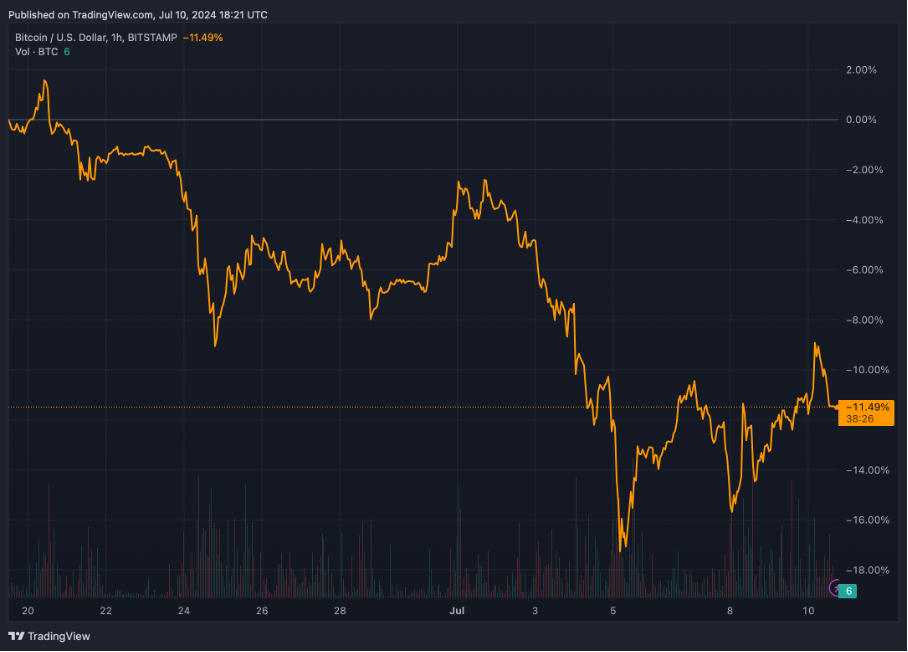
So, was the price drop caused by Germany? The answer is no, at least not directly. Here’s why:
Analyzing Transaction Timing and Price Movements
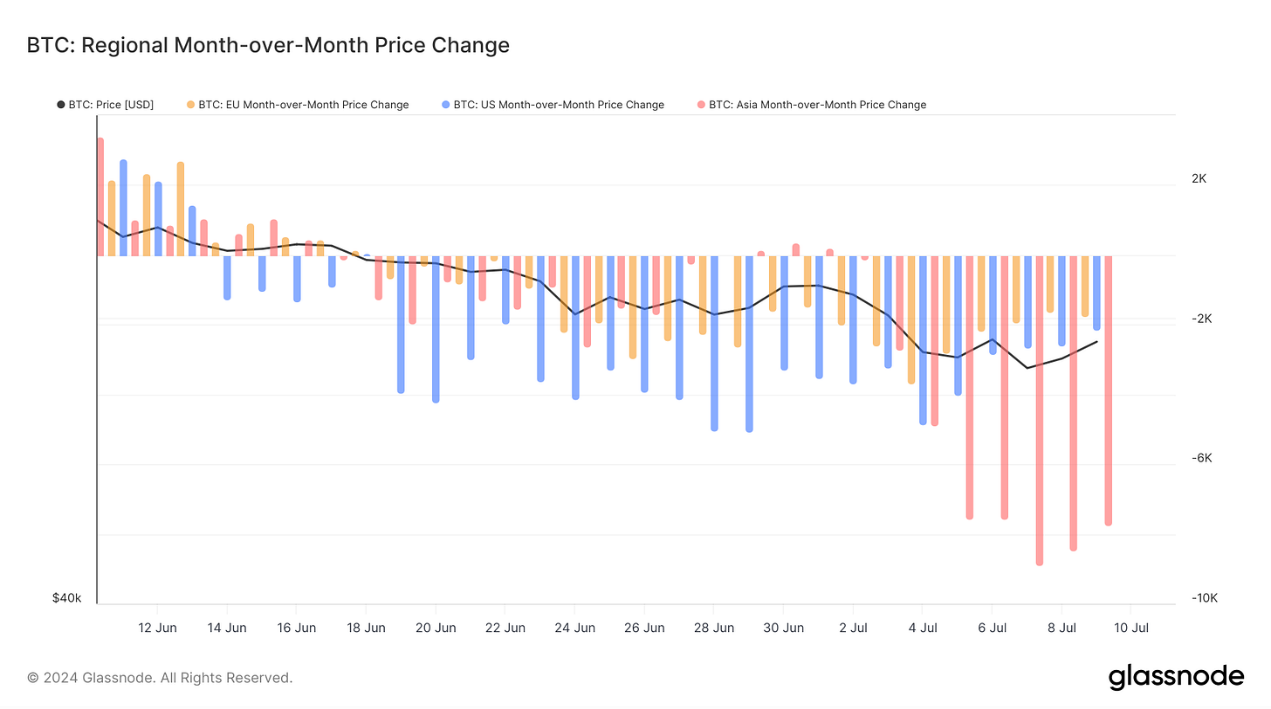
To better understand the situation, let’s examine transaction timing and monthly price declines over the past few months. The chart below divides trading activity into European, Asian, and U.S. trading hours, defined as follows:
-
U.S.: 8:00 AM to 8:00 PM Eastern Time (UTC 13:00–01:00)
-
Europe: 8:00 AM to 8:00 PM Central European Time (UTC 7:00–19:00)
-
Asia: 8:00 AM to 8:00 PM China Standard Time (UTC 00:00–12:00)
Although price drops occurred during European trading hours, the decline was more pronounced during U.S. trading hours. In particular, over the past five days, most of the month-on-month price drop took place during Asian trading sessions. This suggests that Germany’s sell-off was not the direct cause of most of the price decline, as German officials are unlikely to be selling their Bitcoin holdings overnight.
Notably, wallet flow data also supports this observation.
Wallet Flow Data
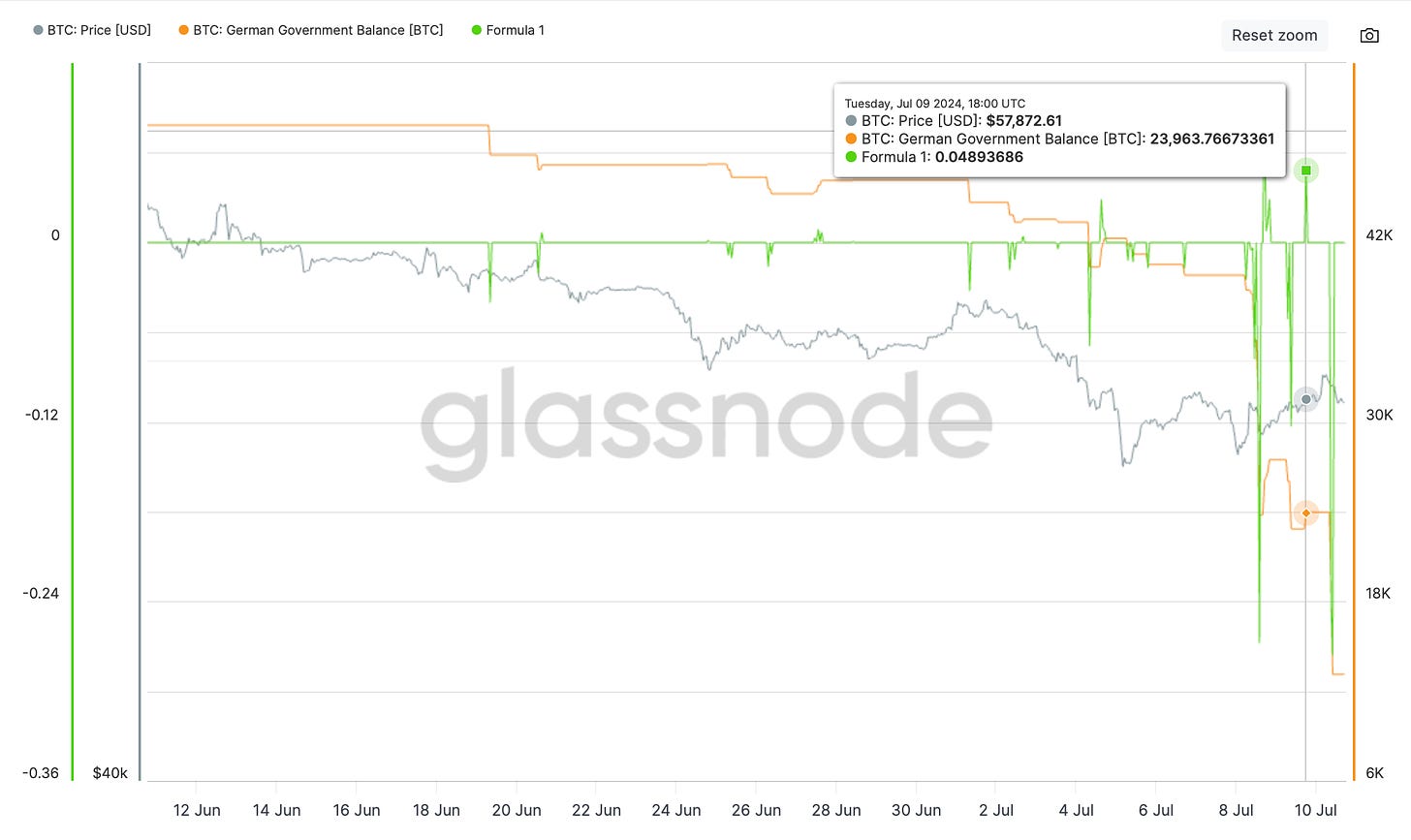
Wallet flow data provides further insight. It appears that German authorities are not selling their Bitcoin holdings over-the-counter, but are instead active on exchanges. This offers an advantage—it allows us to track their behavior more closely.
We observed outflows from the wallet during daytime (European time), followed by inflows back into the wallet between 6:00 PM and 8:00 PM UTC (evening hours in Germany).
Why do they do this? It seems they place limit sell orders during the day, and when officials go home in the evening, they cancel all unfilled limit orders and move any remaining Bitcoin back into the wallet. This could be for security reasons—presumably, they don’t want large amounts of Bitcoin sitting on exchanges overnight (at least they seem to understand "not your keys, not your coins!").
Market Impact
In relative terms, the direct market impact of the German authorities’ Bitcoin sales appears minimal. Even on days with significant outflows—such as June 8, when approximately $740 million worth of Bitcoin (around 123,600 BTC) flowed out—the amount is small compared to overall market liquidity. According to Messari data, actual daily trading volume typically ranges between $10 billion and $35 billion. Overall, Bitcoin markets remain highly liquid.
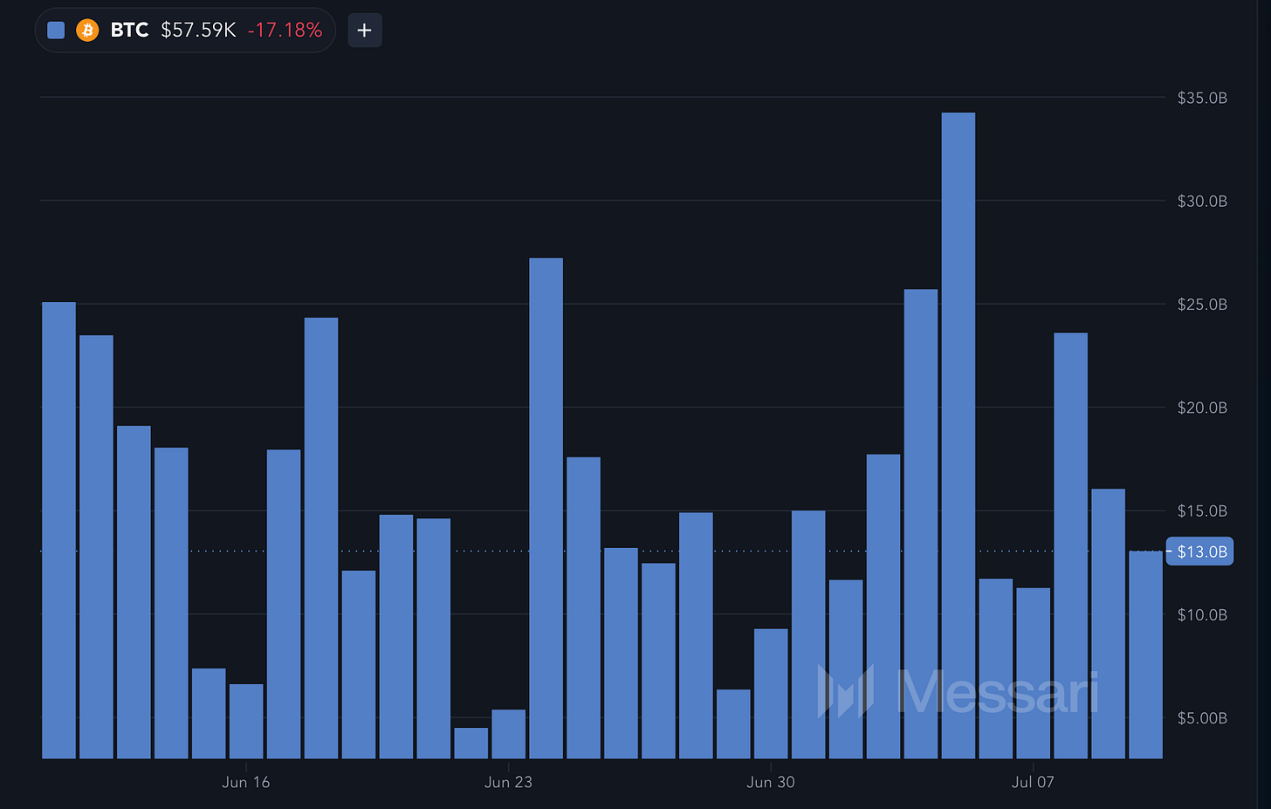
The recent decline in Bitcoin prices is more likely attributable to bearish narratives playing a significant role. Speculation surrounding Germany’s sell-off, along with news that Mt. Gox will begin repaying creditors, may have prompted investors to sell Bitcoin.
Conclusion
In summary, while the actions of the German government have had some effect, they are not the primary driver of the recent price decline (at least not directly). Their influence on Bitcoin price movements is more indirect, with market narratives and sentiment playing a larger role.
Latest data shows that Saxony, Germany, has now fully liquidated its 50,000 Bitcoin holdings. Will this month go down in history like Bitcoin Pizza Day? Perhaps we’ll call it “Bitcoin Keine Ahnung Month” (Bitcoin No Idea, BKA).
Join TechFlow official community to stay tuned
Telegram:https://t.me/TechFlowDaily
X (Twitter):https://x.com/TechFlowPost
X (Twitter) EN:https://x.com/BlockFlow_News










