








Why is the U.S. SEC so relentlessly targeting the crypto industry?
TechFlow Selected TechFlow Selected
Why is the U.S. SEC so relentlessly targeting the crypto industry?
How will crypto regulation affect the future trajectory of the industry?
 Navigating Web3 tides with focused insights
Author: Huohuo
Recent regulatory and negative news continues to emerge. On June 28, the U.S. Securities and Exchange Commission (SEC) filed a lawsuit against Consensys, accusing it of failing to register MetaMask Swap as a broker-dealer — just two weeks after the SEC notified Consensys that it had concluded its investigation into Ethereum 2.0.
According to available information, the SEC’s first major crackdown on cryptocurrency began in 2017, when it established a Cyber Unit to investigate a decentralized autonomous organization known as The DAO. Later renamed the Division of Enforcement’s Crypto Assets and Cyber Unit, the SEC intensified its oversight of the crypto market, launching a series of enforcement actions targeting unregistered securities offerings, fraud, and market manipulation.
In 2023, the SEC ramped up enforcement further, taking a record 46 actions — a 53% increase from 2022. The $4.3 billion penalty imposed on major exchange BN and the forced resignation of its CEO, Zhao Changpeng (CZ), sent shockwaves throughout and beyond the crypto community.
As of 2024, this marks the seventh year of the SEC’s regulatory campaign against cryptocurrency. The battle between regulators and the industry continues. So, what recent actions has the SEC taken, and what impact do they have on the development of crypto?
The SEC’s Recent Entanglements with Crypto
The SEC is a U.S. government agency responsible for regulating the stock market, ensuring transparency, combating fraudulent schemes, and protecting investor confidence. To fulfill this mission, the SEC has established securities registration rules and oversees their enforcement.
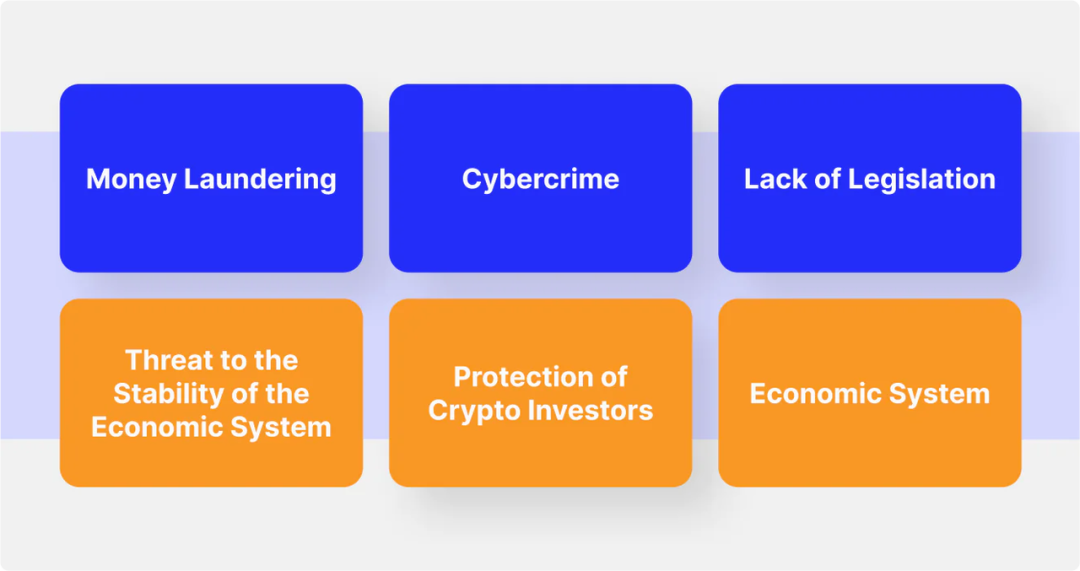
Image source: Internet
In fact, the SEC began regulating crypto as early as 2013, when the sector started gaining traction. However, many of these early moves went unnoticed by the public. In June this year, an industry media outlet published an article titled “The SEC’s Cryptocurrency Enforcement Actions: A Look at 20 Major Charges Filed by the SEC,” listing 20 significant enforcement cases since the SEC began overseeing crypto, including the FTX collapse and BN’s fine.
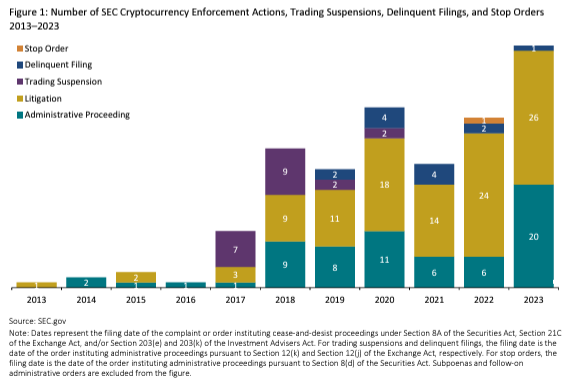
Image source: SEC official website
In 2024, aside from the lawsuit against Consensys mentioned at the beginning, the SEC has also carried out multiple activities and updates regarding crypto and DeFi. Let's take a look:
1) Approval of Bitcoin ETFs
On January 11, 2024, the SEC approved Bitcoin ETFs, marking a significant regulatory milestone. This pivotal decision paved the way for mainstream investors to access the Bitcoin market, known for its high volatility and innovation.
The crypto community celebrated this move, viewing it as a major step toward legitimizing cryptocurrencies as accessible investment vehicles for the general public.
2) SEC Redefines "Dealer"
On February 6, 2024, the SEC adopted new cryptocurrency regulations requiring a broader range of market participants to register with the SEC, join self-regulatory organizations, and comply with existing securities laws.
The rule clarifies terms such as "dealer" and "government securities dealer," defining what constitutes participation "as part of a regular business," thereby expanding regulatory oversight over cryptocurrencies and DeFi.
However, these requirements apply only to entities managing or controlling at least $50 million in assets.
The crypto community reacted negatively to this update:
The DeFi Education Fund criticized the SEC’s new rules as misleading, emphasizing that DeFi participants lack viable compliance pathways and calling the approach impractical and innovation-stifling.
Marisa Coppel, legal director at the Blockchain Association, argued that the revised "dealer" definition sets unrealistic standards for DeFi projects and lacks clarity.
3) Lawsuit Against Uniswap
On April 10, Uniswap Labs tweeted that it had received a Wells Notice from the SEC.
What does a Wells Notice mean? Simply put:
Wells Notice = the SEC’s declaration of war, meaning: “We’re going to sue you — see you in court.”

The SEC’s main allegations against Uniswap are threefold:
A. Uniswap Labs operates its wallet app as a broker-dealer;
B. The UNI token is an “unregistered security”;
C. Uniswap Labs operates a platform selling “unregistered securities.”
Later in May, Uniswap submitted a 40-page response to the SEC, vigorously contesting the charges. Further developments are pending.
4) Lawsuit Against Robinhood
Robinhood, a U.S. financial services firm, also received a Wells Notice from the SEC on May 4.
Dan Gallagher, Robinhood’s head of legal, compliance, and corporate affairs, stated in a press release that the company has maintained direct communication and cooperation with the SEC on its crypto products for years, including well-known attempts to “come in and register,” but expressed disappointment that the SEC still issued the Wells Notice.
While earlier letters did not clarify which tokens the SEC considers securities, notably, Robinhood has proactively delisted several tokens—including Solana (SOL), Polygon (MATIC), and Cardano (ADA)—in response to prior SEC lawsuits against rival exchanges.
5) Approval Regarding Ethereum (ETH)
On April 26, 2024, Consensys Software Inc., developer of the Ethereum blockchain, sued the SEC in a federal court in Texas over Ethereum regulation. The approval of Ethereum spot ETFs clearly indicates the SEC is formally abandoning its stance that ETH is a security.
On May 23, 2024, the SEC approved the sale of spot Ethereum ETFs—the second landmark decision within five months following the Bitcoin ETF approval—surprising the crypto community once again.
Ethereum’s native token, ETH, is the second-largest cryptocurrency by market cap after Bitcoin. Naturally, after Bitcoin ETFs were approved, numerous applications for ETH ETFs flooded in and were submitted to the SEC.
In this case, the SEC approved multiple ETH ETF applications under Form 19b-4.
However, unlike Bitcoin ETFs, which began trading the day after approval, not all required filings for Ethereum ETFs have been cleared yet. Before Ethereum ETFs can begin trading, funds must also obtain approval for their S-1 registration statements, which will include detailed information such as fees and operational structures. The SEC has not set a specific timeline for approving S-1 forms, so it may still be some time before Ethereum ETFs start trading.
Nevertheless, with Ethereum ETFs on the verge of approval, the community is eagerly speculating which cryptocurrency might be next in line for an ETF.
6) FIT 21 Act
With the presidential election approaching, cryptocurrency has become an important voting bloc. Trump has accepted crypto donations and criticized the Biden administration’s crypto policies, suggesting that future regulatory approaches under Biden may soften.
Indeed, on May 24, the U.S. House of Representatives passed the Financial Innovation and Technology for the 21st Century Act (FIT 21). Led by Republicans but supported by many Democrats, the bill was ultimately approved.
The primary goal of FIT 21 is to clarify the jurisdictional boundaries between the SEC and the Commodity Futures Trading Commission (CFTC) over cryptocurrency regulation. Previously, overlapping oversight by the SEC and CFTC created confusion and tension in the U.S., with both agencies asserting authority and competing for control.
This approval marks a significant milestone for the crypto industry. While full implementation will take time, it opens new opportunities for investors and signals potential improvements in the regulatory environment in the coming months.
7) Lawsuit Against Coinbase
On June 6, the SEC sued Coinbase, alleging it illegally operated a crypto asset securities business without proper registration.
In a complaint filed in Manhattan federal court, the SEC stated that since at least 2019, Coinbase has acted as an intermediary in crypto asset trading, earning billions of dollars while evading disclosure requirements designed to protect investors.
The SEC claims Coinbase listed at least 13 crypto assets that should have been registered as securities, including tokens like Solana, Cardano, and Polygon.
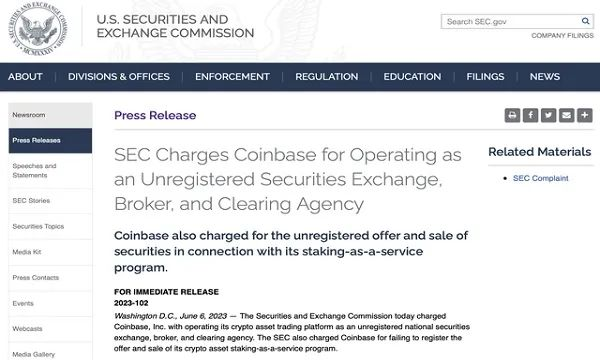
Image source: SEC official website
This marks another major exchange targeted by the SEC, following last year’s lawsuit against leading platform BN.
8) Lawsuit Against Crypto Bank
On July 1, Reuters reported that the SEC filed a lawsuit in federal court against crypto bank Silvergate Capital, accusing it of securities fraud.
The SEC alleges that after FTX collapsed in 2022, Silvergate misled investors about its banking secrecy practices, anti-money laundering (AML) compliance programs, and poor financial health. Meanwhile, the bank failed to monitor nearly $9 billion in suspicious transactions involving FTX and its affiliates.
On July 2, Silvergate agreed to pay $63 million to settle allegations by U.S. and California regulators over internal mismanagement and inadequate disclosures to investors.
Why Is the SEC So Relentless Toward the Crypto Industry?
Cryptocurrency regulation exists to varying degrees worldwide. Given the United States’ unique position, market size, and advanced legal framework, the SEC feels compelled to strictly regulate crypto through legal provisions. On the surface, the stated goals are investor protection, market stability, and compliance with AML laws. Yet, looking at the approval of Bitcoin and Ethereum spot ETFs and past enforcement targets, other motives become apparent:
1) Political Dynamics Behind the U.S. Election
With a large and growing base of crypto supporters in the U.S., the community has become too significant to ignore. Trump’s favorable stance toward crypto prompted the Biden administration and its affiliated SEC to soften its approach, enabling the previously unlikely approval of Ethereum spot ETFs to move forward.
2) Safeguarding the Dollar’s Dominance
Despite the clear innovations in crypto and Web3, financial innovation inherently carries risks. The rise of Bitcoin challenges the dominance of the U.S. dollar, and crypto assets led by Bitcoin have emerged as tools to circumvent dollar-based financial systems. At the same time, the decentralized nature of crypto aligns with American values of freedom, making outright suppression nearly impossible. Thus, “regulation beats prohibition” — guiding and even controlling this powerful tool to benefit the future status of the U.S. dollar is the only viable path.
Currently, the SEC bears the responsibility of curbing excessive power in crypto finance — using legal actions to rein in overly influential platforms and major projects, ultimately steering the industry toward outcomes favorable to U.S. financial innovation, dollar supremacy, and the digital dollar ecosystem.
In summary, every crypto-related regulatory action by the SEC draws intense attention, reflecting a balance between innovation and risk, and strategic considerations to preserve the dollar’s global standing.
Is SEC Regulation Good or Bad for the Crypto Industry?
The SEC’s regulation plays a crucial role in ensuring market fairness, transparency, and stability, promoting financial innovation and investor protection to a certain extent. However, these measures also impose compliance costs that can hinder market growth.
1) Positive Impacts
Fairly speaking, the SEC doesn’t aim to be a villain. Its original intent was to protect U.S. investors dealing with risky assets, promote fair practices through curbing price manipulation and vigilant oversight, and enhance market integrity. As enforcement intensifies, it can effectively prevent fraud and shield investors from pitfalls seen in collapses like FTX and Terra (LUNA).
By approving Bitcoin ETFs in the U.S., the SEC has opened the door to broader crypto investment, potentially stabilizing and boosting market confidence in these assets.
Additionally, the SEC’s emphasis on disclosure standards ensures transparency, helping investors make more informed decisions. As traditional and institutional investors gain confidence under the SEC’s protective umbrella, compliant development could attract wider adoption. Moreover, the SEC’s involvement helps address global concerns, improving cross-border cooperation to combat crypto-related crimes.
2) Negative Impacts
In the short term, regulation suppresses market growth, most visibly driving crypto companies and projects out of the U.S. For example, most initial coin offerings (ICOs) today exclude U.S. citizens. Several exchanges, including Poloniex and Bittrex, chose to exit the U.S. market after paying millions in fines. Additionally, the SEC’s classification of certain tokens as securities forces exchanges to delist them, directly affecting investors.
Moreover, the SEC’s strict crypto rules affect not only U.S.-based investors but also international ones. Other jurisdictions may emulate these regulations, potentially stifling innovation and reducing crypto adoption among underserved populations, such as the unbanked.
The SEC’s expanded definition of “dealer” has raised concerns among DeFi participants and the broader crypto community. On one hand, this new definition could impose significant regulatory burdens on entities in the crypto space, potentially slowing innovation and complicating compliance; on the other hand, crypto companies face complex rules, audits, and daunting costs if they wish to enter the U.S. market. Consider the case of BN: its CEO, Zhao Changpeng, pleaded guilty in November 2023 to violating U.S. anti-money laundering laws, leading to a $4.3 billion settlement with the U.S. government.
Conclusion
Undoubtedly, the SEC’s regulatory landscape for crypto will continue evolving in 2024. According to reports, the SEC has been cautious in crafting new, specific crypto rules. To address violations, the commission currently relies primarily on applying and interpreting existing securities laws, including:
Securities Act of 1933
Securities Exchange Act of 1934
Investment Company Act of 1940
Investment Advisers Act of 1940
Sarbanes-Oxley Act of 2002
Dodd-Frank Wall Street Reform and Consumer Protection Act
The core issue in SEC crypto regulation is whether crypto can be classified as a security. The SEC has yet to provide a clear classification for all cryptocurrencies.
SEC Commissioner Hester Peirce stated at the ETHDenver conference on February 29 this year that the current stance of U.S. financial regulators toward the crypto industry is a “purely enforcement-based model,” largely relying on court precedents. In her view, only with clearer regulations can the industry focus on innovation.
Regardless, achieving the right regulatory balance is essential for effective development. Crypto regulation aims to protect investors from fraudulent schemes and ensure market integrity. For instance, enforcing KYC and AML standards helps prevent the misuse of crypto platforms for illegal activities. These efforts are widely welcomed, as they enhance the safety and appeal of crypto as an investment option, potentially attracting more participants and strengthening market resilience.
However, excessive regulation may undermine crypto’s foundational principles: decentralization. Cryptocurrencies were designed to operate without central oversight, but if only well-resourced large corporations can meet complex regulatory demands, the crypto ecosystem may drift toward centralization.
Ultimately, both the crypto industry and regulators face complex challenges. Regulators must craft laws that preserve the value of crypto — its innovation and decentralization — while mitigating potential market risks. Meanwhile, the crypto industry must foster innovation without violating legal and compliance norms.
Join TechFlow official community to stay tuned
Telegram:https://t.me/TechFlowDaily
X (Twitter):https://x.com/TechFlowPost
X (Twitter) EN:https://x.com/BlockFlow_News
 白话区块链
白话区块链









