









Losses hurt: accepting losses and improving risk management matter more
TechFlow Selected TechFlow Selected
Losses hurt: accepting losses and improving risk management matter more
Buy when no one cares, sell when everyone is talking about it.
 Navigating Web3 tides with focused insights
Author: DUO NINE⚡YCC
Compiled by: TechFlow
Making money in cryptocurrency investing is exciting—everyone loves to talk about it. It’s attractive and boosts engagement. However, few people discuss losing money.
Regardless, everyone experiences losses in the crypto market at some point. How you overcome them will determine whether you ultimately become a winner. Below, I’ll share some of the best tips:
-
How to protect profits
-
Buy when no one cares, sell when everyone does
-
Don’t trust altcoins
-
Don’t quit your job to become a full-time crypto trader
-
Avoid quick wins—they lead to ruin
-
Accept failure and losses
Let’s go through each one.
1. How to Protect Profits
Simply making profits and selling isn't enough—you also need to protect those gains! Without a clear system, the crypto market can quickly take back your profits.
A recent example: someone lost $400,000 in a single trade. He didn’t start with $400,000—he began with just $500. In one trade, he wiped out all his accumulated profits.

Beyond greed, every lucky person eventually runs out of luck—losses are inevitable. You could lose everything.
To avoid this, follow these steps:
-
If you're fortunate enough to turn $500 into $400,000, your primary goal should be protecting those profits. That means not trading with them anymore, but withdrawing them instead. You can hold them as cash (more on that later) or invest in gold or Bitcoin (BTC). It's that simple!
-
After securing your profits, continue trading only with your original capital. In this case, the individual above could keep trading with $500 or slightly more, since now he can afford to lose it. In any case, those profits should never re-enter the market.
By doing so, even if the market turns against you and you lose your initial stake ($500), you still retain $400,000—allowing you to become a better trader/investor over time and recover focus faster after setbacks.
Only after your strategy consistently delivers strong results over a long period should you consider allocating a small portion of your profits back into your trading or investment portfolio. That’s it.
2. Buy When No One Cares, Sell When Everyone Does
You should deploy capital during bear markets—ideally when people start tweeting “Bitcoin is dead.” That’s precisely when you should begin buying and taking risks. Always aim to maximize your risk/reward ratio—find asymmetric bets!
Take current market conditions as an example. With Bitcoin showing weakness, I would keep that $400,000 in USDC and earn yield (e.g., via staking).
At today’s annual yield of 29%, that $400,000 generates approximately $10,000 per month passively. This income comes from real sources like transaction fees and liquidations. If the market drops further, his returns increase.
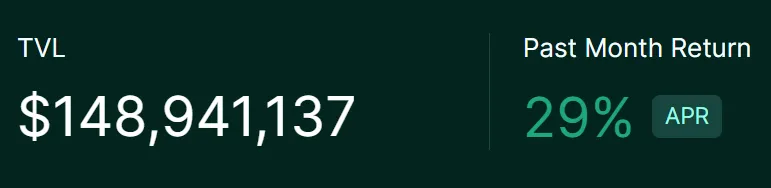
I wouldn’t buy Bitcoin or any other asset right now. I’d wait for deeper discounts as the market continues to fall. Remember: not buying doesn’t cost you anything—you still preserve your $400,000 profit! Protect them at all costs.
Once there are signs of a bottom—such as during a bear market—you can use dollar-cost averaging (DCA) to gradually deploy those profits into Bitcoin. This way, even if BTC falls further or consolidates, you reduce risk and stand a good chance of profiting when prices eventually rebound and reach new highs. With patience, a smart entry point could easily double that $400,000—or whatever amount you invest.
Look at the current cycle. If you bought Bitcoin below $20,000 during the last bear market, you’ve already outperformed most investors. The larger your portfolio, the more Bitcoin you should own.
For instance, during the last bear market, I used my profits to buy Bitcoin below $20,000. I didn’t perfectly catch the $15,500 bottom, but in hindsight, any purchase under $20,000 was an excellent entry point.
You can certainly play with altcoins, but they should make up only a small fraction of your total portfolio. Holding too large a position is irresponsible and will likely result in heavy losses. Whenever you sense excessive market euphoria, start selling—and stop buying. Protect your profits!
3. Don’t Trust Altcoins
Altcoins are not reliable money! At best, they represent promising tech projects. Most don’t even need tokens and perform terribly as long-term stores of value. You wouldn’t buy $10,000 worth of tomatoes to store your wealth, would you? Altcoins are more like tomatoes—they rot quickly.
A surefire way to lose money in crypto is buying newly launched altcoins and holding them long-term. Don’t do this. It’s like buying tulips and expecting to get rich.
That’s not how it works.
Altcoins are suitable only for short- to medium-term speculation. Nothing more. Over timeframes longer than a year, you’re very likely to suffer significant losses. There are exceptions, but overall, altcoins aren’t a path to lasting success.
They might make you rich overnight, but unless you follow the first principle outlined here, that wealth won’t last. Most altcoins crash 90%–99% during bear markets because demand vanishes—their rapid rise and fall is due to poor liquidity.
This means insiders can easily pump them. Once they’ve taken profits, nothing stops the price from collapsing. Bitcoin doesn’t have this issue—it’s the most liquid cryptocurrency.
Fundamentally, only Bitcoin is reliable money, and in some ways resembles gold. Ethereum doesn’t meet this standard, even though some call it “ultrasound money.” In reality, Ethereum behaves more like oil—its price fluctuates with network usage.
4. Don’t Quit Your Job to Become a Full-Time Crypto Trader
95% of traders lose money—only 5% are winners. Trading crypto is harder than your day job and runs 24/7, making it a potentially terrible choice. Instead, keep your job or find work you enjoy, and invest in crypto (primarily Bitcoin).
A great way to avoid big losses is simply not to trade crypto. Instead, invest in this emerging space. When investing, buy the casino—take a long-term view on its infrastructure rather than trading it.
In this regard, Ethereum and its decentralized finance (DeFi) derivatives are a perfect example. Though hard to predict, DeFi is what made Ethereum what it is today (“oil” for DeFi). Likewise, Bitcoin is and will remain sound money.
If you want to protect your wealth, buying Bitcoin at low prices is never a bad move. When you buy it, it’s not to sell tomorrow. You buy it to hold long-term—and retire with it.
How can you do that?
You can lend it or earn yield on your Bitcoin (see details). When Bitcoin hits $1 million in the next decade, that’s when you retire.
As for altcoins, focus on investing in crypto’s infrastructure, not its memes. That’s where the real opportunity lies. Don’t allocate too much to altcoins, but a well-placed bet could return 10x to 100x.
I can’t tell you which coin will be the next Ethereum, but you can take appropriate risks based on your age. As you grow older and wealthier, reduce altcoin exposure and focus on Bitcoin for peace of mind—it’s worth it.
5. Avoid Quick Wins—They Lead to Ruin
Getting a 10x return quickly on a meme coin may spark euphoria and greed, often leading to a disastrous trade afterward. Don’t go all-in on this game. Never dump your entire portfolio into a single altcoin. Speculation is okay—but limit it to a small portion of your total portfolio.
Earning your annual salary in a single trade might change your life—but losing everything in one trade could change it too. Meme coins are tempting because they offer revenge (or ruin). They’re extremely risky and only worth trying when your portfolio is small.
In such cases, taking more risk makes sense. But if you already have a substantial crypto portfolio (mostly Bitcoin), then speculate on memes or high-risk coins using only a tiny fraction of your total holdings—and nothing more.
If you do hit a big win, sell and never look back—then follow the first principle in this article. Never sell Bitcoin to buy altcoins. If you find yourself doing so, there’s only one reason: greed. And that never ends well.
7. Accept Failure and Losses
In this space, failure and losses are unavoidable—but you can absolutely minimize them and reduce their scale. That’s where your role comes in. The market moves independently; your job is managing risk.
Making money shouldn’t be your ultimate goal. Instead, you should maximize your time and freedom. Bitcoin is part of the answer. Most people must lose heavily playing other coins before realizing this.
By accepting losses, you’ll focus faster on what truly matters and improve your risk management. The top 5% who win in this game succeed because they manage risk correctly. This means they lose often—but their losses are small, while they score massive wins a few times each year.
This is what you really need. Accept that losses are part of the process—but keep them small enough so they don’t knock you off balance. This takes time and discipline.
Be patient with yourself. Find your comfort zone—it might not even involve crypto!
Join TechFlow official community to stay tuned
Telegram:https://t.me/TechFlowDaily
X (Twitter):https://x.com/TechFlowPost
X (Twitter) EN:https://x.com/BlockFlow_News
 @DU09BTC









