









Slaps Meta and Gets Nvidia's Backing? Former Meta AI Protein Team, Once Disbanded, Secures $142 Million in Latest Funding
TechFlow Selected TechFlow Selected
Slaps Meta and Gets Nvidia's Backing? Former Meta AI Protein Team, Once Disbanded, Secures $142 Million in Latest Funding
The era of a biological "ChatGPT" may be on the horizon?
 Navigating Web3 tides with focused insights
Author: Metauniverse Heart
EvolutionaryScale, a frontier artificial intelligence research lab in biological sciences, recently announced over $142 million in seed funding alongside the release of its landmark AI model ESM3. What unique philosophy does this one-year-old company hold within the AI life sciences field? And what technological breakthroughs does its new protein large model offer?
Just one week ago, while Meta was aggressively advancing in text-to-video generation, EvolutionaryScale—the team formerly part of Meta that had been disbanded—secured over $142 million in seed funding, an amount considered extraordinarily high across the entire biotechnology sector.
Last August, Meta officially announced the dissolution of its protein folding team, Meta-FAIR. This pure "science + AI" project could not deliver quick returns for Meta, and thus Meta’s decision to focus on commercialized AI appears understandable.
However, this once-overlooked team has now turned the tables on Meta within just one year. Their newly launched ESM3 is regarded as a milestone generative AI model in biology, opening up new possibilities for biological programming.
01. One-Minute Project Overview
1. Project Name: EvolutionaryScale
2. Founded: July 2023
3. Product Overview:
Development of large language models (ESM) for designing novel proteins and other biological systems—currently evolved to ESM-3.
4. Founding Team:
-
Chief Scientist: Alexander Rives (Ph.D. in Computer Science from New York University, former Facebook AI scientist)
-
Tom Sercu
-
Sal Candido
5. Funding Status:
On June 25, 2024, completed a seed round raising $142 million. The round was co-led by Nat Friedman, Daniel Gross, and Lux Capital, with participation from Amazon, NVentures (NVIDIA’s venture arm), and angel investors.
02. A Unified Vision Driving Team Collaboration
Advancements in artificial intelligence have created unprecedented opportunities for biological research, including the design of functional biomolecules, especially proteins. Applying AI to protein design not only enhances efficiency and success rates, but also helps humanity address urgent challenges such as rapid responses to infectious disease outbreaks.
Recognizing the gap in protein design, Alexander Rives and his colleagues decided to develop deep learning-based large models, pushing industrial-scale protein design into a fully automated, intelligent generation era.

Thus, EvolutionaryScale was born. It is a cutting-edge AI research laboratory focused exclusively on biological sciences, dedicated to developing frontier large language models for biology.
Interestingly, all eight founding team members originated from Meta’s FAIR (Fundamental Artificial Intelligence Research) division. Despite setbacks at a world-leading social media giant, the core team remained undeterred and swiftly transitioned to a new battlefield, building next-generation models based on their prior work.
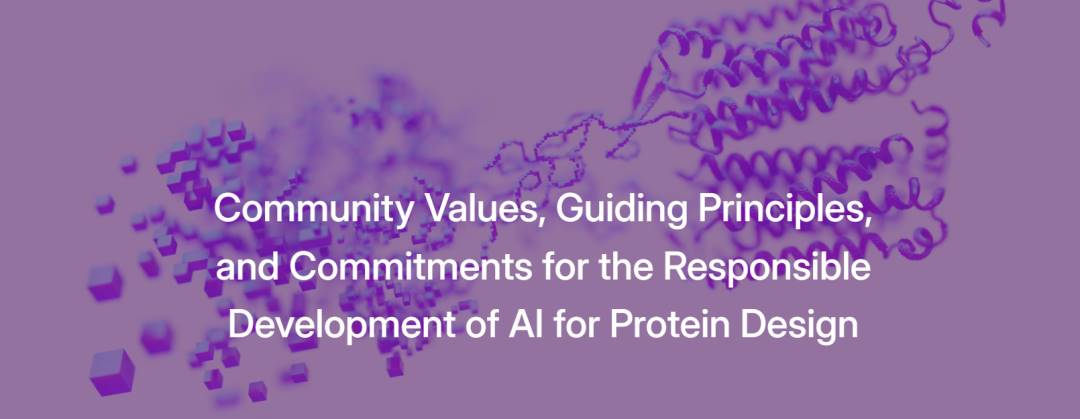
EvolutionaryScale’s large models support research and development in health and environmental sciences, continuously exploring the scalability of biology and powering groundbreaking scientific discoveries. The most notable achievement so far has been the breakthrough in protein folding technology. The ESM models have revealed the structures of hundreds of millions of metagenomic proteins, helping scientists worldwide simulate and understand proteins.
EvolutionaryScale aims to guide the development of AI technologies in protein design through open and secure research practices.
Building on this principle, the company led over 160 global stakeholders from academia, government, and civil society as signatories to jointly advance this technology, ensuring its safety and reliability to ultimately benefit human health and society.
Driven by a sense of responsibility to lead advanced AI in biology, Alexander Rives and his team have never ceased moving forward.
Previously, EvolutionaryScale released the large language model ESM1, widely recognized as the first transformer-based language model for proteins, developed during the founding team’s tenure at Meta’s FAIR division. ESM2, an upgraded version of ESM1, features 1.5 billion parameters and outperforms the earlier ESM1b model (with 650 million parameters).
Last week, EvolutionaryScale unveiled its latest ESM3 AI model—a significant leap toward the future of biology. With this model’s capabilities, discovery across broad applications could accelerate, enabling the creation of proteins that capture carbon and paving the way for new cancer treatments.
03. Pioneering AI Applications in Biology
ESM3 is a generative AI model whose primary function is generating novel proteins. Using deep learning techniques trained on vast protein datasets, the model learns the relationships among protein sequences, structures, and functions.
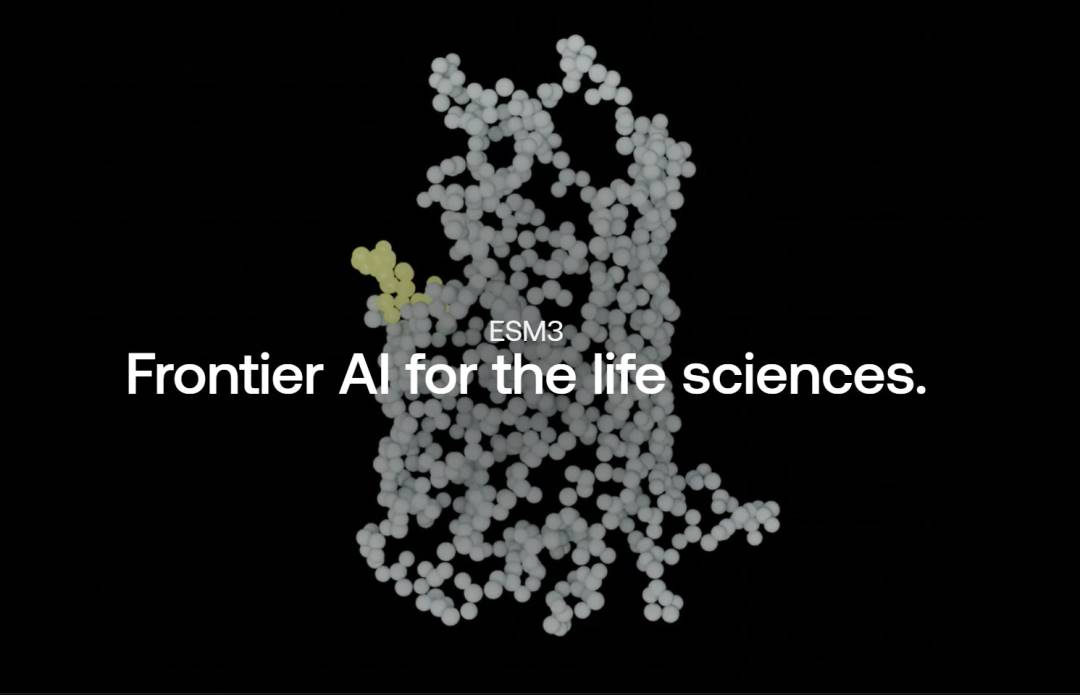
Training ESM3 required over one trillion teraflops of computing power, the largest computational scale known to date in biological research. It was trained on a dataset of 2.78 billion proteins representing Earth’s natural diversity, enabling it to simultaneously reason about protein sequences, structures, and functions.
The main workflow of ESM3 can be summarized in four steps:
-
Data Collection and Processing: EvolutionaryScale gathers extensive biological data from various sources, including gene sequences, protein structures, and functional annotations. These data are cleaned, standardized, and formatted for downstream analysis and application.
-
Model Training: Using deep learning algorithms and massive computational resources, EvolutionaryScale trains the processed data to build large language models capable of understanding and predicting biological principles. These models exhibit high accuracy and can handle complex biological problems.
-
Generating Novel Proteins: Through interactive prompting, ESM3 generates new proteins—some of which might take hundreds of millions of years to evolve naturally.
-
Scientific Validation: Newly generated proteins undergo experimental validation to confirm their functions and potential applications.
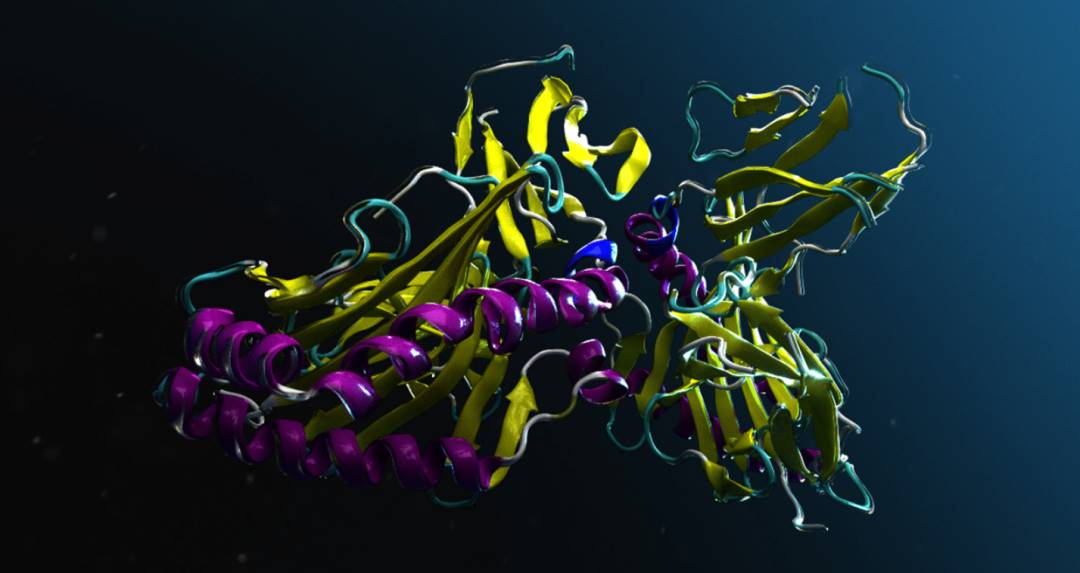
Currently, one of ESM3’s most remarkable use cases is the generation of a novel green fluorescent protein (GFP).
GFP is one of nature’s most beautiful and unique proteins, responsible for jellyfish bioluminescence and the vivid fluorescence of corals. ESM3 created this new fluorescent protein through a thought process simulating 500 million years of evolution. This transformation would likely require more than 500 million years in natural evolution, yet ESM3 achieved it computationally.
The launch of ESM3 is bringing revolutionary changes to drug discovery and synthetic biology.
In drug discovery, ESM3 can generate novel proteins with specific biological activities, expanding the pool of candidate molecules for screening and optimization. Additionally, ESM3 can predict and refine mechanisms of interaction between drugs and targets, providing a more scientific foundation for drug design and development.
In synthetic biology, ESM3 can generate biological systems with specific functionalities, offering new solutions for bio-manufacturing and bioenergy. For example, ESM3 can design enzyme systems that efficiently convert carbon dioxide into organic compounds, creating new pathways for carbon capture and utilization.
EvolutionaryScale’s ESM3 model represents a new milestone for AI in biology. With its powerful generative capabilities and collaborations with industry leaders, ESM3 is poised to accelerate the discovery of novel proteins and the design of biological systems, bringing transformative impacts to future drug development, materials science, and environmental science.
04. An Innovation Journey in Biological Sciences
Synthetic Biology: Programming Life
Synthetic biology is a key strategic direction for EvolutionaryScale’s future growth. By designing and synthesizing new genetic circuits and biological pathways, scientists can create organisms with customized functions.
-
Genetic circuits resemble electronic circuits but control biological processes within cells.
Genetic circuits enable precise control over gene expression within cells. For instance, a circuit can be designed to activate or deactivate specific genes when the cell detects certain signals, such as particular chemicals or environmental changes.
-
Synthetic biological pathways involve combining multiple enzymes and metabolic routes to produce valuable compounds.
Through AI-driven analysis and design, scientists can engineer new metabolic pathways allowing organisms to synthesize compounds not produced under natural conditions. For example, by redesigning microbial metabolism, microbes can produce pharmaceutical intermediates, biofuels, or industrial chemicals.
-
Cell factories are biological systems created by genetically engineering microbes to efficiently produce target products under industrial conditions.
With AI-assisted design, scientists can modify microbial genomes to optimize production performance under specific conditions. For example, by editing yeast or bacterial genes, these microbes can be engineered to efficiently produce antibiotics, enzymes, or other bioproducts.
If this technology continues to advance, it will not only push the frontiers of scientific research but also bring significant applications in medicine, environmental protection, and agriculture.
Data-Driven Personalized Medicine
EvolutionaryScale is advancing personalized medicine through AI and big data analytics, delivering more precise and efficient healthcare tailored to individual patients.
Personalized medicine customizes treatment plans based on each patient’s unique biological and clinical data. A critical component is genomic analysis. By conducting whole-genome sequencing and analysis, scientists can identify genetic variants associated with diseases.
Leveraging AI, EvolutionaryScale can rapidly and accurately interpret vast genomic datasets to uncover potential disease risk factors.
This approach enables doctors to diagnose diseases earlier and implement preventive measures. For example, analyzing BRCA1 and BRCA2 gene mutations in breast cancer patients can predict their risk of developing the disease, facilitating early screening and intervention.
Today, EvolutionaryScale stands at the forefront of the convergence between biology and artificial intelligence, continuously innovating and exploring to achieve programmable and optimized biological systems. Future advancements may unlock further technical breakthroughs, ushering in a smarter and healthier future for humanity.
Join TechFlow official community to stay tuned
Telegram:https://t.me/TechFlowDaily
X (Twitter):https://x.com/TechFlowPost
X (Twitter) EN:https://x.com/BlockFlow_News










