








MetaMask Sued by SEC: What’s Next for Web3?
TechFlow Selected TechFlow Selected
MetaMask Sued by SEC: What’s Next for Web3?
The integration between Web3 and the real world is becoming increasingly close, making it difficult for relevant policies, regulations, or policy groups to exclude Web3.
 Navigating Web3 tides with focused insights
While the market was still awaiting the SEC's final stance on ETH ETFs, the U.S. Securities and Exchange Commission (SEC) unexpectedly filed a formal lawsuit on June 29 against Consensys, a blockchain technology company and the parent firm of MetaMask. The SEC accused MetaMask’s Swap and staking products of violating securities laws, explicitly naming liquid staking tokens stETH from Lido and rETH from Rocket Pool as unregistered “securities.”
The news sent shockwaves across the industry. According to TrendX sentiment data, both Lido and MetaMask saw significant drops in sentiment metrics. Lido’s score fell by 30 points, dropping from 21 to a low of -9; MetaMask’s sentiment plummeted over 100 points, sliding from 33 to -69, shifting from relatively positive to highly negative.
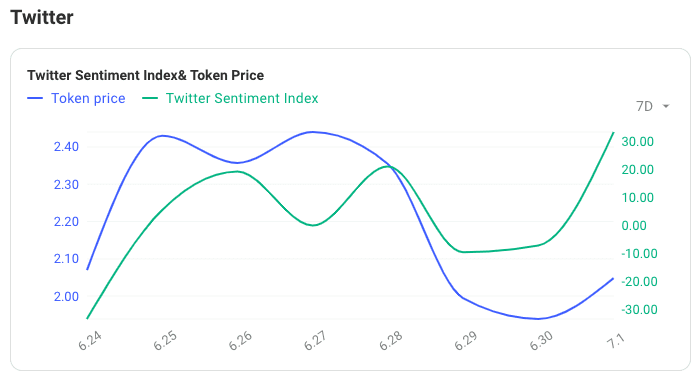
This negative sentiment triggered price volatility. According to CoinMarketCap data, on the day the lawsuit was announced, Lido’s price dropped from a high of $2.43 to a low of $1.86, a decline of over 23%.
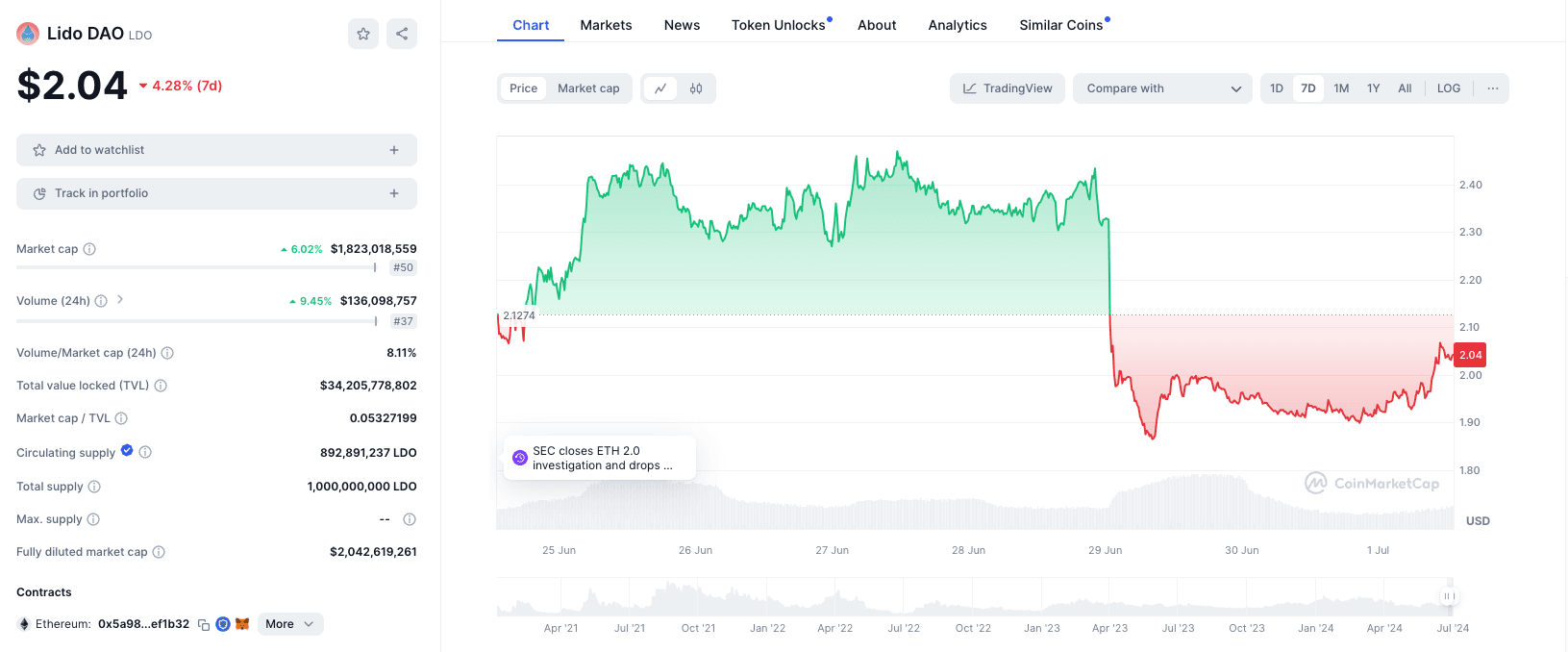
Given that MetaMask is the most widely used wallet in the Web3 space and Lido plays a pivotal role in the ETH staking and restaking ecosystem, this lawsuit is bound to cast a shadow over both project development and the broader industry.
ConsenSys vs. SEC: A Longstanding Legal Dispute
On April 25, Consensys filed a lawsuit against the U.S. Securities and Exchange Commission (SEC) in the U.S. District Court for the Northern District of Texas, challenging the SEC’s attempt to classify Ethereum (ETH) as a security. This case immediately drew widespread attention. In its complaint, Consensys argued that although ETH does not possess the characteristics of a security, the SEC is attempting to regulate it as such—despite previously stating that ETH is not a security and falls outside the SEC’s statutory jurisdiction.
Origins of the Conflict
On April 10, 2024, SEC staff sent Consensys a “Wells Notice,” indicating their intent to recommend enforcement action against the company for allegedly violating federal securities laws through its MetaMask Swaps and MetaMask Staking products. A Wells Notice is an official warning issued by the SEC before initiating enforcement proceedings, informing the recipient that the SEC intends to recommend action due to suspected violations. It allows the recipient to submit written or oral arguments to explain or rebut the SEC’s preliminary findings before a final decision is made.
Legal Focus of the Case
The SEC’s legal argument centers on the claim that MetaMask’s Swap and related features involve trading unregistered securities, thereby breaching federal securities laws. Consensys, however, argues that the SEC’s position on whether these tokens qualify as securities has been inconsistent, prompting the company to file suit. Consensys maintains that Ethereum should not be classified as a security and that MetaMask’s functionalities do not constitute securities transactions, thus not violating federal securities laws. The SEC’s allegations typically hinge on the following grounds:
-
Unregistered Securities Offering: The SEC may allege that Consensys failed to comply with registration requirements under U.S. securities law when issuing certain tokens. Under U.S. law, any asset deemed a security must either be registered with the SEC or qualify for specific exemptions prior to issuance.
-
Investor Misrepresentation: The SEC could argue that Consensys misled investors or failed to provide adequate disclosures during token offerings, preventing investors from fully understanding the risks and nature of their investments.
Implications and Concerns
If the court rules that Ethereum qualifies as a security, all Ethereum sales in the U.S. would need to follow procedures similar to those for stocks, significantly impacting exchanges and institutions holding large amounts of ETH—and potentially affecting the approval of ETH ETFs. Consensys warns that the SEC’s overreach would bring disaster to both the Ethereum network and its own operations.
The SEC’s lawsuit against Consensys could have far-reaching consequences:
-
Impact on Consensys: If the SEC’s claims are upheld, Consensys could face substantial fines, investor compensation demands, and forced business model changes—significantly affecting its operations and reputation.
-
Impact on the Crypto Industry: This case could become a landmark event, signaling the SEC’s intent to enforce stricter regulations on cryptocurrency and blockchain firms. It may prompt other companies in the sector to reevaluate their compliance strategies and seek engagement with the SEC to mitigate legal risks.
-
Market Reaction: The case could trigger short-term volatility in the crypto market, particularly for projects and tokens associated with Consensys. Investor concerns over regulatory risk may dampen overall market sentiment.
Escalation of Tensions
In earlier litigation, Consensys challenged the SEC’s authority. On June 18, the SEC issued an ambiguous response: “Although we do not agree with the facts or legal conclusions stated in the June 4 letter, based on information currently available to us, we do not intend to recommend to the Commission that enforcement action be taken against Consensys Software Inc.” However, this statement did not mean the SEC had abandoned its investigation into Consensys.
Statement from Legal Counsel
Regarding this lawsuit, Consensys’ legal counsel Laura Brookover stated that the investigation (not limited to Consensys) has concluded. The letter clarified that no charges would be brought against Consensys, but emphasized this does not preclude actions against others who offer or sell Ethereum.
Differing Interpretations
However, some critics argue that the SEC’s letter did not clearly state the investigation was “over.” For example, Enumma founder David Barrera believes the message only means the SEC won’t pursue cases against others selling Ethereum, but according to the SEC Enforcement Manual, a conclusion doesn’t necessarily mean the investigation is entirely closed.
Industry Impact
Currently, the SEC’s lawsuit against Consensys appears inevitable. Yet, industry watchers are more concerned about whether this will affect liquid staking protocols like Lido and the broader restaking landscape, as well as the final approval of ETH ETFs. Laura maintains that the SEC’s investigation into these activities falls under a separate and independent scope, unrelated to the conclusion of the Ethereum 2.0 probe.
Conclusion
Although further details about this lawsuit remain undisclosed, one thing is clear: the integration between Web3 and the real world is becoming increasingly inseparable, and regulatory bodies can no longer ignore or exclude Web3. On this front, we should remain confident.
The conflict between the SEC and Consensys highlights the complex legal and regulatory challenges facing the cryptocurrency industry. As more regulations and policies emerge, finding a balance between innovation and compliance will be a critical challenge for the entire sector. We await the final outcome of this case and hope it will provide valuable insights for the healthy development of the industry.
Join TechFlow official community to stay tuned
Telegram:https://t.me/TechFlowDaily
X (Twitter):https://x.com/TechFlowPost
X (Twitter) EN:https://x.com/BlockFlow_News
 @TrendX_official









