









X To Earn Retrospective: In the context of concentrated attention, the social track should focus more on token utility
TechFlow Selected TechFlow Selected
X To Earn Retrospective: In the context of concentrated attention, the social track should focus more on token utility
While presenting my perspective, I will list three projects to clearly outline the past, present, and future development of X to Earn.
 Navigating Web3 tides with focused insights
Author: Eric SJ
This article will build upon the SocialFi trend of X To Earn to reflect, review, and summarize some perspectives.
While presenting these views, I'll also highlight three projects that help clarify the past, present, and future development trajectory of X To Earn 🙌🏻
X To Earn is one of the few sectors outside infrastructure that I understand relatively well,
so some of the project insights shared here include my subjective reflections from past participation and involvement in this space~
Article outline:
1. The Rise of X To Earn | TipCoin @tipcoineth
2. Business Model of X To Earn | Mferc DAO
3. The Future of X To Earn | Popp @Hi_PoPPOfficial
1. The Rise of X To Earn | Tip Coin Retrospective 🔻
Before the Ordinals boom last year, there was a brief but highly popular social media trend during which two particularly memorable projects emerged: Tip Coin and Friend.Tech.
They each represented new paradigms in the social sector at the time: X To Earn and private creator economies. In hindsight, the latter appears more sustainable and enduring, while X To Earn seemed like just a higher-than-usual wave preceding a tsunami.
🗝️ Note: Friend.Tech’s rise benefited from the fact that the BASE chain had already captured significant market attention at the time.
Yet the X To Earn model continues to be adopted by many current projects, as it served as a successful case for Web3 ventures to rapidly build brand influence.
(1) Let me briefly walk through how Tip Coin achieved viral spread. The project unfolded in two phases. The first was a more aggressive distribution phase—users simply needed to tag their posts or replies; later, they added the requirement to mention the project's official account;
(2) Then came a points system that quantified user behavior on X, introducing something akin to Proof-of-Work mechanics (perhaps even pioneering the points-based gamification model???).
Although Tip Coin wasn’t the first to launch a “tag-to-earn” mechanism, it became by far the most famous. Setting aside post-hoc speculation about influencer collusion or coordinated pumping, at the time it truly exemplified viral growth (in contrast, Friend.Tech’s path was far more complicated).
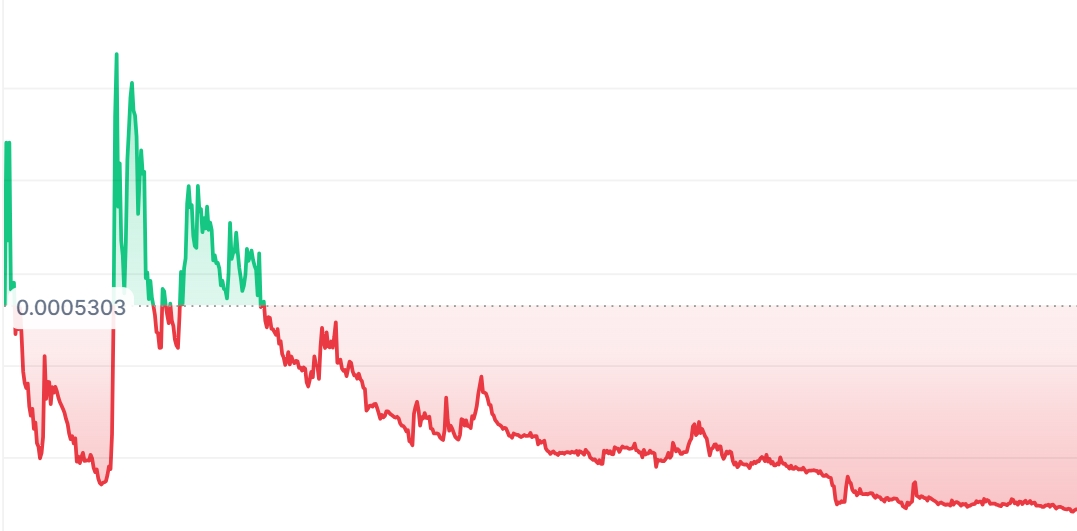
In retrospect, its major flaw may have been fulfilling market expectations too early—launching the token prematurely and releasing excessive circulating supply, leading to a downward price spiral. Today, few people talk about it anymore (I suspect this might be one of the rare recent mentions, but it's discussed here from a sector-wide perspective).
2. The Business Model of X To Earn | Personal Practice Review: Mferc DAO 🔻
After briefly discussing Tip Coin, let me share some personal experiences with similar models, including business model takeaways centered around supply-demand dynamics, costs, and revenue 👇🏻
(1) Cost: Capturing users’ social behaviors via hashtags and processing them requires API calls on the X platform. There are currently two pricing tiers: $100/month and $5,000/month. Anyone building a serious platform would opt for the latter, making this the baseline cost. Larger-scale operations could negotiate custom deals with X’s team, though exact figures become harder to quantify;
Just this line item amounts to $60,000 annually—not including platform development, data tracking, or other operational expenses. Real-world costs are undoubtedly higher.
(2) Revenue: Frankly, I’m not entirely clear on the direct monetization pathways for such initiatives in Web3—how exactly attention translates into revenue. However, the indirect benefits can be substantial 👇🏻
🔻 First, accumulating market attention to boost industry influence—Tip Coin being a prime example;
🔻 Second, leveraging that attention for institutional fundraising and eventual token listing. This is a straightforward indirect revenue model—and indeed what Tip Coin pursued. While they didn’t focus much on direct attention monetization, our project prioritized exactly that;
How did we approach it? In our token design, we aimed to leverage accumulated attention to run marketing campaigns for client projects, then distribute earnings back to the community based on a points algorithm. At the time, this felt like a solid economic loop—but in hindsight, issues emerged 👇🏻
🔺 First, most projects in the market lacked strong demand for marketing services;
🔺 Second, due to scale constraints, we needed dedicated personnel to pitch and manage business partnerships. While short-term goodwill efforts were feasible, long-term sustainability required real incentives. Token-based rewards meant immediate, tangible costs (don’t pretend otherwise—the treasury funds come out of someone’s pocket).
To sum up: use hashtag-driven algorithms to build an internal community, grow its influence, serve B2B clients using that reach, and redistribute revenues back to participants—a complete closed loop.
📍 Note: The platform supporting our community predated TipCoin. We often wondered why they succeeded despite launching later.
Now, consider how users obtained our token: the closed-loop design was elegant and simple. But Web3 isn't just about mechanics—it also involves secondary markets,市值 management, and FOMO dynamics. A critical question every project must answer is: *You’ve built something great—but why should I buy your token?* ❓
Otherwise, you might as well embrace pure meme status, where hype drives price surges based purely on luck and whether whales decide to jump in.
Without hard utility and under conditions of broad token distribution, if you can't survive on product fundamentals alone, how do you continuously generate market FOMO? Beyond secondary market challenges, scaling the product itself presents unresolved hurdles:
(1) How do you convince Twitter influencers to join? This model requires account authorization and wallet linking. Wallets can be handled via new addresses, but social account permissions remain tricky.
Eventually, I concluded only authoritative endorsement could alleviate top users’ concerns—but securing such endorsements introduces another challenge altogether.
(2) If multiple economic layers exist—such as NFTs (as in our project)—clear distinctions between NFT and token rights must be established. This is a universal challenge for multi-token systems. Sectors combining deep product complexity with intricate economics are rare, but DEXs are one example. SocialFi is undoubtedly another.
(3) Lowering entry barriers and reducing user steps—especially regarding point accumulation and token claiming—is another hurdle. Later, I realized integrating account abstraction wallets could partially solve this issue.
3. The Future of X To Earn | Popp’s Multi-Layered Ecosystem 🔻
Popp is another project whose core product follows the X To Earn model. While network effects haven’t fully kicked in yet, its foundational setup is already quite robust—and it directly addresses several pain points I've outlined above 👇🏻
(1) On content quality: The product integrates AI to summarize and refine captured content—an innovative feature compared to earlier同类 projects I've seen (even if it's currently just ChatGPT integration). Notably, content capture doesn't require hashtags; instead, their AI automatically identifies relevant content (exact methodology unclear—possibly based on follower thresholds?).
Additionally, content is categorized within the platform, improving information discoverability—a known bottleneck in our previous project. We used manual curation to surface high-quality posts daily, but since our system relied on hashtag tagging, the scope of quality content capture remained limited. Popp improves upon this (though categories could be further refined).
🗝️ Beyond this, I believe implementing a scoring mechanism governed by a committee could benefit creators, users, and the platform alike—prioritizing high-scoring content for greater visibility.
(2) Channel diversity: Content isn't limited to a single platform but aggregates across multiple platforms. I'm curious how this technical integration works—while broader sourcing increases volume and variety, it also complicates quality control. Perhaps delegating task-based scoring to the community via governance could help manage this.
Multi-platform aggregation—including support for Mirror—isn’t unique; ChainFeeds offers similar functionality.
(3) Token Distribution 🔻
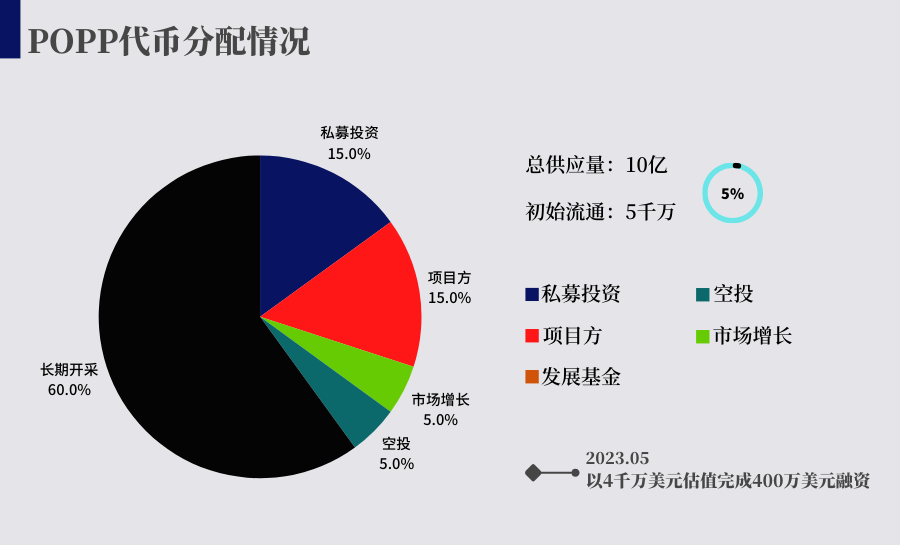
1/ This aspect is crucial. As shown above, the majority of tokens are allocated to the community, with issuance tied directly to user growth—creating positive alignment between product success and tokenomics.
Detailed emission rates aren't public, but it's safe to assume early流通 won’t heavily favor users. Allocating too large a share upfront risks massive sell pressure and dumping controversies in secondary markets—exactly the problem Tip Coin faced 🔺
2/ Team and investor allocations are kept reasonable (each under 20%), with post-TGE vesting schedules and linear release mechanisms;
One caveat worth noting: if neither team nor institutional investors hold stakes, and distribution is entirely community-driven, the project lifecycle tends to stretch indefinitely. This is precisely why I remain skeptical of many "fair mint" narratives.
📍 Long-term collective coordination is extremely difficult. Depending on the stage, having a central entity guiding development is often decisive. (Fair mint is a good asset distribution method—but rarely a sound long-term development strategy.) 🔺
3/ Of the remaining 10%, half supports airdrop budgets during growth phases, and the other half goes to the foundation and KOL programs;
Overall, the token design includes all key stakeholders without overly favoring any single party (the specifics of the community-driven issuance plan remain undisclosed, so hard to evaluate fully).
Comparing POPP’s allocation with Tip Coin’s reveals notable similarities and differences 👇🏻
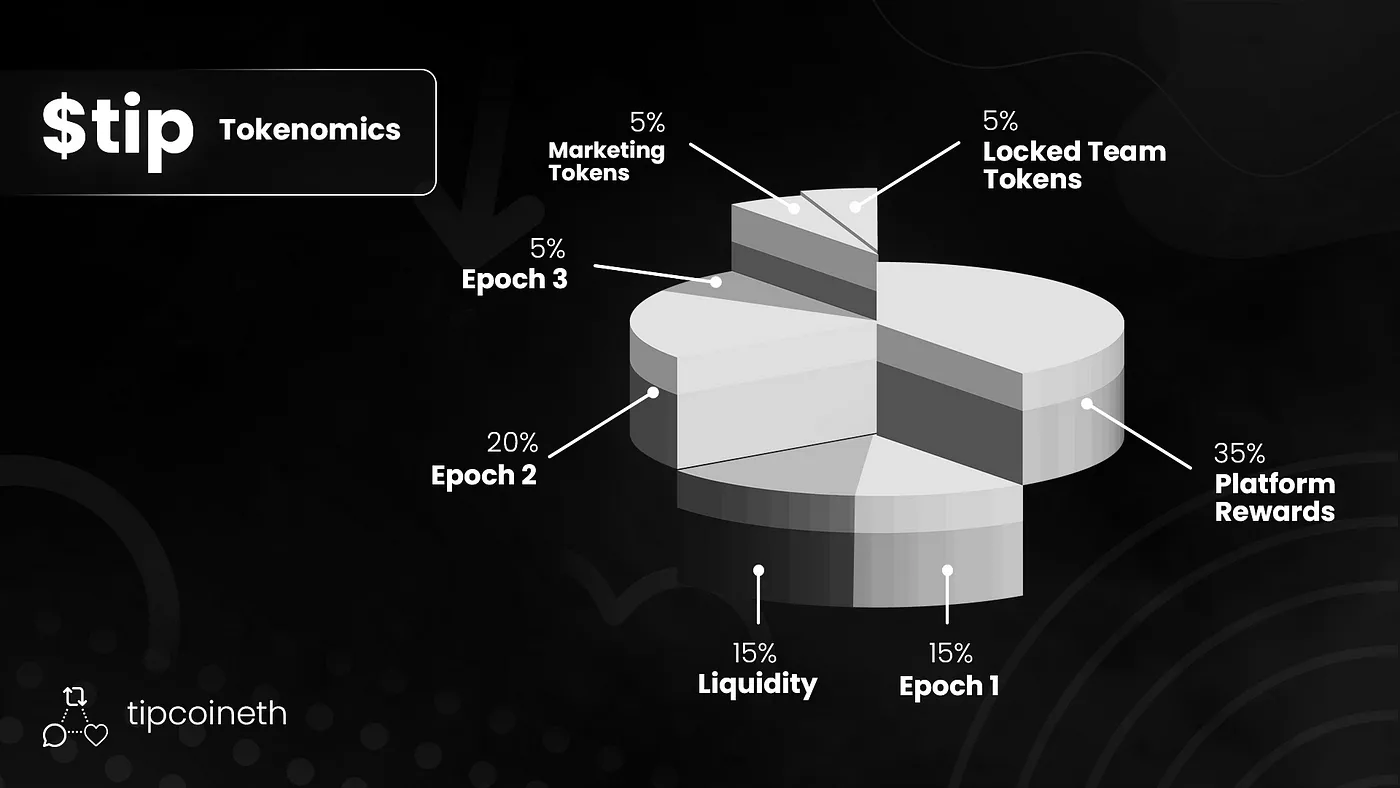
(1) Both allocate the largest share to the community, but Tip Coin’s “destructive” distribution flooded the market with tokens shortly after launch—one of the main reasons for its collapsing secondary market price.
In contrast, POPP seems aware of this pitfall and avoids premature mass circulation by aligning token emissions with actual product scale.
(2) Tip Coin notably excluded investment institutions from its allocation—an unexpected move given their traction at the time. Even modest funding from smaller funds should have been achievable.
Looking back, their entire development cycle moved quickly. Compare this to Friend.Tech, which delayed token issuance for nearly a year—a different strategic choice. Perhaps $TIP aimed to ride the peak of the social app wave, unaware the trend would fade so fast.
(3) POPP reserves a portion for investors, meaning the team has financial backing to refine the product over time. One key reason our earlier community project stalled was insufficient funding.
(4) Demand-side Design 🔻
The above discusses token supply distribution. But if the X To Earn sector cannot escape perpetual selling pressure, holders face a death spiral. That’s why my title emphasizes: amid attention-grabbing mechanics, SocialFi must prioritize token utility 🗝️
📍 This isn’t just about市值 management—it’s about fundamental demand. You don’t want users thinking: *WTF, am I just the bagholder here? What’s the point of buying?* ❓
Currently, POPP doesn’t rely solely on its core X To Earn creator economy. Instead, it bundles additional products under a unified token ecosystem—this *is* the demand architecture. Whether supply and demand will balance remains to be seen, but having such a structure is essential. For X To Earn projects, this principle holds: features can be missing, but foundations must exist.
So far, three mature products have launched:
1/ Popp X: A strongly financialized ecosystem where users bet against each other on topics, with winners splitting the losers’ prize pool (think coin flipping—the logic is similar). This application has simple mechanics and fits naturally into event-driven Web3 use cases.
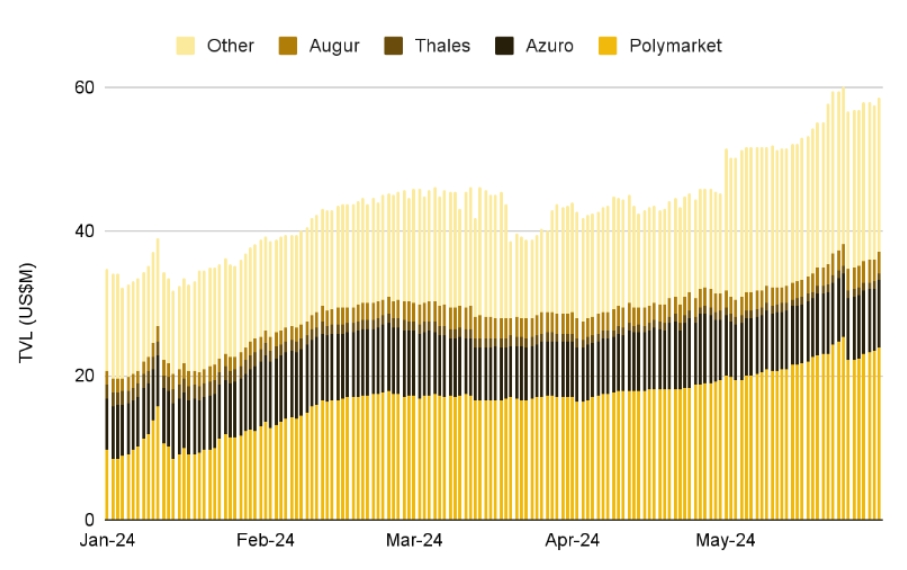
For instance, Binance previously reported that prediction market TVL grew by 68.6% in a year—largely fueled by bets on the U.S. presidential election.
2/ Popp Echo: A creator economy app similar to Mirror, turning content into NFTs. However, it lacks account abstraction—access still requires wallet connection, creating friction for casual users.
Such applications depend heavily on prominent creators to drive NFT sales. While this segment shined during the social app boom, outside that context, users may prefer Web2 platforms offering tangible backend services.
Content NFTs aren’t lacking speculative potential—they just need favorable market cycles to attract attention. Standalone demand alone isn’t enough to sustain them.
3/ PoPP-AI BOX: An AI plugin supporting wallet login, available via the Google Chrome Store. With PoPP AI BOX, users browsing any Web3 project instantly access key updates (token details, funding news, airdrops, project milestones, major events), plus real-time group chats for each project.
I find this product highly innovative. While many sites aggregate Web3 news, few offer live chat windows per project—and none that I know of have brought this model to mainstream adoption!!!
These three form the core ecosystem. Future expansions will continue serving the user-centric issuance model—addressing supply release by building downstream demand ecosystems to offset selling pressure.
However, secondary market performance depends on pre-listing token distribution analysis. Take IO’s recent launch: retail holders controlled minimal supply, contributing to strong initial price action (also influenced by whale behavior).
Join TechFlow official community to stay tuned
Telegram:https://t.me/TechFlowDaily
X (Twitter):https://x.com/TechFlowPost
X (Twitter) EN:https://x.com/BlockFlow_News
 @sjbtc9









