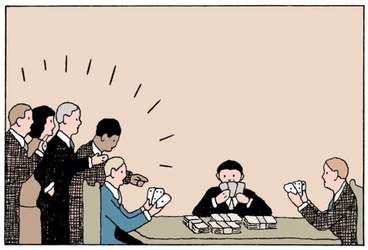
Emotions are the devil: you shouldn't always be bearish at the bottom and bullish at the top
TechFlow Selected TechFlow Selected
Emotions are the devil: you shouldn't always be bearish at the bottom and bullish at the top
No one can seize every opportunity.
 Navigating Web3 tides with focused insights
Author: ROUTE 2 FI
Translation: TechFlow
Hey friends! Does anyone find human psychology fascinating?
When crypto drops, we spend a lot of time analyzing, trying to predict the exact bottom, always extremely cautious.
But when the market rises, we become confident and buy in almost without any analysis. We click the green button as if tomorrow doesn't exist.
Why do we behave this way?
Why are people bearish at bottoms and bullish at tops?

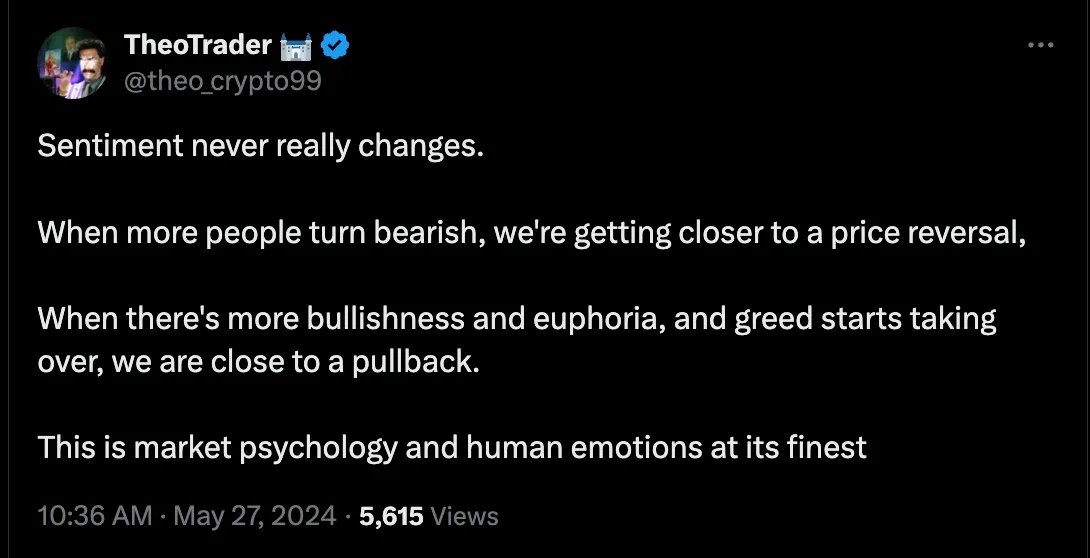
Fear and greed—these seem to be the two emotions driving most of our actions in the crypto markets.
When fear takes over, everything feels apocalyptic. Twitter/X floods with doom-and-gloom predictions of further collapse and calls for surrender.
“It’s over, goodbye everyone, nice knowing you.”
But when greed takes control, euphoria prevails. Suddenly, everyone becomes an expert confidently predicting new highs just around the corner.
“If this coin goes up another 10,000%, I can retire. Let’s go, LFG!”
So why does this happen?
Why are we so cautious at market bottoms yet throw caution to the wind at tops?
Much of it comes down to loss aversion—we feel the pain of losses far more intensely than the joy of gains.
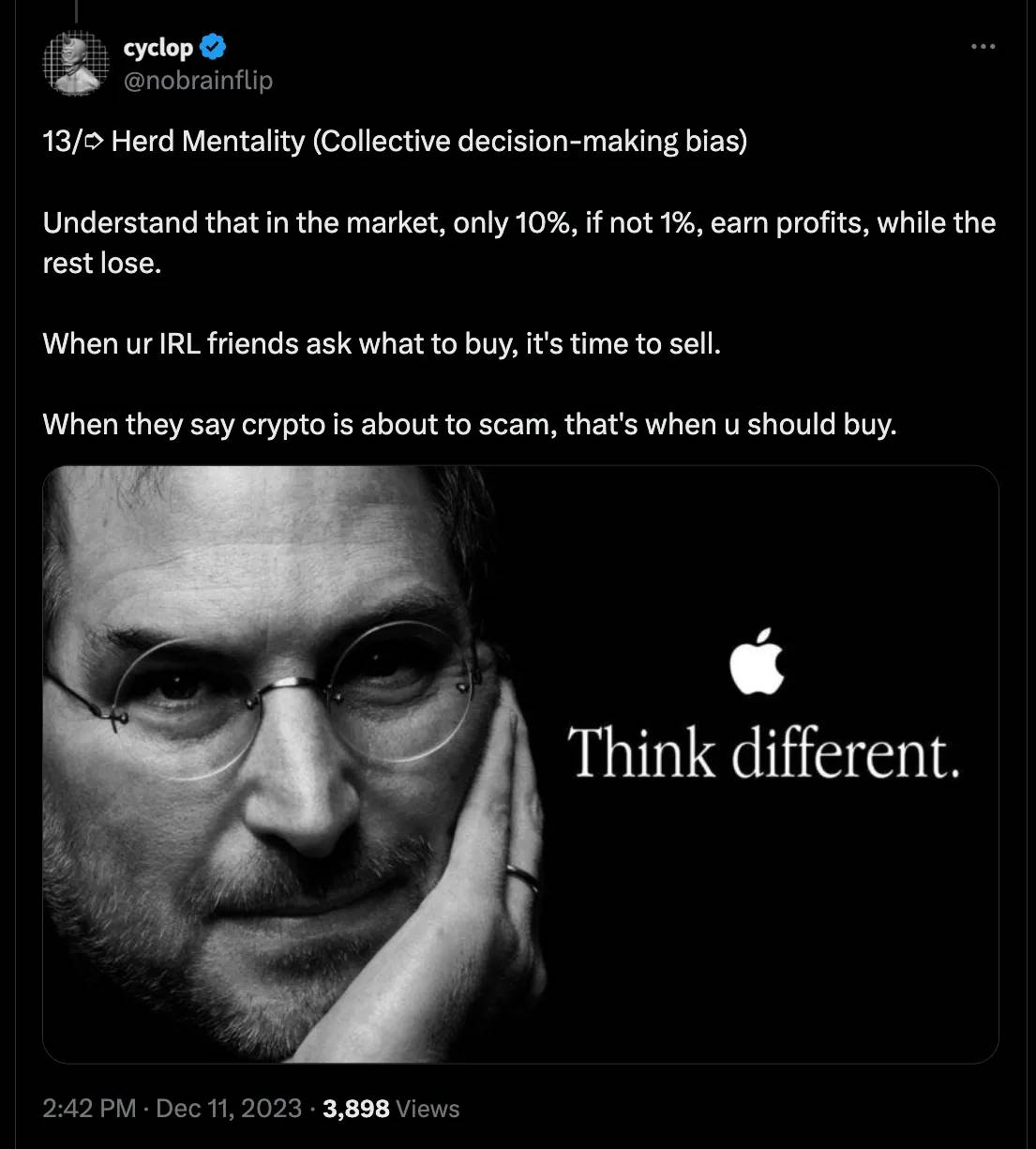
We’re also social creatures, and FOMO (fear of missing out) is incredibly powerful. When everyone around us seems to be getting rich fast, it’s hard to stay on the sidelines. Herd mentality kicks in, and we jump into the market—often right at the peak. It’s tough to remain calm when every day brings stories of someone striking it rich overnight.
On the flip side, when prices plummet and everyone is fleeing, our instinct is to follow them. Holding firm feels like fighting a losing battle. The prospect of further losses overshadows potential future gains in our minds.
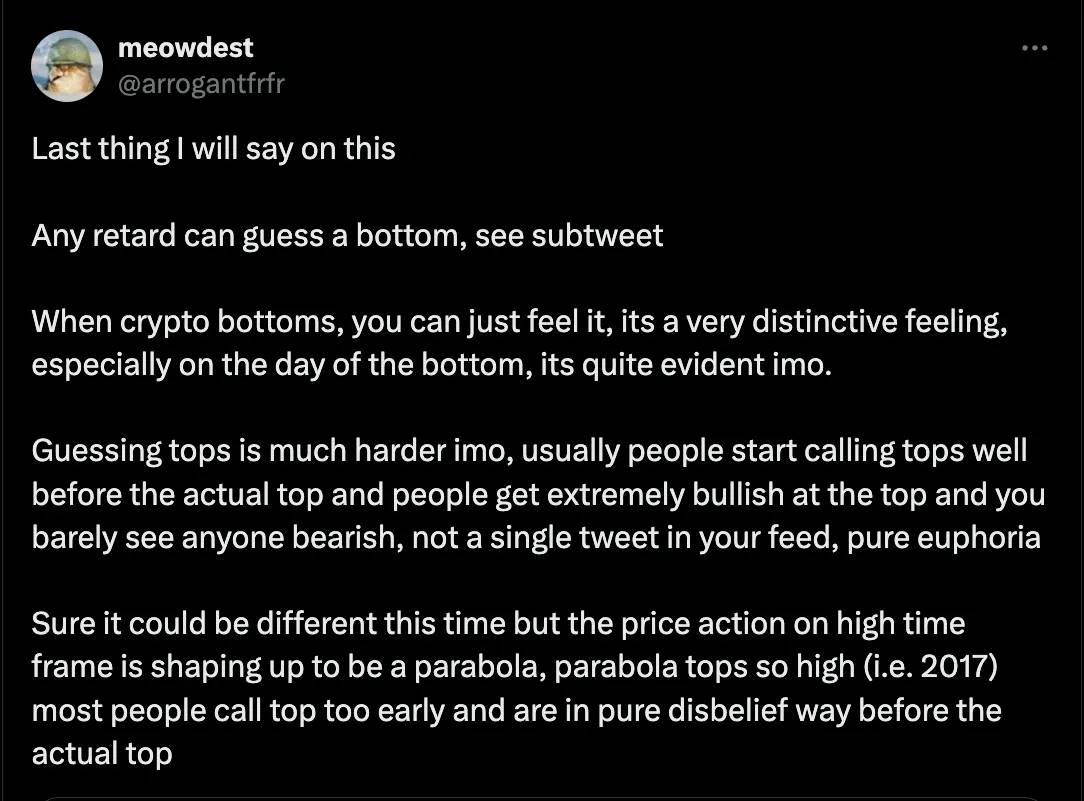
Yes, for most people, trying to predict bottoms and tops is foolish.
When sentiment reaches extremes, the boat has usually already sailed. If your Twitter/X feed is overwhelmingly bullish at the top or bearish at the bottom, it’s likely already too late.
Ironically, the best opportunities often lie in going against the crowd.
Buy when others are overwhelmed by fear, sell when greed and euphoria run rampant. Yes, I know—it’s easier said than done. Going against the herd requires immense mental strength.
But as one of the greatest investors ever said, “Be fearful when others are greedy, and greedy when others are fearful.”
So if predicting tops and bottoms based on sentiment is usually a failing strategy, what’s a better approach?
One way is to focus on your own analysis and have a plan.

Instead of trying to find perfect entry and exit points, consider accumulating gradually during downturns and taking profits during rallies.
Have a strategy and stick to it, regardless of what the herd is doing. Develop a thesis based on fundamentals, technicals, or your assessment of market cycles, and let that guide your decisions.
You don’t know what other people’s “predictions” are based on. Maybe that bull shouting $100,000 next week on X is a 16-year-old who doesn’t even know what funding rates are?
FOMO is a powerful force, and the temptation to abandon your plan and chase momentum can be strong. That’s where discipline comes in.
A big mistake I’ve repeatedly made is how I justify holding losing positions in my portfolio.
Even when I know the smartest move is to cut losses and redeploy capital elsewhere, I still hold on, hoping to break even.
This is human psychology in full effect.

No one catches every opportunity.
I’ll say it again: no one catches every opportunity.
There will always be coins that went up 100x that you didn’t buy, or ones you sold too early.
That’s just the nature of the market. The key is not letting FOMO dictate your actions, staying disciplined, sticking to your strategy, and trusting that new opportunities will always emerge.
By having a plan, maintaining discipline, focusing on your own analysis rather than the herd’s opinions, and keeping a long-term perspective, you can aim to buy low and sell high—instead of the reverse.
It’s not easy, but this mindset is what separates the successful few from the failing majority.
Ultimately, the goal is to remove emotion from the equation as much as possible. Fear and greed may be unavoidable human reactions, but we don’t have to let them dictate our every move in the market.
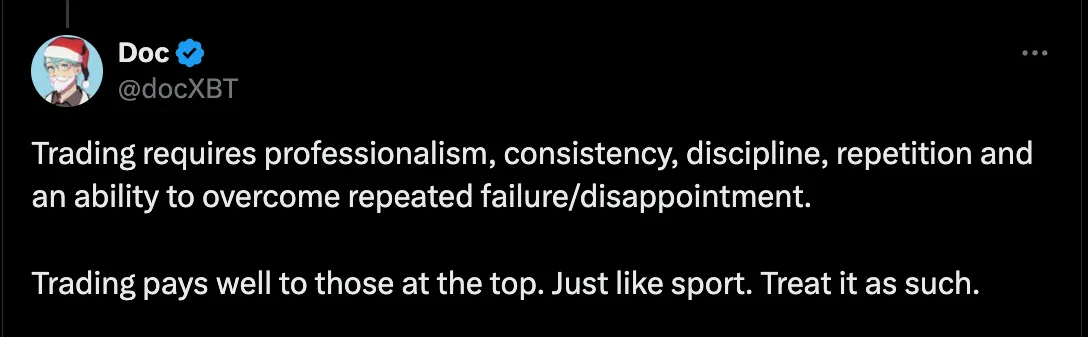
Let’s break it down:
-
Professionalism means having a plan and sticking to it, even when emotions run high.
-
Consistency means applying your strategy every day, not just when it’s easy.
-
Discipline means resisting the urge to deviate from your plan when FOMO strikes or fear grips the market.
-
Repetition means putting in screen time and doing the work, even when it feels boring.
-
And perhaps most importantly, the ability to overcome repeated failures and disappointments is essential—because no strategy is perfect, and losses are part of the game.
So why do most traders struggle here? Why do they end up being bearish at bottoms and bullish at tops, even when they know better?
A big part of it is that it’s incredibly difficult to truly internalize these fundamental yet crucial principles. Understanding the concepts is one thing; consistently applying them in the heat of the moment is another.
Warren Buffett’s famous quote about being greedy when others are fearful echoes again.
But in practice, buying when there’s blood in the streets and your portfolio is down 50% is extremely hard. Likewise, we know we should stay cautious when euphoria reigns, but the lure of quick profits is powerful when everyone around seems to be effortlessly making money.
How can you sit still when headlines scream things like “High schooler makes $1,000,000 overnight”?
That’s why having a plan and sticking to it is so important. If your plan is to accumulate on dips, then you buy when prices fall and sentiment turns bearish—regardless of how you feel.
If your plan is to take profits at target levels, then you sell portions along the way—even if it feels like the rally might go on forever.

Perfectly timing bottoms and tops might stroke the ego, but it’s not a reliable path to building long-term wealth. A better approach is focusing on executing your plan repeatedly—even if that means missing some of the best days.
Slow and steady often wins the race in investing.
But even the best plans can’t fully eliminate the psychological impact on our trading. We’re emotional beings, and we make mistakes.
The key is learning from those mistakes, regrouping, and moving forward.
Every trader has bad days, bad weeks, even bad months. Those who succeed long-term are the ones who can bounce back from inevitable setbacks and disappointments. They’re the ones who keep executing their strategy even when it’s hard, who resist the pull of FOMO and the grip of fear stronger than any pro wrestler.
So next time you find yourself overly bearish or irrationally euphoric, pause.
Remember, in extremes, the crowd is usually wrong.
Remember your plan, and the effort you put into creating it.
Discipline is the key to long-term success, and every setback is an opportunity to learn and improve.
Stay rational, and may your returns be plentiful!
Be fearful when others are greedy, and greedy when others are fearful!
Take care.
That’s all for today, friends!
Join TechFlow official community to stay tuned
Telegram:https://t.me/TechFlowDaily
X (Twitter):https://x.com/TechFlowPost
X (Twitter) EN:https://x.com/BlockFlow_News
 @Route2FI