








MIIX Capital: South Korea Market Research Report
TechFlow Selected TechFlow Selected
MIIX Capital: South Korea Market Research Report
South Korea's cryptocurrency market is likely one of the most active and mature.
 Navigating Web3 tides with focused insights
By MIIX Capital

Introduction
South Korea's cryptocurrency market is likely one of the most active and mature. In South Korea, almost everyone knows about BTC, and people are generally more receptive toward emerging projects. Young people in particular show far greater enthusiasm for cryptocurrencies than older demographics, and due to the country’s economic environment, younger generations experience stronger FOMO (fear of missing out) tendencies.
1. Macroeconomic Indicators and Current Status
South Korea is a high-income developed nation and one of the most industrialized members of the Organisation for Economic Co-operation and Development (OECD). Korean brands such as LG Electronics and Samsung are internationally renowned, earning the country its reputation through high-quality electronics and other manufactured goods. South Korea became an OECD member in 1996.
Geography and Population Size
South Korea, officially known as the Republic of Korea (ROK), occupies the southern portion of the Korean Peninsula, extending approximately 1,100 kilometers from the Asian mainland. It borders North Korea along the Demilitarized Zone (DMZ), with the Yellow Sea forming its western boundary and the Sea of Japan defining its eastern edge. South Korea, including all its islands, lies between latitudes 33°N and 39°N and longitudes 124°E and 130°E, covering a total area of 100,410 square kilometers (38,768.52 square miles). The country claims to be the sole legitimate government of the entire peninsula and adjacent islands.
As of 2022, South Korea’s population was estimated at around 51.7 million. However, the country has had the world’s lowest birth rate since 2009 and experiences the fastest decline in working-age population among OECD countries. By 2025, individuals aged 65 and above are projected to account for over 20% of the population, rising to nearly 45% by 2050.
Additionally, South Korea is notable for its high population density—estimated at 514.6 people per square kilometer in 2022, more than ten times the global average. Excluding microstates and city-states, it ranks as the third most densely populated country in the world. South Korea is also one of the most ethnically homogeneous societies globally, with ethnic Koreans making up approximately 96% of the population. Since many immigrants are themselves ethnic Koreans, official statistics do not track race, making accurate demographic estimates difficult.
Economic Structure and Characteristics
South Korea operates a mixed economic system, with key industries including textiles, steel, automobile manufacturing, shipbuilding, and electronics. Over recent decades, rapid growth has been driven largely by exports of electronic products and telecommunications equipment, establishing the country as a top global producer and innovation hub.
The country holds significant or even dominant positions in major global sectors such as nuclear power, consumer electronics, and biotechnology, and is committed to becoming a leading player in additional fields like smart grid technologies, the Internet of Things (IoT), and robotics.
South Korea's economy is heavily reliant on international trade. In 2014, it ranked as the world’s fifth-largest exporter and seventh-largest importer. However, amid tightening interest rates and weakening external demand affecting exports, near-term economic growth is expected to remain moderate but slow. Notably, semiconductor exports—one of South Korea’s primary export products—declined by 41% in April 2023. The International Monetary Fund (IMF) forecasts real GDP growth of 1.5% for 2023.
As of 2023, there are 82 chaebols in South Korea. These conglomerates are typically family-run and have total assets exceeding 5 trillion KRW (approximately $3.69 billion). Chaebols are large South Korean industrial groups controlled by individual or family ownership. Samsung, valued at over $375 billion, is one of the most valuable chaebols—larger than Qatar’s entire economy. According to Statista.com, as of May 2023, the five largest business groups—Samsung, SK Group, Hyundai Motor Company, LG, and POSCO—accounted for nearly 53% of the total revenue of South Korea’s 82 major business conglomerates.
South Korea’s GDP Ranking
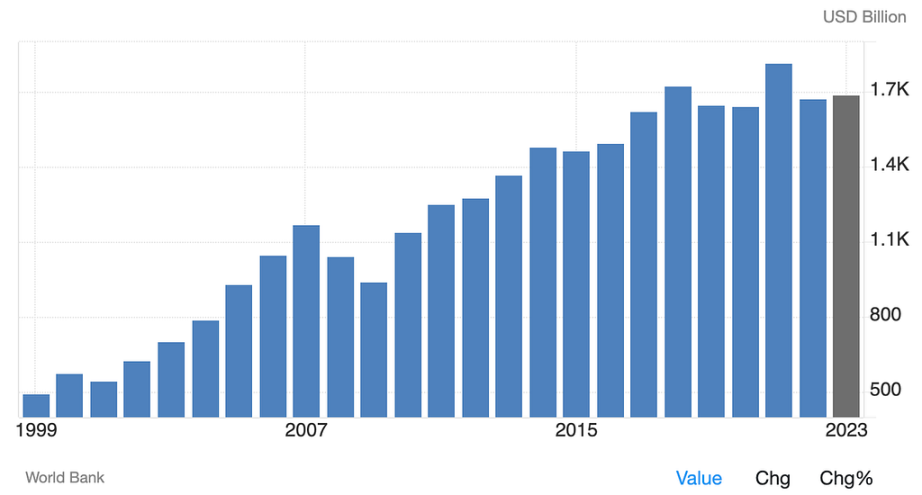
South Korea’s economy is among the largest and most advanced in the world, ranking 13th globally by nominal GDP and 14th by purchasing power parity (PPP) GDP. According to World Bank data, South Korea’s gross domestic product (GDP) reached $1.67392 trillion USD in 2022, accounting for 0.72% of the global economy.
Inflation Rate Data
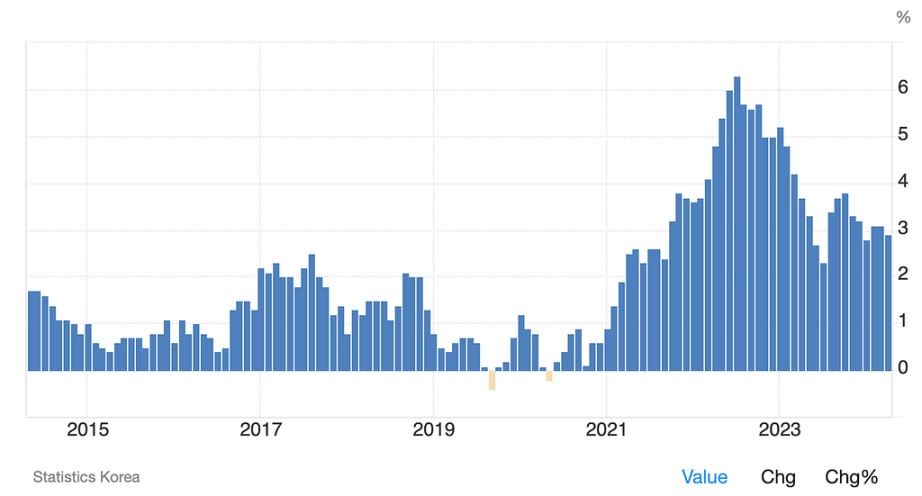
In April 2024, South Korea’s annual inflation rate slowed to 2.9%, down from 3.1% the previous month, slightly below the market forecast of 3%. This marked the lowest reading since January, as price increases in food and non-alcoholic beverages (5.9% vs. 6.7% in March) and restaurants and hotels (3% vs. 3.4%) moderated.
Meanwhile, housing, electricity, gas, and water costs rose at the same pace (1.8%), while overall prices increased slightly faster (2.9% vs. 2.8%). On a monthly basis, inflation remained flat after a negligible 0.1% rise the prior month, falling short of the expected 0.2% increase.
South Korea’s Legal Currency
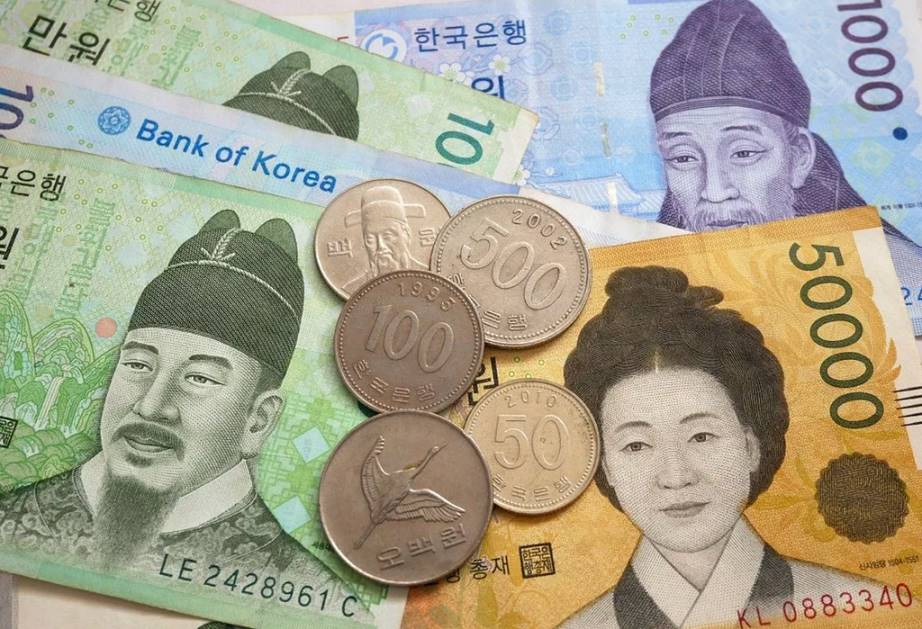
The won is South Korea’s official currency. Its currency code is KRW, and its symbol is ₩. The won uses a six-digit conversion factor and is a legal tender. According to data from research firm Kaiko, in the first quarter of 2024, the Korean won emerged as a leading currency in global cryptocurrency trading, recording a cumulative trading volume of $456 billion—reflecting growing speculative interest among South Koreans in high-risk crypto assets.
2. Cryptocurrency Market Status and Characteristics
High User Penetration
According to the semi-annual report on crypto asset businesses released by the Korea Financial Intelligence Unit (KOFIU), the number of active users registered with licensed crypto exchanges in South Korea increased by 390,000 in the second half of 2023, bringing the total to over 6.4 million (11% of the population).
High Adoption Rate
Driven by a tech-savvy population and strong interest in financial innovation, cryptocurrency ownership and adoption in South Korea are both substantial and growing. Most investors engage primarily in centralized exchange-based investment activities, giving centralized exchanges significant influence within the local crypto market. Additionally, crypto ownership has surged significantly—notably among individuals in their 40s and 50s, as well as younger investors in their 20s and 30s.
Large Trading Volume
Moreover, with the arrival of a new market cycle and rising BTC prices, South Korea has seen a resurgence in crypto trading frenzy. In March 2024, trading volume on domestic cryptocurrency exchanges hit a record high of 11.8 trillion KRW (approximately $9 billion), surpassing that of the Korean stock market, which stood at 11.47 trillion KRW (around $8.7 billion) at the time.
3. Crypto User Profile
Recent data shows a sharp increase in cryptocurrency ownership across diverse demographic groups in South Korea, with particularly strong adoption among those in their 20s and 30s, as well as individuals in their 40s and 50s. According to a report by Forkast, 31% of Korean crypto investors are in their 30s, 27% are in their 40s, and a quarter are in their 20s.
Higher Female Participation Compared to Other Markets
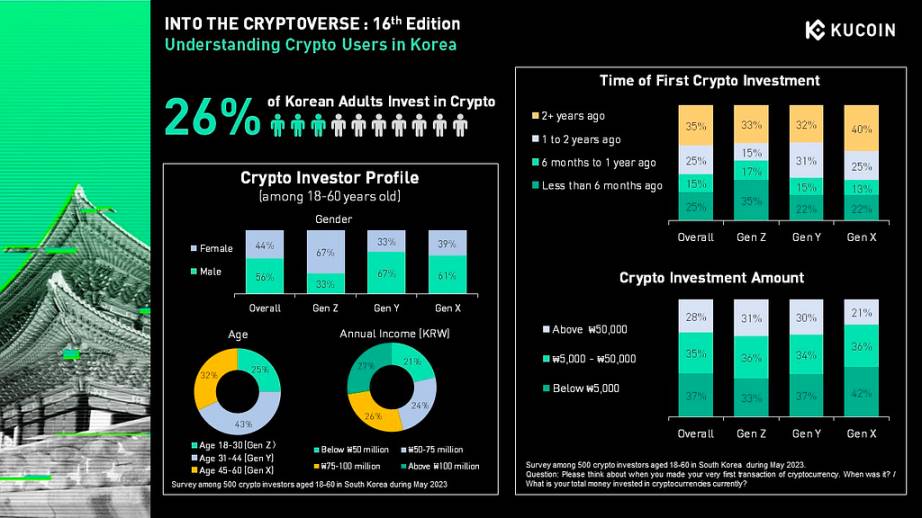
According to a 2023 Kucoin survey:
-
26% of South Korean internet users aged 18–60 invested in cryptocurrencies in the past six months;
-
Among all crypto investors, male participation (56%) exceeds female participation (44%);
-
Young women (Gen Z), aged 18–30, showed significant investment growth, representing 67% of female crypto investors;
-
This trend suggests that women, especially Gen Z women, may play increasingly important roles in future cryptocurrency investments.
Gen Z Prefers Getting Rich Quick
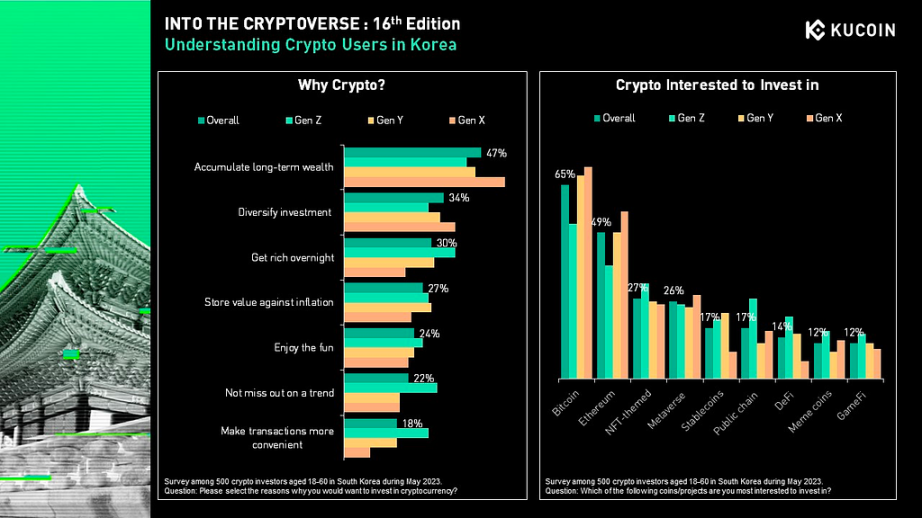
The survey also analyzed different motivations behind cryptocurrency investment:
-
Older investors are primarily motivated by long-term wealth accumulation (47%);
-
Gen X favors long-term investing (55%) and portfolio diversification (38%);
-
Gen Z leans toward quick profits, with 38% aiming to “get rich overnight,” compared to an overall average of 30%;
-
Younger investors are largely driven by FOMO, reflected in their higher trading frequency—64% of Gen Z traders trade more than once per week, compared to 48% of Millennials (Gen Y) and 42% of Gen X.
Additionally, Gen Z shows greater interest in the entertainment value of crypto investing (27%), viewing it as an engaging activity beyond mere financial returns.
4. Status of Centralized Exchanges (CEX) in South Korea
South Korea is one of the largest and most active cryptocurrency markets in the world. According to CoinGecko data, as of May 14, 2024, its five licensed exchanges—Upbit, Bithumb, Coinone, Korbit, and Gopax—handled over $2 billion in daily crypto trading volume.
Upbit
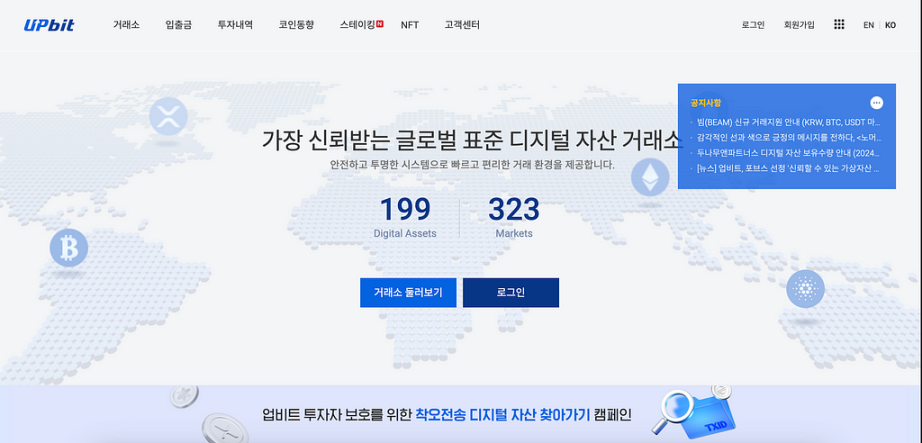
Upbit is South Korea’s largest exchange, dominating the market with over 80% of trading volume ($1.5 billion as of May 17, 2024), placing it among the top five global cryptocurrency exchanges. It also operates in Singapore, Thailand, and Indonesia, focusing on key Southeast Asian crypto markets.
Bithumb
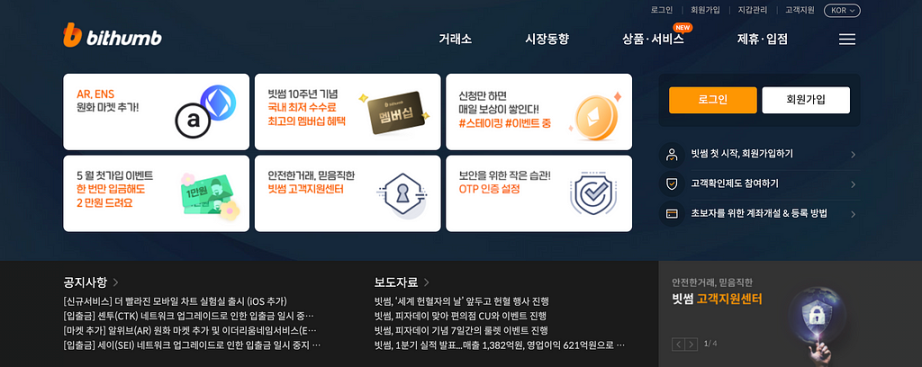
Founded in 2014, Bithumb has grown into one of South Korea’s largest and most influential cryptocurrency exchanges, headquartered in Seoul. According to CoinGecko data, as of May 14, 2024, it ranked second with a daily trading volume of $411 million.
Other CEX Platforms
According to CoinGecko data as of May 17, 2024, other CEX platforms have relatively small market shares compared to Upbit and Bithumb, with daily trading volumes of $5 million (Korbit), $2 million (Gopax), and $29 million (Coinone).
5. South Korean Web3 Projects
ZEAT
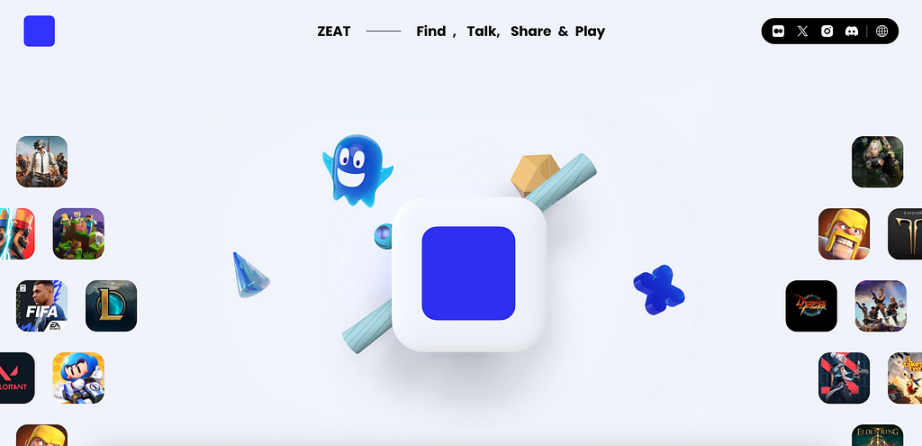
ZEAT is a gaming social platform designed to connect players, facilitate finding gaming partners, chatting with friends, and sharing content. It supports clans with features such as casual matches, tournaments, and missions. ZEAT aims to integrate Web3 elements like NFTs, SocialFi, and tokens to enhance the gaming experience. The platform’s AI recommendation system helps players discover like-minded individuals and build communities.
CXT.Tax
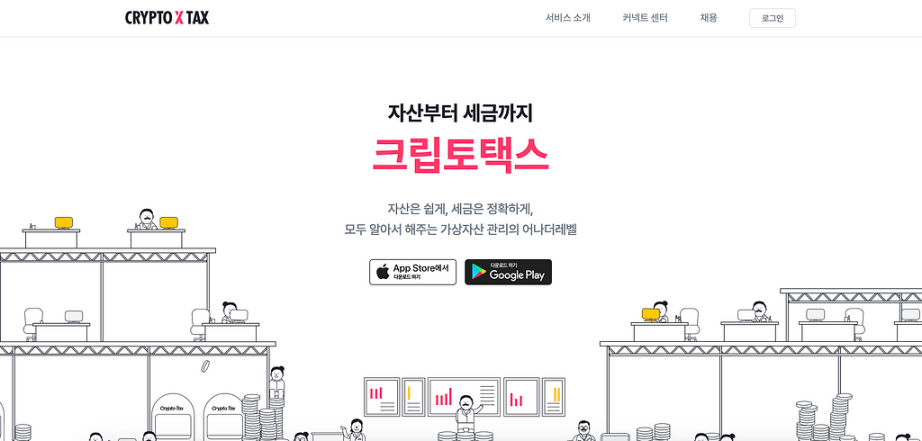
CXT.Tax, also known as CryptoTax, is a platform designed to efficiently manage cryptocurrency assets and taxes. It offers features such as transaction data aggregation across multiple trading platforms, real-time asset monitoring, and access to the latest news and disclosures. Users can preview and generate tax reports, estimate future tax liabilities, and receive notifications about critical updates regarding their holdings. CryptoTax aims to simplify digital asset management and tax compliance for investors.
DSRV
DSRV is a blockchain infrastructure company headquartered in Seoul, South Korea. It provides a range of services, including node operation, staking, and blockchain development tools. DSRV supports over 40 major blockchain networks and operates more than 4,000 nodes. The company also offers products such as Welldone Studio—an integrated development environment for multi-chain applications—and All That Node, a comprehensive multi-chain development kit. DSRV aims to simplify blockchain access and promote sustainable industry growth.
Hyperithm
Hyperithm is a digital asset management firm headquartered in Tokyo and Seoul, specializing in quantitative trading and venture capital. The company leverages advanced trading strategies and investment expertise to deliver institutional-grade services in the digital asset space.
KODA
Korea Digital Asset (KODA), launched on February 22, 2023, is South Korea’s largest institutional crypto custody service, backed by KB Kookmin Bank—the country’s largest retail bank—Haechi Labs, and Hashed, a leading South Korean VC fund. KODA announced that the value of crypto assets under custody expanded by nearly 248% in the second half of 2023.
6. South Korean Crypto Venture Capital
Lecca Ventures
Lecca Ventures is a Seoul-based venture capital firm focused on the Web3 and cryptocurrency sectors. It specializes in investing in community-driven startups, particularly those led by visionary founders. Lecca Ventures takes a hands-on approach, providing not only capital but also actively participating in the development and scaling of its portfolio companies.
Its investment strategy emphasizes quality over quantity, aiming to support startups offering unique and innovative solutions in the Web3 space. Portfolio companies include Airstack, Alloyx, Nibiru, Shield, Anima, and Mission ate Cash—all recognized for their contributions to the crypto industry.
Hashed
Hashed is a prominent blockchain investment firm and incubator headquartered in Seoul, with an office in Silicon Valley. The firm focuses on supporting and investing in innovative blockchain projects and Web3 startups. Founded by Simon Kim, Hashed is dedicated to building a decentralized future by empowering visionary entrepreneurs and offering comprehensive support to its portfolio companies. Hashed plays a pivotal role in the global blockchain ecosystem, organizing events such as Korea Blockchain Week to foster community engagement and collaboration within the industry.
7. Cryptocurrency Regulation in South Korea
South Korea has established a comprehensive cryptocurrency regulatory framework aimed at ensuring investor protection and market integrity. Key components of this framework include:
Digital Asset Basic Act
This upcoming legislation aims to provide a structured approach to regulating virtual assets. It includes regulatory requirements for Virtual Asset Service Providers (VASPs), standards for issuing and listing cryptocurrencies, and disclosure obligations to prevent unfair trading practices.
Anti-Money Laundering (AML) and Compliance
The Financial Intelligence Unit (FIU) is intensifying scrutiny of cryptocurrency exchanges. Its approach includes rigorous audits and enforcement of strict regulatory standards to combat illegal activities such as money laundering and corruption. Exchanges must implement real-name verification services and segregate user funds from corporate funds.
Investor Protection Measures
Following high-profile incidents such as the Terra-LUNA collapse, regulatory focus has shifted toward strengthening investor safeguards. This includes stricter controls on token issuance and listings, as well as mandatory disclosures by senior public officials to prevent conflicts of interest.
Global Alignment Standards
South Korea’s regulatory efforts align with international standards, such as those set by the Financial Action Task Force (FATF). This ensures that national regulations are consistent with global best practices, enhancing the reliability and security of its digital asset markets. These measures aim to create a safer and more transparent environment for cryptocurrency trading in South Korea, balancing innovation with the need to protect investors and maintain market stability.
8. Tax Policy in South Korea
South Korea’s cryptocurrency tax policy is evolving, reflecting the government’s effort to balance regulation with market growth. Initially, South Korea planned to impose a 20% tax on crypto gains exceeding 2.5 million KRW (approximately $2,300 USD) starting in 2022. However, due to industry opposition and legislative delays, implementation has been postponed multiple times. As of now, the tax has been delayed until January 2025. It will apply to income from cryptocurrency transactions and require investors to report their gains for taxation. Furthermore, the ruling People Power Party has proposed another delay, prioritizing the establishment of a comprehensive regulatory framework, potentially pushing the effective date to 2027.
Under current rules, cryptocurrency gains are classified as “miscellaneous income.” Any non-sale transfers of crypto assets—such as gifts or inheritance—are subject to statutory gift and inheritance tax rates, which can reach up to 50%. The South Korean government is also focused on increasing transparency and combating illicit activities in the crypto market, requiring exchanges to share transaction records and mandating senior public officials to disclose their crypto holdings starting in 2024.
In South Korea, capital gains tax rates vary depending on the type of asset and whether the seller is a resident or non-resident;
Non-residents are required to pay capital gains tax on income sourced from South Korea, with tax rates and rules generally similar to those applied to residents;
9. Conclusion
As a G20 member with a robust economy supported by global giants like Samsung and Hyundai, South Korea plays a significant role in the global economic landscape. At the same time, it is a highly culturally homogeneous market. Without an authentic local team operating within South Korea, it is extremely difficult for foreign teams to successfully enter this market.
On the other hand, South Korea’s financial system enjoys very high trust, which has led to relatively low enthusiasm among users for decentralized self-custody and DeFi. However, driven by FOMO stemming from desires for investment, wealth preservation, and getting rich quickly, the South Korean crypto market continues to perform strongly, standing out uniquely in the global crypto landscape—especially in terms of licensed cryptocurrency exchanges and widespread user adoption.
As of 2024, South Korea’s cryptocurrency market is clearly defined by rapidly evolving regulations, strengthened government oversight, and significant market activity. Combined with high levels of market participation and strict enforcement measures, South Korea has become a key player in the global crypto industry. As the sector continues to develop, South Korea is poised to play an even more important role in the global cryptocurrency market.
Join TechFlow official community to stay tuned
Telegram:https://t.me/TechFlowDaily
X (Twitter):https://x.com/TechFlowPost
X (Twitter) EN:https://x.com/BlockFlow_News
 @MIIXCapital_CN










