








Crypto Becomes Key Issue in Swing State Voter Polls? In-Depth Analysis of Harris' Polling on Crypto in Battleground States
TechFlow Selected TechFlow Selected
Crypto Becomes Key Issue in Swing State Voter Polls? In-Depth Analysis of Harris' Polling on Crypto in Battleground States
Legacy polling firm Harris Poll and blockchain venture capital company DCG jointly released a survey titled "Crypto Attitudes in Swing States," revealing several key findings.
 Navigating Web3 tides with focused insights
By Weilin
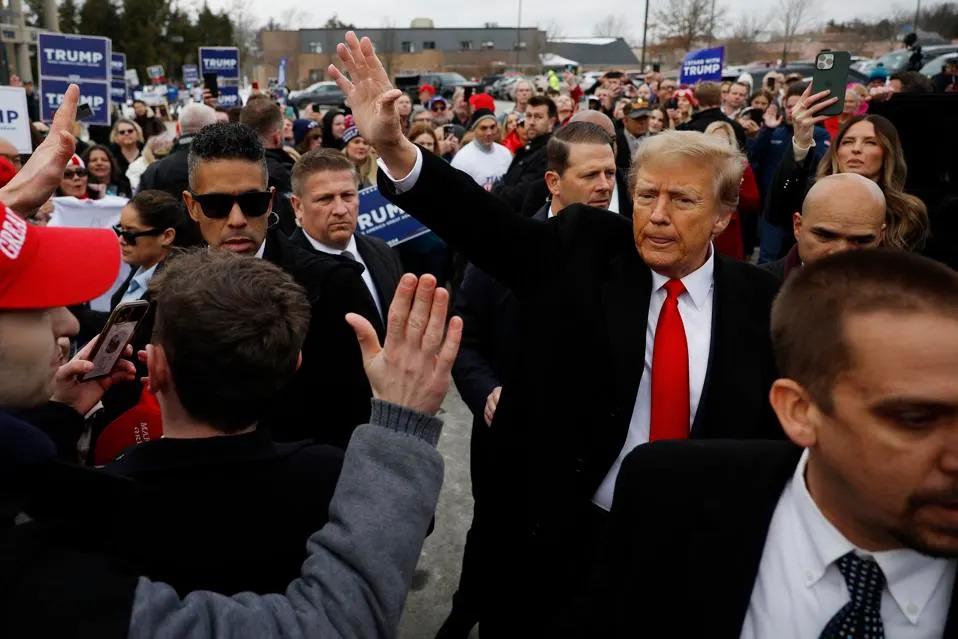
In U.S. presidential elections, swing states are crucial battlegrounds for both Democrats and Republicans. Because no candidate or party enjoys overwhelming support in these states to secure electoral votes, winning their electors is essential to securing victory in the general election.
Earlier this month, Harris Poll—a well-established survey firm founded in 1963—and blockchain venture capital firm Digital Currency Group jointly released a poll titled "Crypto Attitudes in Swing States." The survey included responses from 1,201 registered U.S. voters residing in politically undecided swing states. Meanwhile, recent shifts in Democratic policy toward cryptocurrency and Republican expressions of crypto-friendliness further validate some of the report's findings.
The 45-page report highlights several key insights. For instance, 40% of surveyed voters want political candidates to talk more about digital currencies; over half worry that policymakers could stifle innovation through excessive regulation; nearly half distrust political candidates who would interfere with cryptocurrency; a quarter say enthusiasm for crypto would make them trust a candidate more; and 30% say they’d be more inclined to support a crypto-friendly candidate.
The survey was conducted online between April 4 and April 16, taking respondents approximately 10 minutes to complete. Eligible participants were U.S. residents aged 18 or older living in swing states—Michigan, Nevada, Ohio, Montana, Pennsylvania, and Arizona—who were also registered to vote in their respective states. Below are further details from the poll.
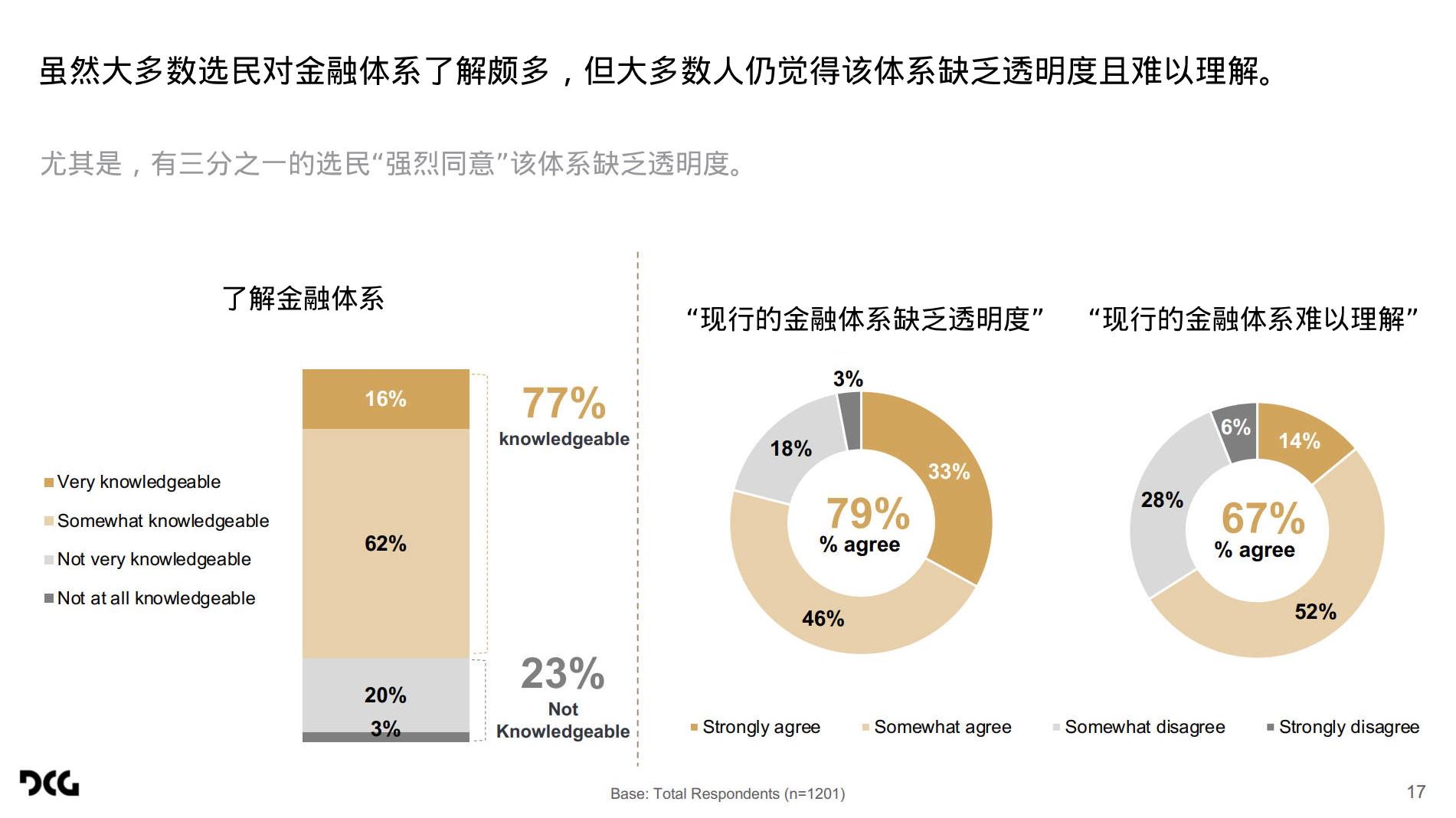
Finding 1: The current financial system is broadly unpopular, widely perceived as unfair, especially disadvantaging younger generations.
-
Specifically, the existing financial system elicits negative reactions among voters. Most believe it favors elites over ordinary people (80%), lacks transparency (79%), is difficult to understand (67%), and sets younger generations up for failure (63%).
-
Conversely, few believe the current financial system is designed for people like themselves (38%) or treats everyone fairly (26%).
-
Interestingly, a majority (60–65%) hold generally positive views about their own current and future personal financial health, and most express confidence in their understanding of the financial system (77%). Yet this optimism does not extend to the overall financial system.
Finding 2: A significant portion of voters show interest in cryptocurrency, forming a base of pro-crypto sentiment.
-
Currently, only a small proportion of voters own cryptocurrency (14%), and most feel unfamiliar with it (69%). Around one-fifth plan to acquire crypto within the next six months.
-
However, nearly one-third of voters hold positive attitudes toward cryptocurrency (termed “crypto-positives”). These voters consistently exhibit greater enthusiasm than the general population, associating crypto with innovation (62%), promise (50%), and accessibility (45%).
-
Most crypto-positive voters agree that cryptocurrency represents a new path to financial security and prosperity (83%), is the future of transactions (79%), creates a level playing field for financial well-being (77%), and is built for people like them (70%).
-
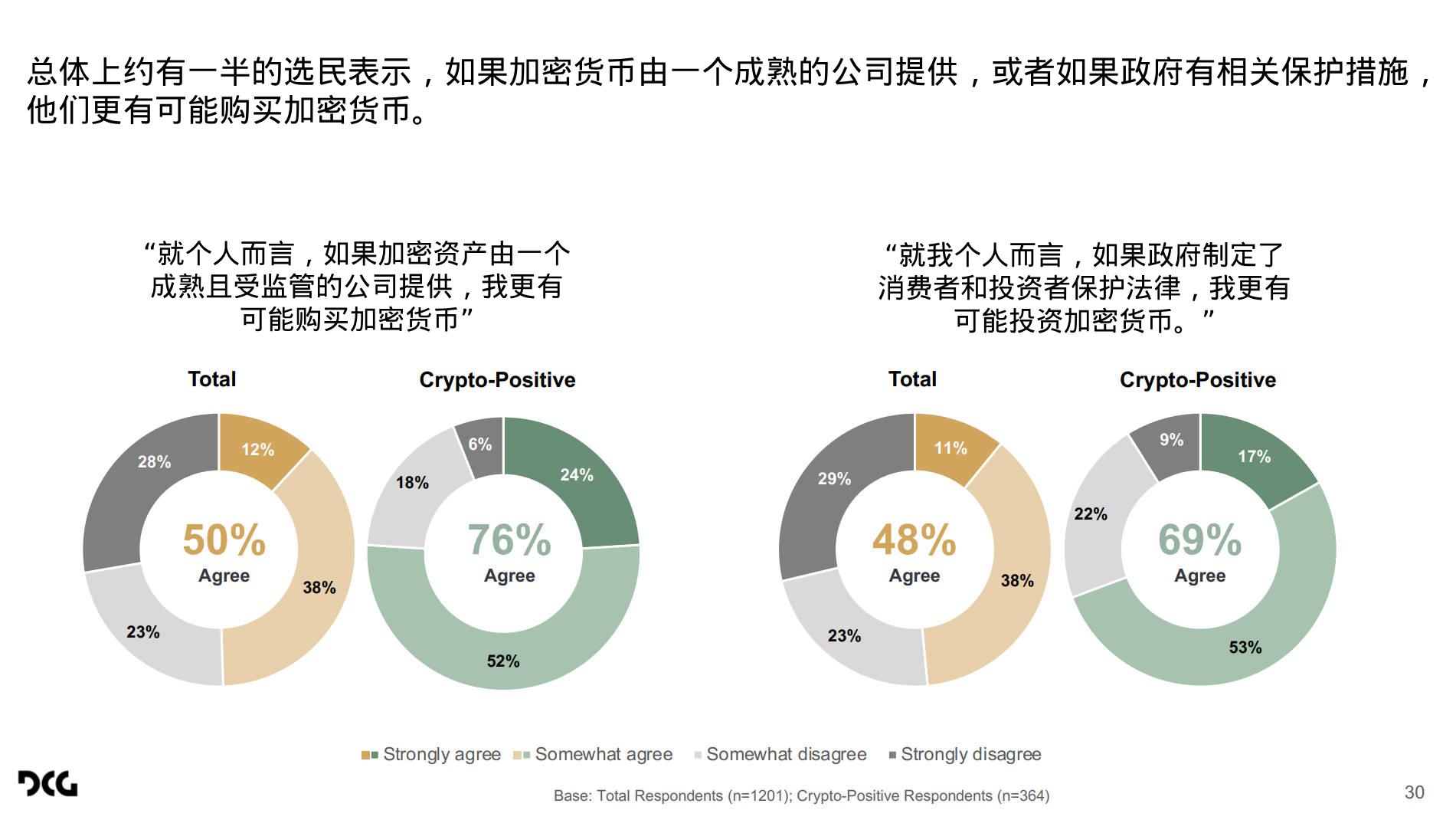
While skepticism exists, about half of all voters—and a majority of crypto-positives—say they would be more likely to buy crypto if offered by established or regulated firms (50% overall, 76% among crypto-positives), or if government laws protected consumers and investors (48% overall, 69% among crypto-positives).
Finding 3: Treating cryptocurrency as an election issue could offer political candidates a strategic advantage.
Overall, a vast majority of both general and crypto-positive voters plan to participate in the upcoming 2024 election (over 90%), with nearly equal support for Republicans and Democrats.
-
A substantial share of voters (40%) want political candidates to discuss digital currencies more frequently.
-
Most voters distrust elected officials’ ability to understand innovative technologies like crypto, and over half fear that policymakers may stifle innovation via overregulation. An overwhelming majority wants regulators to fully understand crypto before enacting rules.
-
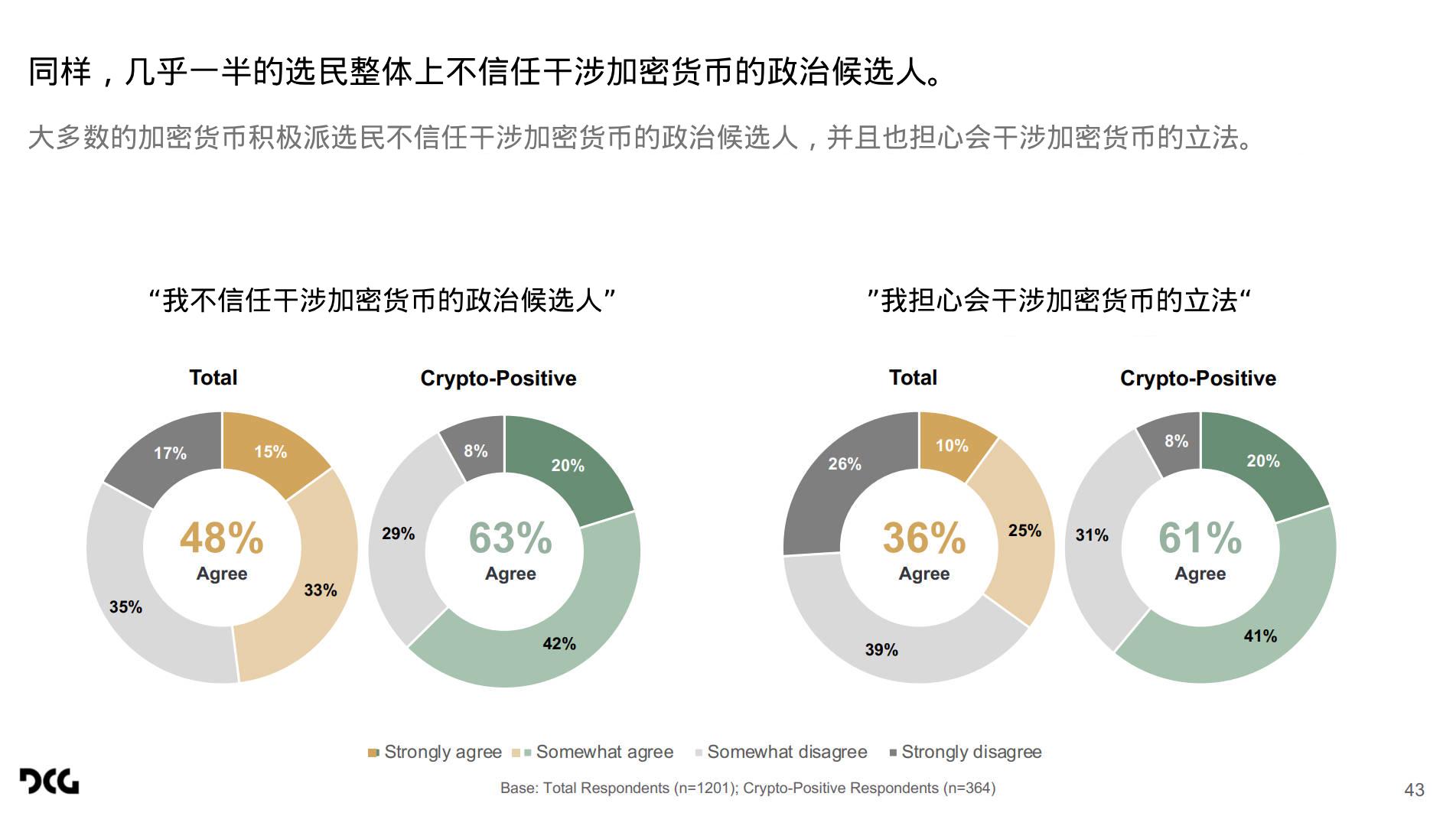
Nearly half of voters distrust candidates who would interfere with cryptocurrency. A quarter say a candidate’s enthusiasm for crypto would increase their trust. And 30% say they’re more likely to support a crypto-friendly candidate.
-
Crypto-positive voters are significantly more committed to supporting pro-crypto positions than the general electorate.
-
Notably, there is broad support for crypto regulation. A strong majority of voters—including nearly half of crypto-positives—support comprehensive reform of cryptocurrency regulations. Similarly, around 20–25% of all voters and one-third of crypto-positives want elected officials to focus on regulating crypto or protecting crypto investors.
Finding 4: Certain demographic groups show greater openness to cryptocurrency.
-
Crypto-positive voters are more likely to be male, young, Black, or Hispanic, and less likely to hold four-year college degrees compared to the general electorate.
-
There are no significant differences in household income or political leanings between crypto-positive voters and the broader voting population.
-
Positive attitudes toward crypto are not limited to holders—about 40% of those expressing favorable views have never owned cryptocurrency.
-
Among the surveyed states, Ohio voters hold notably more negative views toward cryptocurrency.
What do these findings imply?
Public perception of cryptocurrency could improve with greater education
-
Most voters feel unfamiliar with cryptocurrency—even many crypto-positive voters find it hard to understand.
-
When asked about their negative views, some cite lack of familiarity or experience, suggesting that increased information or exposure might shift their opinions.
Crypto-positive voters represent a strategic opportunity for candidates in the upcoming election
-
In a highly polarized political climate, cryptocurrency may emerge as a relatively non-partisan issue capable of attracting cross-party support.
-
The demographic profile of crypto-positive voters—younger individuals and people of color—is particularly appealing to Democratic candidates.
Candidates who speak knowledgeably about crypto may stand out
-
There is considerable interest in candidates discussing digital currencies, yet low confidence that they truly understand crypto. A politician demonstrating genuine knowledge could gain a distinct edge.
-
Voters supporting pro-crypto candidates describe them as forward-thinking and open-minded, suggesting a potential halo effect.
Beyond simply supporting crypto, candidates can win favor by advocating sensible regulation
-
Strong majorities among both general and crypto-positive voters support comprehensive crypto reform. More people would buy crypto if backed by government consumer protections, indicating that hesitation may be alleviated through trusted authority.
-
Including calls for balanced regulation within broader pro-crypto messaging can ease concerns among skeptical voters while still appealing to crypto enthusiasts.
Join TechFlow official community to stay tuned
Telegram:https://t.me/TechFlowDaily
X (Twitter):https://x.com/TechFlowPost
X (Twitter) EN:https://x.com/BlockFlow_News
 PANews









