








Security Special Issue 02 | OKX Web3 & CertiK: MEME "Dare" and Security "Truth or Dare"
TechFlow Selected TechFlow Selected
Security Special Issue 02 | OKX Web3 & CertiK: MEME "Dare" and Security "Truth or Dare"
From a practical guide perspective, share common MEME token on-chain transaction security risks and preventive measures.
 Navigating Web3 tides with focused insights
Introduction
OKX Web3 Wallet has specially launched the "Security Special Edition" series, offering targeted solutions to various types of on-chain security issues. By analyzing real-life cases happening around users and collaborating with experts or institutions in the security field, this series provides dual perspectives—practical insights and expert analysis—to gradually clarify and summarize secure trading rules. The goal is to strengthen user education on security and help users learn how to protect their private keys and wallet assets from the ground up.
Meme Trading Is a High-Stakes Adventure
Rug Pulls, Ponzi schemes ("Pixiu" traps), price crashes, getting sandwiched—the path ahead is full of traps
I’ve always been a brave adventurer—until I took an “arrow” to the knee.
This is Security Special Edition #02. We are honored to invite industry-leading security firm CertiK and the OKX Web3 team to share practical guidance on common security risks and preventive measures in meme token trading. We hope this will provide valuable insights for meme enthusiasts.
CertiK Security Team: Founded by two professors from Yale University and Columbia University, CertiK leverages cutting-edge formal verification technology, AI-powered auditing, and manual audits by security experts to scan and monitor blockchain protocols and smart contracts for enhanced security. To date, CertiK has earned the trust of over 4,000 enterprise clients, uncovered nearly 70,000 code vulnerabilities, and protected more than $400 billion in digital assets from potential losses.
OKX Web3 Wallet Security Team: Hello everyone, we’re excited to join this discussion. The OKX Web3 Wallet Security Team focuses on building robust security capabilities for the OKX Web3 Wallet, delivering multi-layered protection across product, user, and transaction security. Operating 24/7, we safeguard users’ wallet assets while contributing to the broader blockchain security ecosystem.
Q1: Real-World Meme Token Risk Cases Users Face
OKX Web3 Wallet Security Team: There are many types of such risk incidents. Here, we’ve selected several classic cases where users encountered problems while trading meme tokens:
Case 1: "Pixiu" Trap (Can Only Buy, Cannot Sell)
User A discovered a highly discussed meme token on Twitter and found its contract address in the comments. After checking the token’s trading data and seeing strong performance, User A decided to buy. As the price rose, User A attempted to sell and lock in profits—but was unable to complete any sell transactions. Our investigation later revealed that the token was a "Pixiu" scam; User A’s address had been blacklisted, preventing any sales.
Case 2: Malicious Rug Pull
User B was active in a Telegram group and had added many members as contacts. One day, a fellow member privately messaged User B, recommending a hot new meme project with huge potential, and immediately shared the token’s contract address. Tempted, User B checked a data analytics tool and saw that the liquidity (LP) was burned and no whale held large amounts—appearing trustworthy—and proceeded to buy. The next day, however, User B discovered the project’s liquidity had been drained. Our team later confirmed it was a malicious rug pull token containing hidden backdoor logic allowing unlimited minting.
Meme token risks continue to emerge. Through this dialogue, we aim to offer users some safety guidelines—not investment advice—for educational and informational purposes only.
Q2: Common Risks in Meme Trading on EVM Chains vs. Solana Network
CertiK Security Team: Meme-related risks fall into two categories: on-chain risks and general risks unrelated to blockchain technology.
Before diving into specific on-chain risks, let’s first cover the general risks, which include five major types: extremely low issuance cost, easily manipulated prices, high centralization, significant trading slippage for investors, and rug pull scams.
1. Extremely Low Issuance Cost
Typically, launching a meme project requires minimal or even zero technical development, enabling tools like PandaTool to offer one-click token creation. Due to these negligible development costs, insiders and early investors acquire tokens at near-zero cost. Combined with the lack of fundamental value in most meme projects, once market FOMO (fear of missing out) fades, these low-cost tokens are often dumped rapidly, causing significant losses for latecomers.
2. Easily Manipulated Prices
Meme token prices are easy to manipulate due to weak technological foundations, lack of intrinsic value, and low barriers to entry—anyone can create and launch a meme token, flooding the market with highly speculative assets.
Additionally, meme tokens rely heavily on social media buzz and online trends to drive price movements—factors easily exploited by whales or organized groups. These speculators may manipulate prices through large-scale buys/sells or by spreading false information and market noise, creating sharp volatility that attracts retail traders into momentum-driven trades, further amplifying manipulation risks.
3. High Centralization
Meme projects often lack decentralized governance, with decision-making power concentrated among a few developers or core team members. This makes project direction vulnerable to personal interests, increasing investor risk. Beyond decision-making, centralization extends to control over contracts, token holdings, and liquidity—each posing significant risks.
4. High Trading Slippage for Investors
High trading slippage in memes stems primarily from poor liquidity. With relatively few participants and insufficient trading volume, bid-ask spreads widen, increasing transaction costs. Poorly liquid meme tokens also suffer drastic price swings during large trades, further raising risks and costs. Traders often face higher slippage and greater price impact when buying or selling, leading to inefficient trades and elevated costs.
Secondly, high slippage is exacerbated by “transaction tax” mechanisms. Many meme projects impose a fee on every trade to incentivize holding or fund operations—used for buybacks, rewards, or development. However, these taxes increase transaction costs, making frequent trading prohibitively expensive. Each buy/sell incurs additional fees, worsening slippage and reducing liquidity. Meme traders must bear higher costs and risks.
5. Rug Pull Scams
Meme tokens are prime targets for rug pulls due to high anonymity, lack of transparency, and minimal regulation. Below are common rug pull tactics and their warning signs:
1) Liquidity Drain:
Method: The development team creates a liquidity pool on a decentralized exchange (DEX), adding the token and a major cryptocurrency (e.g., ETH, USDT). Once sufficient investors join, the team abruptly withdraws all liquidity, rendering the token untradeable.
Signs: Investors cannot sell; token price plummets to near zero; the liquidity pool shows almost no remaining funds.
2) Developer Dumping:
Method: Project founders or early holders dump large quantities of tokens once market demand peaks, causing a sharp price drop.
Signs: Massive sell orders appear in transaction records; price collapses rapidly; market confidence evaporates; trading volume drops sharply.
3) Fake Projects:
Method: Fraudsters create fake meme coins with fabricated visions and roadmaps, using social media hype and celebrity endorsements to attract investments. Once enough funds are raised, they vanish.
Signs: Project website and social accounts disappear overnight; team becomes unreachable; token value crashes.
4) Contract Exploits:
Method: Developers intentionally leave backdoors or vulnerabilities in the smart contract, enabling them to steal investor funds under certain conditions.
Signs: Abnormal or halted trading activity; users unable to transfer or sell tokens; large sums transferred from the contract to unknown addresses.
5) Fake Forks:
Method: Claiming to upgrade or fork an existing token, scammers ask holders to swap old tokens for new ones—only to seize and abscond with the original tokens.
Signs: Original tokens lose value; so-called new tokens aren’t listed anywhere; project team disappears.
Next, we’ll explore common on-chain risks when trading meme tokens on EVM chains and the Solana network. For easier comparison, we present the differences in table format below.
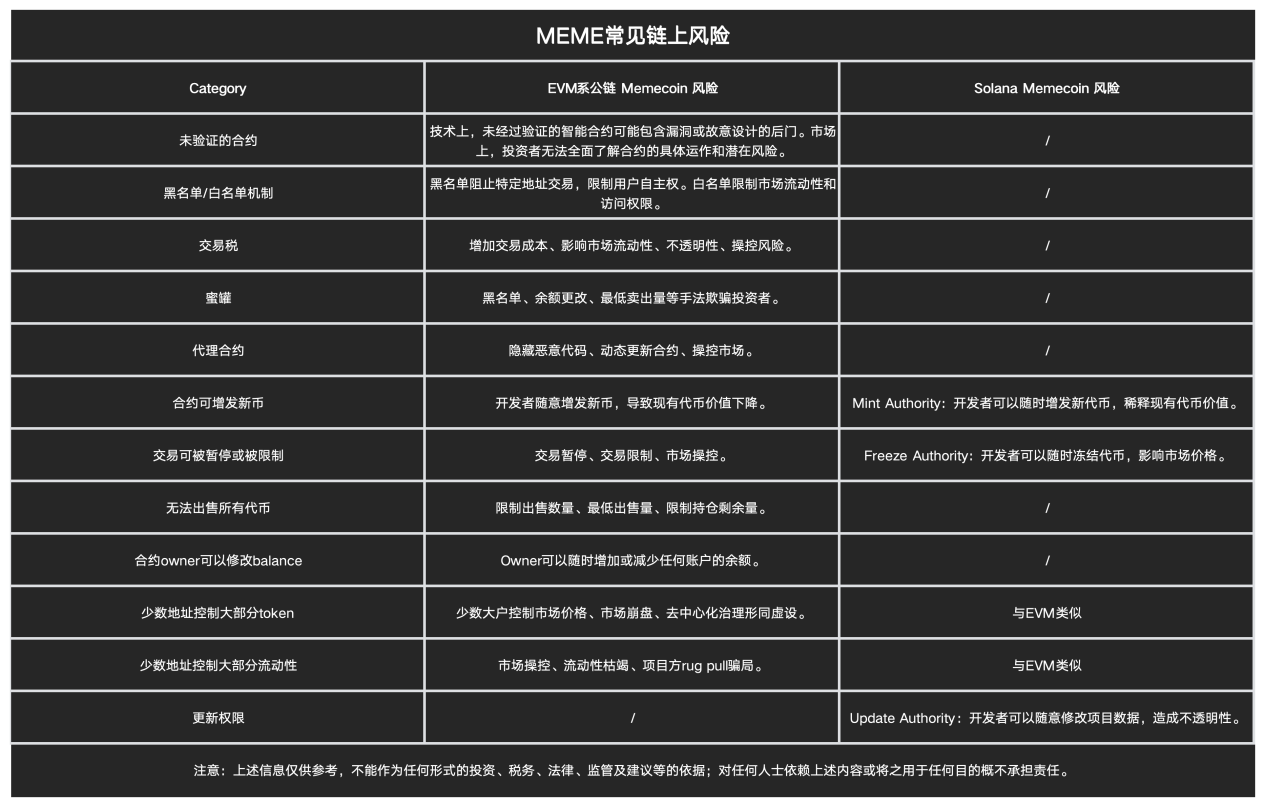
Image source: CertiK Security Team
OKX Web3 Wallet Security Team: EVM-based chains and Solana are top choices for meme trading, and their differing on-chain risk profiles stem largely from distinct token issuance mechanisms.
First, EVM-based chains. Due to high freedom in token issuance and developer-defined logic, common on-chain risks in meme trading on EVM chains fall into two main categories:
(1) Malicious Logic Memes
When a popular meme emerges, numerous fake versions with malicious logic surface. These tokens often display strong trading data, misleading users into purchasing the wrong (malicious) token and suffering losses. Two common types exist:
1. Pixiu Schemes: Tokens that allow buying but block selling. These typically implement 100% tax or special transfer restrictions to prevent users from selling.
2. Malicious Rug Pull Tokens: Tokens with hidden mint functions. These exploit backdoor logic to mint vast supplies and drain liquidity.
(2) Project Team Misconduct
Team misconduct mainly falls into two types: abuse of privileged functions and direct dumping.
1) Abuse of Privileged Functions: Teams use privileged functions (e.g., mint) to inflate supply and dump tokens.
2) Direct Dumping: Teams directly sell off their large token holdings.
Second, Solana. Notably, Solana uses a fixed official channel for token issuance. Thus, the primary on-chain risk in Solana meme trading comes from project team misconduct.
(1) Abuse of Privileged Functions
Teams use privileged functions (e.g., mint) to issue more tokens and dump them—or use freeze instructions to lock user addresses, achieving a similar effect to a Pixiu scheme.
(2) Direct Dumping
Teams directly dump their holdings. Notably, some malicious teams distribute tokens across multiple wallets to evade detection of concentrated holdings.
Q3: Which Metrics or Tools Can Help Filter High-Risk Meme Projects?
CertiK Security Team: This is not investment advice. We’re simply sharing a few tools we personally use—they don’t guarantee risk avoidance but can help users make preliminary assessments of meme token risks.
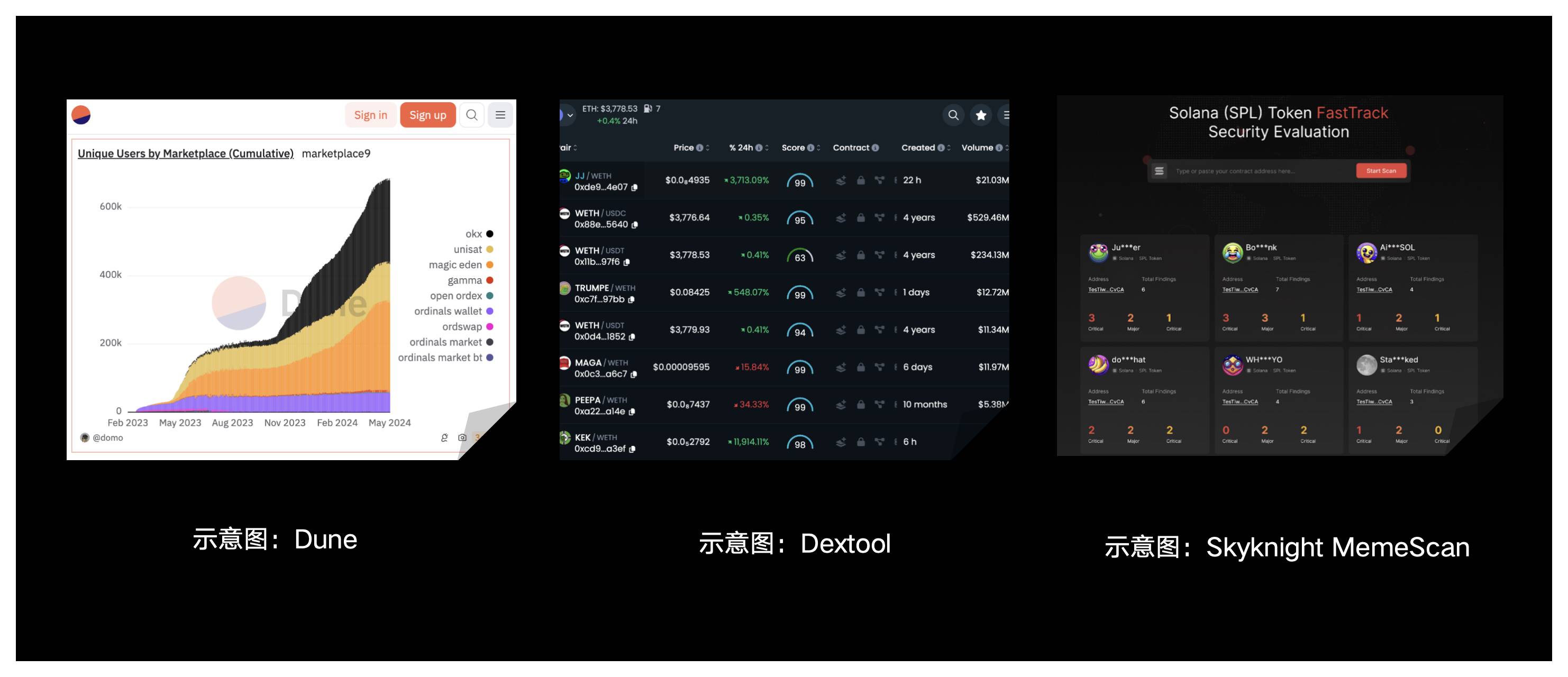
1) dune.com: A flexible data analytics platform allowing custom queries to analyze and monitor on-chain data. However, it has a steeper learning curve.
2) Dextools.io: A token information aggregator providing basic data like market cap, liquidity, holder count, and distribution, along with simple risk filters.
3) Skyknight MemScan: A new platform by CertiK designed to evaluate meme token safety. It offers real-time insights and on-chain behavior analysis, including mint function checks, trade restriction detection, ownership concentration analysis, and liquidity control assessment.
OKX Web3 Wallet Security Team: No method guarantees 100% risk filtering. But from the perspective of token security and project health, we offer users several dimensions to initially filter out extremely risky meme projects. Note: these factors alone shouldn’t determine a project’s safety.
1) Smart Contract Security: Use tools to verify source-level security issues. These tools can detect malicious logic and code vulnerabilities. Also assess permission controls—ensure contract owners can’t arbitrarily mint or burn tokens.
2) Token Distribution: Use blockchain explorers to check holder distribution. Avoid projects with highly concentrated holdings, as they’re prone to manipulation and rug pulls.
3) Liquidity and Trading Activity: Monitor trading volume and price volatility. Low volume and high volatility suggest instability or manipulation risks.
4) Community and Team Activity: Assess whether the team is transparent—check team backgrounds, experience, and social media presence.
Currently, OKX Web3 Wallet also offers built-in risk filtering, blocking potentially harmful tokens based on code and transaction security, while providing comprehensive token data to safeguard your meme trading experience.
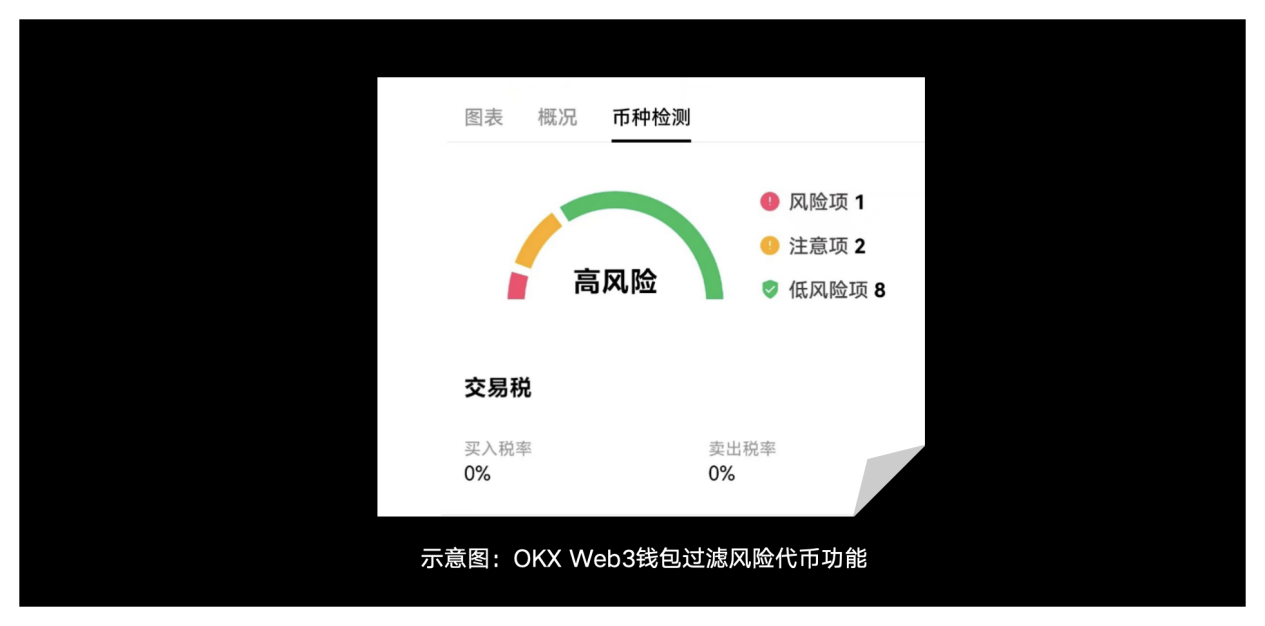
Q4: What Are the Limitations or Risks of Launchpad Platforms and DEXs as Early Meme Trading Venues?
CertiK Security Team: First, Launchpads and DEXs must have robust technical infrastructure to handle the speed and scale of meme trading. Second, liquidity is critical—platforms must monitor events that could compromise liquidity security. Finally, regarding regulatory compliance, platforms must understand and adhere to relevant policies to minimize legal risks.
OKX Web3 Wallet Security Team: Next, we’ll outline the current limitations and risks of Launchpad platforms and DEXs.
For Launchpad platforms, three key issues exist:
1) Inconsistent Project Quality: While some Launchpads conduct reviews and due diligence, they may still fail to identify high-risk or low-quality projects.
2) Fund Management Risks: Launchpads often manage large volumes of user funds. If mismanaged or maliciously accessed, these funds could be lost. Additionally, platforms may lack adequate safeguards for user asset protection.
3) Market Manipulation: Project teams or large players may manipulate prices post-launch, causing extreme volatility and harming retail investors.
DEXs face even more limitations:
1) Insufficient Liquidity: Newly listed memes often suffer from poor liquidity on DEXs, resulting in high slippage and price volatility.
2) Smart Contract Vulnerabilities: DEXs rely on smart contracts. Any flaws could be exploited by hackers, leading to fund loss.
3) High Transaction Fees: On networks like Ethereum, gas fees can be prohibitively high, affecting cost-efficiency for small traders.
4) Malicious Project Teams: Anyone can deploy a token and list it on a DEX. Some teams deliberately insert backdoor functions to manipulate balances or prevent users from selling.
5) Poor User Experience: DEXs can be complex for average users—requiring wallet connections, gas settings, etc.—making them less intuitive than centralized exchanges (CEXs).
Q5: Follow-up: Do Telegram bots represent the future of intent-based interaction in crypto, indicating a trend for DEX evolution?
CertiK Security Team: Telegram bots significantly lower trading barriers and automate parts of the process, enabling non-experts to participate more easily. However, their specific security risks must be carefully considered. We recommend thorough security due diligence on any third-party dApp interacting with your wallet to ensure safety.
OKX Web3 Wallet Security Team: Telegram bots in crypto showcase the potential of intent-based interactions. This trend could shape the future of DEXs by improving user experience, enhancing trading convenience and security, expanding financial service ecosystems, and driving innovation.
1. Enhanced User Experience
Simplified Operations: Using natural language processing, Telegram bots allow users to execute trades via simple chat commands, streamlining complex processes.
Automated Trading: Users can set rules like stop-loss and take-profit, reducing manual effort and associated risks.
2. Strengthened Decentralized Trading
Seamless Integration: Bots integrate with DEXs via APIs, hiding complex mechanics and lowering learning curves.
Real-Time Execution: Bots monitor markets in real time and notify users instantly, enabling rapid decision-making and trade execution.
3. Improved Security
Smart Contracts: Bots use smart contracts to ensure transparent and secure transactions, minimizing human interference and fraud.
Decentralization: Although bots may be centrally operated, actual trades occur in decentralized environments, enhancing security and transparency.
4. Expanded Ecosystem
Multi-Functional Platform: Beyond trading, bots can support asset management, lending, staking, and more—offering one-stop financial services.
Enhanced Community Engagement: Bots foster user interaction and community building within Telegram, boosting participation.
5. Technology and Market Drivers
Innovation Catalyst: Advances in AI and blockchain will make bots smarter and more efficient, accelerating the emergence of new decentralized applications and services.
Growing Market Demand: Rising user preference for simplified, automated services pushes more DEXs to adopt bot features to stay competitive.
Q6: Security Risks of High-Frequency Tools Like Telegram Bots
CertiK Security Team: As the crypto market evolves, Telegram bots have become increasingly common for trading and information access. However, these widely used tools introduce significant security risks users should be aware of:
First, many Telegram bots are unaudited and have closed-source code, potentially containing malicious code or vulnerabilities. Such bots may steal private keys, identity details, or other sensitive data. Some mimic legitimate services and use phishing attacks to trick users into revealing private keys or seed phrases, resulting in fund theft. Users should only use officially recommended or verified bots and avoid clicking suspicious links or entering sensitive information.
Second, some bots request excessive permissions—like access to contacts, files, or private data. Users should grant only the minimum necessary permissions. Also, communications between bots and Telegram servers may be intercepted via man-in-the-middle attacks, leading to data leaks or tampering. Users should prefer bots using encrypted communication and verify their security protocols.
Third, many bots offer automated trading, but flawed logic can lead to severe financial losses. Users should thoroughly test such features and monitor transactions for anomalies. Additionally, bot developers may collect and store vast amounts of user data—posing serious privacy threats if leaked or misused. Choose bots with strong reputations and clear privacy policies, and regularly review their data protection practices.
Finally, over-reliance on a single bot for trading or asset management can leave users stranded if the service shuts down or experiences downtime. Avoid dependence on any single bot and maintain backup plans. By understanding and mitigating these risks, users can safely leverage Telegram bots to protect their assets and privacy.
OKX Web3 Wallet Security Team: Telegram-like bots bring convenience but also significant risks. Let’s illustrate with examples:
1) Centralized Private Key Custody Risk: Most Telegram bots require custody of users’ private keys to sign and send transactions autonomously. This means private keys are stored on third-party servers, increasing the risk of theft or misuse.
2) Phishing Risks: Phishing links sent via Telegram bots may trick users into clicking, leading to account or key theft. Social engineering in chat windows (e.g., fake support agents) may also deceive users into revealing seed phrases or other sensitive data.
3) Trojan Risks: Some bots may deliver malware (trojans) or malicious SDKs that infect user devices, compromising system-wide security.
In summary, users must exercise caution when using Telegram bots—avoid clicking unknown links and never disclose private keys.
Q7: Common Mistakes and Risk Prevention in Meme Trading
CertiK Security Team: First, perform security due diligence on any dApp interacting with your wallet—including trading platforms and Telegram bots. Choosing audited dApps reduces attack risks and protects your private keys and identity. Currently, CertiK offers penetration testing services for dApps to help reduce user risk.
Second, meme trading demands fast response times and high frequency, so choosing a stable, low-fee platform is crucial. Opt for platforms that are secure, reliable, fast, and cost-effective for better trading experiences. For example, CertiK’s MemeScan platform provides real-time security insights, including on-chain behavior analysis—such as whether a contract allows minting, pauses trading, concentrates tokens or liquidity in few hands—all aimed at helping users trade more safely.
OKX Web3 Wallet Security Team: For security, users must understand safe practices and risk prevention when trading memes to ensure correct and secure transactions.
1) Choose the Right Trading Platform: Use reputable, secure exchanges. Avoid unverified or unknown platforms that may expose you to asset theft. For on-chain trading, confirm the project’s official website and verify the contract address.
2) Enable Strong Authentication: For enhanced security, enable two-factor authentication (2FA) on all platforms and wallets using apps like Google Authenticator. Avoid SMS verification, which is vulnerable to SIM-swapping attacks.
3) Use Secure Wallets: Prefer verified wallets for trading. Securely back up your seed phrase or private key in a safe physical location—avoid digital storage. Without a backup, device loss or damage means permanent asset loss.
4) Prevent Phishing: Always verify URLs before transacting—ensure they are official links. Contact only official customer support when needed. Ignore private messages in Telegram or Discord groups. Never click suspicious links, sign unknown transactions, or reveal private keys.
5) Secure Network Environment: Operate only on trusted systems. Avoid public Wi-Fi networks.
Finally, thank you for reading Issue #02 of OKX Web3 Wallet’s “Security Special Edition.” We’re already preparing Issue #03—with real cases, risk identification tips, and practical security guidance. Stay tuned!
Disclaimer:
This article is for informational purposes only and does not constitute (i) investment advice or recommendations; (ii) an offer or solicitation to buy, sell, or hold digital assets; or (iii) financial, accounting, legal, or tax advice. Holding digital assets—including stablecoins and NFTs—involves high risk, with potential for extreme price volatility or total loss of value. You should carefully consider whether trading or holding digital assets is suitable for your financial situation. You are solely responsible for understanding and complying with applicable local laws and regulations.
Join TechFlow official community to stay tuned
Telegram:https://t.me/TechFlowDaily
X (Twitter):https://x.com/TechFlowPost
X (Twitter) EN:https://x.com/BlockFlow_News
 OKX
OKX









