








Spectral: 8 million token airdrop, zero-barrier smart contract compilation and deployment, building the Web3 on-chain agent economy
TechFlow Selected TechFlow Selected
Spectral: 8 million token airdrop, zero-barrier smart contract compilation and deployment, building the Web3 on-chain agent economy
The ability to compile, test, and optimize smart contracts based on the Solidity language is an important feature that distinguishes Syntax from other on-chain AI agents.
 Navigating Web3 tides with focused insights
By: TechFlow
After witnessing one farcical airdrop after another in the restaking sector, Spectral’s recent Season 1 airdrop—generous, widely distributed, and drama-free—has truly stood out.
On one hand, this airdrop allocated 8% of the total token supply—8 million SPEC tokens—to 52,992 addresses, including early users, data scientists, open-source AI developers, generative artists, Pudgy Penguins holders, and highly active Farcaster users. On the other hand, the token price performed impressively around the airdrop. According to CoinGecko, on May 12, the SPEC price surged past $14, marking a single-day gain of over 100%.
As the most unmissable airdrop in the crypto space this May, Spectral's broad community engagement has prompted many to reflect: It's been a long time since we've had such a satisfying airdrop experience.
Although SPEC has seen a slight pullback in price over the past two days, the airdrop buzz continues drawing attention to the project itself. As an on-chain agent machine intelligence network focused on AI applications, Spectral aims to leverage cutting-edge AI and ML technologies to simplify development—enabling even non-coders to easily write, adjust, and deploy smart contracts. Simultaneously, broader participation fuels stronger innovation, enabling deeper integration between autonomous on-chain agents and the Web3 ecosystem, unlocking the potential of Web3’s inference economy.
As early as August 2022, Spectral raised approximately $30 million in funding, with backers including prominent Web3 VCs like Circle Ventures and Jump Capital, as well as traditional Web2 giants such as Samsung and Franklin Templeton. This impressive fundraising history reflects strong market confidence in the project’s vision and quality.
In 2024, Spectral has been particularly active: launching its core product, the on-chain AI application Syntax, while leading exchange Bybit announced spot trading for SPEC. Going forward, the project will focus on product optimization and ecosystem development, aiming to unlock the full potential of Web3 AI through real-world use cases.
This article dives into Spectral, exploring its promising赛道 (track), implementation logic, core competitiveness, and more, to uncover the project’s opportunities and challenges.
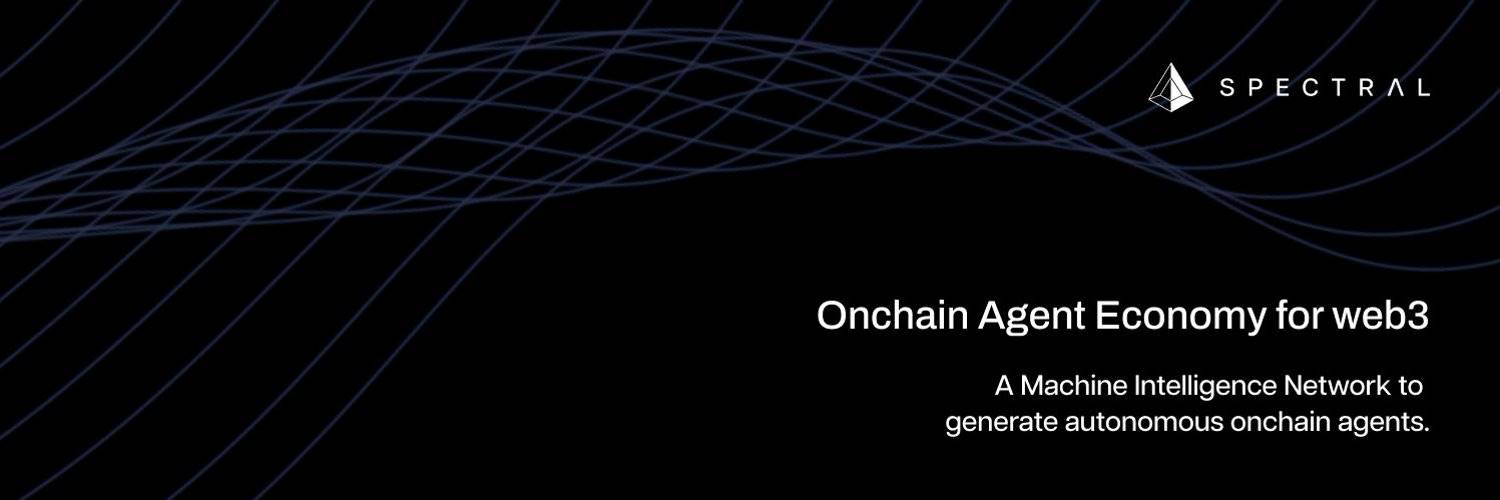
Product Architecture: One-Click Smart Contract Generation and Deployment, Unlocking AI + Web3 Innovation
Spectral’s product architecture consists of two main layers: the upper layer is the product layer, primarily composed of two core modules—Spectral Syntax and Spectral Nova—communicating with each other; the lower layer is the provenance layer, where Syntax and Nova interact efficiently via Inferchain.
A major milestone in 2024 was the launch of the AI application Syntax by Spectral Labs in March, allowing users to create their own on-chain AI agents.
Syntax significantly lowers the innovation barrier in Web3 by leveraging natural language processing. As Han Yu wrote in "Shi Shuo": “There is specialized expertise.” Undeniably, the current Web3 workforce is limited, with many excelling in marketing but lacking technical skills—or vice versa—preventing deep integration of technology and market needs. With Syntax’s conversational interface, both developers and non-technical users can compile smart contracts using natural language. For example, inputting “I want to issue an ERC20 token named XXX with a total supply of 100 million” enables Syntax to execute the request, helping innovators quickly realize their ideas.
The ability to compile, test, and optimize smart contracts in Solidity sets Syntax apart from other on-chain AI agents. Most code generation models—such as CodeLlama, GPT-4 Code Interpreter, and DeepSeek—are not specifically designed for Solidity developers. Given Solidity’s critical role in Web3, prior to Syntax, it was difficult to effectively use AI tools for efficient Solidity development.
Syntax fine-tunes open-source models using techniques like Parameter-Efficient Fine-Tuning (PEFT), Low-Rank Adaptation (LoRA), and DeepSpeed, trained on a custom dataset containing over 7 million Solidity contracts. These fine-tuned models are combined with a Retrieval-Augmented Generation (RAG) system, greatly expanding AI’s potential in Solidity coding. Syntax not only generates compliant Solidity code but also optimizes it—detecting vulnerabilities, reducing gas costs, and more. As models evolve, Syntax will offer advanced services like code refinement and security testing for increasingly complex scenarios.
Beyond compilation, Syntax’s standout feature is one-click deployment of generated smart contracts across dozens of blockchains, including Ethereum. Using Foundry, Syntax executes deployments by generating instructions that Foundry can process—including code compilation, on-chain deployment, and transaction signing. Syntax also creates an ERC4337 smart account abstraction between the user and itself to handle transaction signing, asset management, and gas payments, delivering a true end-to-end service for Web3 participants.
At its core, Syntax functions like an agent-driven development environment, turning users’ Web3 dApp ideas into reality through natural language interaction. After unleashing innovation, Syntax further provides a marketplace where community-built agents can be showcased and interacted with, helping users quickly find optimal solutions.
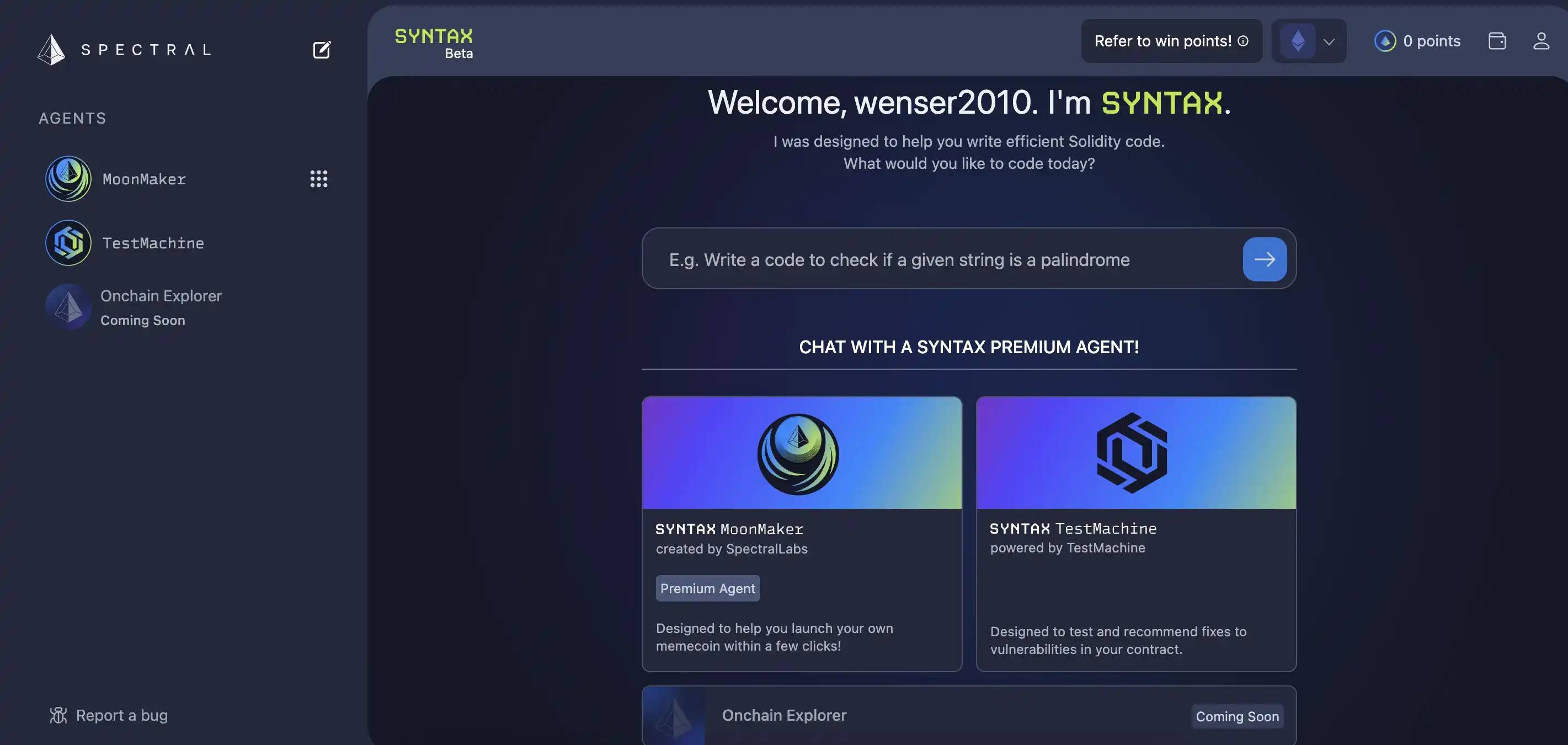
As more users join, increasingly diverse agents will be created within Syntax, driving higher demand for inference feedback. Within Spectral’s product suite, agents inside Syntax can directly access Spectral Nova’s inference network—powered by top-tier decentralized models built by the community.
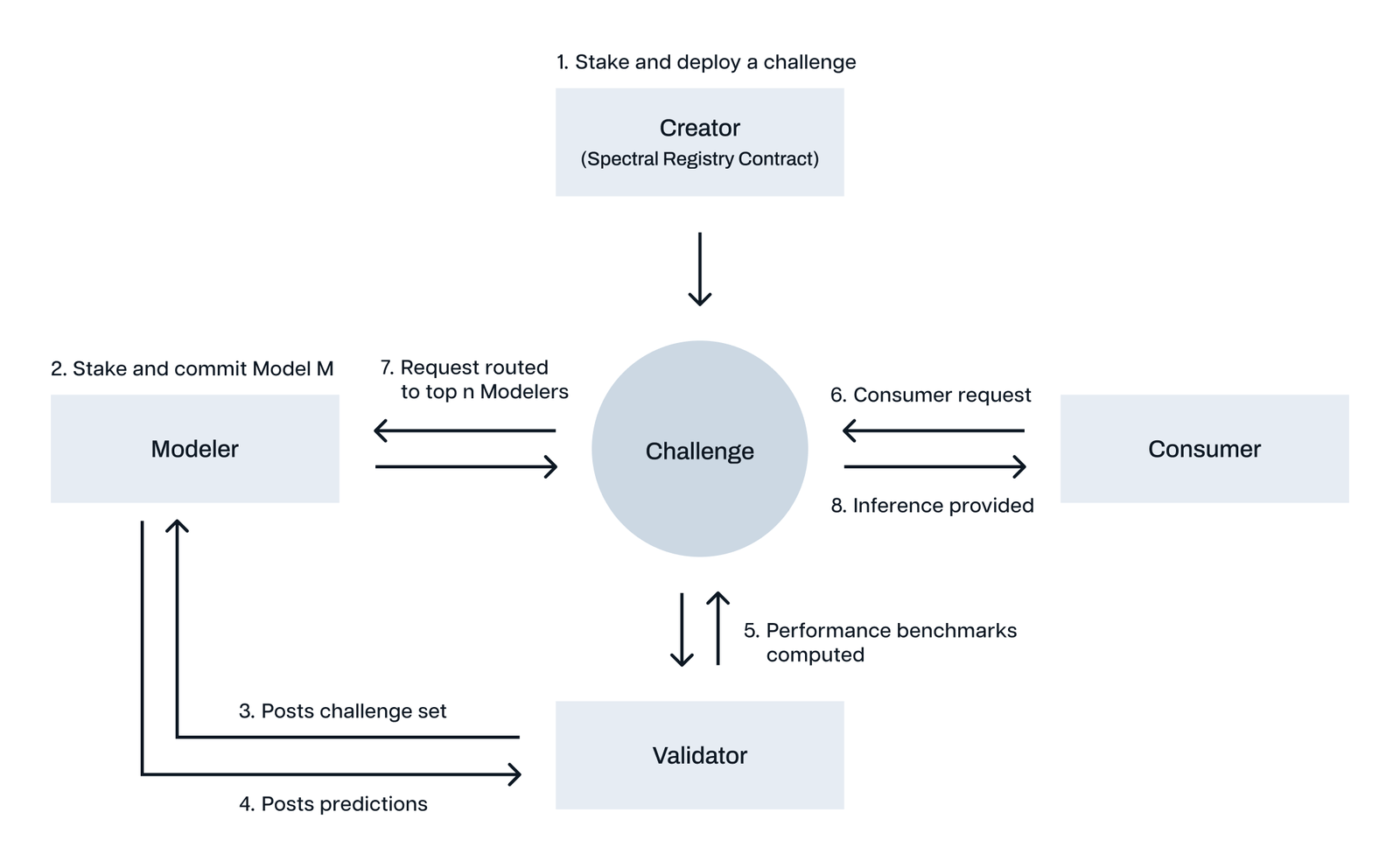
As a machine intelligence network, Spectral Nova delivers high-quality, decentralized inference feedback to smart contracts. Through various ecosystem incentives, Nova encourages leading data scientists and ML engineers to build models whose outputs help smart contracts make decisions autonomously. All inferences can be verified via zero-knowledge proofs and verifiable computing to ensure correctness and security, enhancing Web3 applications' efficiency.
Within the Spectral Nova network, four key roles exist:
-
Creators: Set performance benchmarks, launch ML challenges, and offer bounties.
-
Modelers: Submit solutions to challenges and win rewards.
-
Validators: Evaluate the quality of submitted solutions and earn validation rewards.
-
Consumers: Pay fees to access and use these solutions.
Throughout this workflow, Consumers integrate solutions into their applications for improved functionality. The fees they pay are partially distributed to challenge-issuing Creators and partially awarded to Modelers who provided successful solutions—ensuring fair compensation and sustainable value circulation within the ecosystem.
Indeed, Spectral Syntax and Spectral Nova complement and reinforce each other. Inferchain, serving as the bridge between them, ensures smooth data and command transmission, maintains network transparency and decentralization, and enables secure, efficient interactions among on-chain agents.
As a custom L2 built specifically for Web3 evolution, Inferchain aims to integrate with AI in a trustless, verifiable manner, validating all interactions among on-chain AI agents. While still in early planning stages, Inferchain is poised to become a crucial piece in building a positive, efficient value cycle within the ecosystem.
By simplifying complexity and lowering innovation barriers, while establishing incentive mechanisms to fuel continuous innovation, Spectral’s powerful product capabilities generate a strong flywheel effect—opening vast possibilities across numerous application scenarios.
Take DeFi, for instance. Spectral previously explored Web3 credit infrastructure, developing risk assessment tools (including MACRO scores) and Non-Fungible Credit (NFC) tokens to establish and continuously update Web3 credit ratings via machine learning. Beyond credit scoring, Spectral’s DeFi applications include arbitrage bots, trading behavior analysis, and price prediction—enhancing capital efficiency, risk management, and decision-making in DeFi protocols.
Additionally, in DAOs, Spectral can assist users in governance through efficient information processing, intelligent voting, and seamless interaction with core contracts. In security, it can detect code vulnerabilities and suggest optimizations to strengthen defenses. In NFTs, it enables provenance tracking, floor price monitoring, and smart recommendations to uncover value opportunities. In education, thanks to its low barrier and one-click deployment, Spectral could build smart contract education platforms, contributing to blockchain developer growth—and so much more.
Underpinning this robust architecture and extensive applicability is an elite team deeply experienced in AI + Web3, skillfully orchestrating ecosystem expansion.
Elite Team Execution: Backed by Top Web2 and Web3 VCs, Multiple Major Partnerships Announced
AI narratives are undoubtedly at the forefront of technological trends for the next 10–20 years, whether in Web2 or Web3. While Web2 enjoys advantages in talent, funding, and technical maturity, Web3’s principles—data sovereignty, decentralization, and fair, transparent value flow—can counteract monopolies, privacy breaches, and algorithmic bias inherent in centralized AI. By 2024, the convergence of Web2 and Web3 in AI development appears inevitable.
Examining Spectral’s team composition, funding structure, and ecosystem partnerships reveals its distinct advantage in bridging Web2 and Web3.
On the team front, co-founder and CEO Sishir Varghese graduated from Columbia University. According to his public LinkedIn profile, he served as co-founder and executive partner at AlphaChain from October 2017 to January 2022, and was also a strategic partner at Loopring, an Ethereum Layer 2 protocol—giving him rich experience in product operations and ecosystem incubation.
Other core team members have worked at Web2 tech giants like Amazon, leading crypto exchange Coinbase, Web3 metaverse game Illuvium, and zkEVM-based Ethereum L2 Scroll. This blend of Web2 and Web3 veterans equips Spectral with stronger technical depth and broader product perspectives, enabling it to better navigate technological shifts and market challenges, delivering more comprehensive and innovative solutions.
In terms of funding, Spectral has raised a total of approximately $30 million. In November 2021, it secured $6.75 million in funding led by Polychain Capital, with participation from Galaxy Digital (Mike Novogratz), Social Capital (Chamath Palihapitiya), ParaFi Capital, Edge & Node Ventures (The Graph), and MetaPurse Ventures.
In August 2022, Spectral raised $23 million, co-led by General Catalyst and Social Capital, with investors including Samsung, Gradient Ventures, Section 32, Franklin Templeton, Circle Ventures, and Jump Capital.
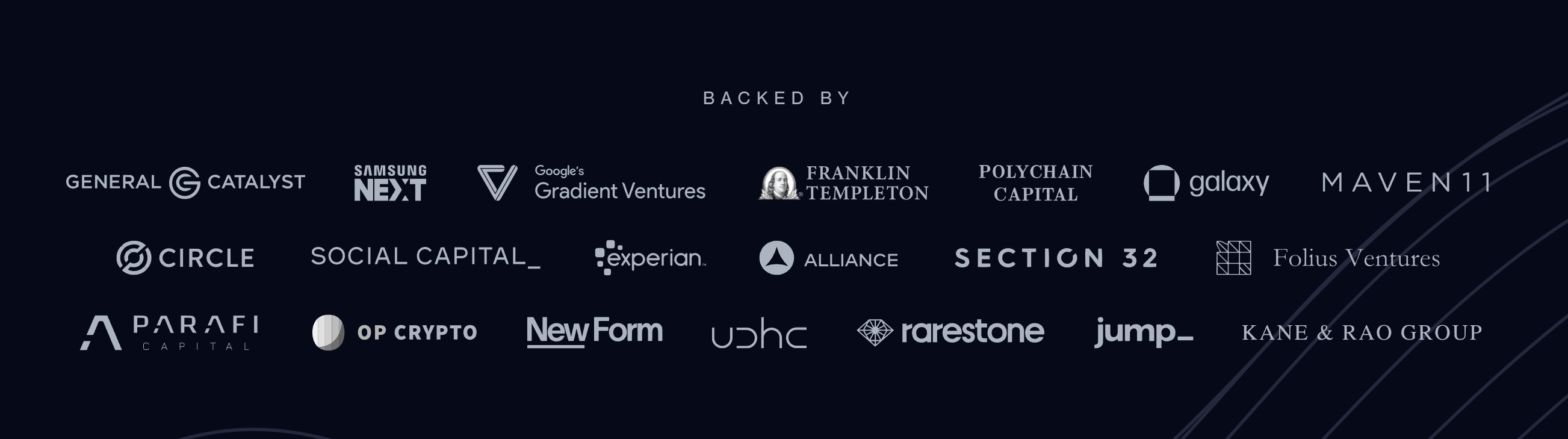
Looking closely at the investor list, it includes both renowned Web3 VCs like Polychain Capital and Circle Ventures, as well as traditional Web2 giants like Samsung. At a time when Web3 projects seek Web2 capital and Web2 firms explore Web3 opportunities, Spectral’s ability to attract top-tier support from both ecosystems underscores its solid fundamentals and strengthens future growth prospects.
On the ecosystem front, on May 8, Spectral announced its inclusion in Hugging Face’s Expert Support Program—the leading open-source AI community. Recognized in Forbes’ 2023 AI 50 List as one of the most promising AI companies, Hugging Face offers a vast array of high-quality open-source models and tools globally, significantly lowering AI development barriers and advancing AI democratization—positioning it as a strong competitor to OpenAI and Google.
Through this collaboration, Spectral will hold regular meetings with Hugging Face’s deep learning experts to plan new use cases, design dataset strategies, and refine training approaches—advancing open-source models, datasets, and applications for the on-chain agent economy. Previous coordination with Hugging Face notably improved Spectral’s dataset preparation, training, routing, and evaluation methods, culminating in the launch of Syntax—a revolutionary platform powered by an LLM orchestrator. Additionally, top individual and small organization contributors on Hugging Face will receive exclusive SPEC token airdrops. Recently, Spectral also announced partnerships with TestMachine, SynapseProtocol, and others, further expanding its ecosystem footprint.
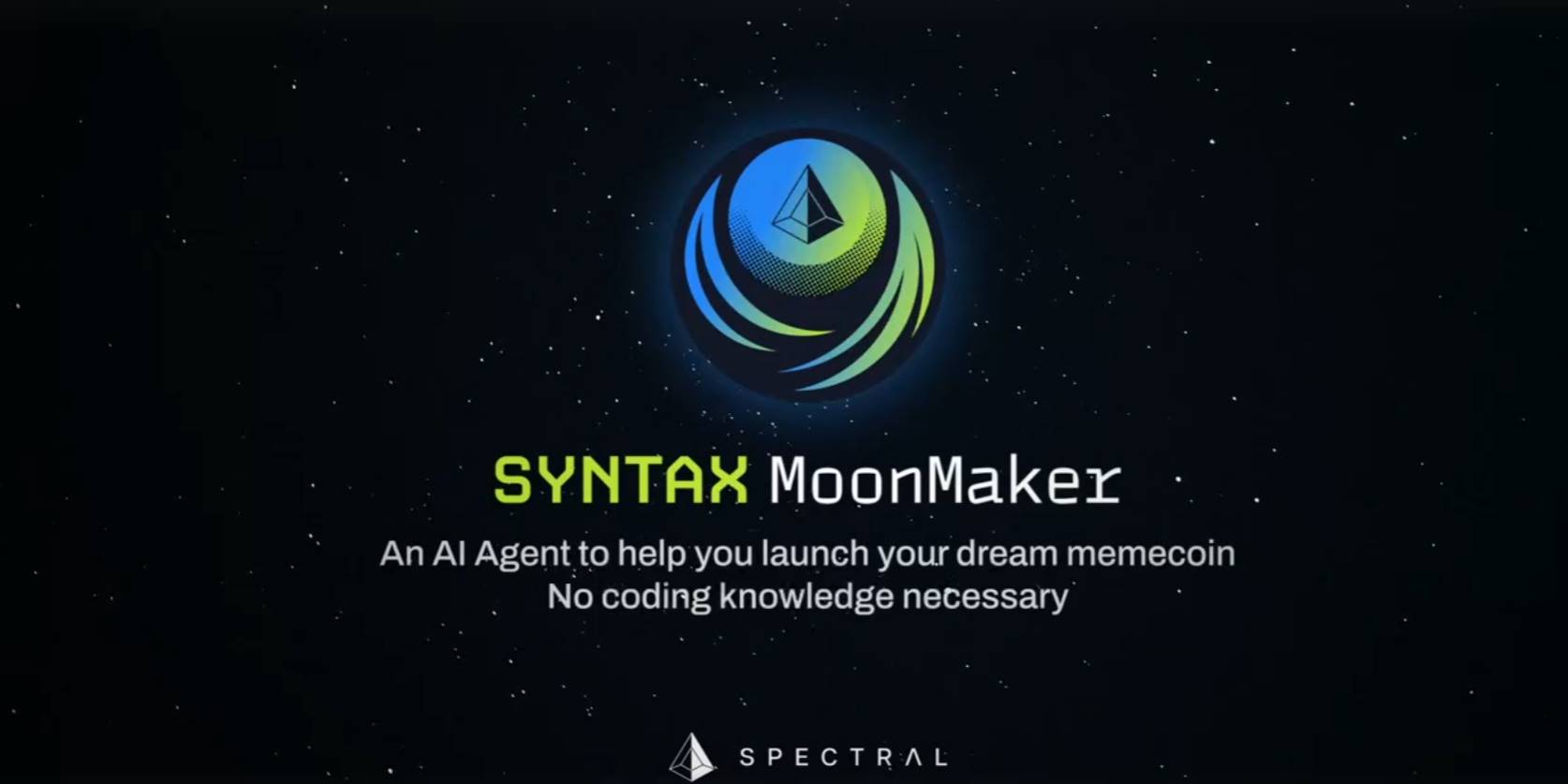
Notably, MoonMaker—the first Syntax on-chain agent—has achieved remarkable success since launch. With MoonMaker, users can effortlessly turn their meme coin ideas into reality. Within just months of going live, over 600+ meme coins have been launched on Base, marking a successful practical application of Spectral’s on-chain agent network in the meme coin space, and demonstrating its commitment to accessible services and catalyzing industry creativity.
In the second half of 2024, as Spectral refines its product features and advances multiple ecosystem-building initiatives—combined with community anticipation for the SPEC Season 2 airdrop—the project is set to maintain strong momentum.
Ecosystem Momentum: Multiple Incentives in Place, Roadmap Progressing
Given the excitement around Season 1, the community now holds high expectations for Season 2.
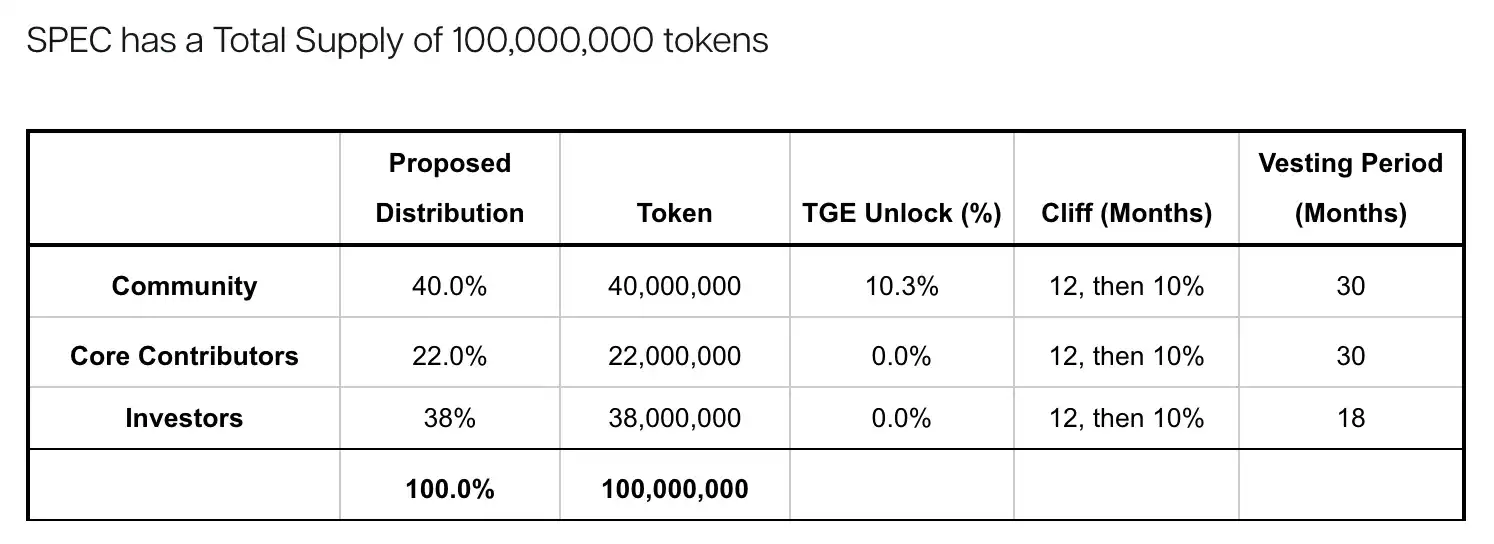
Firstly, Spectral’s emphasis on community is evident from Season 1’s execution and the official tokenomics: 40% of the total supply (40 million tokens) is allocated to the community.
Secondly, users have already spotted clues about Season 2. According to the Spectral Syntax interface, users can earn platform points by inviting new users or deploying smart contracts. What will these points be used for? Based on typical patterns, they are highly likely to serve as a metric for future airdrop eligibility. Interested users are encouraged to stay engaged.
More importantly, the SPEC token is deeply integrated into the ecosystem, serving purposes such as on-chain governance, Syntax staking, Nova staking, and payment for services. As Spectral’s ecosystem expands, the utility and potential of SPEC will continue to grow.
In fact, a rich ecosystem fosters more use cases and applications, creating a more sustainable environment for Web3 projects. With ecosystem development now a shared priority, Spectral is steadily deepening its strategic deployment.
On one hand, Spectral is sparking ecosystem creativity through challenge campaigns. As early as October 2023, Spectral launched its first challenge: building a decentralized credit scoring system.
Previously, Spectral released the first Multi-Asset Credit Risk Oracle (MACRO) scoring model. The latest version uses over 150 features, trained on eight years of transaction data and over 2.5 million lending events across Ethereum, Polygon, and Avalanche. Backtesting on Aave’s on-chain lending protocol demonstrated MACRO’s strong efficiency and performance.
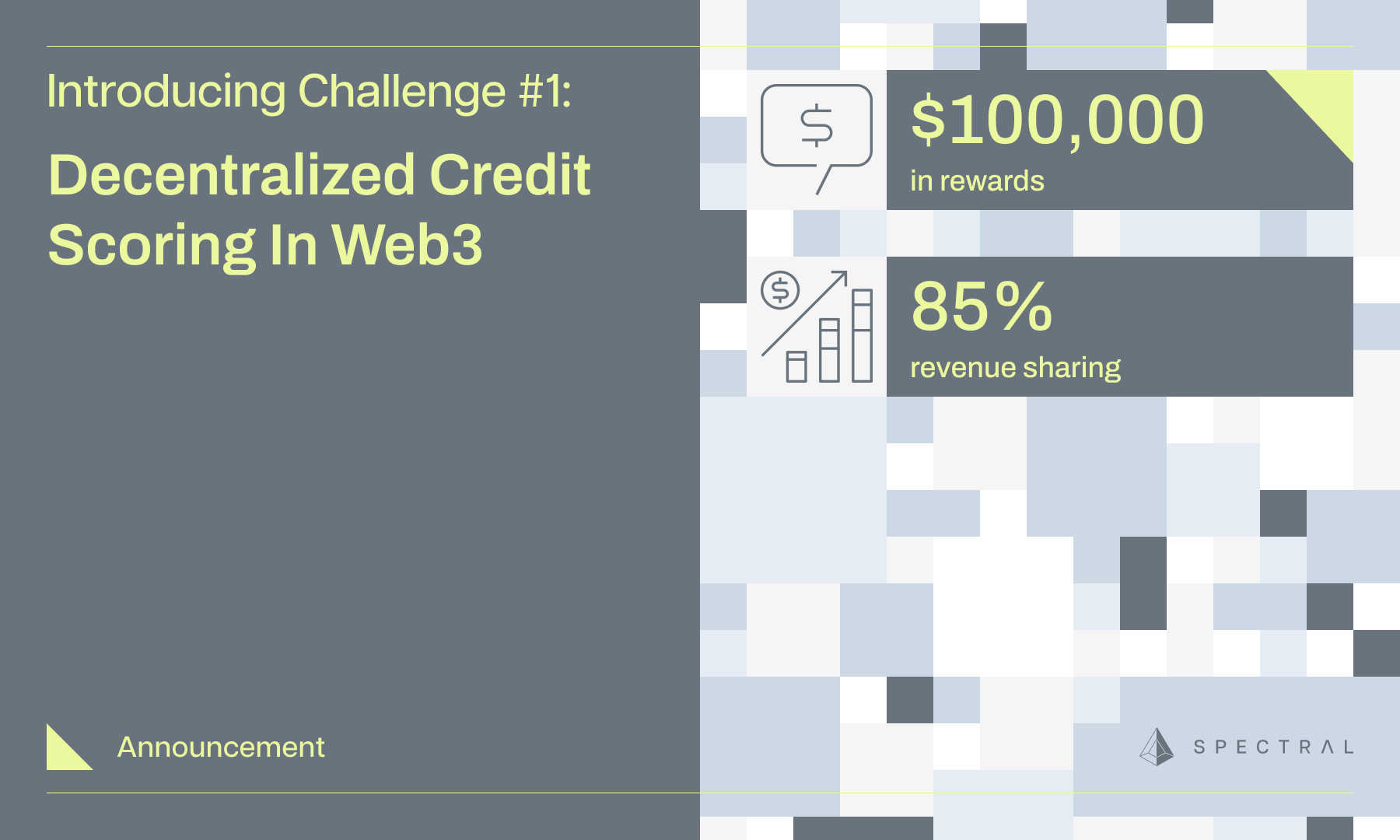
For this challenge, Spectral asked developers to build a new credit scoring model (made simple via Spectral Syntax). The winner shares a $100,000 prize pool and retains over 85% of revenue generated whenever their model is used on-chain.
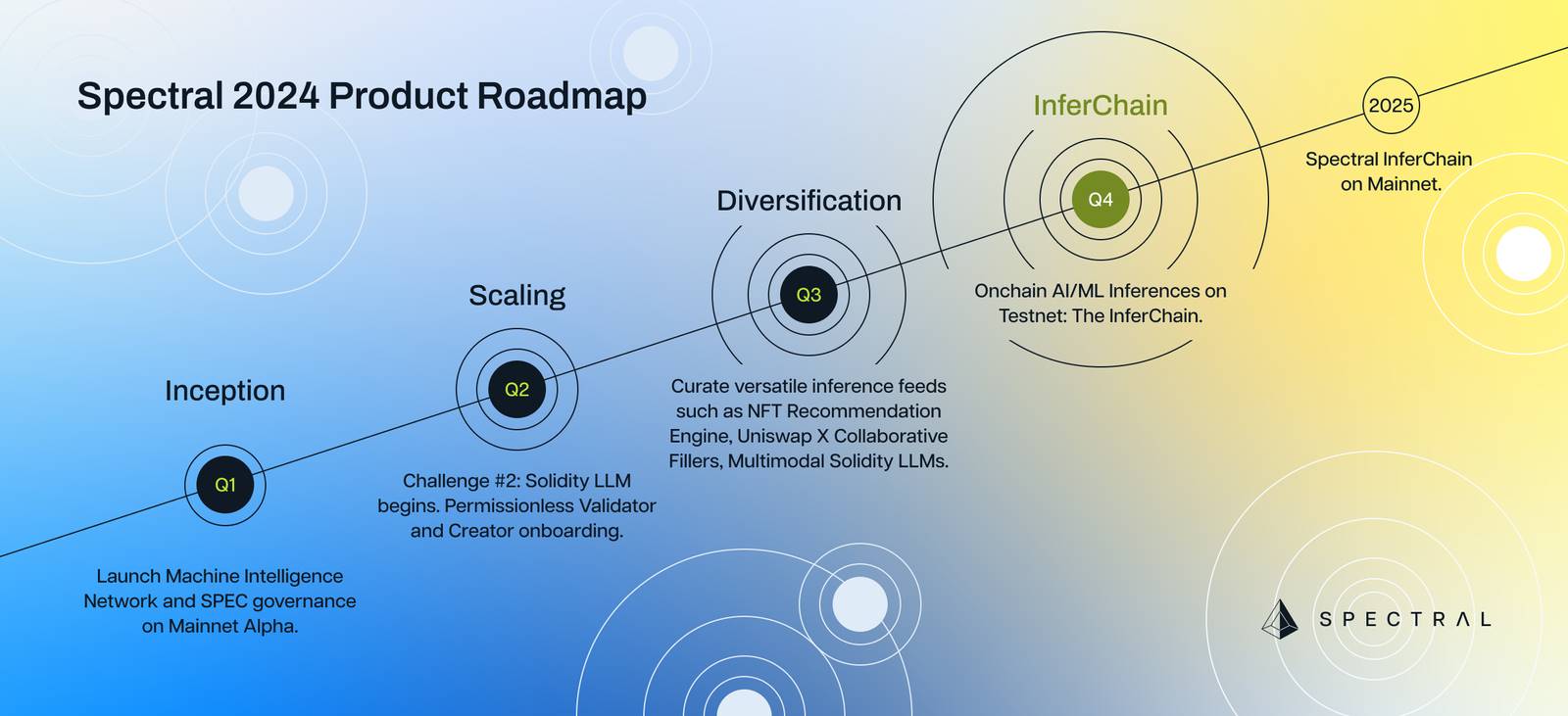
According to the official roadmap, additional challenges are in the pipeline—covering UniswapX Collaborative Filler, NFT recommendation engines, price forecasting, NBA sports predictions, and more—further incentivizing innovation.
On the other hand, Spectral will provide comprehensive support for ecosystem builders: detailed onboarding guides and developer kits, promotional exposure, and VC connections for high-potential projects—delivering one-stop incubation to let builders focus on creation.
Additionally, Spectral’s 2024 priorities include iterative upgrades and optimization of Spectral Syntax and Spectral Nova—such as tokenizing agent interactions, enterprise DevRel agents, pursuing collaborations with top-tier projects, and running marketing campaigns to boost community engagement. Notably, Inferchain is expected to launch its testnet by the end of 2024, with mainnet rollout in 2025—set to draw significant community attention once again.
Conclusion
An airdrop is merely a good opportunity to raise awareness. If a project fails to capitalize on it, the buzz may fade quickly. Spectral’s widespread discussion stems not only from its fair airdrop design but also from its strong product functionality and user experience—demonstrating deep understanding of the market, community, and product excellence.
While some criticize SPEC’s economic model as overly simplistic, the ultra-low barrier it offers developers and even non-technical users to compile and deploy smart contracts has won over VCs and fueled stronger innovation through deeper integration of autonomous agents into the Web3 ecosystem.
With continuous product iteration and ecosystem development, Spectral will spark further innovation across diverse applications. Although AI + Web3 remains in its infancy, we have every reason to believe that large-scale adoption across real-world use cases is imminent—and Spectral is positioned to play a pivotal role in that transformation.
Join TechFlow official community to stay tuned
Telegram:https://t.me/TechFlowDaily
X (Twitter):https://x.com/TechFlowPost
X (Twitter) EN:https://x.com/BlockFlow_News
 深潮TechFlow


