








Mainnet Mergers and Acquisition Waves: The New Trend of Web3 Projects Joining Forces
TechFlow Selected TechFlow Selected
Mainnet Mergers and Acquisition Waves: The New Trend of Web3 Projects Joining Forces
Mergers and acquisitions could become a key strategy, but should be avoided if used solely for price manipulation or risk avoidance.
 Navigating Web3 tides with focused insights
Translated by: TechFlow
Executive Summary
-
The Web3 industry evolves rapidly, with new mainnets constantly emerging—many of which quickly disappear. Recently, mergers between mainnets have emerged as a new trend.
-
Mainnet mergers offer benefits such as enhanced competitiveness, talent retention, and expanded value. However, due to the scale of ecosystems and potential exchange delisting risks, caution is required.
-
In the fast-moving Web3 market, mergers and acquisitions (M&A) may become key strategies, but should not be used solely for price manipulation or risk avoidance.
1. Introduction
In the Web3 industry, mergers and acquisitions (M&A) between mainnets have recently emerged as a new trend. Each mainnet seeks to generate synergies by merging with others possessing different assets and expertise, or to rapidly enhance competitiveness by acquiring mainnets with proven technical capabilities.
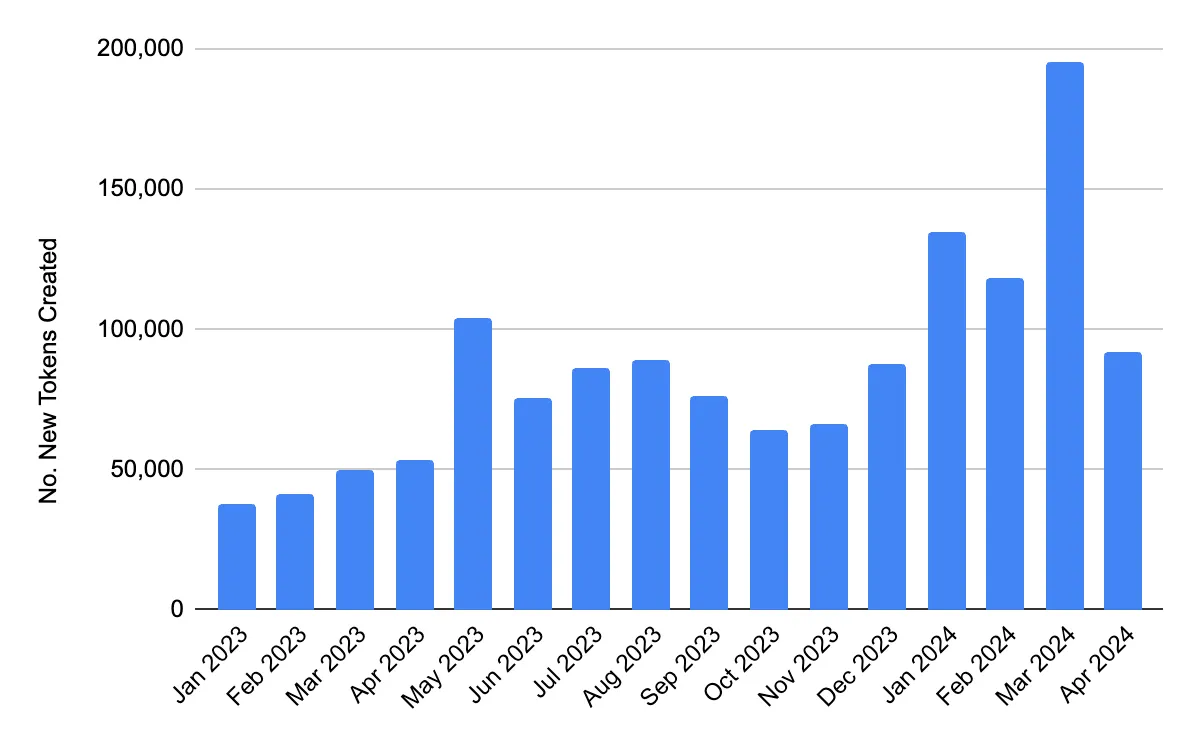
Source: Coingecko
The Web3 industry is characterized by rapid development, with market trends emerging and fading quickly at an unprecedented pace. New mainnet projects appear daily, while those unable to adapt swiftly risk rapid marginalization and obsolescence. Data from Coingecko shows that on average 5,300 new token projects launch each day, highlighting the market’s frenetic rhythm of constant emergence and disappearance. While token projects differ from mainnet projects, it is reasonable to infer that trends in the token space partially influence mainnet market dynamics.
As competition intensifies in the Web3 sector, mergers and acquisitions are becoming strategic tools for projects to strengthen competitiveness and ensure survival. The frequency and diversity of M&A activities among mainnets are expected to grow, significantly shaping the industry's trajectory. This report analyzes recent mainnet M&A cases, exploring the strategic objectives behind these moves and their intended outcomes.
2. Mainnet Mergers and Acquisitions: A New Trend in Web3
Recent mainnet acquisitions and mergers can be categorized into three primary strategies:
1) Horizontal Integration. A mainnet acquires or merges with a competing mainnet in the same market to strengthen its market presence.
2) Vertical Integration. Aims to reduce costs and maximize synergies by merging with mainnets related to specific business areas or value chains.
3) Convergent Integration. Merging unrelated mainnets to diversify operations and rapidly build capabilities in unfamiliar domains.
Vertical Integration
-
In May 2023, Vietnam-based Coin98 announced the acquisition of TomoChain.
-
In March 2024, SingularityNET announced plans to merge with Fetch and Ocean Protocol.
Horizontal Integration
-
In January 2024, Klaytn announced plans to merge with Finschia.
Convergent Integration
-
In April 2024, Carry Protocol announced plans to merge with SLG.Games.
2.1 'Kaia': Integration Project Between Klaytn and Finschia Foundations
Source: Kaia
The merger between Klaytn and the Finschia Foundation represents the first case of mainnet integration. In January this year, both projects announced the launch of an integrated mainnet, now rebranded as 'Kaia'. Their goal is to create Asia’s largest blockchain by combining respective ecosystems and assets, aiming to lead the global Web3 market.
This merger is seen as a way to expand dominant influence in the Web3 market—particularly in Asia—by consolidating two competing mainnets. Its significance lies in the comprehensive integration of human, physical, and technological resources. Kaia is expected to be operated jointly by personnel from both the Klaytn and Finschia foundations, integrating their respective assets. Notable examples include Klaytn’s exclusive on-chain assets and real-world assets (RWA), and Finschia’s games and content assets based on LINE FRIENDS IP.
Leveraging Klaytn’s EVM-based expertise and Finschia’s Cosmos-based technology, the team plans to develop an integrated mainnet supporting both EVM and CosmWasm compatibility. This initiative is expected to foster a vast ecosystem within the Web3 space, resulting in a highly advanced mainnet.
Through this full integration, Klaytn and Finschia will collaborate closely to maximize strengths and compensate for weaknesses. They will also leverage assets from partners Kakao and LINE to further solidify their dominance in the Asian market. In an increasingly competitive Web3 industry marked by rising institutional investment and accelerating innovation, this merger is viewed as a timely strategic move. High expectations surround the changes and innovations this merger will bring to the global Web3 ecosystem, extending well beyond Asia.
2.2 Major Project by the Web3 AI Alliance: 'ASI'
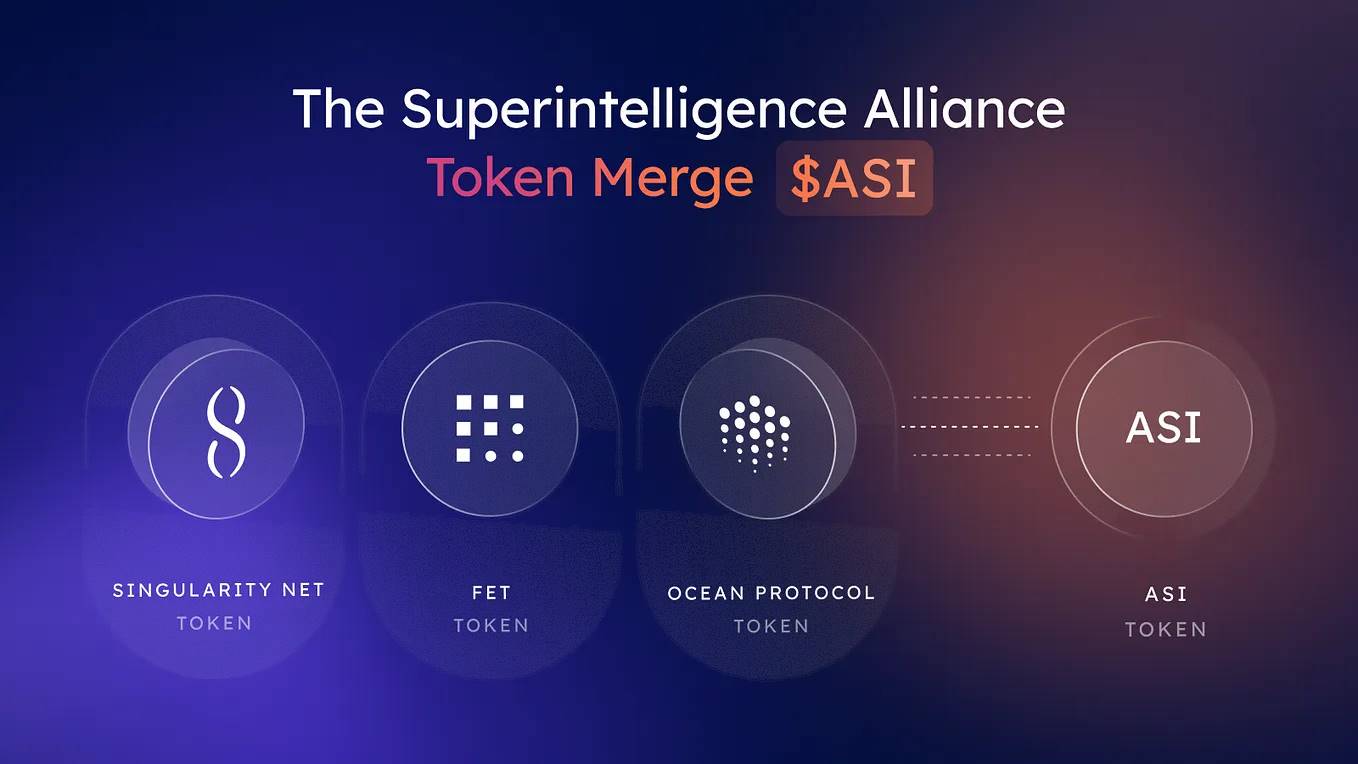
Source: ASI Project
In March, Web3 AI projects SingularityNET, Fetch, and Ocean Protocol announced their merger plans. After receiving approval through governance voting in April, they are set to launch a new token project called 'ASI (Artificial Superintelligence)'. This merger differs slightly from the Klaytn-Finschia integration, as they are creating a new project to advance their vision while preserving the independence of each foundation.
The projects involved in the ASI initiative are not direct competitors but rather complementary players linked along the artificial intelligence value chain through vertical integration. They plan to consolidate existing tokens into the ASI token and use a Cosmos-based chain (a hard fork of the Fetch mainnet) to vertically integrate each project’s technology stack. The primary objective is to create synergies and accelerate the development of decentralized AI technologies.
Meanwhile, leadership, teams, communities, and financial resources of the participating foundations are expected to remain unchanged. This approach resembles a strategic partnership more than a full merger, indicating an intent to generate synergies through collaboration while maintaining each project’s identity and unique characteristics.
The ASI project aims to advance Web3-based AI technologies through vertical integration within the AI sector. By setting goals too ambitious for any single project to achieve alone, they intend to drive innovation by leveraging the combined strengths of all participating entities. As the convergence of Web3 and AI gains attention as a key driver of future technological advancement, the evolution of the ASI project is expected to become a significant milestone in building a decentralized artificial intelligence ecosystem.
2.3 Convergence of Advertising and Gaming Industries: Horizontal Expansion via the 'GAME Build' Project
Source: Carry Protocol
In April, blockchain-powered rewards advertising platform Carry Protocol and Web3 gaming platform SLG.Games announced their merger plans. Following governance voting, they revealed a new token project named 'Game Build'. By integrating their expertise in blockchain technology, advertising, and game development, their goal is to generate synergies and drive innovation within the Web3 gaming ecosystem.
This merger exemplifies horizontal integration, aiming to complement relative weaknesses by leveraging each other’s strengths. Carry Protocol intends to contribute its expertise in blockchain technology and advertising, while SLG.Games will bring accumulated knowledge in game development and blockchain integration. The goal is to introduce a blockchain-based advertising platform and development tools tailored for the gaming industry. Furthermore, the Game Build project envisions offering advertising solutions optimized for Web3 games and a developer-friendly, one-stop infrastructure.
The success of the Game Build project hinges on how effectively Carry Protocol and SLG.Games can combine their expertise to create meaningful synergies. Observing the changes and innovations their collaboration brings to the gaming industry will be crucial.
2.4 Coin98’s Acquisition of TomoChain to Gain Mainnet Technology

Source: Viction
In May last year, Vietnamese Web3 platform Coin98 acquired local mainnet TomoChain. This move was seen as a strategy for Coin98—lacking prior mainnet development experience—to quickly secure technological competitiveness by acquiring TomoChain, which possesses mature technical capabilities, thereby maximizing synergies in a short timeframe.
Following the acquisition, Coin98 rebranded TomoChain as Viction, making it a core component of its ecosystem. Coin98 plans to leverage Viction’s technology and resources to cultivate a developer-friendly environment and create synergies by integrating it with various services, such as its Web3 wallet. This integration is expected to become a unique advantage for Coin98 in the fiercely competitive Web3 landscape. However, so far the changes have been largely superficial, including renaming the native token, and the actual impact remains to be seen.
Industry attention focuses on the potential changes and impacts this acquisition could bring to the Web3 sector. If the integration successfully leverages the strengths of both companies, it could establish a new model for securing mainnet technology and expanding ecosystems.
3. What Are the Goals of Merging Mainnets?
Case studies to date show that mergers and acquisitions between mainnets are becoming a notable trend in the Web3 industry. These movements are driven by various objectives, which can be analyzed under three main factors:
-
Strengthening business and technological competitiveness
-
Acquiring specialized talent
-
External expansion of project value
First, strengthening business and technological competitiveness. Through M&A, mainnets can expand geographically or enter new business domains. The 'Kaia' project between Klaytn and Finschia exemplifies this strategy. Klaytn and Finschia hold competitive advantages in different regions and sectors—Klaytn excels in infrastructure-driven industries, while Finschia leads in content-driven ones. Their merger aims to broaden business scope, address weaknesses, accelerate growth, and rapidly increase market share.
Additionally, this can serve as a strategic move for technological advancement. By acquiring a mainnet with specialized technical capabilities, a company can rapidly upgrade its own technology. Coin98’s acquisition of TomoChain is a prime example. The goal was to gain advanced mainnet technology and expand its wallet ecosystem. This approach is efficient in terms of time and cost, making it a critical strategy in the competitive Web3 industry.
Source: Stackoverflow
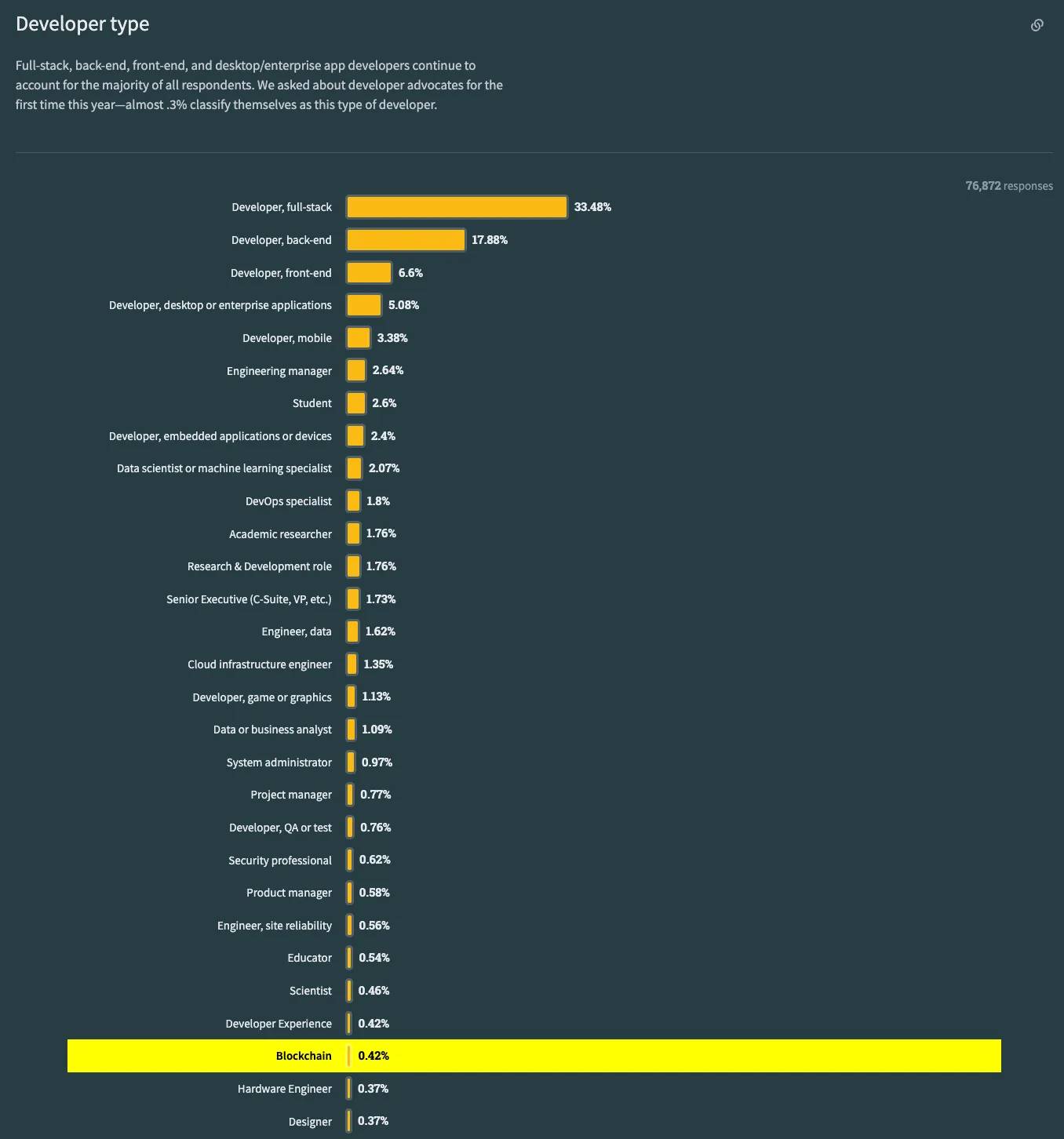
Second, the goal of acquiring specialized talent. The Web3 industry is a fast-evolving, cutting-edge technological field where access to capable talent significantly influences project growth. Particularly scarce are individuals directly involved in designing and developing mainnets, such as core blockchain developers. According to Stack Overflow’s 2023 survey, only 0.42% of all developers identify as blockchain developers, indicating a severe shortage of specialized talent. Therefore, mainnet M&A is also pursued to acquire these valuable human resources.
Finally, the goal of external value expansion. In the Web3 industry, market capitalization and total value locked (TVL) are key metrics for evaluating mainnets, serving as indicators of credibility. Strong performance in these areas enhances brand visibility and strengthens market position. Projects with higher market cap or TVL attract greater attention and capital inflows. Hence, mainnets adopt M&A strategies to rapidly increase enterprise value—by combining liquidity and capital from each mainnet, they can quickly boost TVL and reinforce market standing, making M&A an attractive option.
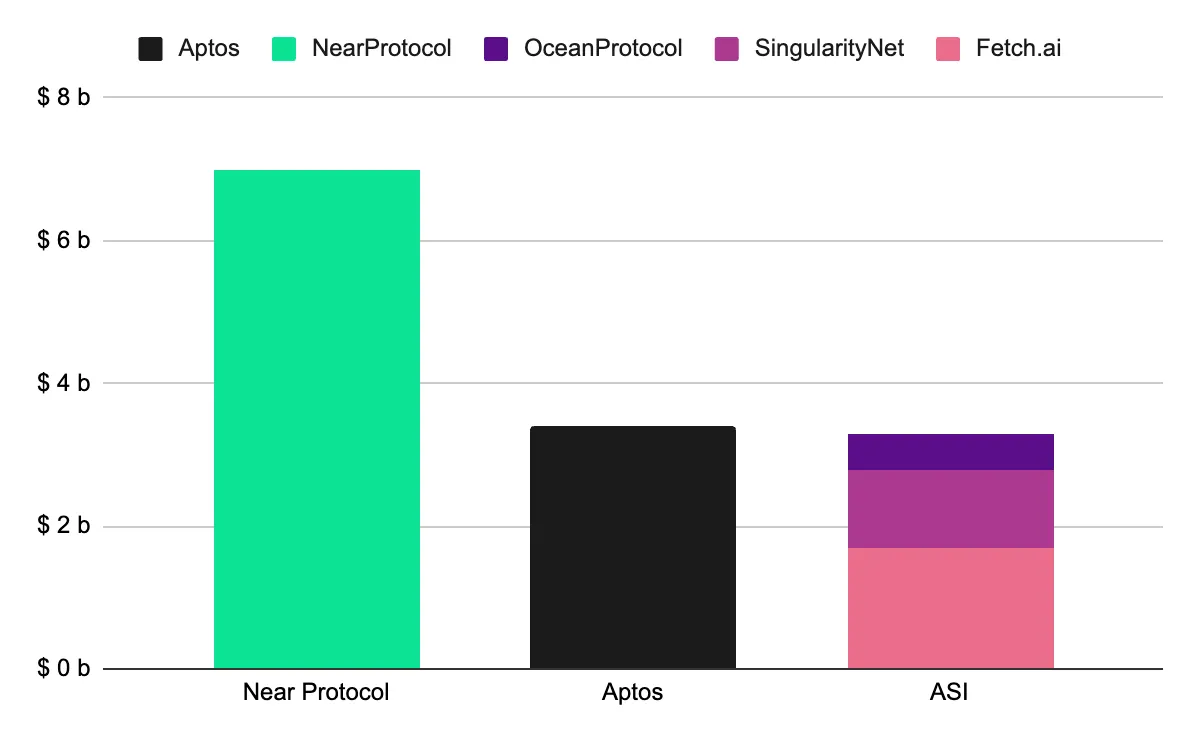
Cryptocurrency market cap ranking as of May 13, 2024. Source: Coinmarketcap
Indeed, the merger of SingularityNET, Fetch, and Ocean Protocol quickly propelled them into the top 30 by market capitalization. This illustrates how M&A can serve as an effective strategy to accelerate external growth and expand industry influence.
In this way, mainnet mergers and acquisitions are becoming key strategies for Web3 companies to overcome growth limitations and enhance competitiveness. Driven by goals such as expanding business scope, advancing technology, and acquiring specialized talent, these initiatives are expected to continue and significantly shape the future of the Web3 industry.
4. What Are the Risks in Mainnet Mergers?
Mainnet project mergers face risks similar to those in Web2, but integrating large ecosystems and cultures makes the process even more complex and requires careful handling.
-
Challenges in integrating human and physical resources
-
Difficulties in community and ecosystem integration
-
Exchange listing issues
First, challenges in integrating human and physical resources must be carefully managed. This mirrors common issues in corporate M&A. A notable example is the so-called “merger of the century” between Mercedes-Benz and Chrysler, which attracted significant market attention but ultimately failed due to cultural clashes and differing work practices. Similar issues may arise in mainnet mergers, requiring careful management and foresight.
Source: A41
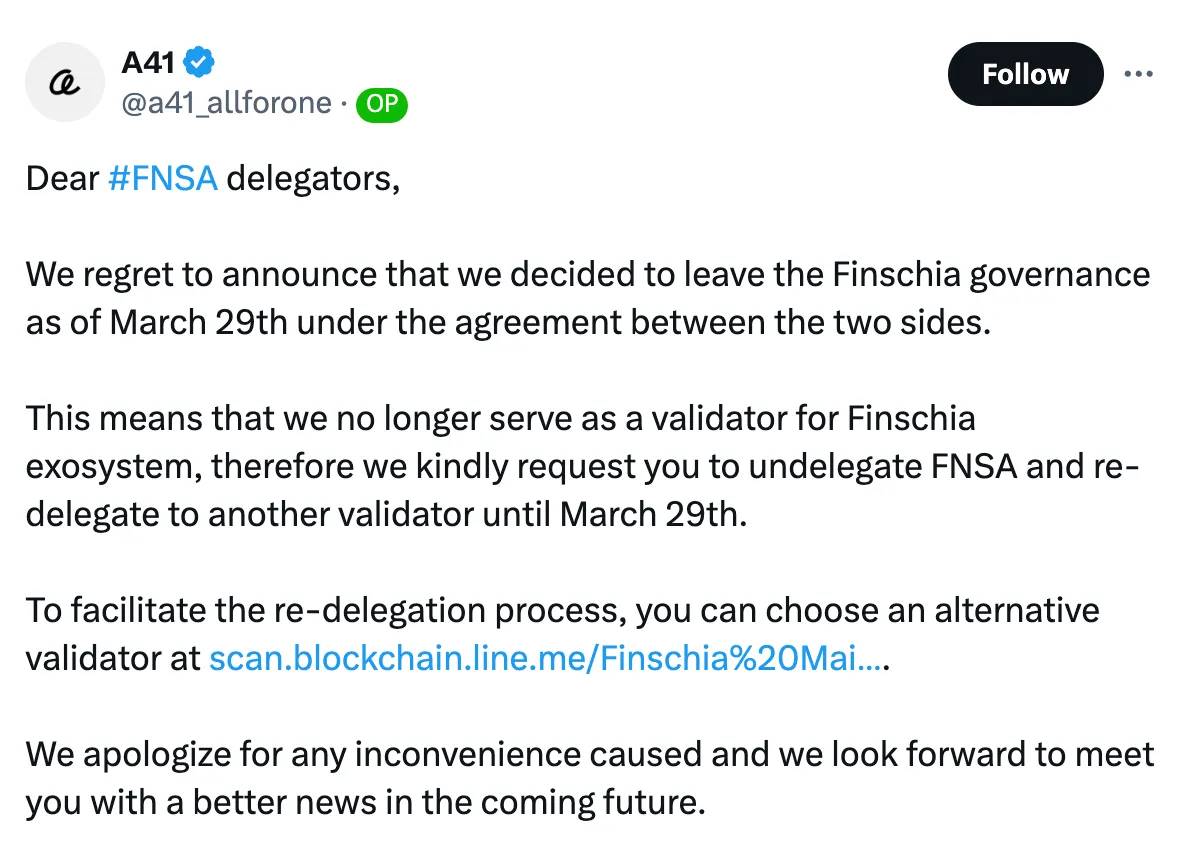
Second, integrating communities and ecosystems presents significant challenges. Unlike Web2 companies, mainnets encompass diverse dApps and governance participants. Thus, internal and external stakeholder alignment is crucial. A clear example is the opposition from communities and governance participants during the Klaytn-Finschia merger. Since mainnets operate within decentralized structures, achieving consensus not just internally but across broader ecosystem stakeholders is essential. Therefore, ensuring a smooth process is critical, recognizing that improper integration could lead to serious problems.
Source: Upbit
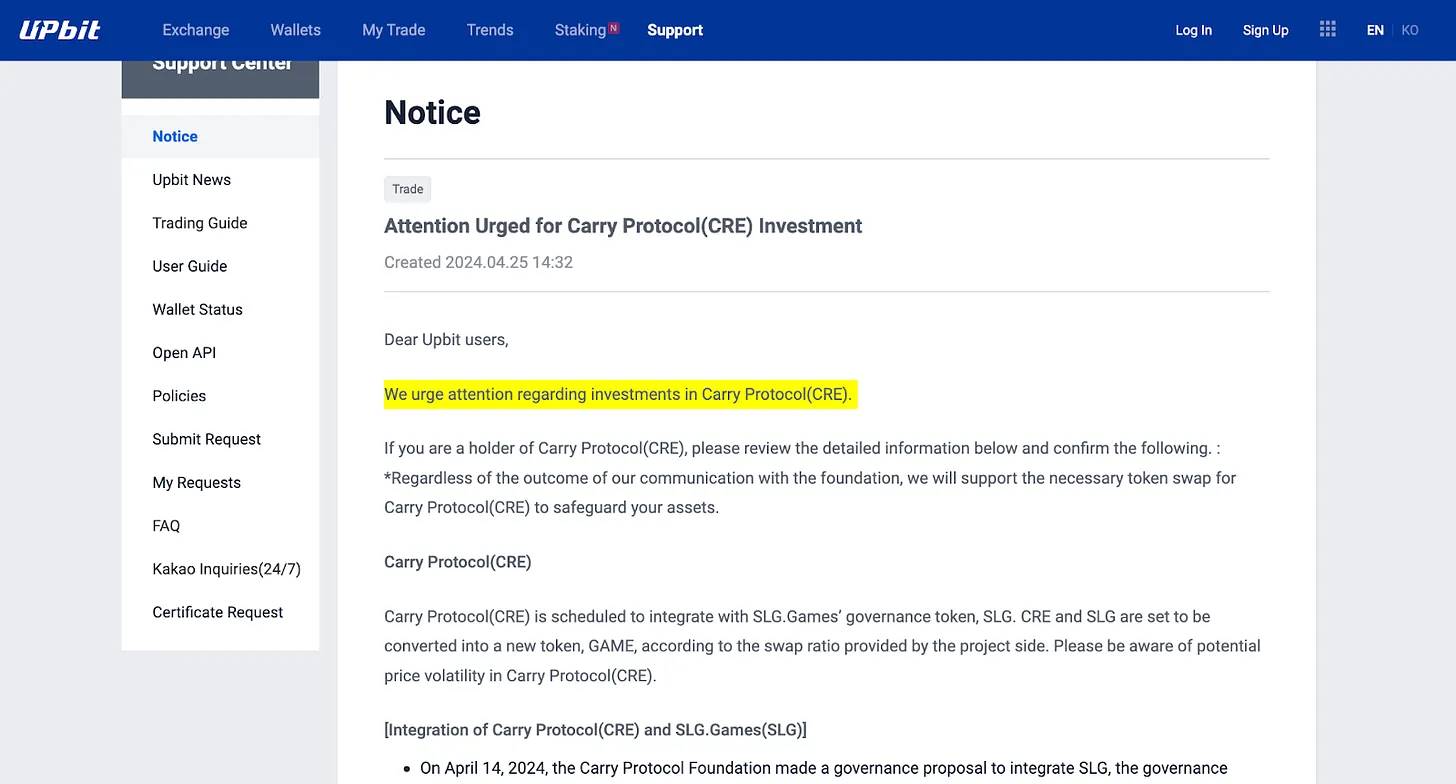
For mainnets, exchange listings of their tokens are crucial. However, the process of token conversion or issuing new integrated tokens during mainnet consolidation may not proceed smoothly on exchanges. In practice, most exchanges are highly cautious about token swaps and new tokens arising from mergers. If delisting occurs, relisting may take considerable time, potentially weakening competitiveness during the transition.
In summary, the post-merger integration process is critical. Unlike Web2 companies, mainnets must secure consensus from a more diverse and complex set of stakeholders and rigorously manage exchange listing issues. Successful mainnet M&A requires carefully prepared strategies and implementation plans to effectively navigate these challenges.
5. Conclusion
Mainnet mergers and acquisitions are expected to become the new standard in the Web3 industry. As the number of blockchain projects continues to grow, only a few mainnets will ultimately gain market favor. Hence, frequent M&A activity is anticipated to弥补 weaknesses and amplify strengths.
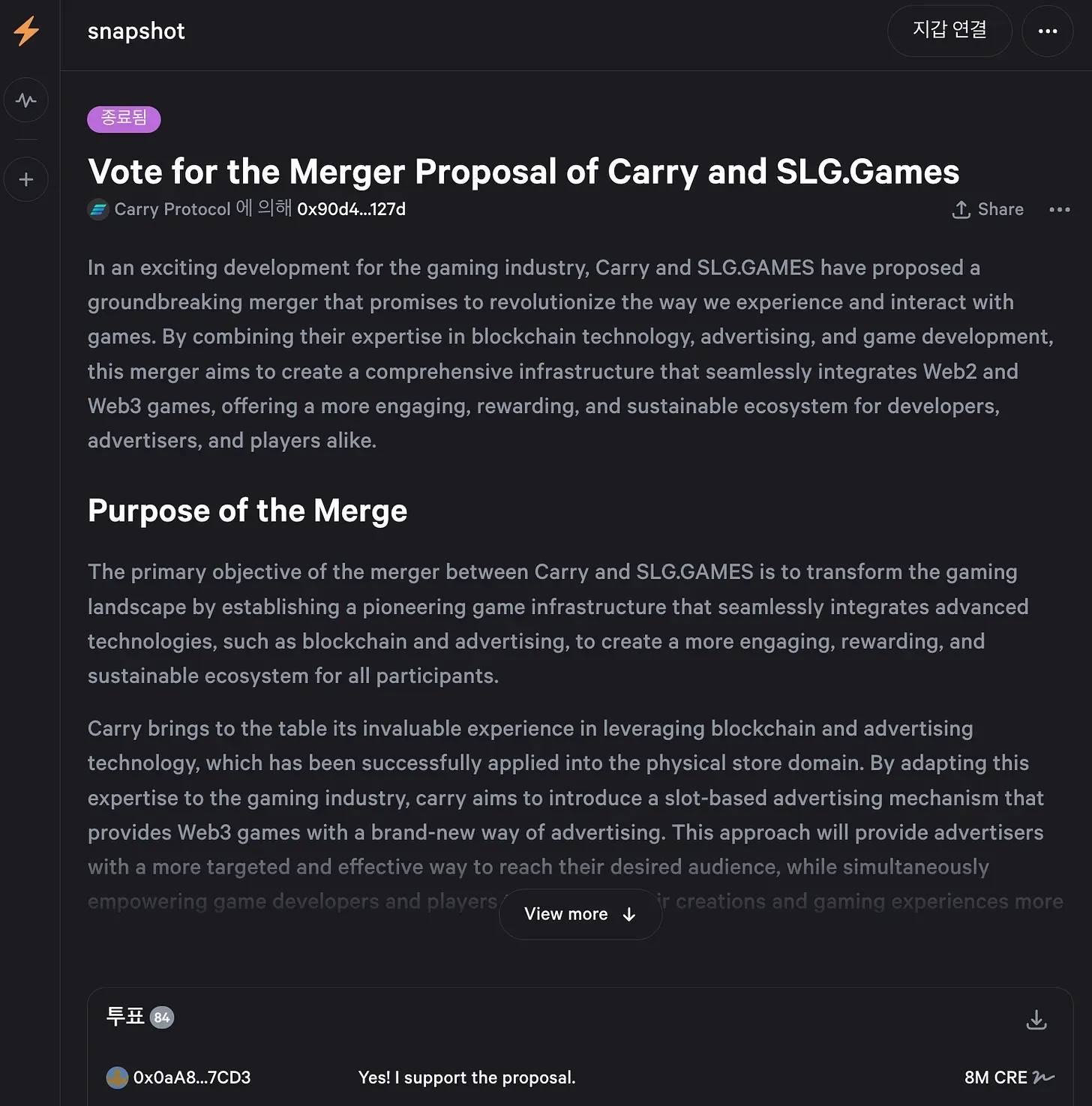
Vote supporting the merger proposal between Carry and SLG.Games. Source: Snapshot
However, this process should not be used merely as a short-term price pump event, nor as a means to evade responsibility or risk. As seen in the Klaytn-Finschia merger, proactive communication, persuasion, and long-term preparation are essential prerequisites. In most current project mergers, governance voting has been poorly conducted with low voter turnout. For instance, in the merger proposal between Carry Protocol and SLG.Games, only about 100 wallet addresses participated in voting, indicating insufficient representation of all token holders’ views.
Nevertheless, as more cases accumulate and new strategies and narratives emerge, these chaotic situations are expected to improve. In conclusion, mainnet M&A is a key strategy for overcoming growth constraints and accelerating development, vital for the dynamic Web3 industry. Whether recent M&A cases can set successful precedents remains to be seen.
Join TechFlow official community to stay tuned
Telegram:https://t.me/TechFlowDaily
X (Twitter):https://x.com/TechFlowPost
X (Twitter) EN:https://x.com/BlockFlow_News
 @tiger_research


