A Brief Discussion on Trump's Public Support for Bitcoin
TechFlow Selected TechFlow Selected
A Brief Discussion on Trump's Public Support for Bitcoin
On May 9, Trump publicly expressed support for cryptocurrency for the first time in a rare move.
 Navigating Web3 tides with focused insights
By: Carbon Value
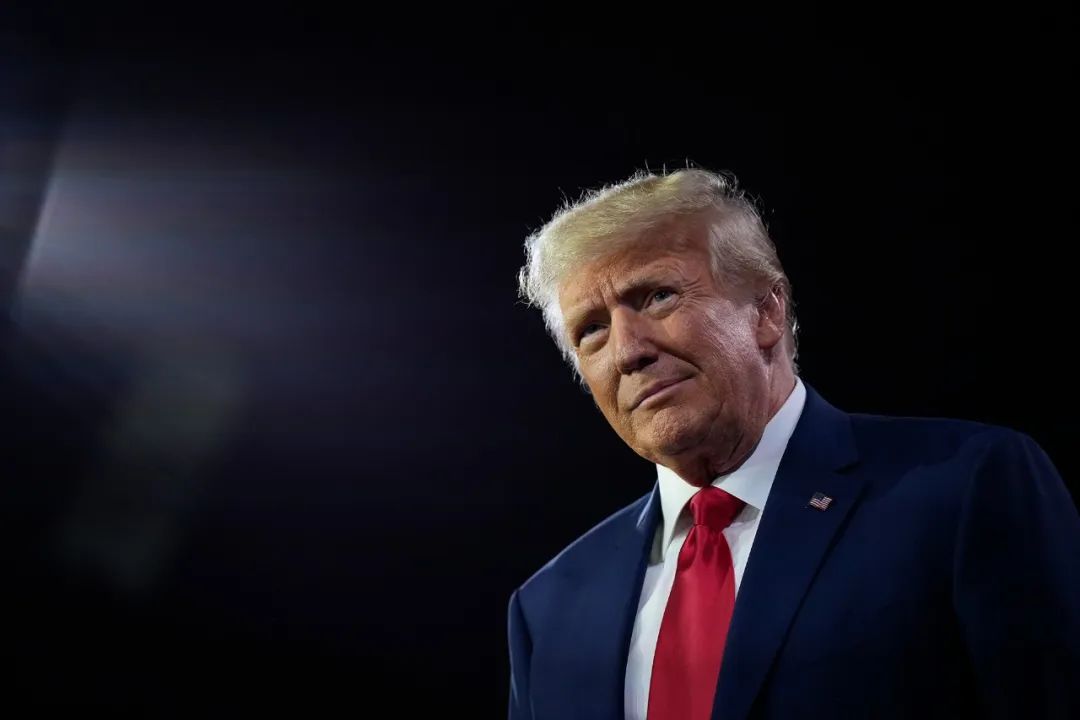
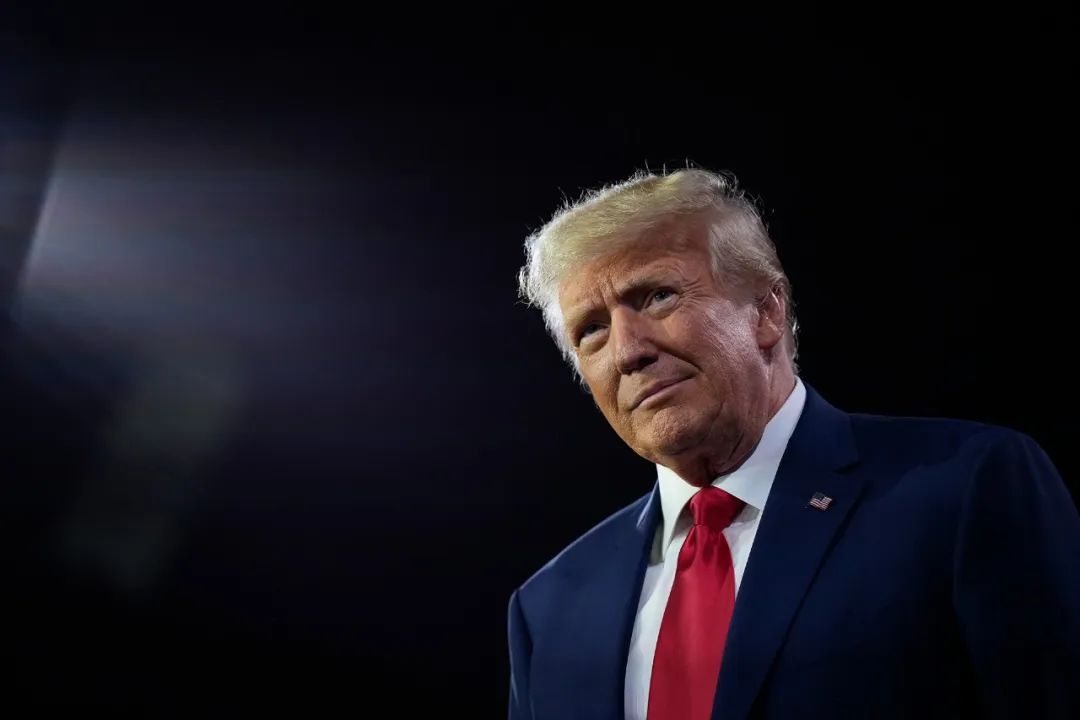
On May 9, Trump made a rare public endorsement of cryptocurrency. According to Fox News, Trump will ensure that cryptocurrency can be used for donations to his campaign. In a widely circulated short video speech, Trump said: "Can we use cryptocurrency to donate to the Trump campaign? I believe the answer is yes."
Following Trump's statement, the meme token TRUMP briefly surged to $6.09, with a 24-hour gain of 26.09%.
Strictly speaking, Trump has always held a critical stance toward cryptocurrency. Back in 2019, during his presidency, Trump expressed dislike for cryptocurrencies, calling them "not money," and even stated he only liked one currency—the U.S. dollar.
The turning point came on February 20, when Trump, during a Fox News interview ahead of the South Carolina primary, said, "I can accept Bitcoin." This was interpreted by outsiders as a softening of Trump’s position on Bitcoin, quickly igniting public discussion. Trump added that Bitcoin had already taken on a life of its own and might require some regulation, noting that many people were accepting it and an increasing number wanted to pay with Bitcoin. "Either way, I’m okay with it," he said.
To summarize, this marks the second time Trump has publicly supported Bitcoin. Why has his position shifted—from criticism to support? The reason likely lies in the voting power held by the cryptocurrency community. According to incomplete statistics, as early as 2022, nearly 14% of Americans owned digital assets, with young people forming the majority. Two years later, amid the SEC's approval of Bitcoin ETFs, this number has only grown.
From now until November, the period leading up to the U.S. election is crucial for vote mobilization. Bitcoin, being a key digital asset embraced by younger generations, makes Trump’s recent statement a strategic move to appeal to this demographic, hoping they will cast their votes for him. It’s a smart choice to align himself with the younger Bitcoin audience. Vote gathering is currently a top priority for both Trump and Biden. In fact, Biden launched pro-Bitcoin voter outreach campaigns earlier than Trump on social media platforms like X and TikTok.
This strategy has proven effective repeatedly. For readers interested in deeper context, consider reviewing previous articles published by "Carbon Value" on how Argentine President Javier Milei—a self-proclaimed Bitcoin enthusiast—leveraged pro-Bitcoin rhetoric to boost electoral support before his presidential run, as well as how El Salvador’s President Nayib Bukele benefited from similar messaging during his re-election campaign.
On May 8, Forbes reported that Bitcoin and cryptocurrency are expected to play a bigger role in this year’s U.S. election than in 2016 or 2020. A survey commissioned by Digital Currency Group (DCG) and conducted by Harris Poll found that approximately 21% of voters in key swing states view crypto policy as a significant issue that could influence their voting decision.
Meanwhile, a report released by consumer advocacy group Public Citizen using data from Opensecrets shows that crypto-industry super PACs have raised about $100 million for the 2024 congressional elections.
In stark contrast to Trump, today the White House announced that Biden will veto legislation allowing financial firms to custody Bitcoin.
According to BitcoinMagazine, the Executive Office of the President stated: "The Administration strongly opposes passage of H.J. Res. 109, which would undermine the Securities and Exchange Commission’s (SEC) work to protect investors in the crypto asset markets and safeguard the broader financial system." The statement added that if the President receives H.J. Res. 109, he will veto it. The bill aims to allow heavily regulated financial institutions to serve as custodians of Bitcoin and other cryptocurrencies.
Billionaire Tim Draper posted on social media saying the White House’s veto of this legislation is driving entrepreneurs out of the United States. Draper noted that all new jobs and nearly all innovation come from entrepreneurs—and now these entrepreneurs are beginning to leave America.
Under the Congressional Review Act (CRA), H.J.Res. 109 would overturn the SEC’s Staff Accounting Bulletin (SAB) No. 121, which imposes restrictions on how financial institutions can custody digital assets. By repealing SAB No. 121, this bipartisan resolution would remove barriers preventing strictly regulated financial institutions from acting as custodians of Bitcoin and digital assets.
Patrick McHenry, Chairman of the House Committee on Financial Services, voiced support for overturning the SEC’s SAB 121, stating: "SAB 121 is one of the clearest examples of overreach during Gary Gensler’s tenure at the SEC. Through SAB 121, the SEC attempted to dictate how financial institutions and companies safeguard Americans’ digital assets under the guise of staff guidance."
“SAB 121 requires financial institutions and companies safeguarding customers’ digital assets to hold those assets on their balance sheets. This means banks must bear substantial capital, liquidity, and other costs under existing prudential regulatory frameworks. This effectively makes it too costly for financial institutions to custody digital assets. It stands in stark contrast to the traditional treatment of assets held by strictly regulated banks on behalf of their clients.”
Congressman French Hill also spoke in favor of H.J. Res. 109, saying: "Treating custodied assets as reserves is not standard practice in financial services. The Biden administration’s SAB 121 is wrong and should be repealed."
The Chamber of Digital Commerce, a Washington-based advocacy group promoting the U.S. blockchain industry, expressed frustration through its Chief Policy Officer Cody Carbone: "The Biden Administration’s declaration that it will veto H.J. Res 109—the joint resolution to repeal the SEC’s Staff Accounting Bulletin (SAB) 121—is deeply disappointing. SAB 121 effectively prohibits trusted custodians from managing digital assets."
Earlier this year, Representatives Mike Flood and Wiley Nickel co-authored a bipartisan op-ed criticizing the SEC’s “flawed SAB 121 guidance,” arguing that “when it comes to digital asset custody, clearly our most regulated institutions need to be involved.” They expressed concern over the limited custodian options available for spot Bitcoin ETFs, warning it could lead to centralization risks.
Result: H.J. Res 109 passed the House by a vote of 228 to 182 and now moves to the Senate.
If the crypto community votes based on today’s actions by Trump and Biden, Trump is clearly the big winner.
Additionally, Jeff Kendrick, Head of Foreign Exchange and Cryptocurrency Research at Standard Chartered Bank, believes that Trump and the Federal Reserve could help push Bitcoin’s price to a record high of $200,000 by 2025, bringing the total crypto market cap back to around $4 trillion.
Kendrick explained that as U.S. fiscal dynamics become increasingly unsustainable, the risk of the Federal Reserve monetizing government debt is rising. This could drive Bitcoin prices to surge between $150,000 and $200,000 by the end of 2025.
Kendrick stated, “This scenario will broadly support digital assets as investors seek alternative holdings. We believe a second-term Trump administration, through a more favorable regulatory environment, would be broadly positive.”
Join TechFlow official community to stay tuned
Telegram:https://t.me/TechFlowDaily
X (Twitter):https://x.com/TechFlowPost
X (Twitter) EN:https://x.com/BlockFlow_News