








Bloomberg: How Are Asian Retail Investors Betting on Cryptocurrencies?
TechFlow Selected TechFlow Selected
Bloomberg: How Are Asian Retail Investors Betting on Cryptocurrencies?
From South Korea and the Philippines to Hong Kong and Australia, retail traders are placing unique bets on crypto assets.
 Navigating Web3 tides with focused insights
By Claire Ballentine
Translated by Luffy, Foresight News
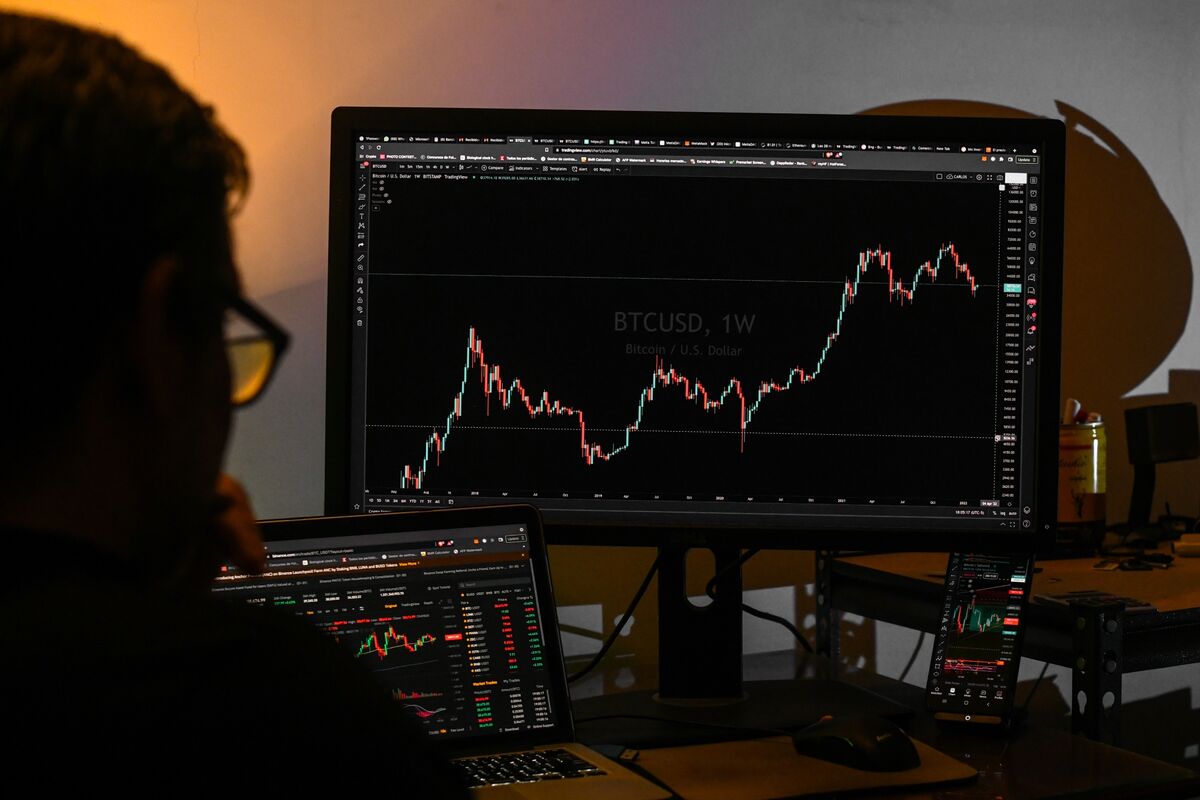
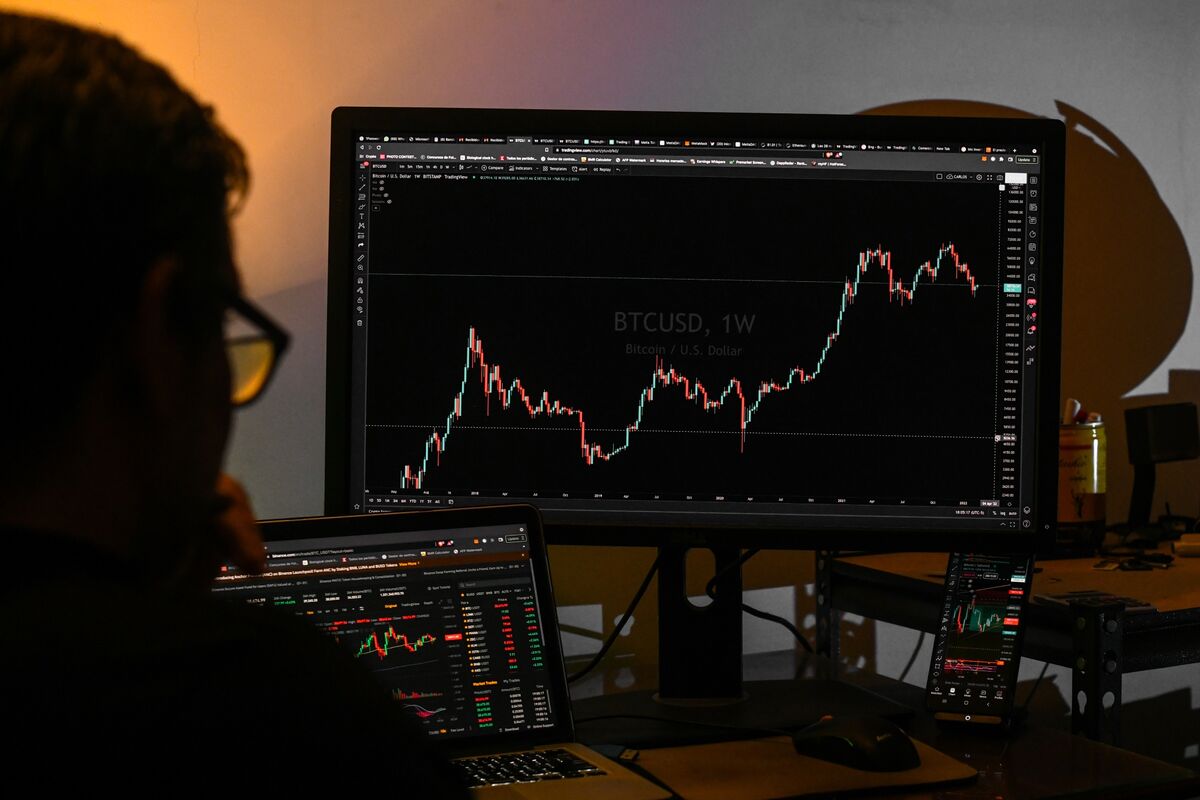
Despite recent pullbacks, cryptocurrencies remain one of the best-performing assets this year, with retail investor demand across Asia-Pacific serving as a key driver behind the rally.
A lot is happening across the Asia-Pacific region. Hong Kong has just launched a batch of cryptocurrency exchange-traded funds (ETFs), while Australia plans to bring these products to its largest stock market. Meanwhile, Singapore is racing to become a crypto hub, and Web3 blockchain technology is rapidly gaining traction elsewhere in the region.
In January, U.S. regulators approved Bitcoin ETFs, boosting the credibility of cryptocurrencies globally. That decision helped revive the digital asset class after the 2022 "crypto winter," when a wave of scandals and bankruptcies sent Bitcoin tumbling 64%. Still, this year hasn’t been without volatility. In March, a surge in U.S. Bitcoin ETF inflows pushed Bitcoin to an all-time high near $74,000, only for it to fall nearly 16% in April.
Some investors in Asia are long-time crypto enthusiasts who have weathered previous cycles, while others are new entrants. From Korea to the Philippines and Australia, small-scale traders have built distinct ecosystems.
Leah Callon-Butler, head of Philippine-based Web3 consultancy Emfarsis, said: “The region has long been an early adopter of Web3 technologies and has a strong affinity toward them. Outsiders often lump 'Asia' into a homogenous region, but if you want to truly understand how and why crypto is rising here, that’s a big mistake.”
Here’s a look at cryptocurrency trends across Asia:
South Korea
Traders in South Korea are among the most enthusiastic crypto investors in the world. In fact, the country’s won recently overtook the U.S. dollar as the most used currency in cryptocurrency trading. According to CryptoQuant, smaller-cap tokens—known as altcoins—are especially popular, accounting for 80% of trading volume on Korean exchanges, compared to about 50% on global platforms.
Retail investors are also known for their love of crypto-based esports, where players earn cryptocurrency or non-fungible tokens (NFTs) as rewards. Charles Pyo, founder and CEO of AI3, said Korean gaming firms such as Nexon Games Co. and NCSoft Corp. plan to launch new play-to-earn games this year. AI3, headquartered in Seoul, focuses on enterprise adoption of Web3 and artificial intelligence.
After the collapse of Terraform Labs’ cryptocurrencies Luna and UST, created by co-founder Do Kwon, South Korean regulators tightened scrutiny of the industry. Last year, the national legislature passed a bill strengthening investor protection, allowing officials to oversee crypto operators and custodians.
Philippines
Web3 games such as Axie Infinity and Pixels have gained massive popularity in the Philippines in recent years. For example, "guilds"—groups that play together—can earn NFTs and other rewards. Internet cafes have even emerged as physical meeting spots for these guilds.
One guild, Yield Guild Games, has grown so large that it has evolved into building Web3 protocols and helping other guilds around the world.
“The Philippines is the epicenter of global blockchain gaming adoption,” said Emfarsis’ Callon-Butler. “Guilds have become unique communities atop all other games, and they transfer between games.”
The Philippines allows crypto trading but does not recognize cryptocurrencies as legal tender. The central bank has established a sandbox framework to encourage innovation under oversight and is also piloting a central bank digital currency.
Hong Kong
Patrick Pan, CEO of digital asset platform OSL, explained that retail traders in the financial hub are keen on using leverage in their trades. He said they have a high risk appetite and greater interest in alternative investment products. They are also heavily influenced by social media and key opinion leaders (KOLs) in the crypto space.
Chun Ho Chow, a 23-year-old retail investor who also works at a Web3 startup, said he feels confident engaging in trades that others may consider too risky.
“Many young people hope to get rich quickly through leveraged trading on volatile assets. Many have become millionaires through such trades and posted about it on social media,” he said. While aware of survivorship bias, he believes he can achieve similar success.
Hong Kong only began allowing retail investors to legally invest in cryptocurrencies last year and has since rolled out a regulatory regime for crypto exchanges and related entities. Regulators say their approach prioritizes consumer protection, but there are concerns it could reduce Hong Kong’s appeal to firms seeking higher profits from activities like staking and derivatives.
On April 30, Hong Kong allowed three ETFs that directly invest in cryptocurrencies to list. The level of demand for these funds will help gauge whether Hong Kong’s push to become a tightly regulated digital asset hub is gaining traction.
In mainland China, all cryptocurrency activities are banned, including crypto-based fundraising, exchange trading, and Bitcoin mining. That said, enforcement remains questionable.
Australia
Australian retail investors are well known for their enthusiasm for Ethereum, with some even abandoning Bitcoin entirely in favor of its rival. According to a survey by cryptocurrency exchange Kraken, Ethereum accounts for 59.4% of holdings in Australian wallets, compared to 17.7% for Bitcoin. Globally, Ethereum makes up 34.5% of wallet holdings, while Bitcoin stands at 29.9%.
Sydney-based trader Kurtis Dawe, 33, favors Ethereum over Bitcoin because it has more room to grow and many alternative tokens are built on the Ethereum blockchain.
“I think it has much more upside potential than Bitcoin,” said Dawe, who recently sold all his Bitcoin positions. He is also optimistic that Ethereum ETFs will soon be approved, which could further boost prices.
Japan
As part of a broad initiative to strengthen its economy, the Japanese government is actively promoting the growth of Web3 companies. It has begun easing crypto-related rules on listings and taxation and now allows venture capital firms and other investment funds to hold cryptocurrencies directly. Nomura Holdings and other financial institutions are advancing Japan’s security token market—tokenizing real-world assets such as corporate bonds, securitized real estate, and other financial products.
Overall, however, regulation remains strict. For instance, mutual funds cannot hold cryptocurrencies, including Bitcoin ETFs.
Masamichi Matsushima, a crypto analyst at Monex Group Inc., said Japanese financial firms are still moving slowly in participating in crypto activities such as custody services, as they tend to avoid any activity unless explicitly approved by regulators.
India
Indian crypto investors are highly interested in U.S. Bitcoin ETFs. Through the Reserve Bank of India’s “Liberalized Remittance Scheme,” investors can send up to $250,000 abroad annually and use those funds to purchase foreign securities. Meanwhile, startups are expanding their product offerings in response to growing investor demand for crypto derivatives.
The situation has changed from last year. After a heavy tax regime was introduced in 2022, Indian crypto trading dried up. The government framed this as a way to formalize crypto assets, but the side effect was making trading prohibitively expensive.
Officials have recently cracked down on offshore exchanges that haven't registered locally, while also promoting their own central bank digital currency. Various pilots are currently underway.
Singapore
Due to its relatively small population, Singapore is largely an institutional market for crypto investors, partly because the Monetary Authority of Singapore has repeatedly warned residents against crypto trading. Singapore bans crypto firms from public advertising—a key tool for such entities to promote their products.
However, for institutions, Singapore encourages the use of blockchain for tokenization, cross-border remittances, digital bonds, and similar initiatives, which can often speed up payments and reduce costs. The MAS’s “Project Guardian” is one such initiative.
Taiwan
In Taiwan, the new U.S. Bitcoin ETFs have been a major talking point. Initially, crypto investors could buy Bitcoin ETFs via sub-brokerage services offered by brokers, but in January, Taiwan’s Financial Supervisory Commission instructed domestic brokers to stop accepting client orders, citing “investor protection.”
The Financial Services Commission later added that it would consult with brokers and might reopen access to Bitcoin ETFs in April—but that has yet to happen.
Thailand
The 2022 plunge in crypto prices hit Thai retail investors hard, particularly after the collapse of local exchange Zipmex. This prompted regulators to tighten oversight. But the government of Prime Minister Srettha Thavisin, who took office late last year, is aggressively pushing Thailand to become Southeast Asia’s digital asset trading hub. He has waived certain taxes on crypto and digital asset transactions, and traders are now allowed to invest in overseas crypto ETFs.
Additionally, competition in Thailand’s crypto trading sector is intensifying, with Binance joining forces with Kasikornbank, one of the country’s major commercial banks. Binance has partnered with Gulf Energy Development Pcl—the nation’s largest private power company, controlled by Thailand’s second-richest man—to launch a new crypto exchange. Recently, regulators allowed mutual funds to directly invest in cryptocurrencies for the first time.
Vietnam
Many Web3 games are developed in Vietnam, including Axie Infinity by Sky Mavis. Another game, Sipher, also comes from Vietnamese developers.
Giap Van Dai, founder and CEO of Nami Foundation, which provides a crypto trading platform, said local investors are turning to cryptocurrencies in search of higher returns.
“Regulations around crypto and blockchain in Vietnam have not yet been established, creating what’s called a sandbox environment for developers, investors, and market growth,” he said.
Vietnamese law does not ban crypto-related businesses, but cryptocurrencies are not recognized as legal payment methods. Issuing crypto and using it as a payment instrument technically violates the law. The central bank warns that crypto trading carries risks and victims of scams receive no legal protection. Earlier this year, the government tasked the Ministry of Finance with completing a legal framework for cryptocurrencies by May next year to combat money laundering.
Join TechFlow official community to stay tuned
Telegram:https://t.me/TechFlowDaily
X (Twitter):https://x.com/TechFlowPost
X (Twitter) EN:https://x.com/BlockFlow_News
 @Bloomberg









