Avail Airdrop: Who Exactly Received It?
TechFlow Selected TechFlow Selected
Avail Airdrop: Who Exactly Received It?
What exactly were Avail's airdrop criteria, who received the tokens, and are users' concerns justified?
 Navigating Web3 tides with focused insights
By Alex Liu, Foresight News
Introduction
Avail, another major player in the modular narrative, announced on April 19 its upcoming Unification Drop token airdrop. A total of 354,605 eligible addresses will be able to claim 600 million tokens, with claims open until May 4.
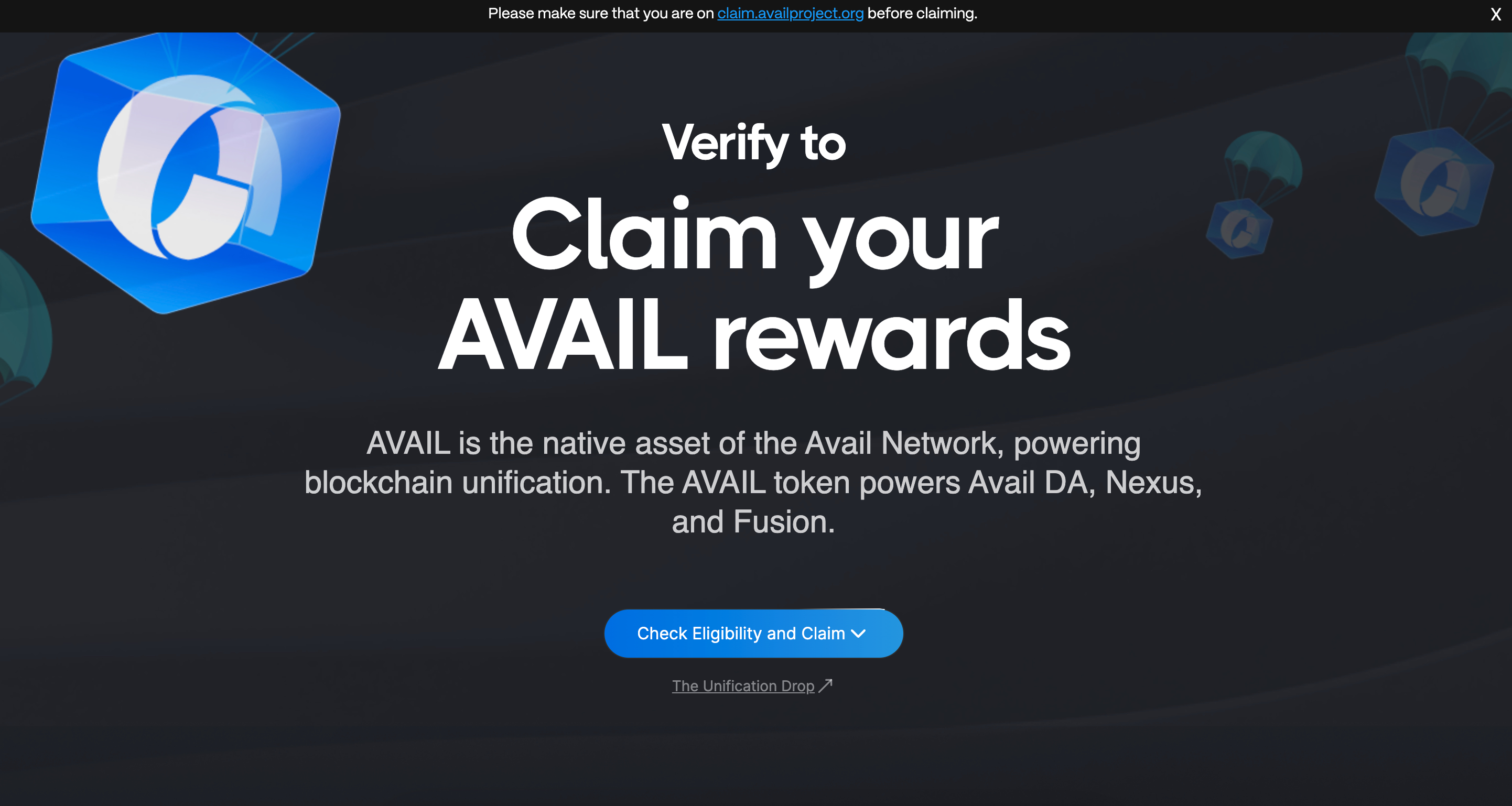
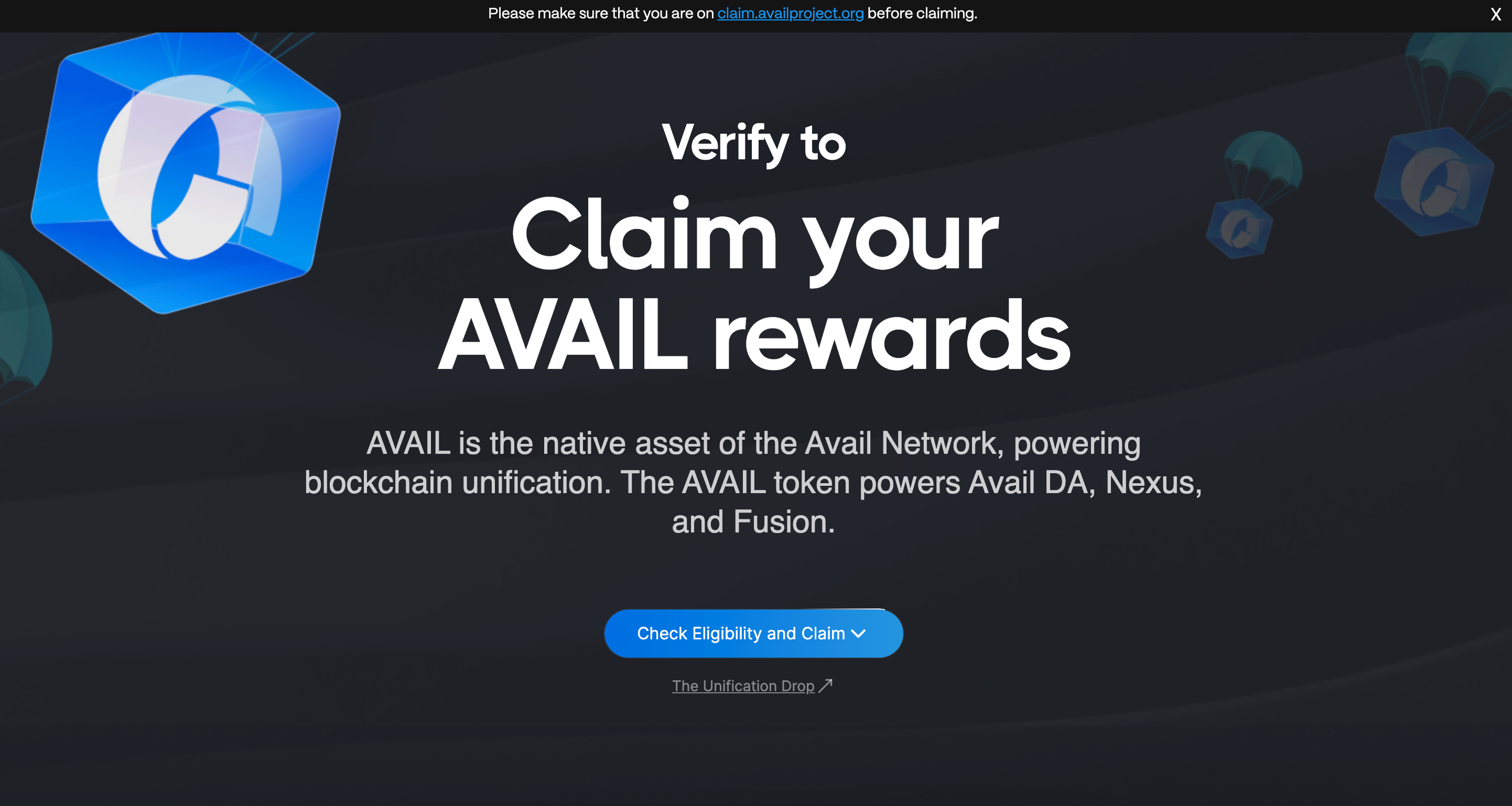
AVAIL claim interface
This was not surprising. Over a week earlier, a screenshot allegedly showing Avail’s airdrop eligibility criteria had already circulated on X and was later confirmed by the team as a “leak,” fueling anticipation.
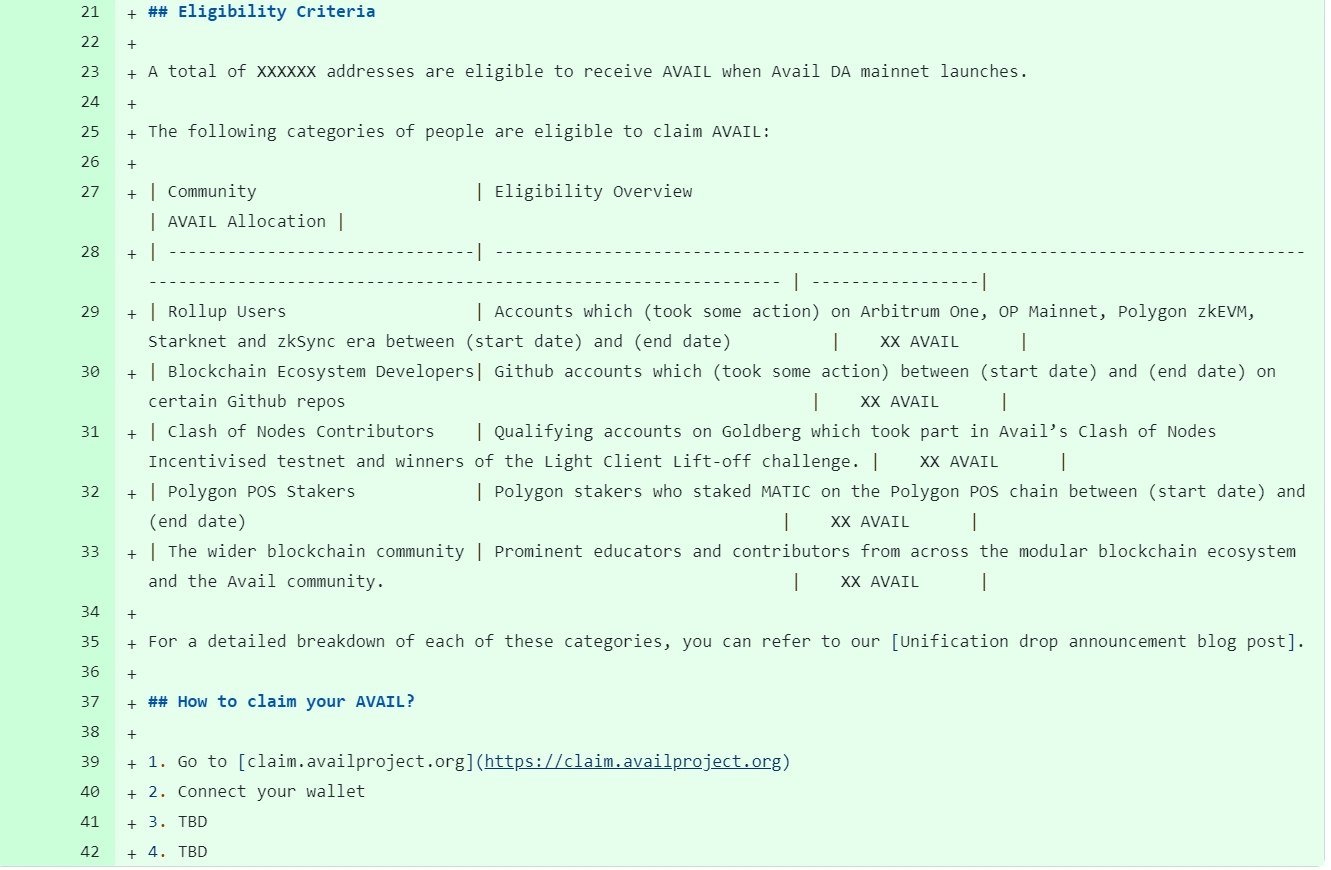
Leaked airdrop eligibility criteria
However, the subsequent launch of the airdrop claim website disappointed many—numerous testnet participants and heavy L2 users who were confident they’d qualify received only a “Not Eligible” result upon checking. Online criticism quickly erupted, targeting the rules and criteria, with widespread accusations of unfairness and even claims of insider allocations (“pre-mining”), leading many users to label the project team as operating a “rat farm.”
What exactly were Avail’s criteria? Who received the tokens, and are the user complaints justified? By the end of this article, you’ll likely have your own answer.
Rules
The official airdrop rules were identical to the leaked version and divided into five categories:
-
Blockchain ecosystem developers: 90 million AVAIL.
-
Incentivized testnet contributors: 49.5 million AVAIL.
-
Rollup users: 380 million AVAIL.
-
Polygon PoS stakers (i.e., MATIC stakers on Ethereum mainnet): 70 million AVAIL.
-
Major community contributors: 10.5 million AVAIL.
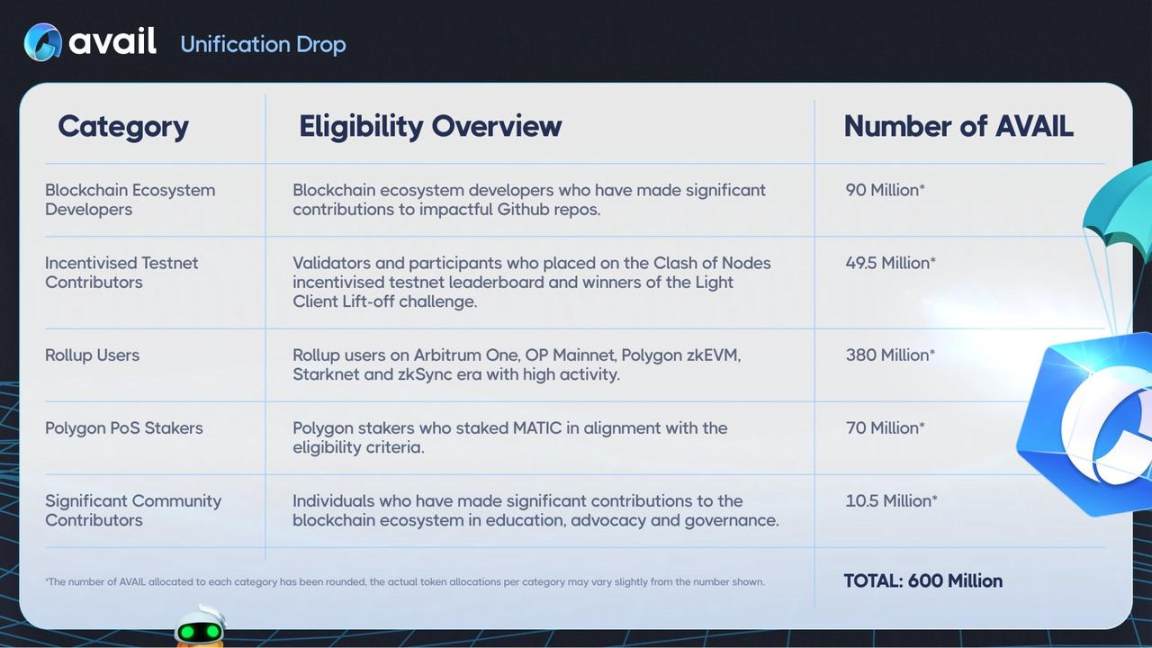
Official Avail airdrop criteria
Why did these rules spark such controversy?
Controversies
No allocation for DYM stakers
As fellow members of the modular ecosystem, many expected Avail to airdrop tokens to stakers of Dymension (DYM), just as TIA stakers received DYM airdrops. Dymension, serving as a modular settlement layer, is objectively a customer of Avail’s data availability (DA) solution. These connections led many users to buy and stake DYM in anticipation of an Avail airdrop.
But ultimately, no airdrop was given to DYM stakers.
Dymension’s founder also seemed dissatisfied. After Avail released the airdrop details, he tweeted: “Who’s building the real Substrate-based DA that knows how to do airdrops?”

Tweet from Dymension’s founder
Given that Avail itself is a Substrate-based DA, the implication is clear.
Testnet node operators subject to a “lottery”
Light node operators fall under the second category: incentivized testnet contributors. However, many users who ran nodes for months found themselves ineligible. Why? According to the official explanation:
“The top performing light client operators who participated in the Light Client Lift-off have also been randomly selected for AVAIL rewards.”
This random selection turned users’ time and effort into a luck-based “lottery,” shifting control from their hands to chance. With no further transparency, doubts remain about whether the selection process was truly fair. Such criticism seems understandable.
Polarization and lack of transparency in criteria
Among all categories, “Rollup users” offered the largest allocation pool and the best chance for retail participants. But was this really the case?
Avail claimed that the top 50,000 addresses on each L2 would qualify. In practice, however, reaching that threshold proved far harder than expected.
You may have had a similar experience: scrolling through X and seeing prominent airdrop influencers and KOLs sharing news of the Avail airdrop, posting screenshots showing thousands or even tens of thousands of AVAIL available for claiming, calling it “free money.” Excited, you rushed to the official site to check each of your addresses, only to gradually realize something was off—your most active and frequently used L2 addresses all failed to qualify.
This was the common experience among the author and peers. Some friends found their main accounts ineligible, while obscure secondary accounts—with no apparent special activity—qualified for thousands of tokens. Why? The answer: nobody knows. Avail stated that eligibility considered weekly transaction counts, volume, gas fees, etc., but the exact weighting and thresholds remain opaque.
That said, transaction count likely carried significant weight. Community feedback suggests that addresses with many transactions—such as those minting inscriptions on L2s—were often eligible.
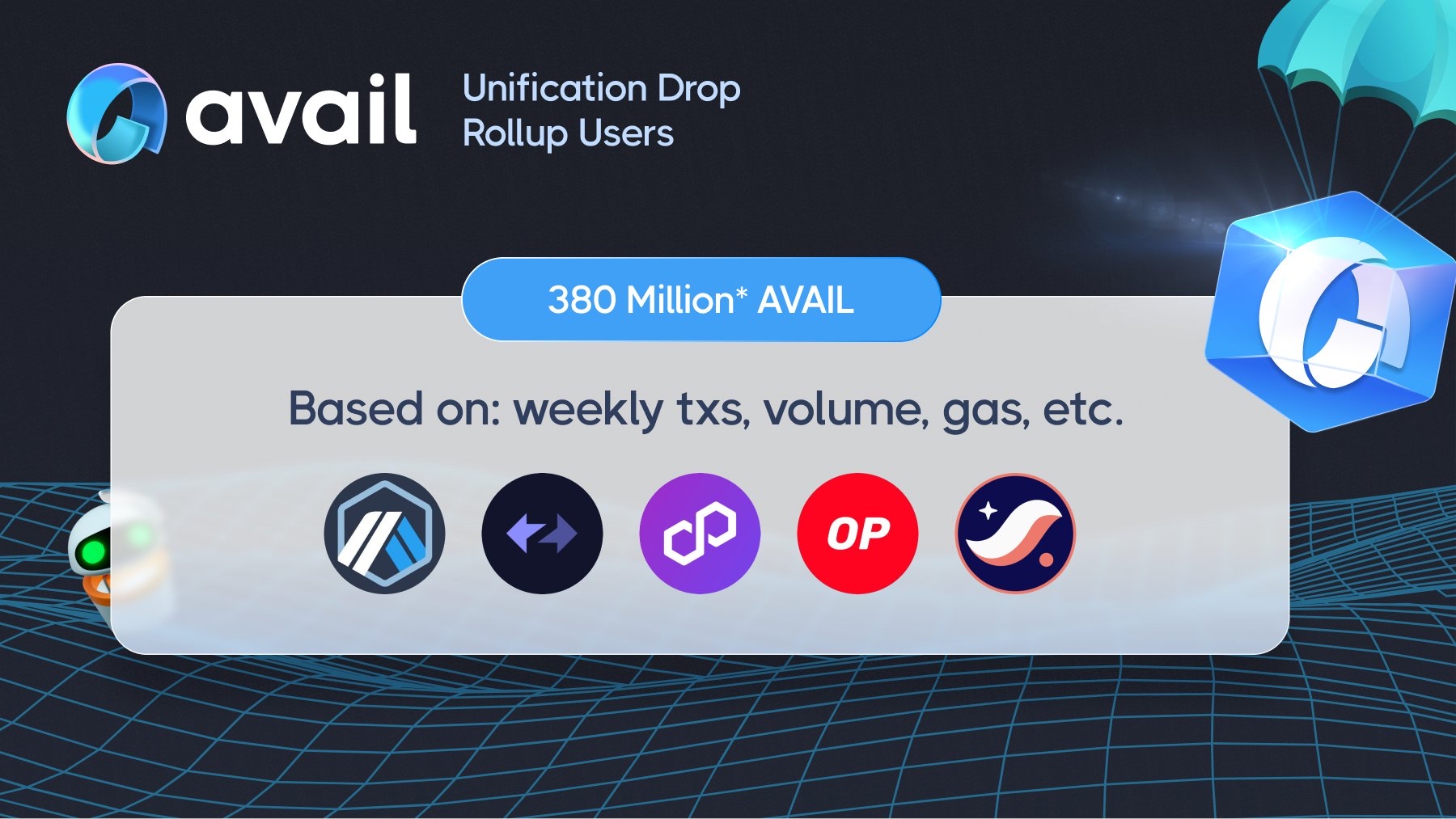
L2s eligible for AVAIL
These vague criteria make allegations of insider allocations (“rat farming”) seem plausible. Notably, tokens will be claimed via Polkadot ecosystem wallet addresses, meaning once distribution is complete, no one will be able to trace which specific L2 addresses qualified or how much they received.
Excessive allocation to “contributors”
Lefteris Karapetsas, a well-known open-source developer in the Ethereum community, commented in a related post:
“I have several private Rollup addresses that are very active, yet received almost nothing—only one address got around 300 tokens. Meanwhile, my GitHub, Twitter, and public address collectively received about 87,000 tokens!!! 🤯 Same for Starknet. Yes, I’m one of eight users. Don’t get me wrong—I’m deeply grateful for the recognition. But why is the multiplier for Rollup/Starknet activity so much smaller compared to someone like me? My lefteris.eth isn’t an active Rollup user—just a governance participant—yet it received 80 times more tokens than my most active Rollup address. 🙏 Again, thank you for the recognition, but it seems unfair to most users, favoring known figures / OGs like myself.”

Airdrop eligibility screenshot attached to his post
As shown, aside from 13,333 tokens received as a developer, linking his Twitter account alone granted him 50,000 tokens. As a regular user, he received only 300. This stark disparity prompted him to speak up on behalf of ordinary users.
In the author’s observation, recipients of the 50,000-token “community contributor” allocation weren’t all respected open-source contributors like Lefteris. Some appeared to be projects friendly with Avail, or even just KOLs who promoted Avail in the past.
The disproportionate allocations and inconsistent quality of those labeled “community contributors” further fueled community anger.
Conclusion
Avail’s airdrop appears to have multiple pain points:
-
Random selection of node operators and opaque L2 criteria → “high potential for manipulation”
-
Claiming via Polkadot wallets means even if insider allocations exist, they cannot be proven.
-
Many large “community contributor” allocations went to individuals or projects closely affiliated with Avail.
We hope readers can draw lessons from this and become smarter “airdrop hunters” in the future. Yet even the most astute and strategic hunters ultimately remain at the mercy of project teams when it comes to airdrop outcomes.
Join TechFlow official community to stay tuned
Telegram:https://t.me/TechFlowDaily
X (Twitter):https://x.com/TechFlowPost
X (Twitter) EN:https://x.com/BlockFlow_News
 Foresight News