Cobo Shen Yu: A Veteran Miner's Mining Memoir
TechFlow Selected TechFlow Selected
Cobo Shen Yu: A Veteran Miner's Mining Memoir
Standing here today in 2024, we see with absolute clarity the infinite possibilities of blockchain's future.
 Navigating Web3 tides with focused insights
Author: Cobo Global
During the Hong Kong Web3 Festival 2024, Cobo, together with Antalpha Prime, BounceBit, SYS Labs, and Rollux, hosted an offline event titled "BTC Old Friends Reunion" in Hong Kong on April 7, supported by Tether Gold. Veteran Bitcoin miners and emerging forces from the BTC Layer 2 ecosystem gathered to reflect on the golden days of early mining and discuss the future of the Bitcoin ecosystem.
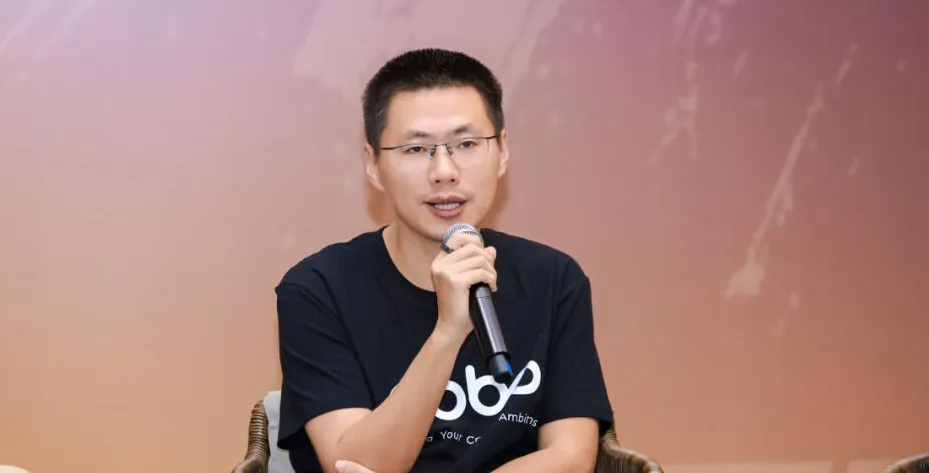
During the dinner break, Shen Yu, Co-founder and CEO of Cobo, shared engaging stories from the early days of Bitcoin mining, reviewed the challenges faced by miners going overseas, and shared his insights on BTC Layer 2 and AI, along with Cobo’s strategic initiatives in these areas.
Below is a summary of Shen Yu’s remarks, shared with Cobo users and partners.
Self-Introduction of an Old Miner
Hello everyone, I’m Shen Yu—an old miner, an OG crypto enthusiast, an NFT collector, and a victim of on-chain inscriptions. Over the past decade, I’ve experienced the ups and downs of this industry: from early GPU mining and the birth of ASICs, to China’s first mining pool and Bitcoin’s first halving, all the way through Mt. Gox… Fast forward to 2017, Ethereum’s ICO wave brought smart contracts and new forms of digital assets. In the last cycle, we witnessed DeFi Summer and the NFT boom. Just a year ago, we saw a resurgence in the Bitcoin ecosystem, with grassroots innovations like inscriptions emerging from the bottom up—and more recently, a surge in Bitcoin Layer 2 and sidechain projects.
Over the past ten years, we’ve witnessed the entire evolution of crypto from nothing into something real. It’s truly fortunate that in 2024, Bitcoin has reached an early inflection point. The launch of Bitcoin ETFs in January 2024 marks Bitcoin’s official debut as a mature financial asset before the broader public.
Standing here in 2024, we now clearly see the boundless possibilities for blockchain’s future. The core challenges that have long plagued our industry are largely being resolved. What lies ahead is a massive wave of growth across the sector—driving true blockchain adoption, even enabling end users to seamlessly leverage the convenience and security blockchain offers, likely at scale within the next one or two cycles.
The Opportunity for Institutionalized, Professional Mining and Mining Memories
One fascinating aspect of this industry is how it advances through cycles—through constant iteration and learning from mistakes. The story of institutionalized mining began during the bear market at the end of 2014 and into 2015. Back then, BTC prices plummeted rapidly. ASIC mining was already somewhat established, but profit margins suddenly collapsed. Early Bitcoin mining had payback periods of just three to six months; later, it stretched to a year, even two. During such a sharp downturn, when prices remained stuck at rock-bottom levels, miners were forced to optimize electricity costs and shift toward corporate-scale, industrialized operations—or face razor-thin margins and extremely poor risk resilience. This market pressure compelled miners to relocate from otherwise ideal mining facilities.
You might not believe it, but my first large-scale mining farm was located in downtown Nanjing, just two kilometers from a Wanda Plaza. Conditions were excellent—using IDC-grade central air conditioning. The mining rigs were incredibly valuable; in that facility alone, we mined over 20,000 BTC and more than 100,000 ETH. But when the bear market hit, we couldn’t continue—the electricity cost was simply too high. Despite perfect living conditions and a beautifully outfitted facility, we had no choice but to move the equipment to locations where power costs offered a competitive edge.
At that time, miners from all over China started scouring provincial power grid maps, hunting for stranded or surplus electricity. We drove along the Dadu River through landslides, visiting hydropower stations one by one, conducting on-site inspections, negotiating deals, and building mining farms.
Through this process, the global cryptographic computing power began trending toward scale and centralization. At one point, 70–80% of the world’s hash rate may have been concentrated along the banks of the Dadu River, and in winter, near coal-fired power plants in Xinjiang. Power consumption wasn’t yet enormous. This trend toward scale was rooted in the prolonged nature of that bear market—forcing everyone to cut costs and boost efficiency.
Challenges and Barriers Facing Miners Going Overseas
When first considering overseas mining, many were excited and eager to dive in. But once they arrived in the U.S., they quickly realized there were numerous pitfalls: legal structures and tax planning in the early stages, followed by operational challenges like maintenance, repair turnaround times, uptime rates. Then came unstable electricity supply, unexpected shutdowns due to special events, and so on. After factoring in all these, the total cost turned out to be very high, while efficiency remained low. Many miners realized the U.S. wasn’t as ideal as expected and began exploring alternatives—mainly South America and Africa. However, those regions present different issues, primarily political instability and safety concerns. Throughout this journey, many miners found themselves missing China’s rapid infrastructure development and relatively favorable environment, where the risks were comparatively fewer.
Another current trend overseas is the rise of new players who possess strong resources, especially political connections. Sovereign wealth funds from various countries have begun entering mining—and they often don’t care about payback periods at all. This drives down profit margins for everyone else.
Looking back, I feel that miners venturing abroad have endured a particularly tough journey. Very few have managed to successfully establish stable, fully operational mining farms overseas.
BTC Layer 2 Projects and Cobo’s BTC Ecosystem Strategy
The recent flourishing of the Bitcoin ecosystem stems from grassroots innovation in new asset issuance and types. As the ecosystem evolved, Bitcoin’s mainnet became persistently congested, causing demand to spill over. To address these overflow needs, the community began exploring sidechains and Layer 2 solutions. Combined with years of advancements in modular blockchain technologies on the EVM side, these tools are now relatively mature. That’s why we’re seeing a rapid emergence of new projects and startups aiming to build Layer 2 networks atop Bitcoin.
A key difference between Bitcoin and EVM is Bitcoin’s limited support for smart contracts. In the short term, the only viable workaround is using bridges to map Bitcoin assets onto Layer 2 or EVM-compatible chains. How do we address the security and decentralization of these bridges? For now, we can only adopt compromise solutions.
Cobo offers a solution based on MPC (Multi-Party Computation), similar to multi-signature setups. In this model, the project holds one private key shard, Cobo acts as a co-custodian holding another, and a third shard is backed up by a third-party security firm or insurer selected by the project. This setup effectively mitigates single-point failure risks and enables collaboration among multiple parties to enhance bridge fund security. Importantly, Cobo can only assist with risk controls specified by the project—it cannot determine fund movements.
We’re also seeing new technical approaches, including updates and iterations at the Bitcoin opcode level and novel cross-chain communication solutions. In the long run, I believe these issues will gradually improve. For now, our goal is to provide a relatively secure and reliable solution early on, allowing room for experimentation and observation as the ecosystem evolves.
Cobo’s AI Strategy
AI development has introduced significant changes at the individual level. With AI, we can now handle 40–50% of daily workloads automatically, greatly improving efficiency. On the organizational level, we’re actively exploring how AI—especially AI Agents, as their accuracy improves—can integrate with the blockchain industry. From today’s perspective, since blockchain’s native information and asset flows are transparent and publicly verifiable on-chain, highly accurate and efficient AI Agents should naturally interact with blockchain systems.
Imagine a scenario: two AI bots representing different individuals could deploy smart contracts on-chain and conduct interactions and transactions autonomously. Once blockchain scalability is solved and on-chain costs drop significantly, we may eventually see vast numbers of AI Agents initiating and executing direct transactions and using smart contract technology independently. Humans might only need to set basic risk controls and define rules—then let the agents operate autonomously. Within the next three to five years, we may begin to see mature prototypes emerge.
Driven by this vision, Cobo—a company focused on secure wallet-level private key management and robust risk control—is working to unify the underlying architecture and risk control layers across all our wallet product lines, providing standardized APIs to enable integration with AI Agents. We hope to see widespread deployment and application of AI technologies in the blockchain space in the near future.
We expect to release a prototype of this product by the second half of this year—stay tuned and feel free to try it out.
Join TechFlow official community to stay tuned
Telegram:https://t.me/TechFlowDaily
X (Twitter):https://x.com/TechFlowPost
X (Twitter) EN:https://x.com/BlockFlow_News
 Cobo
Cobo