









How should investors think about profiting from the Bitcoin halving?
TechFlow Selected TechFlow Selected
How should investors think about profiting from the Bitcoin halving?
Investors must closely monitor the behavior of long-term holders, as they are now the dominant force.
 Navigating Web3 tides with focused insights
Author: Lucas Kiely, Chief Investment Officer at Yield App, CoinTelegraph
Translation: Baishui, Jinse Finance
Time is running out until the Bitcoin halving, and the ETF frenzy appears to be accelerating its arrival. In fact, only weeks remain until this major event. It's no surprise then that the halving has become the topic of conversation among crypto investors and media alike. However, while we can still expect some predictable trading patterns following the key date, we are now in a very different market that demands new trading strategies.
In the past three cycles, halvings were followed by significant spikes in volatility. We typically expected a 30%-40% sell-off within an average of 480 days after the halving date, followed by a sharp rise to new all-time highs. But this time, spot Bitcoin ETFs have changed everything.
To understand where Bitcoin’s price might go next, we need to look more closely at the asset’s volatility. Over recent months, as excitement built ahead of the halving, we’ve seen the expected pullbacks. Yet, by previous cycle standards, these corrections have been weak. This time, Bitcoin’s adjustments have been much smaller—never exceeding 25%. In fact, the most recent dip was only around 15% before BTC rebounded again toward the $70,000 mark.
This milder sell-off suggests a weaker bounce post-halving. Undoubtedly, Bitcoin will experience its usual post-halving sell-off and will eventually reach new all-time highs afterward. Likewise, returns will still appear attractive to traditional investors. But don’t expect to see the over 600% price surge we witnessed after the 2020 halving. Those days are over.
So why is this happening? Two factors are at play here. First, the proportion of long-term Bitcoin holders has reached a record high of approximately 14 million BTC—more than 70% of the total circulating supply of 19,670,043 BTC. Over recent months, with more holders adopting a “diamond hands” mentality, a record number of Bitcoins have been withdrawn from exchanges into cold wallets.
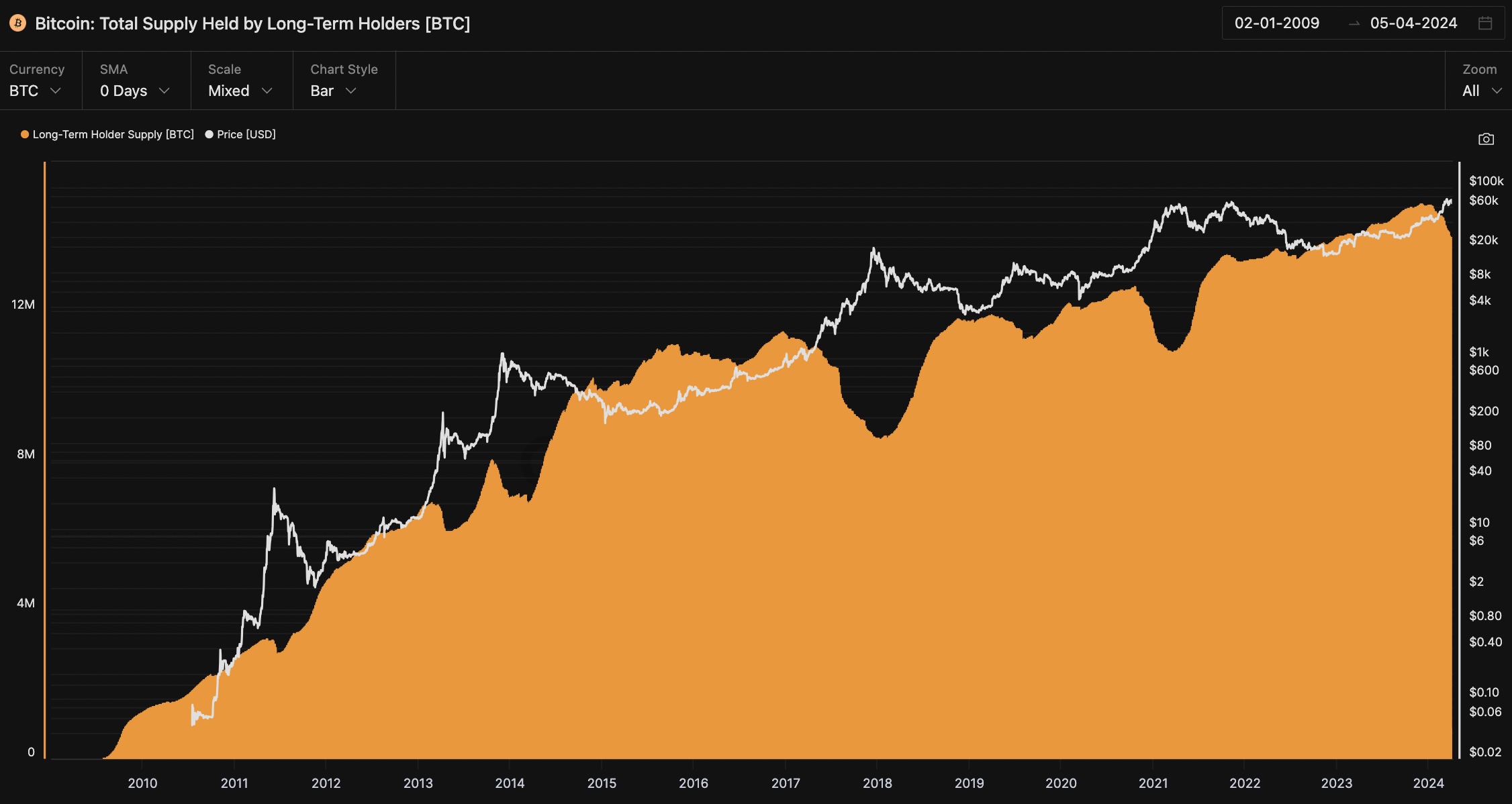
Percentage of total Bitcoin supply held by long-term holders, 2009–2024. Source: Glassnode
But what has truly transformed the situation is the arrival of spot Bitcoin ETFs. Today, ETFs are absorbing BTC supply from the market at a rate exceeding even miner output. Since their launch, spot BTC ETFs have absorbed an average of about 10,000 BTC per day, while miners produce only 900 BTC daily. This intensifies scarcity and drives prices upward.
Crucially, however, it also means significantly lower long-term volatility, as ETF investors have a longer-term outlook compared to typical crypto traders. Although volatility has spiked recently as the halving draws near, it remains far below levels seen during previous halving periods. According to CoinGlass data, the 30-day historical volatility of BTC/USD has dropped from a peak of nearly 18% in April 2013 to around 4% at the time of writing. You’d expect to see that percentage on a U.S. equity fund prospectus—not on a cryptocurrency price chart.
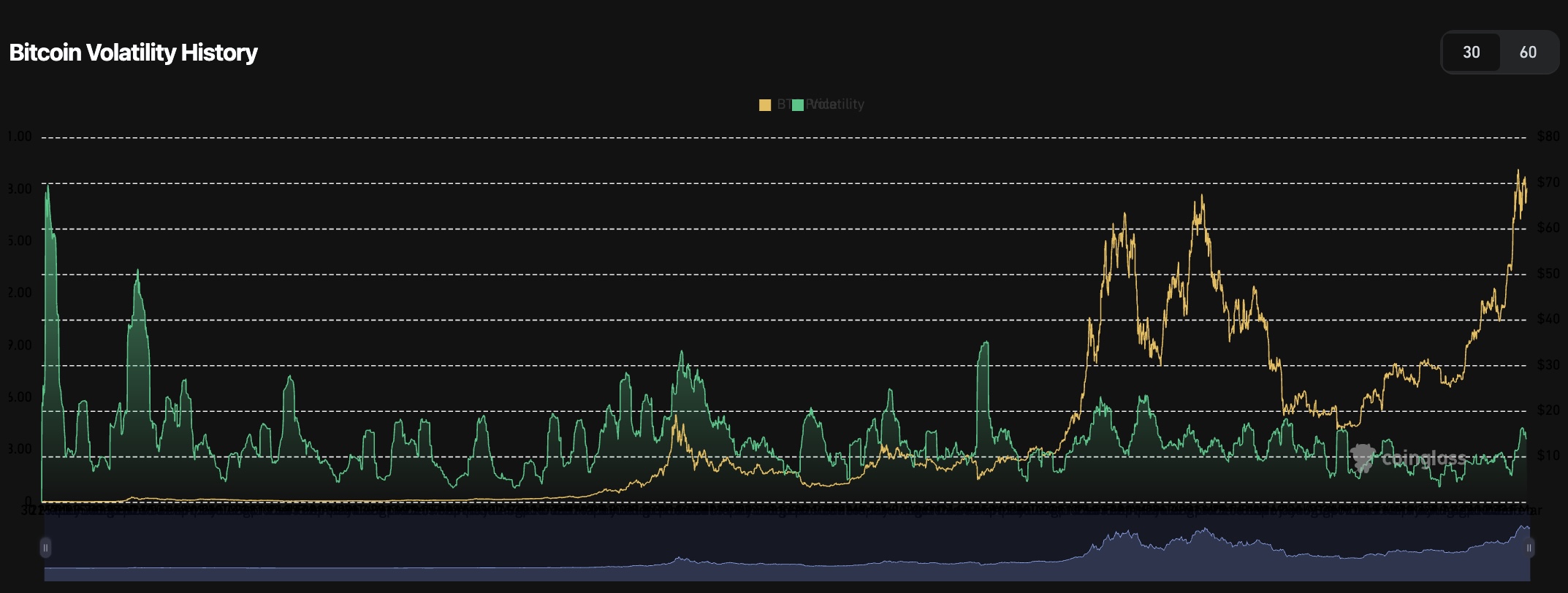
Bitcoin price (yellow) vs. Bitcoin volatility (green), April 2013 to April 2024. Source: CoinGlass
This is because the investors now entering spot Bitcoin ETFs are the same retail and institutional investors who have poured trillions of dollars into S&P 500 ETFs. They are long-term holders, with a minimum investment horizon of three years, making buy or sell decisions based on long-term drivers such as macroeconomic conditions, structural market shifts, and long-term return potential.
What does this mean for investors hoping to profit from the halving? They must think more like traditional equity investors than crypto traders. They should replace Messari with Morningstar—a global provider of traditional fund data—to track the inflows and outflows of assets under management in spot Bitcoin ETFs. They must closely monitor the behavior of long-term holders, as they are now the dominant force.
If they’re seeking 600% returns, they’ll need to look elsewhere. That kind of surge won’t happen after this Bitcoin halving. Instead, the trade-off will be steadier, more reliable returns without excessive volatility that distorts a typical balanced portfolio. For most investors, this is far more appealing than an asset that has a 50/50 chance of either skyrocketing—or vanishing completely.
Join TechFlow official community to stay tuned
Telegram:https://t.me/TechFlowDaily
X (Twitter):https://x.com/TechFlowPost
X (Twitter) EN:https://x.com/BlockFlow_News
 @Cointelegraph









