









Positioning Web3 in the Age of AI Surge: Needed or Replaced?
TechFlow Selected TechFlow Selected
Positioning Web3 in the Age of AI Surge: Needed or Replaced?
The iPhone moment for AI is coming—don't repeat past mistakes in the future hundred-trillion-dollar market.
 Navigating Web3 tides with focused insights
Author: Hedy Bi, OKG Research
NVIDIA held its GTC2024 global conference yesterday, where founder Jensen Huang spent two hours introducing NVIDIA's newly launched product lines and iterative updates to existing products. On March 18, Elon Musk open-sourced the Grok-1 model with 314 billion parameters, along with detailed information about its network architecture. Since the invention of the Transformer, AI large language models have doubled in scale every six months. While AI continues rapid advancement amid frequent breakthroughs, Web3 has recently been immersed in market FOMO driven primarily by meme narratives—appearing to diverge from AI’s technology-focused development path.
As AI consistently generates waves of progress, we are prompted to ask a critical question: What role does Web3 play within the rapidly evolving AI landscape? Or could it even be replaced?
The Sole Currency of the Digital New Frontier: GPU
Summarizing the current stages of Web3 and AI development: whether Web3 leverages AI for user expansion beyond niche communities, or whether the integration of AI and Web3 technologies can upgrade both productive forces and production relations at a foundational level, both ecosystems are still focused on solving real-world problems—for instance, using AI as an efficiency tool to help Web3 acquire users, or leveraging Web3 to address issues of data privacy and security in AI.
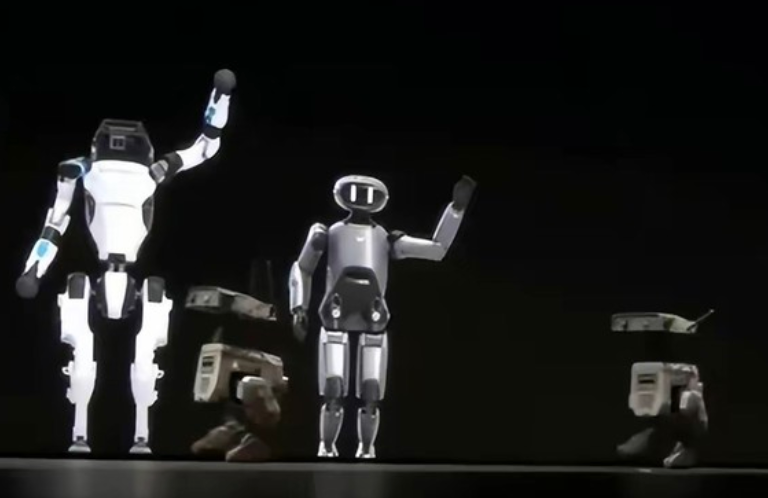
At the NVIDIA event, aside from new developments in GPUs, what caught our attention most was the demonstration of Isaac Robotics' embodied intelligence service, which provides simulation training for robots by integrating real-world computing units and intelligent driving frameworks. In other words, AI is stepping into the physical world as an agent, interacting with humans via video, audio, and even autonomously collecting environmental data to train itself. From this perspective, AI is evolving from a conversational tool into an intelligent productivity engine. Innovation Works, founded by Kai-Fu Lee, also suggests we are entering the AI 2.0 era.
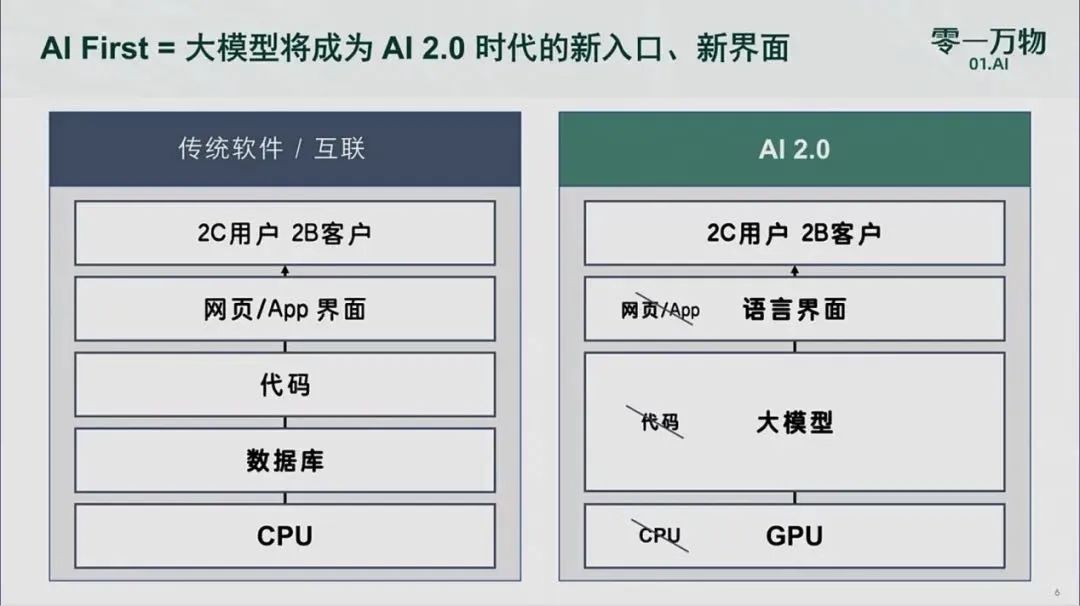
Source: 01.ai
When we apply embodied intelligence to the metaverse, it becomes one of the key technologies enabling autonomous connections between the physical and virtual worlds. In such a world, combined with Web3’s decentralized economic incentive models, we may truly pioneer a digital new frontier—a far broader universe.
Within this entirely new digital realm, we face a crucial choice: should we simply replicate the real world, or build an entirely new digital society? Regardless of the path chosen, computing power will become the most valuable core resource. Currently, GPU production is almost exclusively monopolized by NVIDIA and comes at extremely high prices. Especially after the Transformer architecture introduced the self-attention mechanism, demand for computational power has surged dramatically. In a recent interview, OpenAI CEO Sam Altman stated that computing power will become the currency of the future world.
Faced with this reality, we must deeply consider: how can GPUs, currently under monopoly control, more fairly and inclusively drive social innovation? Or fundamentally, how can we achieve a more equitable and just distribution of computing resources to promote innovation and development? This is an important issue requiring collective reflection and effort.
Web3 Technology Will Be the Final "Firewall"
Web3 is the best answer to this challenge—and the final "firewall" for AI.
Computing power has been an indispensable resource for web practitioners since the birth of Bitcoin. With Bitcoin halving events, the opening of spot ETF channels, and the widespread adoption of complex computation techniques like zk-proofs, Web3’s demand for computing power is rising just as sharply as that of artificial intelligence—inevitably triggering fierce competition among tech giants for these resources. According to the "Global Computing Power Index Assessment Report 2022–2023," the global AI computing market will grow from $19.5 billion to $34.66 billion. Web3’s decentralized technologies offer a promising solution to this growing challenge.
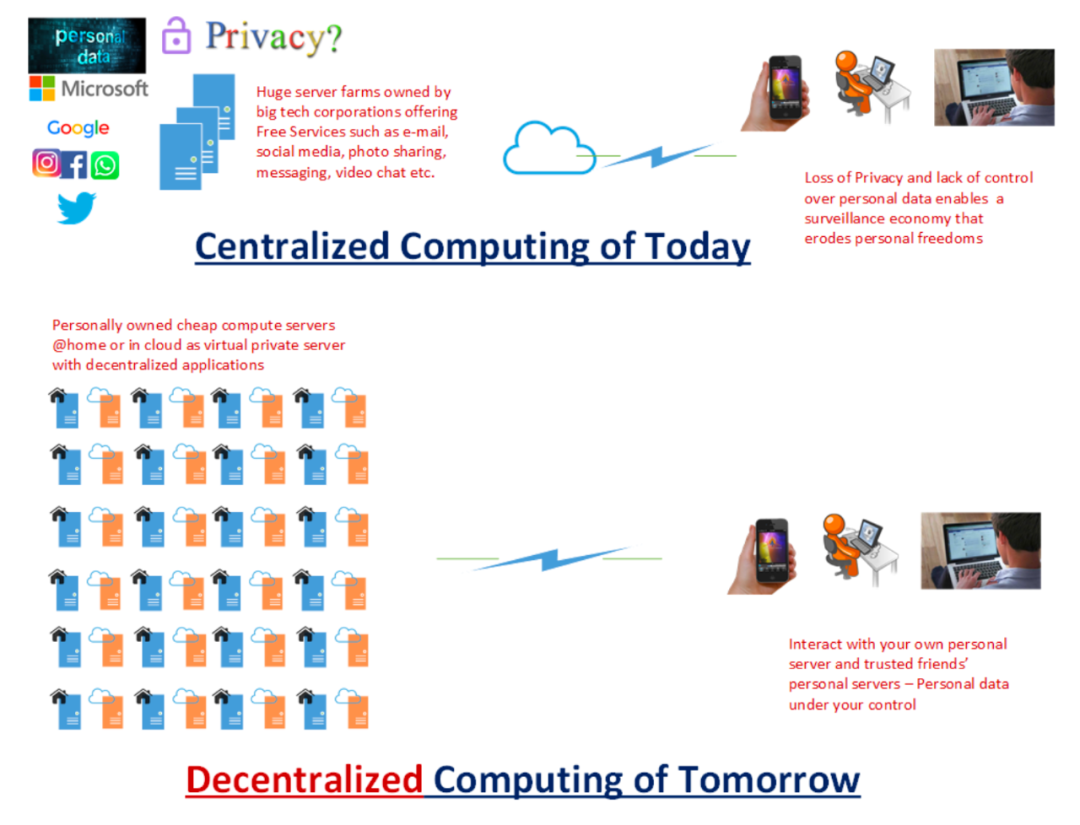
Source: Network
Currently, several promising Web3 projects are already operational. At the NVIDIA conference, Web3 projects such as Render and Near were invited to participate in keynote speeches or panel discussions. These projects leverage blockchain technology and smart contracts to manage the allocation and utilization of computing resources, already playing a significant role in decentralizing computing power. For example, Akash (founded in 2015) and Render Network (launched in 2020), though targeting different niches, share a core architecture: nodes contribute computing power and trade it on a marketplace, offering developers accessible pathways to obtain computational resources. All these activities rely on Web3’s blockchain infrastructure and smart contracts, preventing centralized entities from monopolizing resources.

Source: @layerggofficial
Computing power is merely one of the most visible challenges today. Regarding AI governance, in recent interviews featuring Lex Fridman and OpenAI CEO Sam Altman, Lex posed the question using AGI as an example: whoever achieves AGI first will gain immense power—so how should this be governed? Sam responded seriously: “No single individual—including myself—should hold absolute power.” When facing such transformative technological breakthroughs, re-evaluating institutional frameworks, emphasizing ethics, and strengthening global cooperation become especially vital to prevent misuse and harmful consequences.
AI and Web3 Convergence: The Ultimate Pursuit of Autonomy
Beyond serving as the final firewall for sustainable AI development, Web3 and AI also share common technological values. Looking back at the technological histories of AI, Web3, and cryptography, we find that both Web3 and AI stem from an extreme pursuit of autonomy. This techno-philosophy is not new. As early as 1948, Norbert Wiener’s book *Cybernetics: Or Control and Communication in the Animal and the Machine* introduced cybernetics—the study of control and communication in animals and machines—sparking research and discourse in human-computer interaction and AI ethics.
The foundation of Web3 also originates from the struggle for “autonomy”—the cypherpunk movement. The core belief of the cypherpunk community is promoting personal privacy and freedom through cryptographic technologies. From experimental systems like Digicash and B-Money emerged Satoshi Nakamoto’s Bitcoin. These technologists envisioned a fairer and more transparent internet achieved through decentralization, where protocols and organizations could autonomously operate via code representing consensus, thus preventing monopolies caused by excessive concentration of resources or abuse of power.
Web3 and AI, born from the same roots, represent not only the tech community’s pursuit of autonomy but also symbols of the emerging awakening of consciousness today. To safeguard continuous human innovation, only Web3’s decentralized technology can provide a technical mechanism to govern technology itself—becoming humanity’s final line of defense. The sustained advancement of AI not only creates demands within the AI industry but also presents a unique challenge—one that only Web3 can solve.
Source: NVIDIA
Join TechFlow official community to stay tuned
Telegram:https://t.me/TechFlowDaily
X (Twitter):https://x.com/TechFlowPost
X (Twitter) EN:https://x.com/BlockFlow_News
 @OKGResearch









