









OKLink Research Institute: The Cancun upgrade cannot bring down Ethereum's high gas fees
TechFlow Selected TechFlow Selected
OKLink Research Institute: The Cancun upgrade cannot bring down Ethereum's high gas fees
The positive impact of the Cancun upgrade on reducing its gas fees may struggle to meet market expectations in the long term.
 Navigating Web3 tides with focused insights
Author: Jason Jiang, OKLink Research Institute
The Dencun upgrade is set to activate on the Ethereum mainnet on March 13, marking another pivotal milestone in Ethereum's development history. However, compared to previous major upgrades, perhaps due to the market’s recent exuberance, the Dencun upgrade has not attracted sufficient attention. Coupled with the rapid rise of Bitcoin and Solana ecosystems, Ethereum appears to have quietly found itself surrounded once again.
1. The Dencun Upgrade Is Here—Can Ethereum’s Gas Fees Come Down?
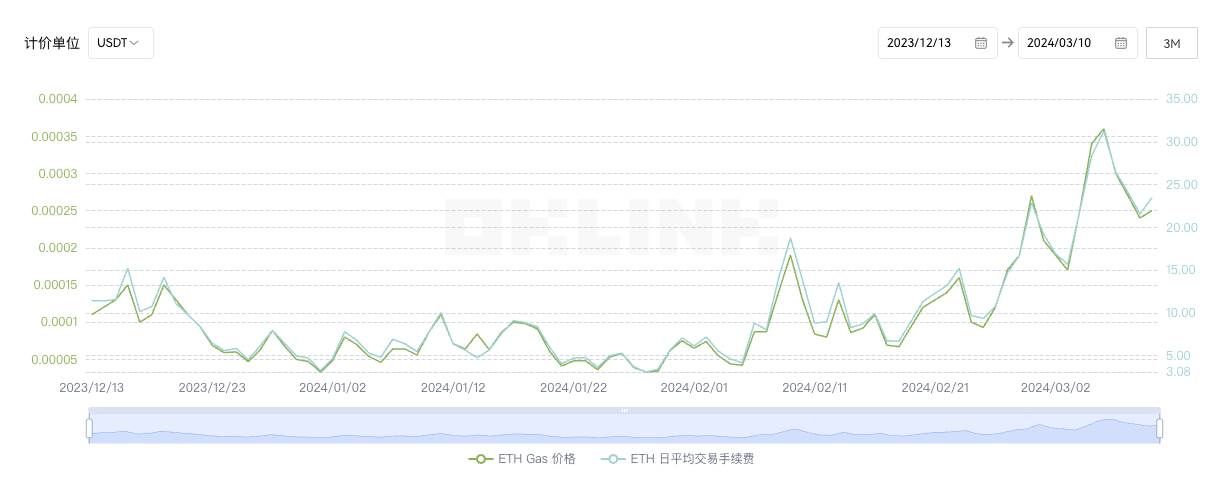
Thanks to strong market performance, on-chain activity on the Ethereum network has been continuously rising recently. A direct consequence of this increased activity is a steady climb in transaction fees. According to OKLink data, over the past two months, Ethereum’s average gas price has surged by nearly 236%, with daily average transaction fees exceeding $20 in the past week. On March 6 alone, the average transaction fee reached $31.22—the highest since June 2022.
Faced with gas fees routinely reaching tens of dollars, many are pinning their hopes on the upcoming Dencun upgrade to alleviate this situation—yet there is a clear misunderstanding here. The core of the Dencun upgrade is EIP-4844, which introduces additional Blob data storage space to reduce L2 data storage costs (which previously accounted for over 90% of L2 transaction gas consumption), thereby lowering gas fees on Ethereum L2s, rather than directly reducing fees on the Ethereum mainnet.
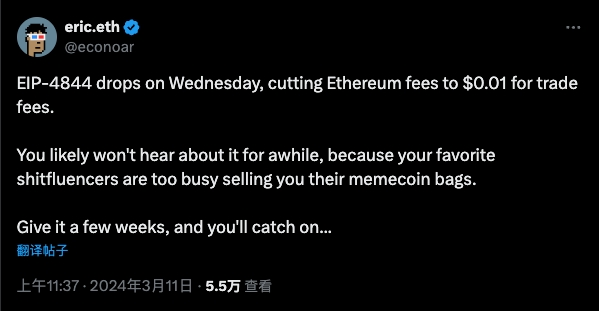
This means only users transacting on L2 networks will benefit from reduced gas fees post-upgrade; users on the Ethereum mainnet will not experience any "direct positive impact." Currently, L2 transactions account for about 10% of total daily gas consumption on Ethereum. Even if these L2 fees drop tenfold as expected, under current bullish market conditions, the effect on overall mainnet gas prices may still be negligible. It certainly won’t bring Ethereum transaction fees down to $0.01 as Eric.eth suggested—even though he believes “L2 is Ethereum.”
For Ethereum L2s, while lower gas fees after the upgrade are inevitable, intensified competition among L2 projects for Blob space and an anticipated surge in overall L2 activity could dampen the long-term benefits. Thus, the positive impact of the Dencun upgrade on L2 gas fees may fall short of market expectations (the current consensus being that L2 fees could drop tenfold or more).
Nevertheless, the Dencun upgrade remains the most significant event for Ethereum in 2024. Not only does it mark the beginning of the “Surge” phase in Ethereum’s roadmap, but it will also attract more users and projects to Ethereum’s L2 ecosystem, serving as a key catalyst for L2 expansion in this cycle.
Another widely recognized potential boost is the approval prospect of a spot Ethereum ETF. Compared to the intense public scrutiny surrounding Bitcoin’s spot ETF applications, the push for a spot Ethereum ETF has stirred relatively little excitement. On one hand, the near-term outlook for approval remains uncertain. Bloomberg’s senior ETF analyst recently lowered the probability of approval by May from 60% to 30%. Aside from ongoing ambiguity over whether Ethereum qualifies as a security or commodity, the popularity of staking services could further complicate SEC decision-making: In February last year, the SEC ordered Kraken to halt its staking services in the U.S., and months later sued Coinbase Global, claiming its staking program amounted to unregistered securities offerings.
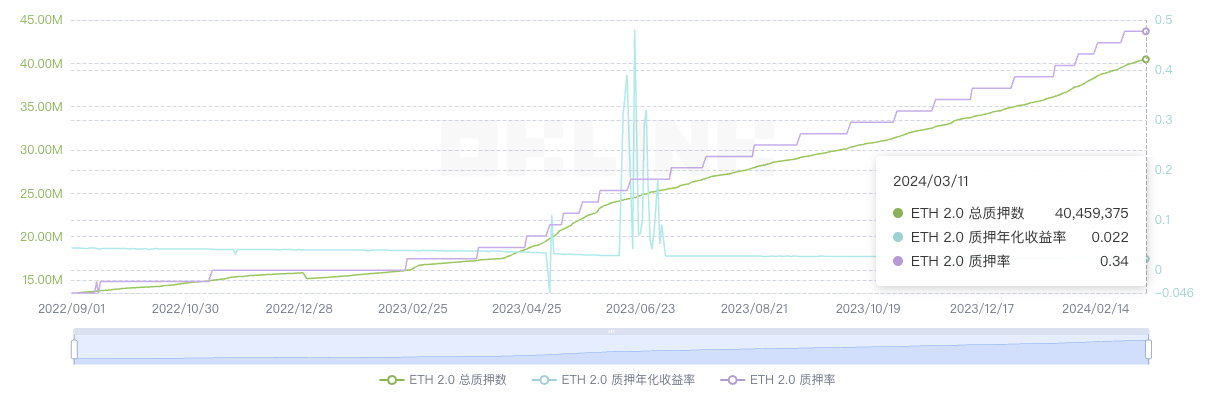
[Despite declining annualized staking yields, as of March 2024, total ETH staked across the network exceeds 40 million, with a staking rate as high as 34%. This continuous rise reflects long-term confidence in the Ethereum ecosystem.]
On the other hand, while we believe the SEC will eventually approve a spot Ethereum ETF under pressure, it may not deliver the same level of “surprise” as Bitcoin’s. The launch of Ethereum futures ETFs last October remains a sobering example: within hours of listing, trading volume barely surpassed a few million dollars—starkly contrasting with Bitcoin futures and spot ETFs, which quickly generated billions in volume upon launch. This kind of “disappointing” debut makes it hard to expect overwhelming enthusiasm for a spot Ethereum ETF, though that won’t stop Wall Street from offering such products.
2. Are Bitcoin and Solana Squeezing Ethereum’s Space?
We can’t be certain whether the Dencun upgrade or a potential spot ETF will help Ethereum reclaim center stage, but it’s undeniable that the rise of Bitcoin and Solana ecosystems has ended Ethereum’s era of dominance in crypto innovation.
The emergence of the Ordinals protocol marked a turning point for Bitcoin: it opened the door for Bitcoin, traditionally seen as “digital gold,” to support a rich on-chain ecosystem. Over the past year, the Bitcoin ecosystem has flourished, with the BRC20 sector alone surpassing $4 billion in market size and averaging nearly 40x growth annually.
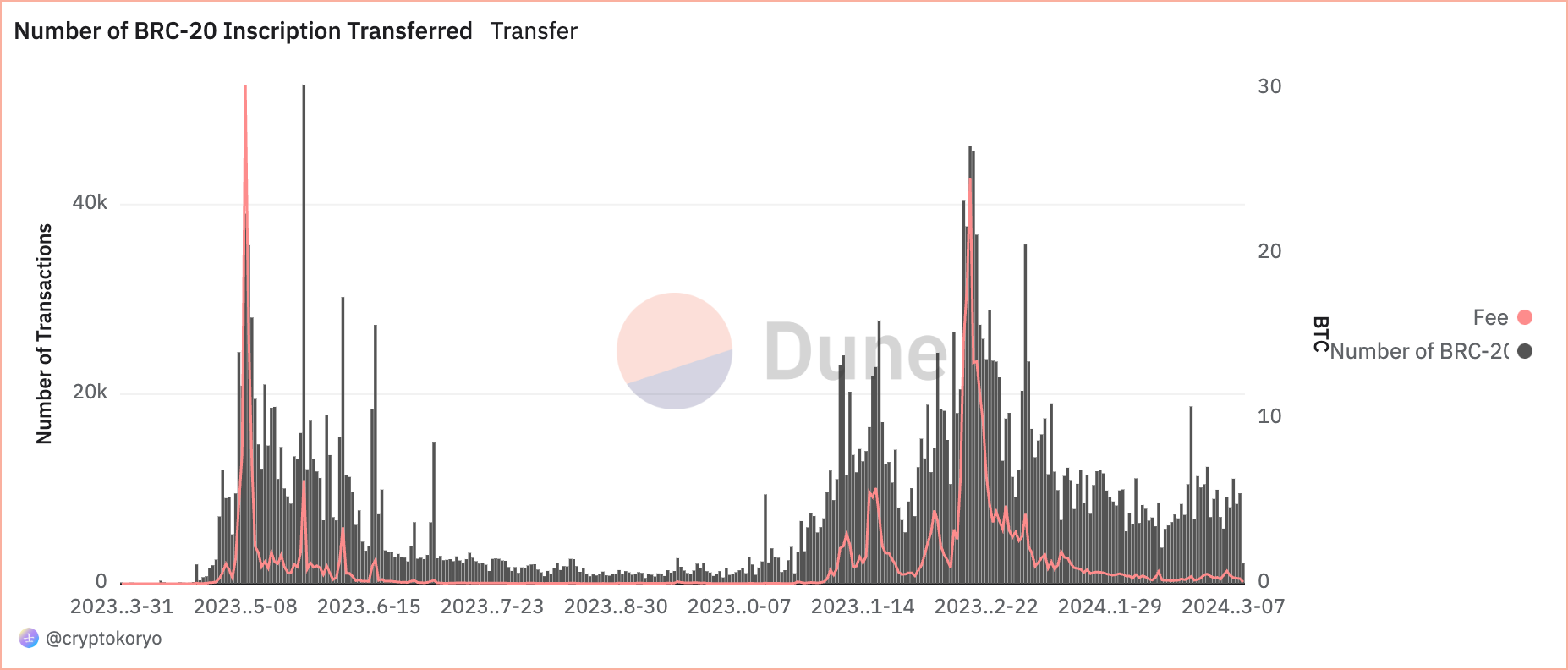
The massive wealth effect has fueled market optimism toward Bitcoin’s ecosystem. However, due to significant technical limitations—including low transaction throughput and slow block confirmation times—Bitcoin’s ecosystem cannot support large-scale applications in the short term. Additionally, its narrative remains narrow, lacking new compelling use cases beyond inscriptions. While Bitcoin’s ecosystem holds great potential, it poses no immediate threat to Ethereum. More importantly, for Bitcoin, retracing Ethereum’s developmental path is likely not optimal. Instead, building native use cases centered around its unique asset properties—like inscriptions—may be the key to unlocking its second wave of growth.
Compared to Bitcoin, Solana is viewed by many as Ethereum’s strongest challenger. Personally, I remain bullish on Ethereum because, to date, it continues to attract the smartest minds in crypto who dedicate the most time and effort. That said, it must be acknowledged that Solana’s technological innovation starts from a higher baseline than many other blockchain architectures, including Ethereum. Prior to Solana, no blockchain could handle transaction volumes sufficient for traditional financial market operations while maintaining low fees and fast settlement speeds.

[Solana Beach is where Solana’s founders surfed together during their time at Qualcomm—and the origin of the name “Solana.” Image source: The New York Times]
However, Ethereum and Solana aren’t mutually exclusive choices, much like Android and iOS: Ethereum resembles Android, emphasizing modularity and decentralization, while continually improving developer tools and infrastructure; Solana is more like iOS, focusing on delivering integrated experiences for users and developers, seamlessly abstracting away the complexity between different L2s.
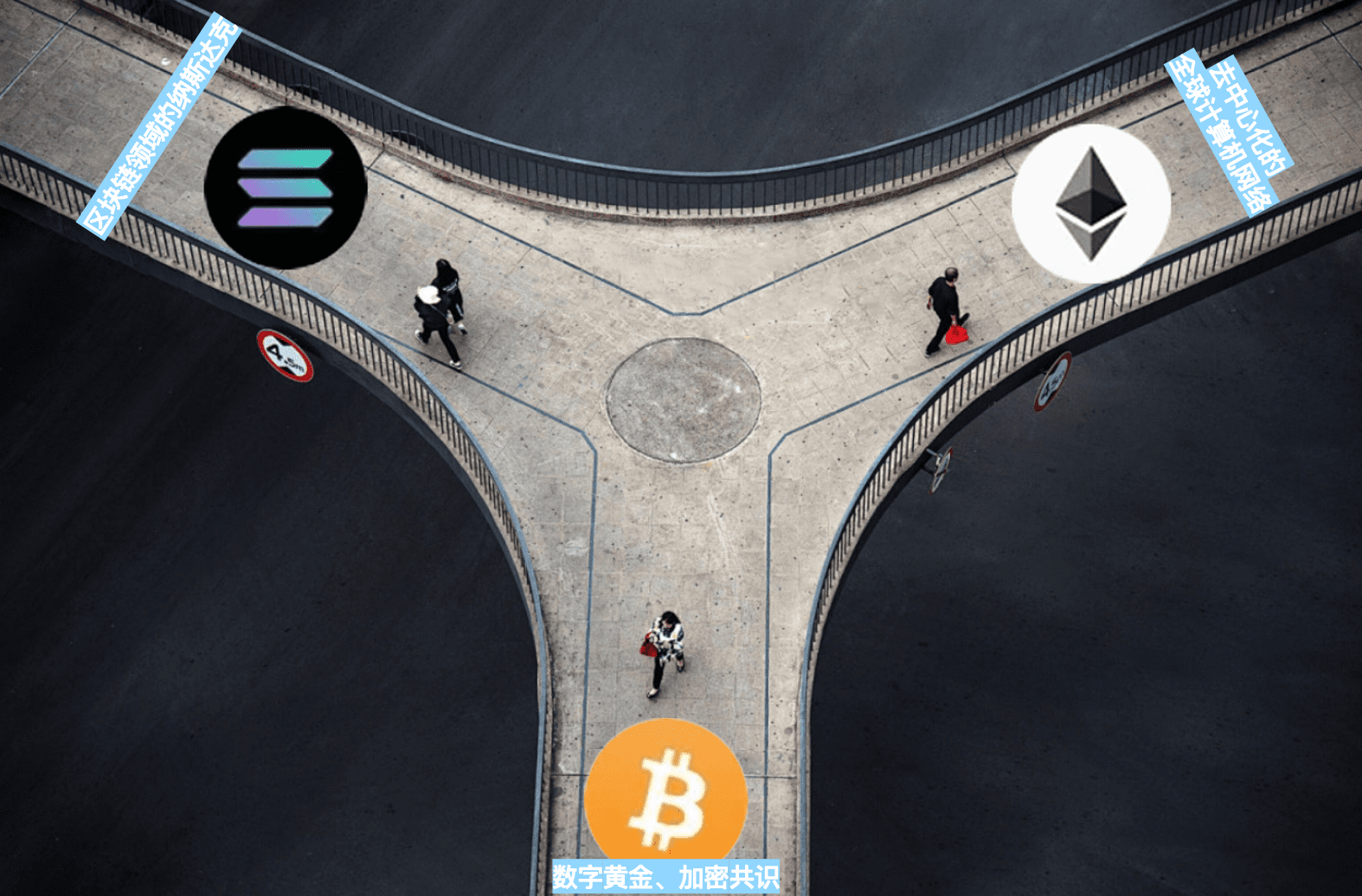
Ethereum and Solana may compete, but they can also coexist. After all, Ethereum aims to build a decentralized global computer network, while Solana’s very first slide in its seed round pitch declared: “Solana is the Nasdaq of blockchain.”
In the short term, Solana may emerge as Ethereum’s biggest rival in the crypto ecosystem. But in the longer run, Solana may actually fill technological and application gaps left by Ethereum in adapting to Web2 financial markets, accelerating Web3 breakthroughs and mass adoption. From this perspective, Solana might be better seen as a Web3 disruptor rather than an Ethereum destroyer.
Still, I can’t predict which—Ethereum or Solana—will ultimately offer greater long-term potential. Much of this will depend on which platform, beyond native crypto narratives, can unlock more value-creating use cases and users. It might be Ethereum, it might be Solana, or it might be another public chain altogether—who knows?
Join TechFlow official community to stay tuned
Telegram:https://t.me/TechFlowDaily
X (Twitter):https://x.com/TechFlowPost
X (Twitter) EN:https://x.com/BlockFlow_News
 @OKGResearch









