








Hong Kong's New Capital Investor Entrant Scheme: A Comprehensive Analysis of Virtual Asset Investments and Guide to Applying for Hong Kong Virtual Asset Management Licenses
TechFlow Selected TechFlow Selected
Hong Kong's New Capital Investor Entrant Scheme: A Comprehensive Analysis of Virtual Asset Investments and Guide to Applying for Hong Kong Virtual Asset Management Licenses
For those who want to immigrate, it is now possible to obtain Hong Kong residency by investing in these financial assets.
 Navigating Web3 tides with focused insights
By Aiying
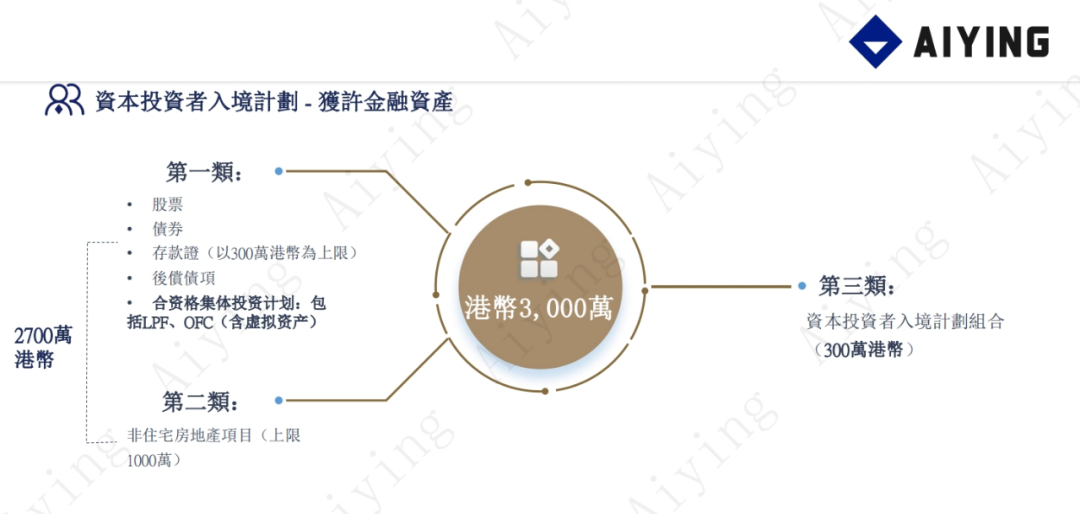
Hong Kong's recent policy address announced a minimum investment threshold of HK$30 million for the "New Capital Investors Entrant Scheme." Applicants must invest at least HK$27 million in approved financial assets and non-residential real estate, and allocate HK$3 million into a new "Capital Investors Entrant Scheme Investment Portfolio" to support innovation, technology, and other key sectors. This means individuals seeking residency can now obtain Hong Kong residency through investments in these financial assets.
The scope of approved investment assets has become a highlight. According to the published list of "Approved Investment Assets," ownership interests in Limited Partnership Funds (LPFs) and Open-ended Fund Companies (OFCs) managed by firms holding Hong Kong Type 9 licenses are recognized as eligible investment vehicles. 2024 [Common Crypto Fund Structures in Hong Kong] (1): Limited Partnership Funds (LPF)
From the list of qualified collective investment schemes under the "New Capital Investors Entrant Scheme," we can also see virtual asset-related investment products such as CSOP Bitcoin Futures ETF (BTE087), Samsung Active Bitcoin Futures ETF (BTF010), and CSOP Ether Futures ETF (BTE088).
Hong Kong’s latest move is expected to further strengthen the competitive advantage of local funds and elevate the status of Type 9 licensed firms. Although the LPF ordinance does not explicitly require fund managers to hold a Type 9 license, managing assets in Hong Kong generally requires compliance with the Securities and Futures Ordinance, which mandates holding a Type 9 license. Based on Aiying’s consultations over the past two years, obtaining a Type 9 license (including virtual asset-related activities) has become the first step for most exchanges and private fund managers expanding overseas, with successful cases significantly increasing.
Today, let’s explore the application requirements and process for Hong Kong’s Type 9 license:
Overview of the Type 9 License
Hong Kong’s financial regulator—the Securities and Futures Commission (SFC)—issues various types of licenses to regulate different financial services. Among them, the Type 9 license specifically authorizes firms to provide asset management services.
I. Basic Eligibility Requirements for Applying for a Hong Kong Type 9 License (Asset Management License)
The following are the core conditions and requirements:
Legal Entity and Business Structure
-
Registered Legal Entity: The applying company must be a legally registered entity in Hong Kong or another jurisdiction.
-
Business Structure and Operations: The company’s structure and operations must be suitable for conducting asset management business.
Management Team
-
Responsible Officers (ROs): At least two ROs with relevant experience (including in virtual assets) and professional qualifications are required.
-
Professional Qualifications: ROs and key management personnel must possess appropriate professional credentials and sufficient industry experience.
Financial Requirements
-
Capital Requirement: Must meet specific minimum capital requirements.
-
Financial Soundness: The company must demonstrate long-term financial stability and sound financial management practices.
Compliance and Internal Controls
-
Compliance Framework: Establish a comprehensive compliance and internal control framework to ensure adherence to SFC regulations.
-
Internal Audit and Risk Management: Implement effective internal audit and risk management mechanisms.
Legal and Regulatory Compliance
-
Anti-Money Laundering and Counter-Terrorist Financing (AML/CFT): Establish robust AML/CFT policies and procedures.
-
Other Legal and Regulatory Obligations: Comply with all applicable laws and regulatory requirements related to business operations.
Investor Protection
-
Client Asset Protection: Implement measures to safeguard client assets, such as segregating client funds from proprietary funds.
-
Transparency and Disclosure: Provide clients with clear disclosures regarding business operations and associated risks.
Ongoing Compliance
-
Periodic Reporting: Regularly submit business and financial reports to the SFC.
-
Supervision and Audits: Be subject to SFC supervision and periodic audits.
These requirements aim to ensure that applicant institutions have adequate management, financial, and compliance foundations to conduct asset management activities.
II. Detailed Application Process for the Hong Kong Type 9 License (Asset Management License)
Step 1: Preparation
-
Define Business Scope: Clearly outline the intended asset management activities.
-
Assess Compliance Requirements: Understand and evaluate compliance obligations under SFC regulations.
-
Assemble Management Team: Ensure qualified responsible officers and management personnel meeting SFC standards are in place.
Step 2: Prepare Required Documents
-
Business Plan: Develop a detailed business plan covering corporate structure, service offerings, risk management strategies, etc.
-
Financial Reports: Prepare audited financial statements and budgets demonstrating financial soundness.
-
Compliance Policies and Procedures: Draft internal compliance manuals, including AML policies and client asset protection protocols.
Step 3: Submit Application
-
Complete Application Forms: Fill out official SFC license application forms.
-
Submit Documents: Submit completed forms along with all supporting documentation to the SFC.
Step 4: SFC Review Process
-
Preliminary Review: The SFC conducts an initial assessment of submitted materials.
-
Requests for Additional Information: The SFC may request supplementary documents or clarifications.
-
Interviews: In certain cases, the SFC may conduct interviews with the applicant’s responsible officers.
Step 5: Approval and Issuance
-
Final Decision: After review, the SFC issues its approval decision.
-
License Issuance: Upon successful application, the SFC grants the Type 9 license.
Step 6: Ongoing Compliance and Reporting
-
Regular Reporting: License holders must periodically report business and financial updates to the SFC.
-
Compliance Checks: Conduct regular internal reviews to maintain ongoing compliance with SFC rules.
The entire application process typically takes several months to a year, depending on application quality and SFC processing times. It is advisable to consult legal and compliance experts throughout the process to ensure smooth progression.
III. Key Documents Required for Application
When applying for a Hong Kong Type 9 license (Asset Management License), a comprehensive set of documents must be prepared to demonstrate to the Securities and Futures Commission (SFC) that the applicant meets all relevant operational, financial, and compliance requirements. These include but are not limited to:
1. Corporate and Business-Related Documents
-
Business Plan: A detailed document outlining the company’s business model, market strategy, target clients, product range, and services.
-
Articles of Incorporation and Business Registration Certificate: Proof of the company’s legal registration and corporate structure.
-
Organizational Chart: A clear illustration of the company’s organizational structure, including key departments and management roles.
2. Management Team and Responsible Officers’ Information
-
Resumes and Qualification Certificates of Responsible Officers (ROs): Evidence of their professional qualifications and relevant industry experience.
-
Management Team Resumes: Demonstrating the professional background and capabilities of team members.
3. Financial Documents
-
Latest Financial Statements: Demonstrating the company’s financial health and stability.
-
Proof of Capital: Confirming that the company meets the SFC’s minimum capital requirements.
4. Compliance and Risk Management Documents
-
Internal Control and Compliance Manual: Including compliance policies, operational procedures, and risk mitigation measures.
-
Anti-Money Laundering (AML) and Counter-Terrorist Financing (CFT) Policies: Detailing how the firm complies with relevant legal frameworks.
-
5. Client Asset Protection Mechanisms
-
Client Fund and Asset Management Policy: Explaining how client funds and assets are segregated and protected.
6. Other Supporting Documents
-
Lease Agreement for Office Premises (if applicable): Proof of physical business location.
-
Opinions from Professional Advisors (if applicable): Such as legal counsel or accountant letters confirming accuracy and completeness of application materials.
When preparing these documents, the focus should be on demonstrating full compliance with SFC regulations and the company’s capability and infrastructure to conduct asset management business professionally.
IV. Minimum Capital Requirements for License Application
The capital requirements for a Hong Kong Type 9 license (Asset Management License) are as follows:
Liquid Capital: Asset management companies holding a Type 9 license are typically subject to a condition prohibiting the holding of client assets. Under this condition, the firm is exempt from the minimum paid-up capital requirement but must maintain at least HK$100,000 in liquid capital.
This means that while there is no minimum paid-up capital requirement, the company must still maintain a minimum level of liquid capital to ensure it can meet operational and compliance needs. This requirement ensures the firm has sufficient liquidity to manage business risks and financial obligations.
V. Upgrading to VA-9 License (Virtual Assets)
Under the SFC’s “Standard Terms and Conditions Applicable to Licensed Corporations Managing Portfolios Investing in Virtual Assets” and any additional conditions imposed, a Type 9 licensee may manage funds that include:
-
Funds whose stated investment objective is to invest in virtual assets; or
-
Funds intending to invest 10% or more of their total asset value in virtual assets.
The company will be assessed against the following criteria:
-
Responsible Officers have experience managing virtual assets and high-risk, highly volatile investments;
-
Traders have experience in virtual assets and high-risk, highly volatile investments;
-
Risk control personnel have relevant virtual asset experience;
-
Compliance staff have relevant virtual asset experience;
-
Operations personnel have virtual asset-related experience;
-
IT personnel or outsourced vendors have virtual asset-related experience;
-
The company has a clear direction for fund establishment, including defined investment strategies;
-
The company has already engaged suppliers for the proposed fund;
-
Relevant fund service providers—including trading platforms, custodians, fund administrators, auditors—have virtual asset experience, qualifications, licenses (where applicable), and meet SFC requirements;
-
The company has adequate internal controls and arrangements with suppliers to protect client virtual assets;
-
The company has sufficient risk management and internal controls to address risks associated with virtual asset investments; and
-
The company has robust cybersecurity systems in place to mitigate related risks.
Join TechFlow official community to stay tuned
Telegram:https://t.me/TechFlowDaily
X (Twitter):https://x.com/TechFlowPost
X (Twitter) EN:https://x.com/BlockFlow_News
 Aiying Compliance









