Bankless: 6 Ways to Invest in Bitcoin in 2024
TechFlow Selected TechFlow Selected
Bankless: 6 Ways to Invest in Bitcoin in 2024
Choose the method that suits you best.
 Navigating Web3 tides with focused insights
Written by: Jack Inabinet, Bankless
Translated by: Deng Tong, Jinse Finance
You probably know how to buy some BTC, and with spot BTC ETFs now trading in the U.S., accessing bitcoin has never been easier—but not all investment avenues are created equal...
Today, we’re exploring the six most important ways individual investors can gain exposure to bitcoin and discussing the pros of each method to help you determine which one is right for you!
Bitcoin Miners
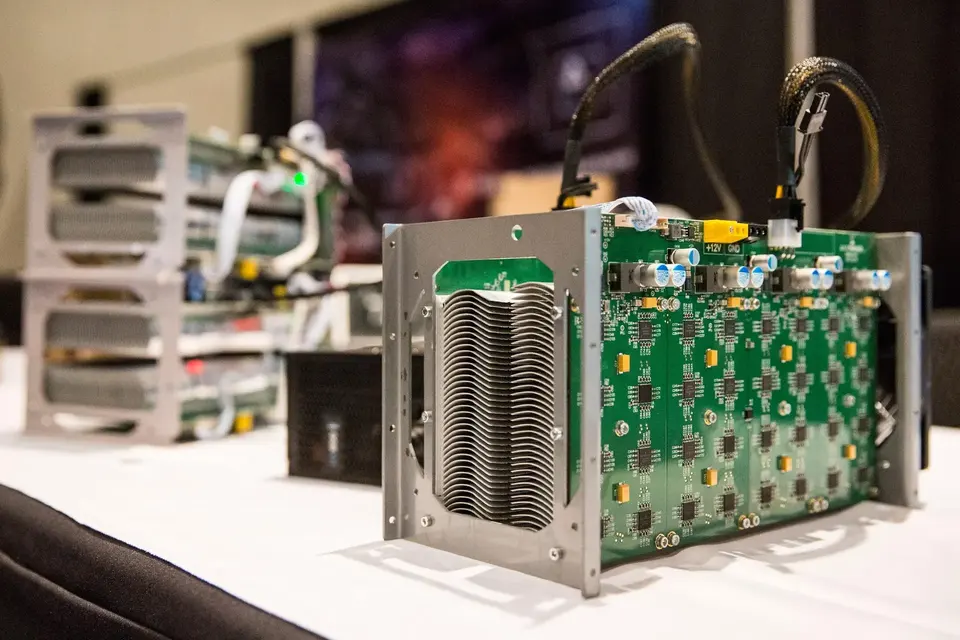
Bitcoin miners use high-energy computing equipment to solve complex cryptographic puzzles, hoping to guess a number or hash value that solves the puzzle and earns them the right to add the next block to the Bitcoin blockchain. In return, they earn bitcoin from inflationary token rewards and transaction fees.
Miners typically do not hold most of the bitcoin they earn on their balance sheets; instead, they sell it to cover operating costs (electricity) or expansion (buying new mining rigs). However, because their revenue is denominated in bitcoin, miner profitability is inherently tied to the bitcoin price!
As the halving approaches, it’s important to remember that many miners may face profitability challenges, as their income from inflationary network rewards—currently accounting for 97% of the total reward for mining a bitcoin block—will be cut in half.
Consolidation caused by unprofitable companies going offline or selling their mining equipment will benefit the remaining miners, who will gain increased control over the Bitcoin network’s hash rate and thus mine more blocks.
Popular Bitcoin miners:
-
Marathon Digital Holdings Inc. (MARA)
-
Riot Platforms Inc. (RIOT)
-
CleanSpark Inc. (CLSK)
MicroStrategy
Michael Saylor made his legendary BTC bet in August 2020, transforming his business intelligence technology company into a massive bitcoin holding vehicle that now owns nearly 1% of all existing BTC!
While MicroStrategy holds a large amount of bitcoin, it does not charge shareholders management fees. Instead, it uses profits from its software business operations to cover these costs.
The residual value of MSTR’s BTC holdings (its market cap minus the value of its core software business) tends to trade at a premium or discount relative to the actual market value of the BTC it holds, due to the lack of a hard mechanism enforcing parity.
When MSTR trades at a premium, management often raises additional capital by issuing shares, diluting shareholder equity to fund future bitcoin purchases—an action that sets a soft ceiling on MSTR’s market cap exceeding the combined value of its software business and bitcoin holdings.
Since Saylor has repeatedly stated he won’t sell, MSTR lacks any real downside protection mechanism, and the company’s market cap could remain below the market value of its bitcoin holdings for extended periods—posing significant risk to holders.
MSTR’s swings between discount and premium create profitable opportunities for traders willing to bet against the market when prices deviate and revert to parity. However, in the era of spot bitcoin ETFs, holding this stock makes little sense for investors seeking pure bitcoin exposure.
Spot ETFs
Approved in January 2024, bitcoin spot ETFs represent a landmark achievement for the crypto industry, enabling anyone in the U.S. to gain direct cryptocurrency exposure through traditional brokerage accounts—products long available in Canada and Europe.
Issuers of spot bitcoin ETFs hold actual bitcoin on behalf of their ETF shareholders and entrust it to professional crypto custodians like Coinbase Custody, whose sole responsibility is storing clients’ digital assets.
Authorized participants can create or redeem spot ETF shares at any time, meaning the share price closely tracks net asset value—unlike trust-based structures such as Grayscale’s Bitcoin Trust (GBTC), which can develop premiums and discounts based on shifts in bitcoin demand.
Although some issuers are currently waiving fees on their spot bitcoin ETFs, these waivers will eventually expire, after which holders will pay annual management fees ranging from 0.19% to 1.5%, depending on the product.
One of the most attractive features of spot bitcoin ETFs is their integration with the traditional financial system, allowing investors to purchase shares directly from their existing brokerage accounts—just like stocks and bonds.
Additionally, the ability to hold these ETFs in existing tax-advantaged accounts—such as retirement accounts (401(k)s) or IRAs—is a major advantage for long-term investors seeking tax efficiency.
Popular U.S. spot BTC ETF tickers:
-
iShares Bitcoin Trust (IBIT)
-
Bitwise Bitcoin ETF (BITB)
-
VanEck Bitcoin Trust (HODL)
-
Valkyrie Bitcoin Fund (BRRR)
-
Grayscale Bitcoin Trust (GBTC)
Exchange Custody
Whether you're a newcomer taking your first steps into the world of cryptocurrency, looking to buy your first fraction of bitcoin, or a dedicated bitcoin maximalist committed to relentless accumulation, centralized exchanges can serve as your gateway to the world of crypto assets!
Centralized exchanges simplify the conversion between fiat currencies and crypto assets while shielding users from the technical complexities involved in storing crypto and swapping tokens across different networks.
Rather than charging storage fees, centralized exchanges generate revenue through trading fees and other ancillary trading services.
For non-U.S. users, many centralized exchanges offer perpetual products that allow traders to use leverage to speculate on crypto asset prices for amplified returns, and enable users to earn yield through lending and structured products.
While storing your bitcoin on a centralized exchange offers certain benefits, it's crucial to remember that you are entrusting the security of your crypto assets to a third party—and to keep in mind the principle: “Not your keys, not your crypto.”
Futures ETFs
Similar to spot bitcoin ETFs, bitcoin futures ETFs allow investors to gain exposure to bitcoin through centralized exchanges, but they hold bitcoin futures contracts rather than physical bitcoin.
Compared to spot products, futures ETFs are considered a suboptimal way to invest in bitcoin. Because futures contracts expire, they must be continuously rolled over, exposing investors to the effects of contango and backwardation—where futures prices diverge from the underlying asset price.
Issuers of bitcoin futures ETFs charge investors management fees—for example, the largest U.S. bitcoin futures ETF, ProShares Bitcoin Strategy ETF (BITO), charges an annual fee of 0.95%.
Popular U.S. futures BTC ETF:
-
ProShares Bitcoin Strategy ETF (BITO)
Self-Custody
The crypto industry has witnessed numerous exchange collapses—whether due to fraud or vulnerabilities—making it highly risky to store your bitcoin on the centralized exchanges where you bought it.
With just a bit more effort and technical knowledge, the average crypto user can adopt self-custody and eliminate the various risks associated with exchange custody!
Beyond the initial cost of purchasing a hardware wallet—a physical device used to store the private keys needed to access your crypto assets—self-custody incurs no additional costs.
Although modern hardware devices from companies like Ledger come with easy setup processes that make self-custody accessible even to those with basic internet knowledge, key management remains a challenge for users. Those who fail to properly record or protect their wallet recovery phrases face a 100% loss of funds—with no possibility of recovery!
Because bitcoin lacks smart contract capabilities, those self-custodying bitcoin must first send it to a centralized exchange to sell, increasing the time required to achieve liquidity—and posing compliance risks, especially for large “whale” deposits that might trigger regulatory red flags.
Join TechFlow official community to stay tuned
Telegram:https://t.me/TechFlowDaily
X (Twitter):https://x.com/TechFlowPost
X (Twitter) EN:https://x.com/BlockFlow_News
 Bankless