








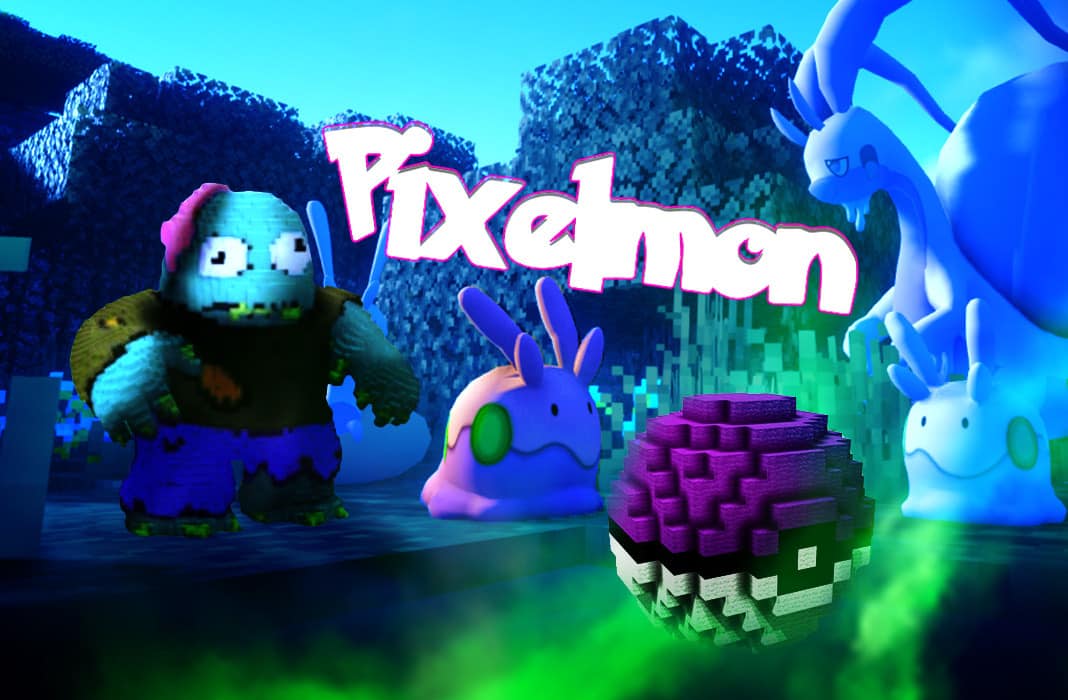
Token Sale Imminent: A Deep Dive into Pixelmon, Which Emphasizes IP Ownership
TechFlow Selected TechFlow Selected
Token Sale Imminent: A Deep Dive into Pixelmon, Which Emphasizes IP Ownership
FDV approximately $86.5 million, a moderate level compared to mainstream blockchain games. The project's vision is ambitious, with high implementation difficulty.
 Navigating Web3 tides with focused insights
By Nan Zhi, Odaily Planet Daily
Pixelmon, which sparked controversy in 2022, recently announced an $8 million funding round and has partnered with MON Protocol to launch the MON token, with a public token sale scheduled for the end of this month.
This article by Odaily Planet Daily will review key information about Pixelmon—a blockchain game that once achieved $70 million in NFT sales—analyze its vision, and explain its token distribution process.
Understanding Pixelmon
What’s the Market Opportunity?
According to Pixelmon, NFT technology has seen widespread adoption in recent years, initially driven by digital artists and collectors who found NFTs to be an ideal tool for disintermediation, securely transferring ownership of unique images or underlying IP, and earning royalties from secondary markets. The team believes gaming will be the first consumer sector to benefit from—and drive—mass adoption of blockchain and NFT technologies.
When the market first attempted to decentralize game asset ownership via blockchain, it used NFTs as a payment channel, embedding earning mechanisms directly into gameplay, thus framing NFT prices around a "play-to-earn" (P2E) model. However, this approach had several critical flaws:
-
Little focus was placed on developing high-quality games or iterating user experience;
-
The core business objective targeted NFT buyers rather than actual gamers;
-
It created an unsustainable economic model where new buyers sustained the system without real “consumers” (i.e., players).
In short, Pixelmon argues that current blockchain games resemble Ponzi economies and struggle to survive long-term due to lack of sustainable revenue streams.
How Does Pixelmon Plan to Break Through?
Pixelmon aims to build a decentralized game IP ownership system that properly incentivizes Play-to-Own models and establishes a free-to-play-based revenue structure. A key part of this strategy is distinguishing between two types of users: separating “art and commercial IP collectors” from “game users,” thereby creating a mutually reinforcing ecosystem.
To achieve this, Pixelmon has developed two distinct NFT systems known as the Right-of-Game (RoG), consisting of Genesis NFTs and in-game NFTs.
Genesis NFTs represent IP ownership rights over specific assets and are aimed at parties interested in acquiring art and exploring, negotiating, and commercializing associated IPs. In contrast, in-game NFTs are consumer-facing products designed for players.
By offering free-to-play access along with in-game NFTs, Pixelmon lowers entry barriers and enables large-scale user acquisition. According to the Pixelmon whitepaper, gamers are the ultimate consumers of the game and serve as the engine for ecosystem growth. A growing user base adds value to the game's IP, with value increasing linearly alongside user numbers.
Genesis NFTs are central to the RoG system. While they have no in-game functionality, holders receive airdrops of in-game assets and earn rewards from ecosystem activities.
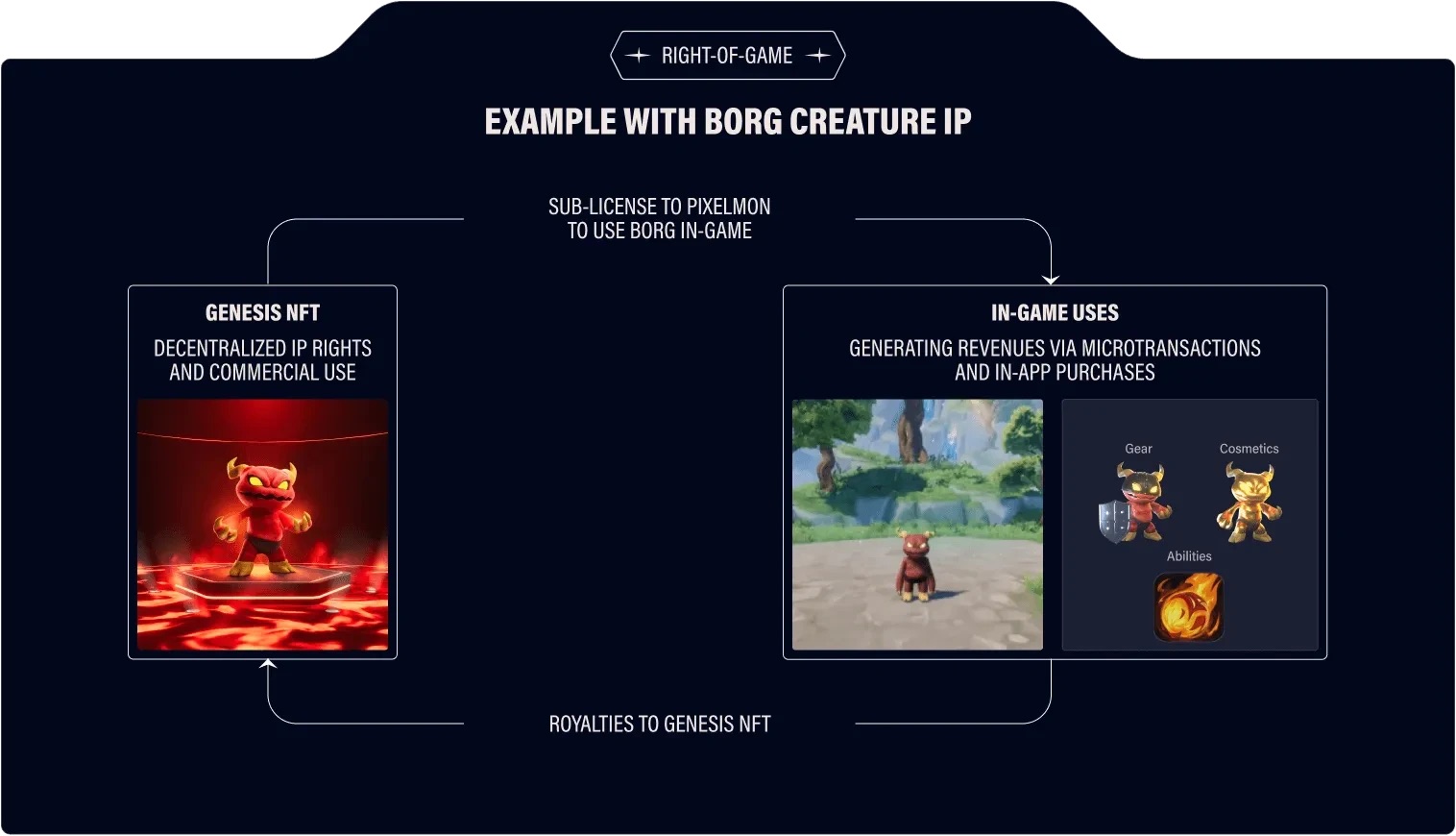
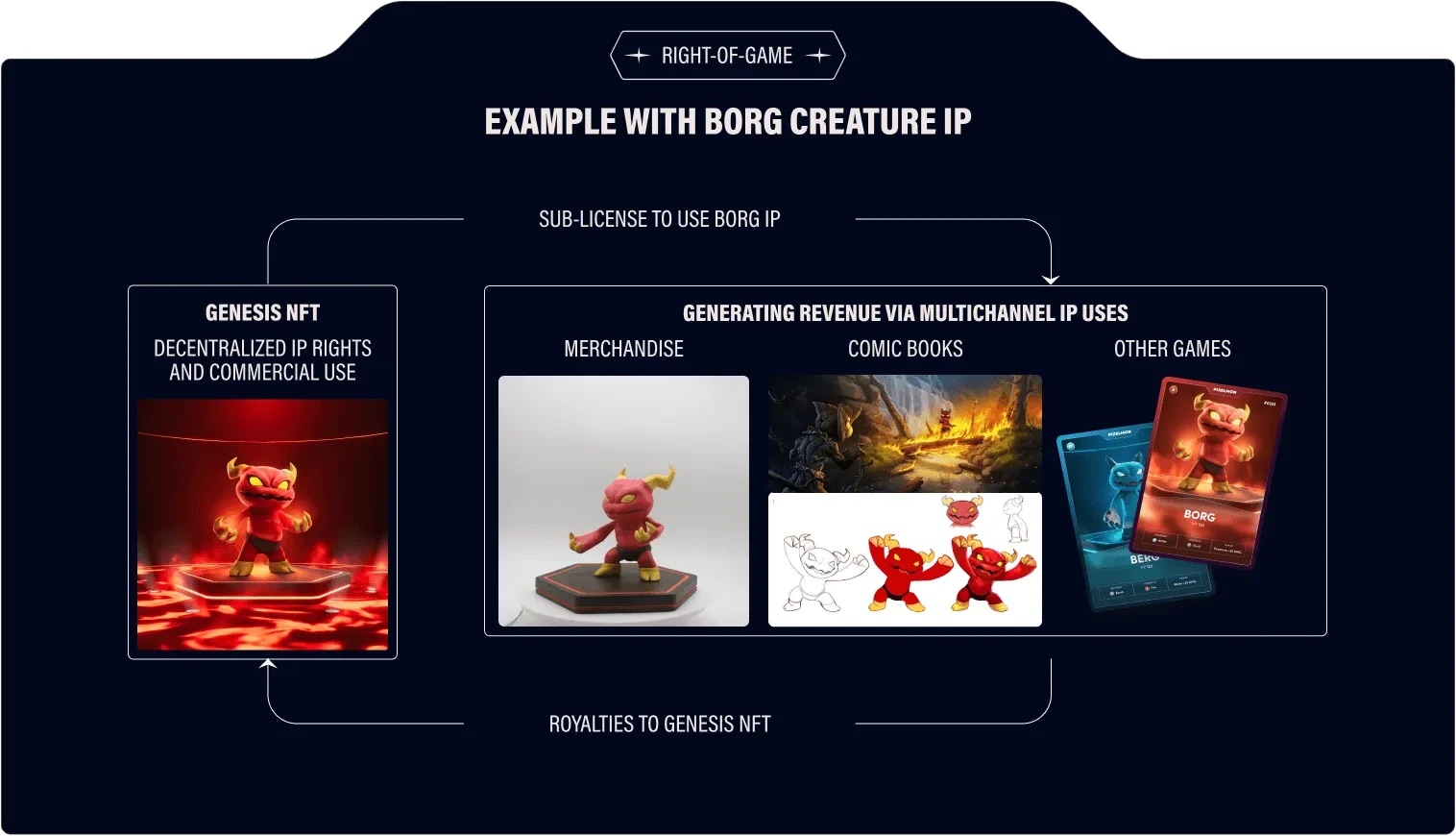
Additionally, Genesis NFTs act as credentials for IP ownership and franchise fee entitlements. By decentralizing IP and franchise rights, Pixelmon says Genesis NFT holders are incentivized to explore, negotiate, and execute commercial applications of the IP, earning franchise fees in return.
Overall, Pixelmon intends to attract a large player base through free-to-play mechanics, establish a solid user foundation, and then develop individual character IPs—similar to how Pokémon赋予 each character distinct and prominent IP value.
Is the Vision Too Optimistic?
Admittedly, there have been rare cases of Web3-native IPs breaking into mainstream culture and creating tangible value. For example, in 2022, Li-Ning launched a clothing line called "Li-Ning Bored Ape Club" based on BAYC #4102 and even opened a physical BAYC pop-up store. Pudgy Penguins' toy line "Pudgy Toys" sold over 20,000 units on Amazon within two days of launch. However, these remain isolated successes. While PFP-type NFTs can be viewed as IP-focused products, very few have achieved long-term survival or broad cultural penetration, let alone integration with a vast gaming ecosystem.
Therefore, while Pixelmon’s proposed blockchain gaming model represents a novel and theoretically viable path, as one of the first projects to explore this model, it still faces significant challenges.
Funding Background and Token Launch
While Pixelmon’s development path remains long when assessed by its business model, the project demonstrates strong potential in terms of funding backing and market expectations.
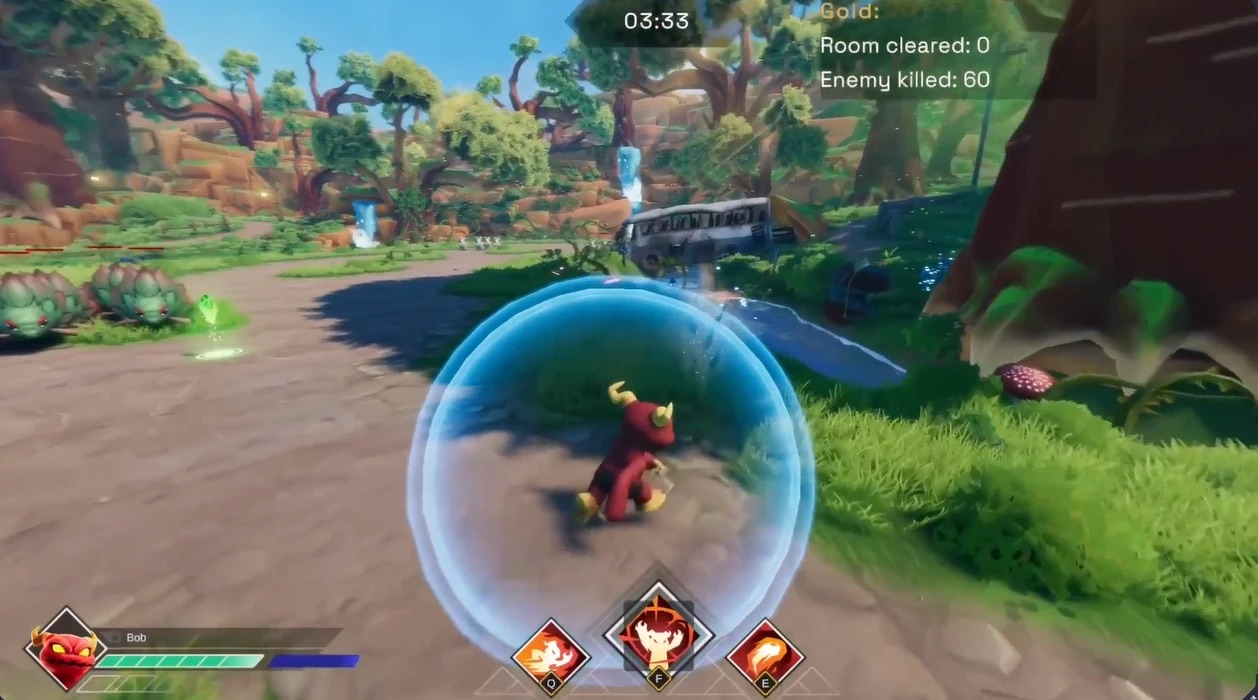
Earlier this month, NFT project Pixelmon announced an $8 million seed round led by Animoca Brands, Delphi Ventures, Foresight Ventures, Amber Group, 9GAG founder Ray Chan, and Immutable co-founder Robbie Ferguson. The team stated that the funds will support the development of casual and mid-core games.
Back in 2022, Pixelmon conducted an NFT sale priced at 3 ETH per unit, generating $70 million in total sales. However, following disappointment over the disclosed game quality, prices plummeted by 90%. Subsequently, Pixelmon replaced its leadership team and introduced a new roadmap. After two years of rebuilding, NFT prices have recovered to 1.65 ETH, and game quality has significantly improved.
Tokenomics
Mon Protocol, Pixelmon’s partner IP management protocol, has announced the launch of the MON token with a total supply of 1 billion. Approximately 36% of the total MON supply will be directly allocated to the Pixelmon community through two distribution mechanisms, while about 29% of the total supply will be indirectly dedicated to both the Pixelmon and Mon Protocol communities via an ecosystem fund.
MON serves as the governance and utility token for Mon Protocol, which will make its debut application within the Pixelmon ecosystem as an IP protocol. Within Pixelmon, MON will function as an in-game currency and a representation of IP governance rights.
Token Presale
The MON token presale will offer tokens at a fixed price, with the following procedures and requirements:
-
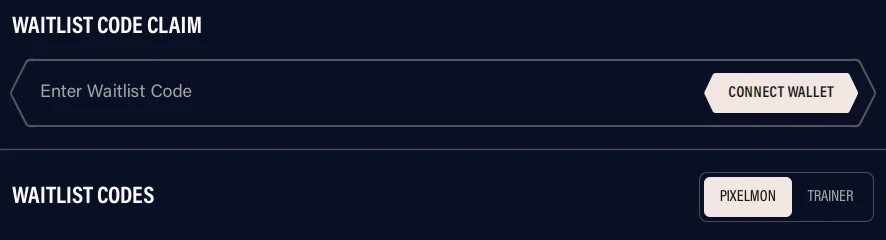
Participants must first obtain a Waitlist Code; each code grants one subscription opportunity;
-
Each subscription allows the purchase of 2,888 MON tokens, with a total of 62,092,000 tokens available for presale;
-
In case of oversubscription, allocation will be determined by lottery;
-
Waitlist Codes will be generated from two NFT collections launched by Pixelmon: Pixelmon Gen 1 and Golden Trainer. The former provides at least 3 codes, the latter at least 2, with rarer NFTs granting additional codes based on rarity.
Subscriptions will be made in ETH. The official price has not yet been disclosed, but the cost per subscription is estimated between $200 and $300. Assuming a midpoint of $250, the implied token price would be $0.0865 USDT, corresponding to a fully diluted valuation (FDV) of $86.5 million.
Conclusion
Compared to major blockchain games with market caps in the hundreds of millions or billions, Pixelmon’s token valuation sits at a moderate level. Coupled with its recent large funding announcement, the project holds some short-term potential. However, its vision is highly ambitious, and whether it can successfully execute remains uncertain at this stage.
Join TechFlow official community to stay tuned
Telegram:https://t.me/TechFlowDaily
X (Twitter):https://x.com/TechFlowPost
X (Twitter) EN:https://x.com/BlockFlow_News
 Odaily









