No hope for an unexpected Fed rate cut
TechFlow Selected TechFlow Selected
No hope for an unexpected Fed rate cut
"In a world where investors are speculating whether the Federal Reserve will cut interest rates four, five, or even six times this year, persistent inflation will kill such speculation. It will render all talk of rate cuts moot."
 Navigating Web3 tides with focused insights
Author: Qin Jin
We know that the three key factors influencing Bitcoin's market direction over the next 1-2 years are Bitcoin ETFs, Bitcoin halving, and Federal Reserve rate cuts.
If the first two can be considered relatively close micro-level factors affecting the Bitcoin market, then Federal Reserve rate cuts represent a major macro-level influence. How should we understand macro factors? By listening carefully and observing the statements and thinking of authoritative figures.
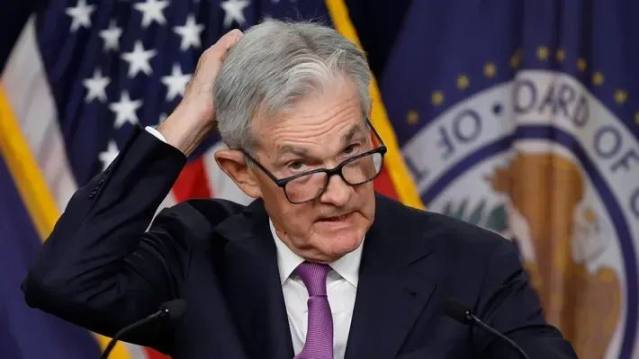
On February 4, Federal Reserve Chair Jerome Powell made a rare appearance for an exclusive interview with CBS News. Powell did not specify an exact timing for rate cuts, but suggested it would not happen in March—any cuts would come only after March. Other Fed officials have indicated that 2-3 rate cuts by the Fed in 2024 would be appropriate. Carbon Chain Value tracked this authoritative information in real time.
Recently, the macro research team at Guojin Securities stated that the shift in the Fed’s monetary policy will be a central theme in global macroeconomics in 2024. Since the so-called "last hike" in July 2023, the Fed has paused rate hikes four times consecutively. Since the end of 2023, markets have fully priced in expectations for Fed rate cuts, and volatility in overnight interest rates has increased. This signals a "structural shortage" in money market liquidity, indicating that liquidity is no longer in a state of "super abundance."
On February 19, Jim Bianco, founder and macro strategist at Bianco Research—a financial market research firm with over 20 years of history—gave an exclusive interview to The New Zealand Market Report, discussing the topic of Fed rate cuts and the number of potential cuts. He said the Fed might cut rates 0–2 times in 2024, meaning he includes the possibility of zero cuts—fewer than the Fed’s projected three cuts.
His explanation: current monetary policy remains restrictive, but not as much as people imagine—this is why strong economic data frustrates those predicting recession, advocating for a "soft landing," or insisting inflation will soon return to 2%.
On February 20, well-known investor Anthony Pompliano expressed similar views in a letter to investors. He noted, "The current Wall Street consensus is that inflation has cooled and the Fed is ready to begin cutting rates. Investors are preparing to benefit from rising asset prices. Central banks are about to wave the victory flag. The media keeps reporting on the elusive 'soft landing.' But what if this consensus is wrong?"
He pointed out that market expectations have now dropped to three cuts. As recently as January 12, markets expected seven rate cuts in 2024. Thus, four anticipated cuts this year have already been erased. Now, the first cut is only being priced in for June—with around a 75% probability, down from nearly 100% just ten days earlier. This declining confidence in the pace and number of cuts is a direct reaction to the worrying inflation data reported over the past 2–3 months.
He added: "If inflation does not disappear and continues accelerating at an annualized rate close to 4%, central banks will have to keep raising rates. However, the problem now is that the Fed has told the market they’re done hiking. 'Market participants don’t want an unreliable Fed,' said Anthony Pompliano. They depend on the Fed to follow through on their words."
Over the past four years, the Fed has broken its word once before. It told the market interest rates would remain near 0% for years. Then, when the central bank began hiking at the fastest pace in history, market participants were completely unprepared. Remember how regional banks were collapsing daily? That was a direct result of the Fed failing to stick to its message. So now, the Fed has painted itself into a corner—it told the market rate hikes are over, that the fight against inflation is nearly won, and that multiple rate cuts in 2024 are coming.
If inflation persists and the Fed is forced to reverse course, that would be unfortunate—but increasingly possible over time. I’m not yet saying the Fed is likely to hike again, but I believe the likelihood is far higher than most in the market assume.
According to Anthony Pompliano, this means both opportunity and potential disaster—depending on your perspective. Closely monitor inflation data and start critically thinking about how the Fed might respond if the data worsens. This could help you spot turning points before others do.
Given that the views of Jim Bianco and Anthony Pompliano on future Fed rate cut expectations may offer valuable insights to readers, Carbon Chain Value has translated the full interview with Jim Bianco, founder and macro strategist at Bianco Research, conducted by The New Zealand Market Report, for reference and study.
In a deep interview with The New Zealand Market Report, Jim Bianco explained why the U.S. economy continues to perform surprisingly well and what driving forces are keeping inflation elevated. He also outlined the opportunities and risks facing investors and how he is positioning for sustained attractive yields through a new total return bond index.
Jim Bianco expects the Fed will not cut rates quickly. Financial markets are in shock. Fresh U.S. economic data intensify concerns that the biggest gains in fighting inflation have already been achieved—and instead, the hardest part may just be beginning. Therefore, the Fed may be forced to keep rates higher for longer.
As long as inflation returns to 2%, the Fed can do whatever it wants—cut rates to zero, launch quantitative easing. But if inflation fails to return to 2%, their options narrow. Thus, inflation is the real key.
"In a world where investors are speculating whether the Fed will cut four, five, or even six times this year, persistent inflation will crush such speculation. It will render all talk of rate cuts meaningless." – Jim Bianco
Full transcript below:
Author: Christoph Gisiger
Translator: Qin Jin
Q: The macroeconomic environment keeps markets on edge. What are you watching most closely right now?
A: I'm focused on the bond market. We're seeing some skepticism about the "soft landing"—concerns that the "last mile" of fighting inflation may be more challenging than expected. Markets might be moving toward a "no landing" scenario: the plane isn't descending; the economy keeps growing at 2.5% or faster. I wouldn't say the bond market fully accepts this view yet, but it's certainly starting to worry.
Q: What supports the case for a "no landing"?
A: You have to ask: where is the weakness everyone talks about? In the last two quarters, the U.S. economy grew 4.9% and 3.3%, wages surged, and stock markets hit new highs. The Atlanta Fed model shows Q1 GDP growth at 2.9%. So we aren't seeing any of the bad news everyone keeps predicting. Maybe next month or in sixty days things will turn worse. You can keep saying that for a year and a half—if you repeat it enough, eventually you’ll be right. But right now, I see no reason to expect the data to deteriorate.
Q: Why is the U.S. economy performing so much better than widely feared?
A: People are always worried because of the old saying: the Fed hikes until something breaks. I agree with that idea, but there's no evidence yet that current interest rate levels have broken anything. At least for now, the economy can withstand a 5% yield on Treasuries, and 6% or 7% mortgage rates. Clearly, 4% or 5% mortgage rates would be better for housing, while 6% or 7% rates drag on the sector. But I don't think it kills housing. Will something eventually break? I think so—but not yet. That’s why demand remains so strong.
Q: How long can this last? Historically, such aggressive tightening by the Fed since spring 2022 typically triggers a recession.
A: Yes, but I think people are suffering from an anchoring bias—they’ve mentally anchored to zero rates because they got used to low rates from 2010 to 2022, when we even had negative real rates. So people convince themselves that environment was somehow normal and today’s rates are too high. But I think the opposite is true: during that period, rates were abnormally low, and today’s levels are closer to normal. That’s why I don’t think the economy can’t handle them.
Q: Still, raising the target rate from zero to 5.5% in the short term—isn’t that a massive shock to the system?
A: If you analyze the impact of rising rates on interest expenses—you pay more on mortgages and loans. But there’s also interest income, meaning your fixed-income investments now generate meaningful returns. Warren Buffett now earns about $6–7 billion in interest income from Berkshire’s massive cash pile, compared to zero two years ago. Same with other big companies like Microsoft—they earn more because they hold large cash reserves. So comparing interest income versus expenses across the entire economy, many corporations are actually in better financial shape.
Q: What about households?
A: Mixed. According to the Fed’s Survey of Consumer Finances, about 90% of assets are held by the top 10% income group. They own nearly all assets, a large portion—half or more—being fixed income. On the liability side, the bottom 50% own no assets but carry over half of all debt. Here’s the unfortunate reality: the poor have debt, the rich have assets—and the rich also account for 80% to 85% of personal consumption. So when rates rise, the poor suffer and get angry at the president, lowering his approval rating. But the rich earn more, spend more, and keep driving the economy. Overall, therefore, this level of rate hikes hasn’t hurt the economy as much as people think.
Q: So the key question becomes what happens next on inflation and interest rates. What’s your take?
A: I don’t see problems in the economy, but my main concern is growth that’s too fast and inflation that’s too high, which would put upward pressure on rates. Investors often confuse what they want with what’s actually happening. Wall Street’s expectation for inflation to return to 2% is a perfect example. But in reality, I’d argue we’ve already completed the "last mile" of disinflation, bringing us to a low 3% or high 2% range. I think we’ve basically reached that floor and may now start drifting slightly higher—say, 3% to 4%. I’m not talking 8%, 10%, or Zimbabwe.
Q: Recent inflation data has been surprising. What are the main drivers?
A: The three biggest factors pushing inflation up are base effects, rising gasoline prices, and housing. These suggest that unless oil prices collapse or financial panic changes the dynamics, inflation could "stabilize" above 3% in the coming months. Crucially, any meaningful decline from here must come from services excluding energy—and when you analyze service inflation, the vast majority comes down to housing costs. That figure is still rising 5–6% on a 12-month basis. Many say housing inflation will fall sharply. I think that’s wrong—meaning inflation will keep rising.
Q: What leads you to this assumption?
A: You need to look holistically: housing—owner-equivalent rent and primary rental costs—accounts for one-third of CPI. Looking back, CPI shows housing inflation rose about 20% since 2021. But market indicators like the Zillow Rent Index or the Case-Shiller home price index show increases as high as 30%. This suggests CPI’s housing component has underestimated actual price gains over the past three years. That doesn’t mean it won’t decline—but it won’t fall as fast as people expect, because it still has ground to cover to catch up with market measures. So housing inflation will stay firm, keeping service inflation elevated.
Q: How does the Red Sea shipping issue affect inflation?
A: The optimistic take: no ships have sunk, no containers lost. Everyone gets what they ordered. But we live in a just-in-time world, so the issue isn’t “can I get it,” but “when.” The answer is later—which ultimately exacerbates goods inflation. Not as badly as in 2020, when demand was also surging. But I agree with Oxford Economics: if shipping delays persist for several more months, CPI inflation could be 0.7 percentage points higher by the end of 2024. My point is: we’ve squeezed goods prices as much as possible—now they may rise again.
Q: What does this mean for Fed monetary policy?
A: In a world where investors are guessing whether the Fed will cut four, five, or even six times this year, persistent inflation will kill such speculation. It will make all talk of rate cuts irrelevant. As long as inflation returns to 2%, the Fed can do whatever it wants—cut rates to zero, launch QE. But if inflation doesn’t return to 2%, their options shrink. So inflation is truly the key.
Q: How much do you think the Fed will actually cut rates?
A: I think 0–2 cuts this year. That’s fewer than the Fed’s three-cut forecast, and clearly differs from market views. Here’s why: you can accept Jay Powell’s view that a 5.25–5.5% federal funds rate isn’t neutral—it’s restrictive. But how restrictive? The conventional wisdom says average inflation should be 2%, plus 50 basis points, implying a neutral rate of about 2.5%. So with rates at 5.5%, we’d have 300 basis points of monetary tightening.
Q: And your view?
A: I disagree. Average inflation may settle between 3% and 4%—call it 3.5%. Add 50 basis points—or more realistically, closer to 100, given persistent inflation—and the neutral rate approaches 4.5%, even 5%. That means current policy is still restrictive, but less so than imagined—explaining why strong economic data frustrates recession predictors, soft-landing advocates, and the 2%-inflation "last mile" crowd.
Q: What does this mean for financial markets?
A: Again, it all comes down to inflation. For example, as a bondholder, I need confidence that Powell will protect me and fight inflation. Even if that causes a recession, I can hold bonds. But once fears of renewed inflation emerge, I don’t want to touch bonds—the 10-year Treasury yield jumps back to 5%. Simply put: if the economy slows and inflation falls, and Powell talks about ending QT and cutting rates, the bond market will welcome it. But if he discusses ending QT or rate cuts while inflation stays stuck at 3%+, he risks a terrible market reaction.
Q: With rising rates, commercial real estate (CRE) crisis has become a recurring issue. Nearly a year after Silicon Valley Bank collapsed, how dangerous is this now?
A: We knew things weren’t good. Now we’re finally admitting it. We realize remote work is a permanent issue—we must revalue office real estate. 70% of CRE loans are held by regional and small banks. Interestingly, Powell recently said big banks are fine. He even admitted some small banks may be taken over. In other words, he’s not claiming every bank stands strong. I agree. For regional and small banks, this will be messy; for the economy, it will cause some harm. But I don’t think it will be catastrophic—just as SVB’s collapse ultimately wasn’t.
Q: Are there other underappreciated risks?
A: One could be artificial intelligence. The idea that AI will deliver a productivity miracle seems misguided. Sure, large language models and similar tools will improve, but much slower than expected. Ultimately, who wins? Everyone says Nvidia, Microsoft, Amazon. But I doubt it. You can’t tell me the greatest invention since the internet will emerge in AI, and the outcome is trillion-dollar firms forcing me to pay for a monthly subscription. It won’t happen. It’ll be free. It’ll allow people like me to compete with Goldman Sachs. It’ll disrupt trillion-dollar companies.
Q: Why?
A: I think it will become something accessible to all of us, like the internet or social media. The internet was revolutionary because it was free—you could use it however you wanted. So the idea that trillion-dollar firms must control AI access won’t work. It’s like 1999, when everyone said buy Cisco, JDS Uniphase, Microsoft—they’ll provide the internet. The opposite happened. It became a free product anyone could build from nothing. Google, Facebook, YouTube—they didn’t need big firms to succeed.
Q: Another market-relevant topic this year is the U.S. election. How significant is this risk factor?
A: At least for now, we’re overstating the election’s impact on the economy and markets. For example, Donald Trump says he’ll cut taxes. But first, he must win the election. Second, remember how the Constitution works. A president isn’t a dictator—he can’t just declare new tax rates. He needs Congress to pass a bill, involving many steps. Frankly, I don’t even know who the nominees will be, let alone their policies. If Trump goes to prison, will he still be nominated? Or if Joe Biden fails to turn around terrible polling by May, will Democrats tap him on the shoulder and say, “Joe, maybe try Michelle Obama, Gavin Newsom, or someone else whose name isn’t Joe, because this isn’t working”?
Q: In this challenging environment, what’s the best move for investors?
A: As my friend Jim Grant likes to say: when there are interest rates to observe, publish a newsletter called Grant’s Interest Rate Observer. So although I believe inflation will prove stickier—which is bad for bonds—these yields need to be managed. You don’t want to exit the market and give them up. You need to preserve them, perhaps gain some capital appreciation. That’s why I launched the Bianco Research Fixed Income Total Return Index—a long-only index aiming to outperform comparable benchmark-neutral fixed income portfolios. WisdomTree offers an ETF, ticker WTBN, tracking my index.
Q: How exactly do you do it? Which parts of the bond market are most attractive?
A: Our top pick is Treasury Inflation-Protected Securities (TIPS). These instruments protect you if inflation proves worse than expected. Essentially, they pay inflation plus nominal interest. Of course, TIPS weren’t great investments last year, as inflation fell and monthly payouts declined. But if inflation bottoms and persists, TIPS become very attractive.
Q: What’s your view on stocks?
A: I don’t think the stock market will crash, but we’re starting to see competition from higher interest rates. Long-term, stocks deliver average annual returns of about 8%. Back in 2017 or 2018, money market funds yielded nearly zero—you had to do something else. Holding cash wasn’t viable. That’s why we coined “TINA”: There Is No Alternative. But now, money market funds average 5.3% yield—meaning you can earn two-thirds of stock returns without taking market risk. For most people, that’s sufficient. They don’t need to take extra risk for the final third, assuming it even materializes. That’s why stocks have largely flatlined over the past two years—and I believe sustained gains will remain difficult going forward.
Q: For investors who still wish or need to invest in stocks, what advice do you have?
A: From 2000 to around 2022, I, like others, strongly argued stock picking was a dead art. Just buy ETFs of the S&P 500, Nasdaq 100, or Russell 2000, and watch all boats rise together. But now, I think the era of passive strategies may end, and we’ll return to active stock picking. This means we’ll see a wave of actively managed ETFs. I don’t think the next Peter Lynch will run an institutional fund or a secretive 2-and-20 hedge fund sending you monthly performance letters. The next Peter Lynch will be an ETF anyone can buy and sell. The key is investing in specific sectors and themes, and/or finding active managers with proven track records.
Q: Where do you see opportunities in this space?
A: I lean toward energy. Fairly speaking, since last summer I’ve tried to be bullish on energy, but it hasn’t worked yet. Maybe it will start working, maybe not. But ultimately, the only bullish case for lower inflation rests on hopes that gasoline and energy costs fall. But these lower costs must persist. For instance, if Middle East tensions flare up and energy prices spike, that hope vanishes. Rising inflation then becomes a major problem.
Join TechFlow official community to stay tuned
Telegram:https://t.me/TechFlowDaily
X (Twitter):https://x.com/TechFlowPost
X (Twitter) EN:https://x.com/BlockFlow_News