








Behind Becoming the "LVMH of NFTs": Yuga Labs' Lost Momentum
TechFlow Selected TechFlow Selected
Behind Becoming the "LVMH of NFTs": Yuga Labs' Lost Momentum
Yuga Labs doesn't have much time left to think.
 Navigating Web3 tides with focused insights
By Cookie
When Yuga Labs announced its acquisition of PROOF, the team behind Moonbirds, few people still doubted Yuga's label as the "LVMH of NFTs." Today, Yuga Labs owns top-tier NFT IPs and projects including CryptoPunks, BAYC, MAYC, BAKC, Otherdeed ("Ape Land"), Meebits, and Moonbirds. These projects occupy eight of the top 15 spots in OpenSea’s all-time trading volume rankings.
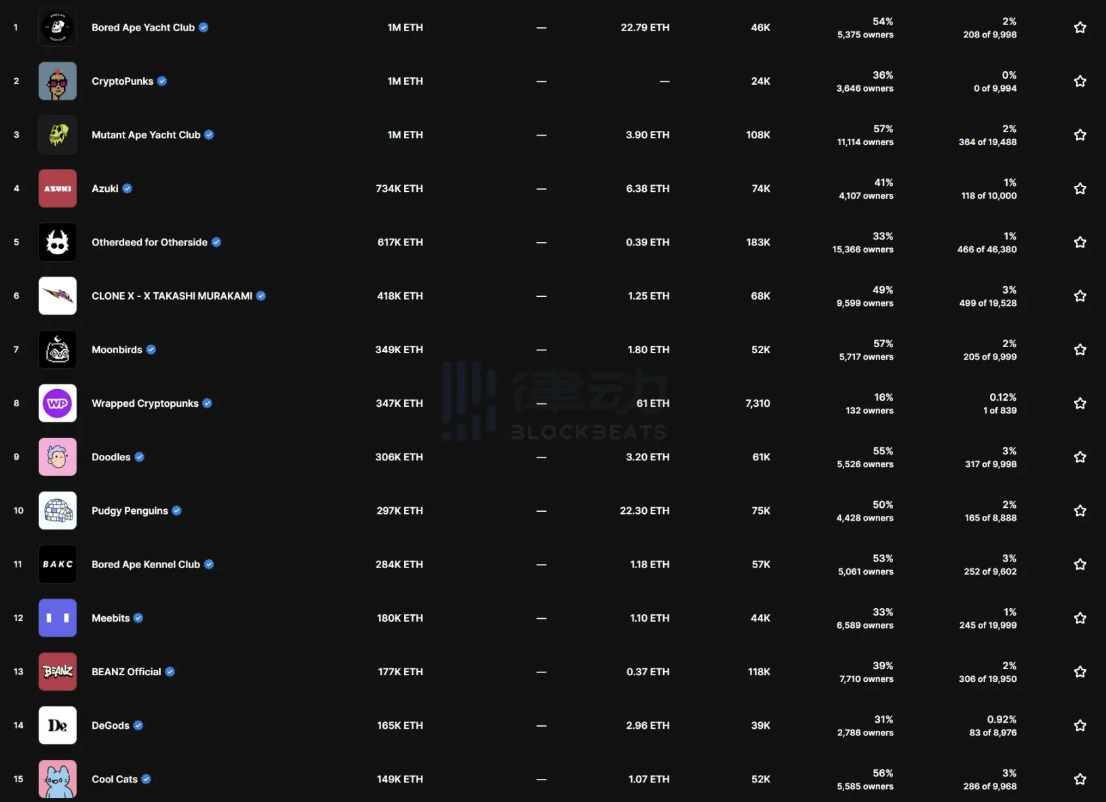
Yet at the same time, Yuga Labs is now facing its strongest challenger yet. On February 17, Pudgy Penguins’ floor price surpassed that of BAYC for the first time. In contrast to Yuga Labs' relentless acquisition spree in recent years, the appeal of “Bored Ape” has steadily declined.
We must ask: why? Why has Pudgy Penguins gained market favor? Why has Bored Ape lost its charm?
“The project team is actually doing things” isn’t sarcasm—NFT players are actually quite forgiving
“Pumping is justice”—this phrase has long circulated among NFT communities and even become one basis for criticism that NFT players are toxic. Another popular saying among Chinese-speaking NFT enthusiasts is “the project team is doing things,” often said half-jokingly, with the fear that the more a team actively works on their project, the more the NFT’s price tends to drop.
But Pudgy Penguins’ success actually proves that many past teams who claimed to be “doing things” were merely self-deluded or stuck within their comfort zones. Their so-called “efforts” failed to clearly communicate a long-term strategy to holders or generate lasting value for the project.
During the last NFT bull run, every PFP project claimed they wanted to build an IP. What happened? We saw new series launches, token emissions, staking mechanisms—endless activities confined within Web3’s familiar Ponzi-style incentives and internal competition. Yet building an IP is a long-term endeavor. Teams originating from Web3 typically only know how to operate within the NFT or Web3 ecosystem. Once a project secures funding from passionate retail investors, how many actually allocate those funds toward hiring professionals in branding, content creation, or social media management?
Is pumping justice? Yes—it could even be said that rising floor prices provide the greatest emotional payoff for NFT players. Is there a market maker behind Pudgy Penguins? I don’t know, but most likely believe the answer is yes. But can mere price manipulation alone lead to such massive success?
No. This kind of success requires synergy between potential market makers and genuine community validation. Pudgy Penguins’ approach to IP development is coherent: they established a brand identity matching their cute, approachable image, chose toys as their breakout product category, and achieved solid results. These efforts, combined with rising floor prices, have stabilized their community and created new value recognition within the NFT space:
“An NFT project that truly works hard—can actually go up.”
Whether a narrative holds water depends on whether the market accepts it. Thus, we see Doodles—a project previously criticized mercilessly—rise nearly 70% over the past month. Any major catalyst? Not really. The latest news was a collaboration with G-SHOCK on a watch. But Doodles has consistently been “doing things.”
Cool Cats has also started “making toys,” and consequently enjoyed similar gains over the past month.
In terms of IP development, Pudgy Penguins has only just begun, yet already achieved astonishing results in the NFT market. NFT players are actually very forgiving—not toxic at all.
“All tides eventually recede”
Pudgy Penguins surpassing BAYC in floor price has been seen by many as a historic moment. Yet many NFT players weren’t surprised, each offering their own perspective on why this milestone felt inevitable. For me, the answer is simple:
“Yuga Labs is no longer cool.”
Does BAYC—or rather, Yuga Labs—remember where it came from? I’m not suggesting they forgot they’re an NFT project. I mean: do they still remember the excitement they once had—the thrill of wanting to “do something cool”—and that original idealism?
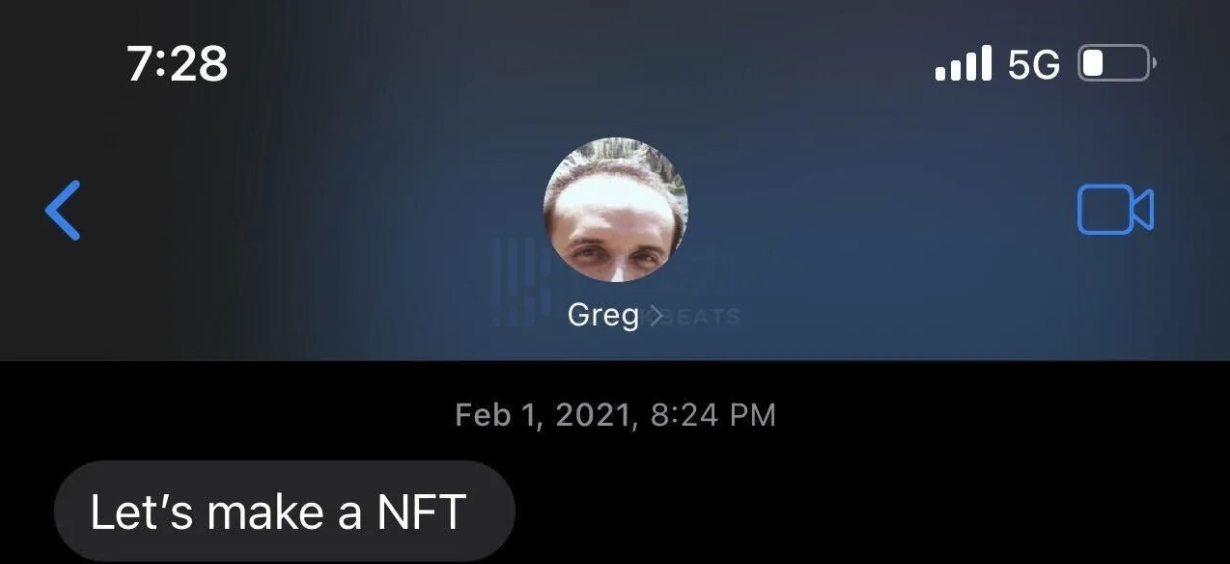
“Let's make an NFT”—it all began with this statement from Yuga Labs co-founder Greg Solano
“Hanging out in a secret club in the swamp, apes only. Graffitiing together on collaborative pixel boards on the bathroom walls”—this vibe attracted even those of us who couldn’t afford a BAYC back then to closely observe the holder community, feeling like we were inside a tipsy little pub filled with dreamers full of wild ideas.
When did that vibe, that unity, that sense of community exchange and collective decision-making disappear? The slogan “Apes together strong” feels increasingly hollow. As the community watches Yuga Labs charge forward with acquisitions and roll out mini-games tied to new assets (Otherside was cool—but what after that?), commercially they keep expanding, but what remains for the community is growing confusion and disappointment.
Whether building IPs or games, these are new narratives crafted after NFTs experienced rapid and intense value inflation. While NFT players later became immune—or even dismissive—to these stories, two points remain: first, there’s nothing shameful about storytelling. Like stocks, companies often cycle through storytelling → delivery → new storytelling. Deliverables become value; undelivered promises become bubbles. Second, at the time, people genuinely felt excited about the boundless possibilities of NFTs, standing at the edge of a new era and sincerely exclaiming:
“Cool!”
According to Pudgy Penguins CEO Luca Netz’s “NFT Value Accumulation Funnel” theory, assuming 8,888 Pudgy Penguins can attract 3 million loyal fans, just a 0.3% conversion rate would absorb the entire supply. But NFTs aren’t securities. No matter how profitable real-world operations become, current regulations make it difficult to directly distribute profits to NFT holders. So converting fan enthusiasm into collecting NFTs still hinges on being “cool.”
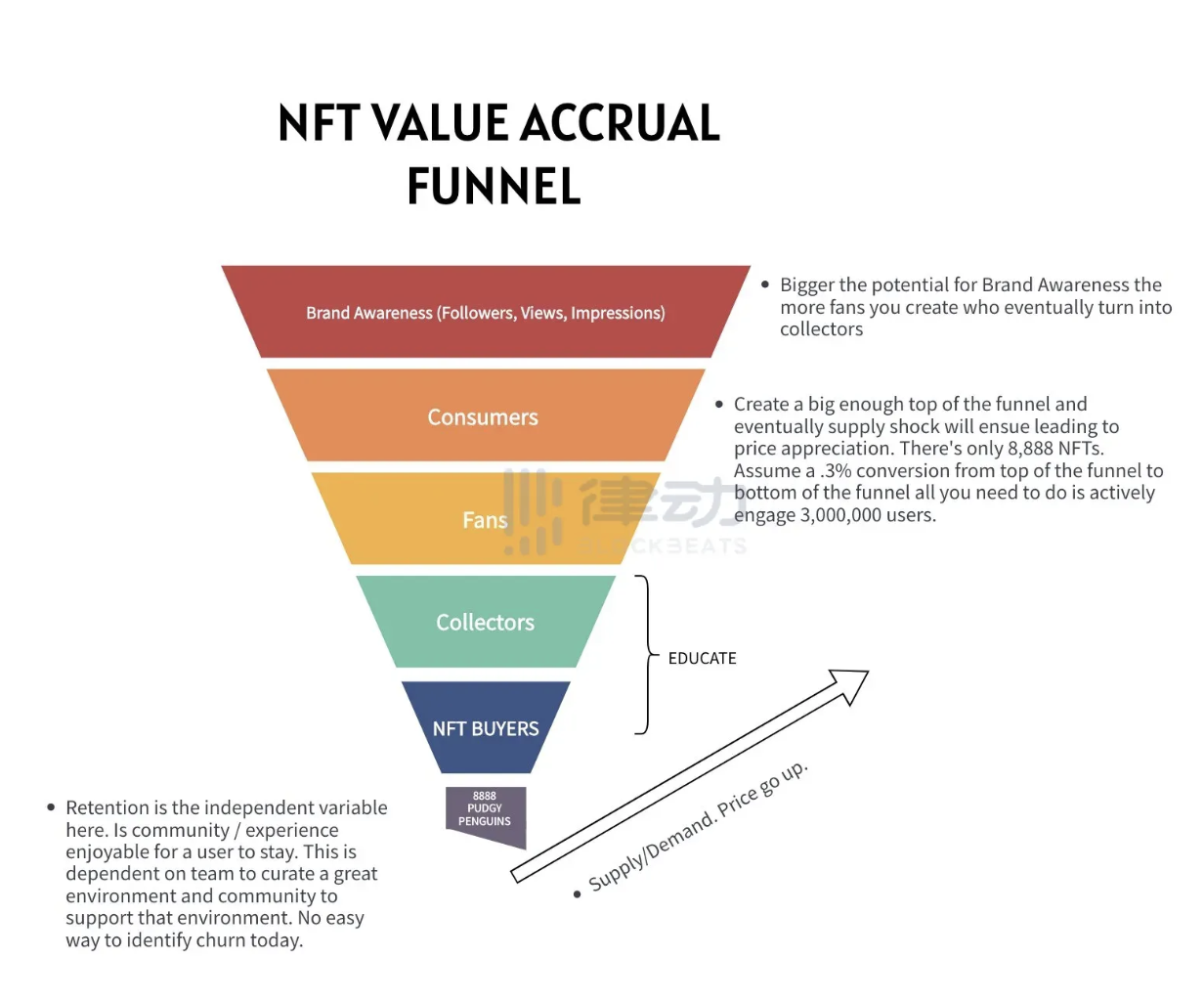
"NFT Value Accumulation Funnel" theory
If BAYC hadn’t initially been “cool,” it wouldn’t have attracted a loyal base. Who would want to pump a project full of paper-handed traders? Forgetting “cool” is essentially abandoning the community—and forgetting its founding ideals.
As NFT whale @jivacore (aka “Teacher Guan”) put it: “Yuga Labs is like Supreme when it stopped being cool—whenever something becomes mainstream, the tide will eventually recede.”

Among the voices from the BAYC community, what moved me most wasn’t the influencers criticizing Yuga Labs’ latest acquisition—but @votefloridaman’s words:
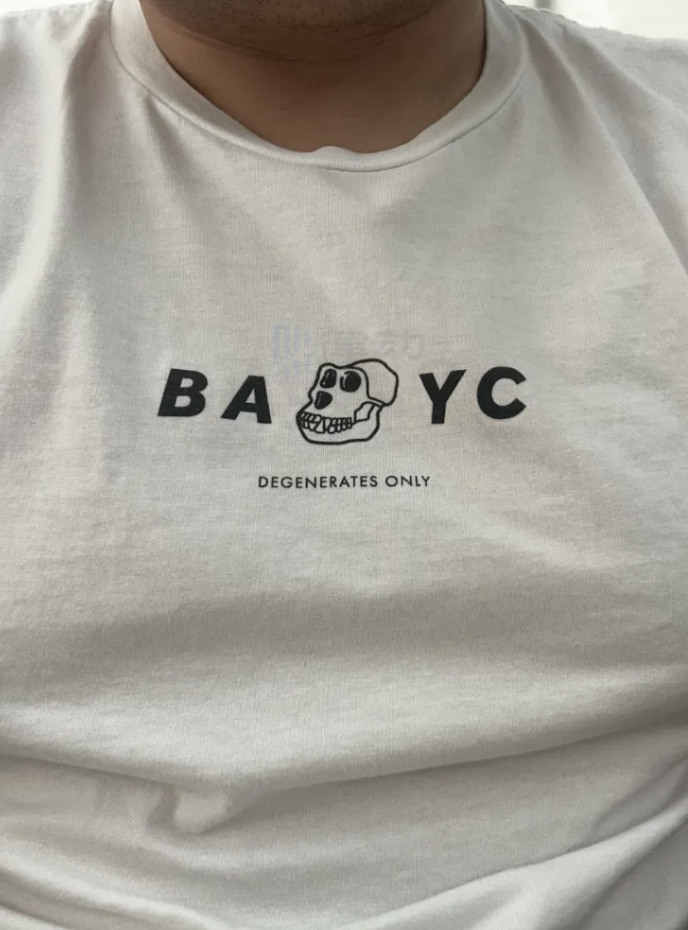
“The motto ‘Degen Only’ has faded away with the wind.”
Conclusion
We are nearing the end of the winter for the NFT and broader crypto markets. As someone who has continuously worked in the NFT space, my sole reason for persisting is this:
NFTs are genuinely cool and fascinating. We don’t lack good projects—we lack great teams.
How you act stems from how you think. Once that sense of passion is lost, what truly separates a large NFT project from a bloated, picture-based “shitcoin” slowly decaying into irrelevance?
There will definitely be another NFT bull market, and NFTs will surely remain the most appealing crypto asset for young people. For high-floor collections like BAYC, average NFT players like me simply can’t afford them. So for the remaining 10% of players who can, how should such projects continue to attract them?
Time may be running short for Yuga Labs. This is now a race against the next bull market.
Join TechFlow official community to stay tuned
Telegram:https://t.me/TechFlowDaily
X (Twitter):https://x.com/TechFlowPost
X (Twitter) EN:https://x.com/BlockFlow_News
 BlockBeats









