ARK Invest Research Report: Bitcoin Will Reach $2.3 Million
TechFlow Selected TechFlow Selected
ARK Invest Research Report: Bitcoin Will Reach $2.3 Million
Bitcoin will face major catalysts in 2024.
 Navigating Web3 tides with focused insights
Author: Qin Jin
On February 2, ARK Invest, the ETF issuer led by Cathie Wood of Ark Capital, released its annual flagship report titled "Big Ideas 2024: Defying Convention, Shaping the Future," a comprehensive 160-page document.
The full 160-page report covers topics including artificial intelligence, Bitcoin, smart contracts, robotics, digital wallets, electric vehicles, reusable rockets, and 3D printing. The entire report is divided into 15 sections, with key emphasis on artificial intelligence, Bitcoin, and electric vehicles.
As we know, among the 11 spot Bitcoin ETFs approved by the U.S. SEC on January 10, ARK Invest’s ARK 21Shares Bitcoin ETF (ARKB) was one of them. Prior to the SEC's approval of ARK’s own Bitcoin ETF, Cathie Wood also held nearly $80 million in Grayscale’s Bitcoin Trust (GBTC). Of course, after launching her own Bitcoin ETF, she gradually exited GBTC and shifted into her own ARKB fund.
Strictly speaking, Cathie Wood is a seasoned Bitcoin believer. Previously, BlackRock founder Larry Fink also referred to himself as a Bitcoin believer.
As of February 2, within just 16 trading days since the launch of spot Bitcoin ETFs, ARKB had accumulated 16,415 Bitcoins, worth approximately $700 million—ranking third, behind only BlackRock and Fidelity.
Carbon Chain Value will extract and present the sections from the "Big Ideas 2024" report focusing on Bitcoin for readers’ reference. When discussing Bitcoin, the report is divided into two main parts: one addressing “Bitcoin Allocation,” emphasizing the importance of increasing Bitcoin’s role in investment portfolios; the other discussing “Bitcoin In 2023,” highlighting Bitcoin’s resilience and recovery following the challenges of 2022.
In the “Bitcoin Allocation” section, the report states that Bitcoin is a relatively new asset class operating in a rapidly evolving and uncertain market environment. Largely unregulated, Bitcoin investments may be more susceptible to fraud and manipulation than regulated financial products. Bitcoin faces unique and significant risks, including substantial price volatility, lack of liquidity, and risk of theft.
ARK notes that the information provided in the report is based on ARK’s research and does not constitute investment advice.
According to ARK’s research, Bitcoin has emerged as an independent asset class worthy of strategic allocation within institutional portfolios.
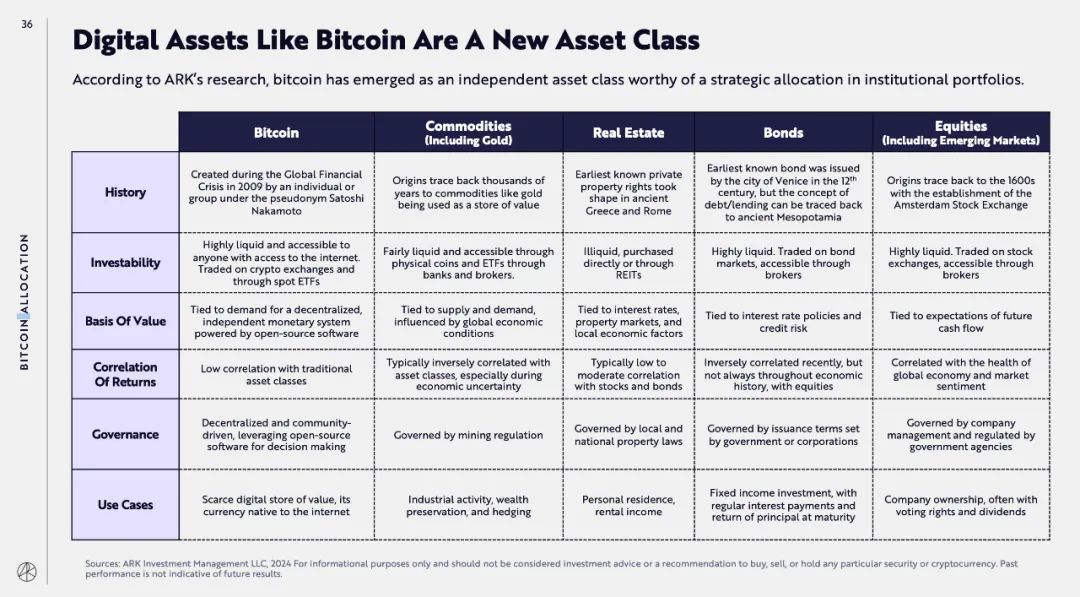
In the “Bitcoin Allocation” section, the report compares Bitcoin across six dimensions—history, investability, intrinsic value, returns, management, and case studies—with commodities, real estate, bonds, and equities.
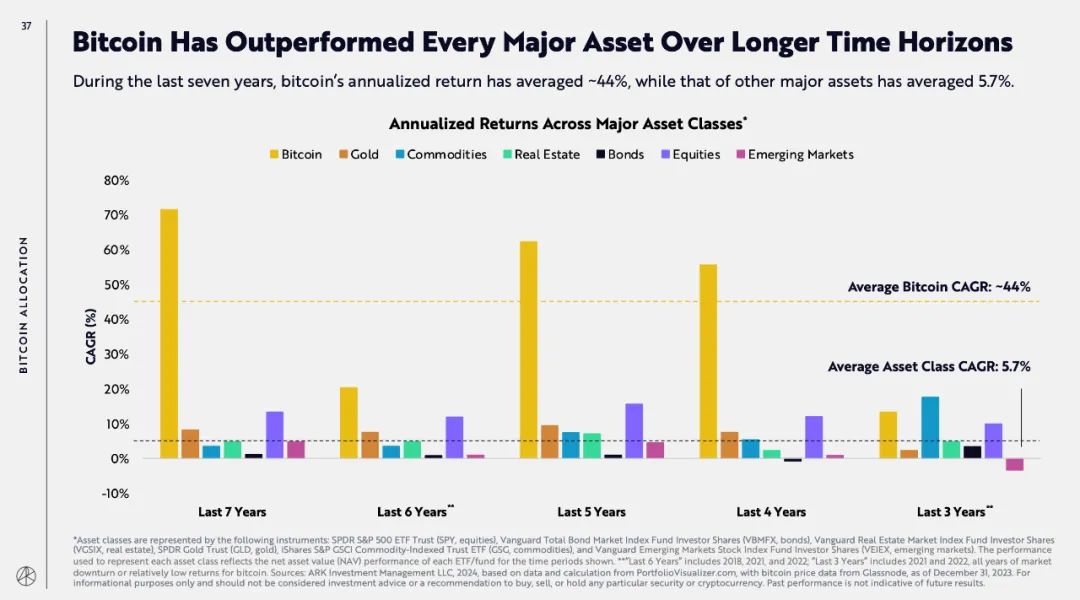
The report claims that over longer time horizons, Bitcoin has outperformed all other major asset classes. For example, over the past seven years, Bitcoin delivered an average annualized return of approximately 44%, compared to an average of 5.7% for other major assets.
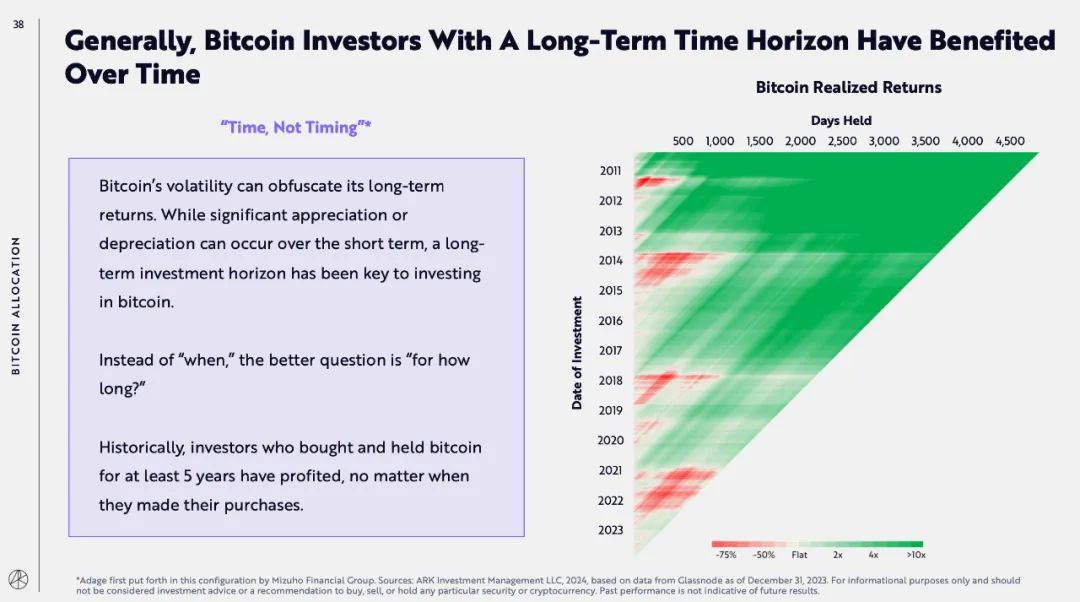
Over time, investors with a long-term perspective stand to benefit significantly. Bitcoin’s volatility often obscures its high returns. However, a long-term investment horizon is key to investing in Bitcoin. Rather than asking “when,” the better question is “for how long.”
Historically, investors who bought and held Bitcoin for at least five years have profited regardless of their purchase timing.
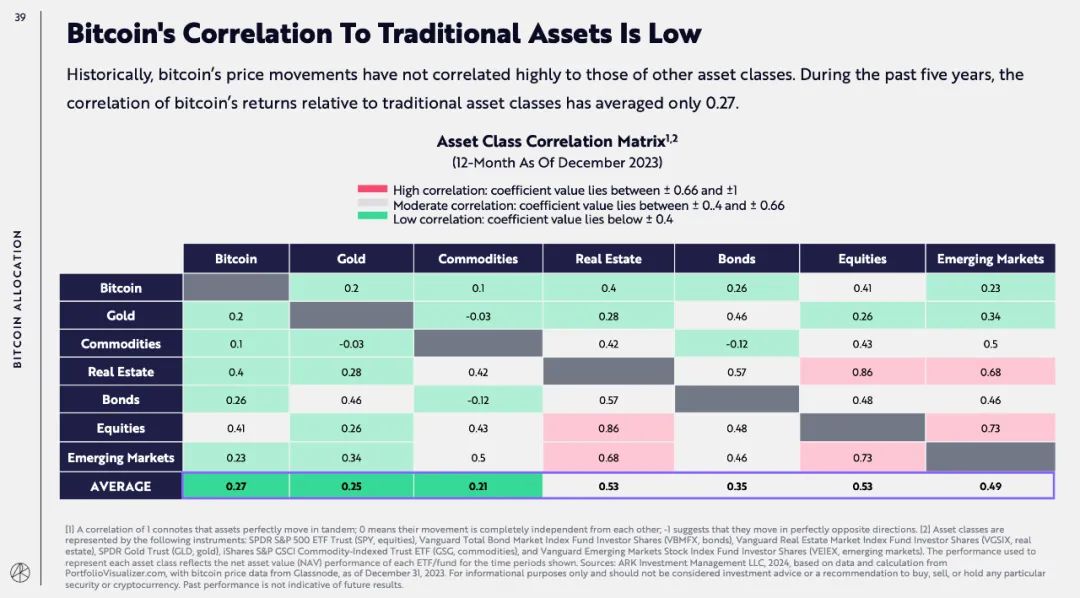
Bitcoin has low correlation with traditional assets. Historically, Bitcoin’s price movements have shown limited correlation with other asset classes. Over the past five years, Bitcoin’s returns have averaged a mere 0.27 correlation with traditional asset classes.
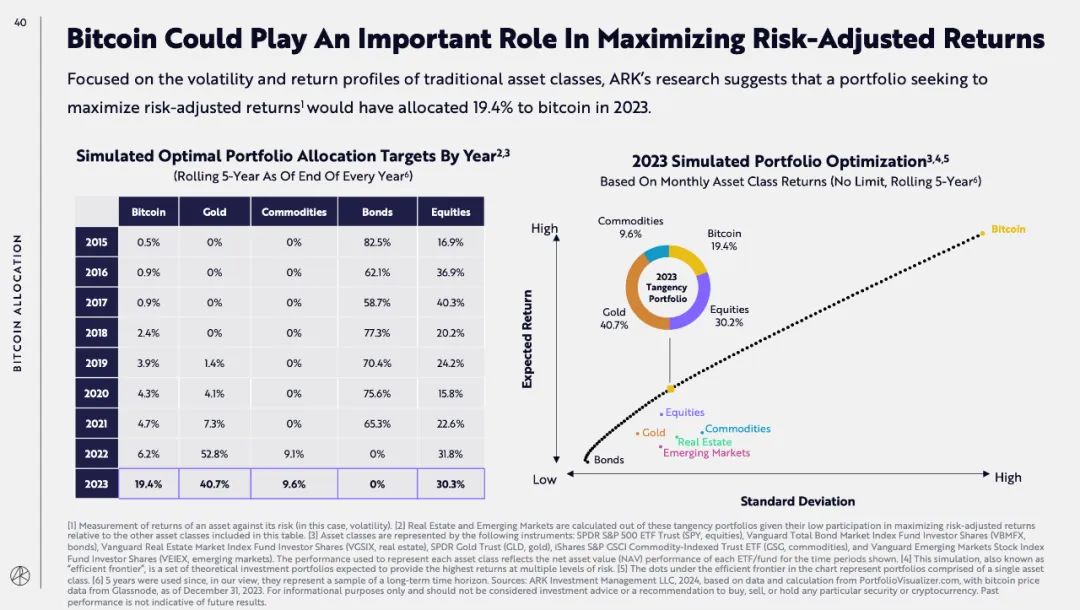
Bitcoin can play a crucial role in maximizing risk-adjusted returns. ARK’s research, which focuses on the volatility and returns of traditional asset classes, suggests that a portfolio optimized for risk-adjusted returns would have allocated 19.4% to Bitcoin in 2023.
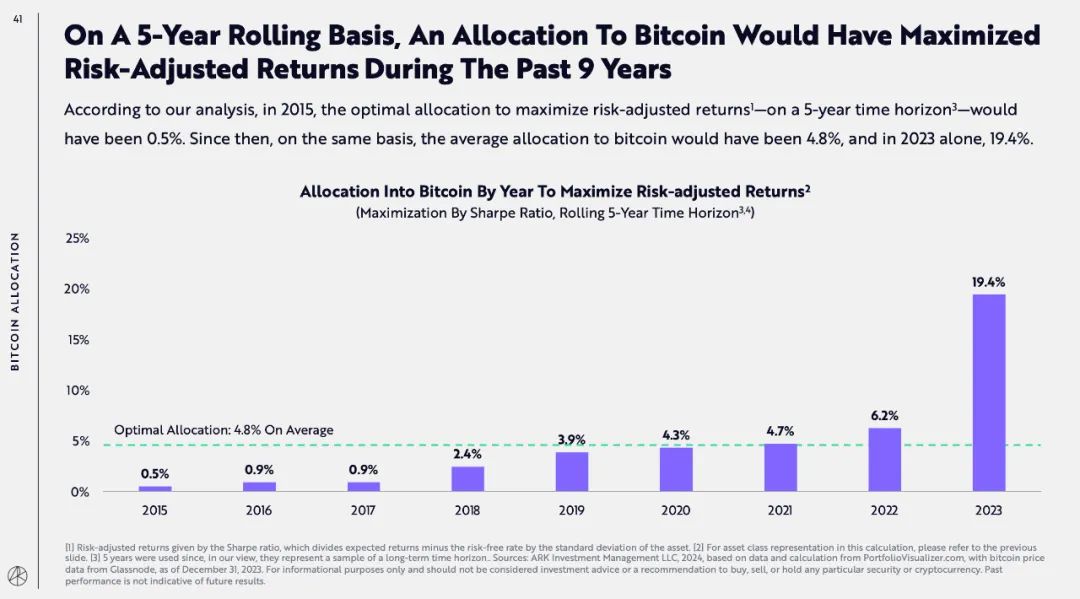
Using a 5-year rolling benchmark, allocating to Bitcoin would have maximized risk-adjusted returns over the past nine years.
According to our analysis, in 2015, the optimal 5-year allocation for maximizing risk-adjusted returns should have been 0.5%. Since then, on the same basis, the average Bitcoin allocation has risen to 4.8%, reaching 19.4% in 2023 alone.
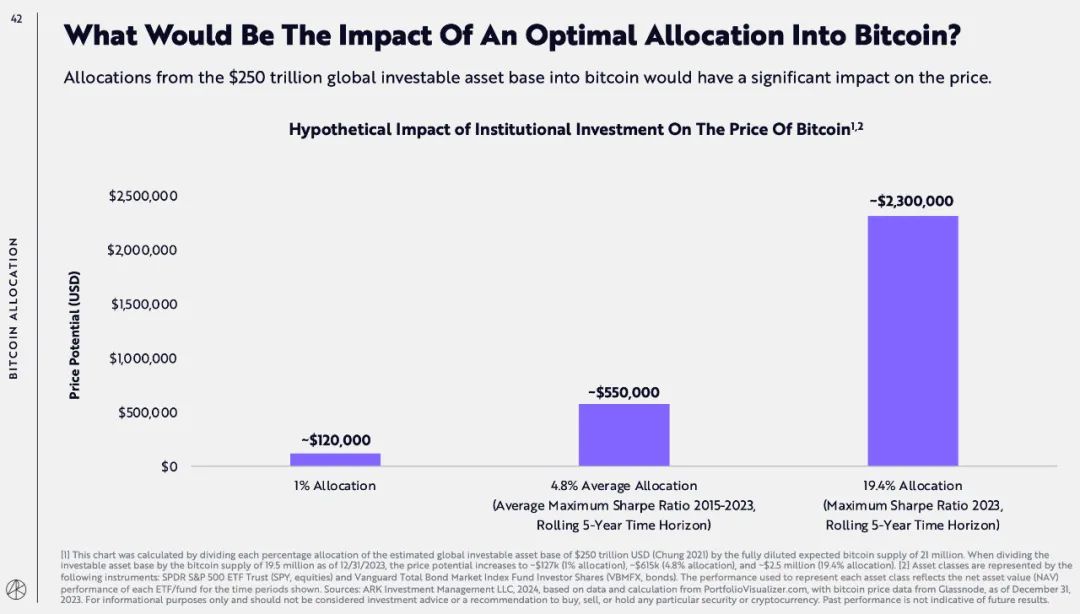
What impact would such optimal Bitcoin allocation have? Allocating portions of the global $250 trillion investable asset base to Bitcoin could significantly affect its price. For instance, allocating 1% would push Bitcoin’s price to approximately $120,000; 4.8% would raise it to $550,000; and 19.4% would drive it to $2.3 million.
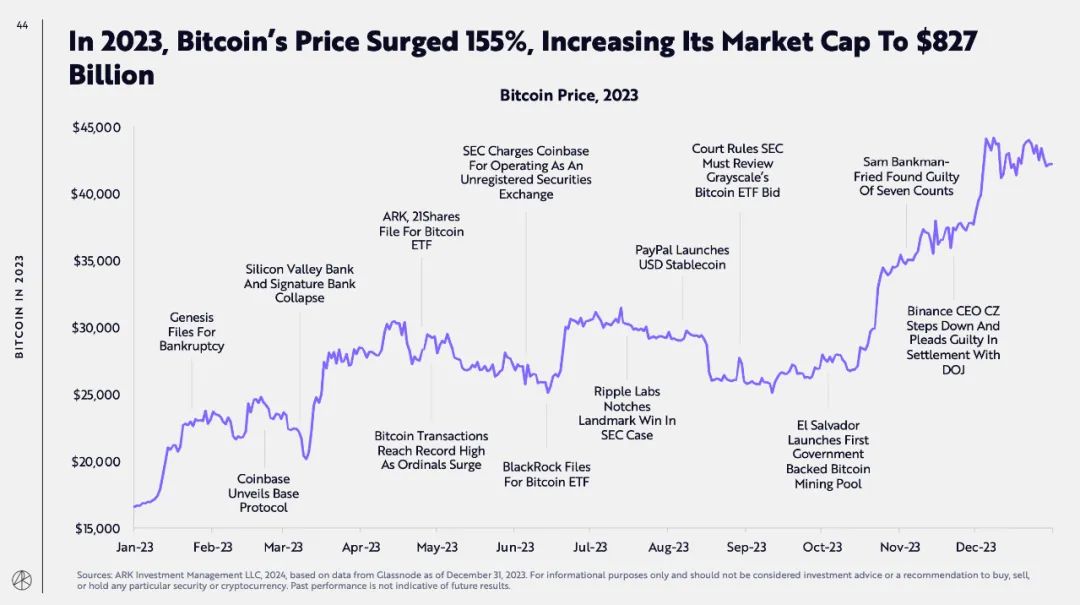
In the “Bitcoin In 2023” section, the report notes that in 2023, Bitcoin’s price surged by 155%, increasing its market capitalization to $827 billion.
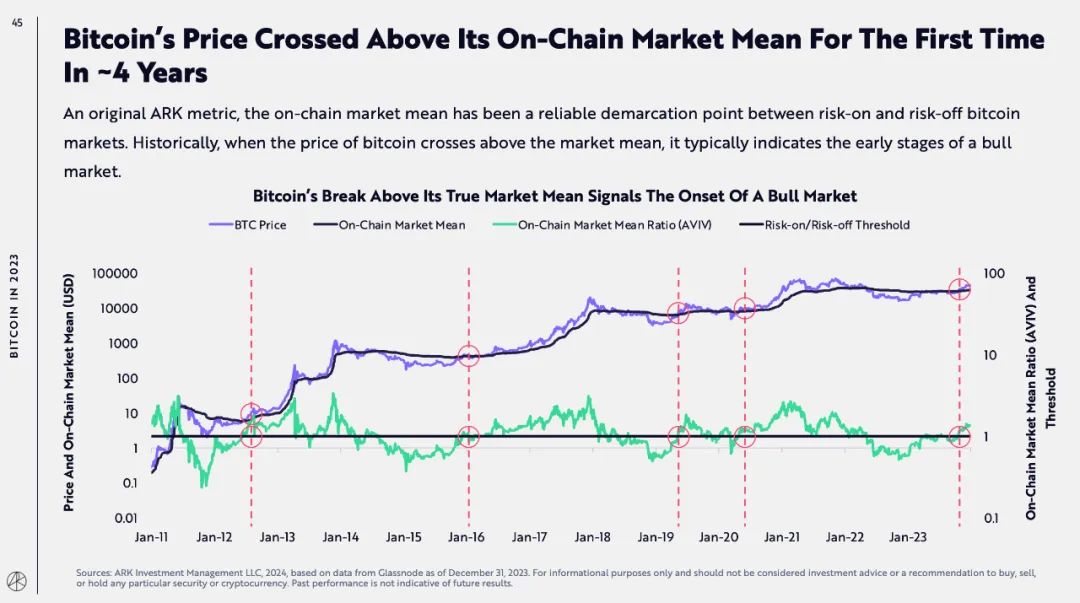
For the first time in four years, Bitcoin’s price surpassed its on-chain market mean. As an original ARK metric, the on-chain market mean has historically served as a reliable indicator of upside and downside market risk. Historically, when Bitcoin’s price crosses above this moving average, it typically signals the early stage of a bull market.
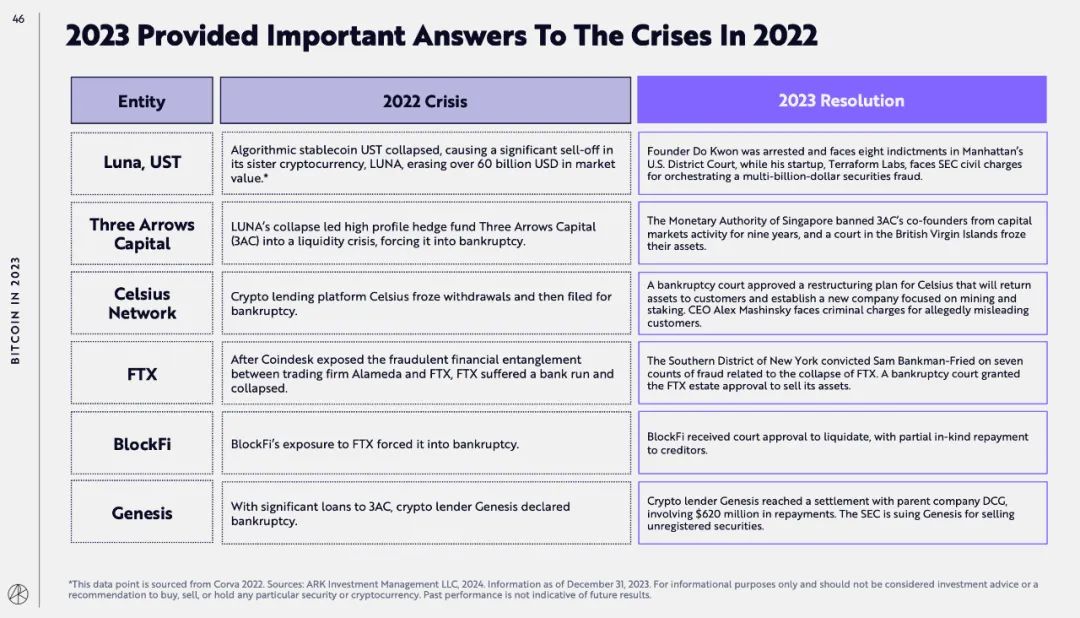
2023 provided critical resolutions to the crises of 2022, which included: the collapse of algorithmic stablecoin UST, the downfall of Luna, Celsius filing for bankruptcy, FTX suffering a bank run and collapsing, BlockFi going bankrupt, and Genesis announcing bankruptcy.
Resolutions in 2023 included: Do Kwon’s arrest in Manhattan on eight charges; Singapore’s Monetary Authority banning the co-founders of 3AC from participating in capital markets for nine years; the bankruptcy court approving Celsius’ restructuring plan to return assets to customers; the Southern District of New York court convicting SBF on seven fraud charges related to FTX’s collapse; BlockFi receiving court approval to liquidate and repay creditors partially in-kind; and cryptocurrency lending firm Genesis reaching a settlement with its parent company DCG involving $620 million in repayments.
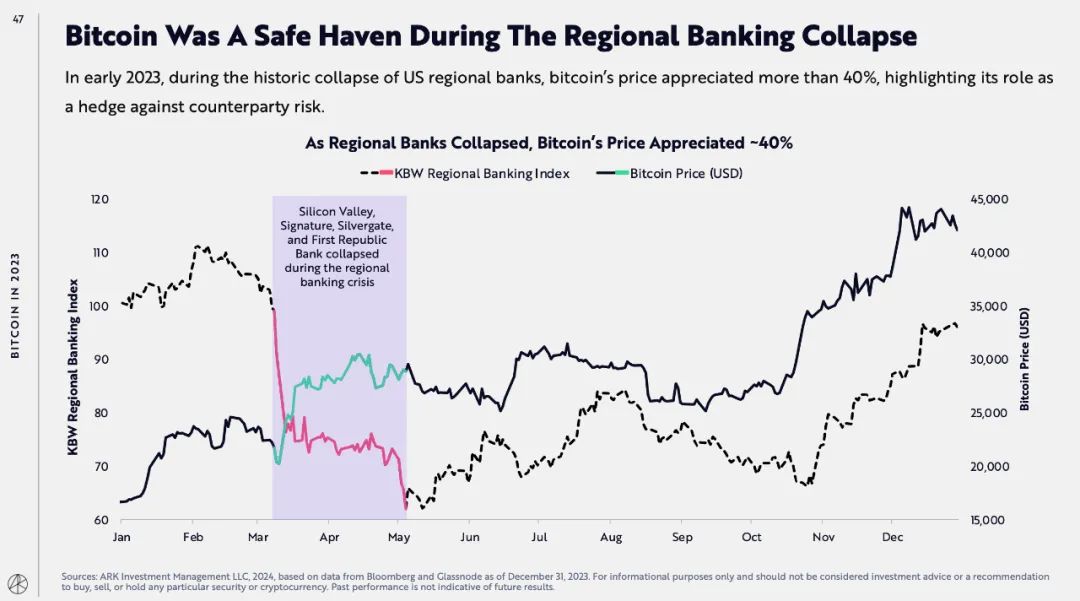
Bitcoin served as a safe haven during regional banking collapses. Early in 2023, amid the historic collapse of U.S. regional banks, Bitcoin’s price rose over 40%, underscoring its role as a hedge against counterparty risk.
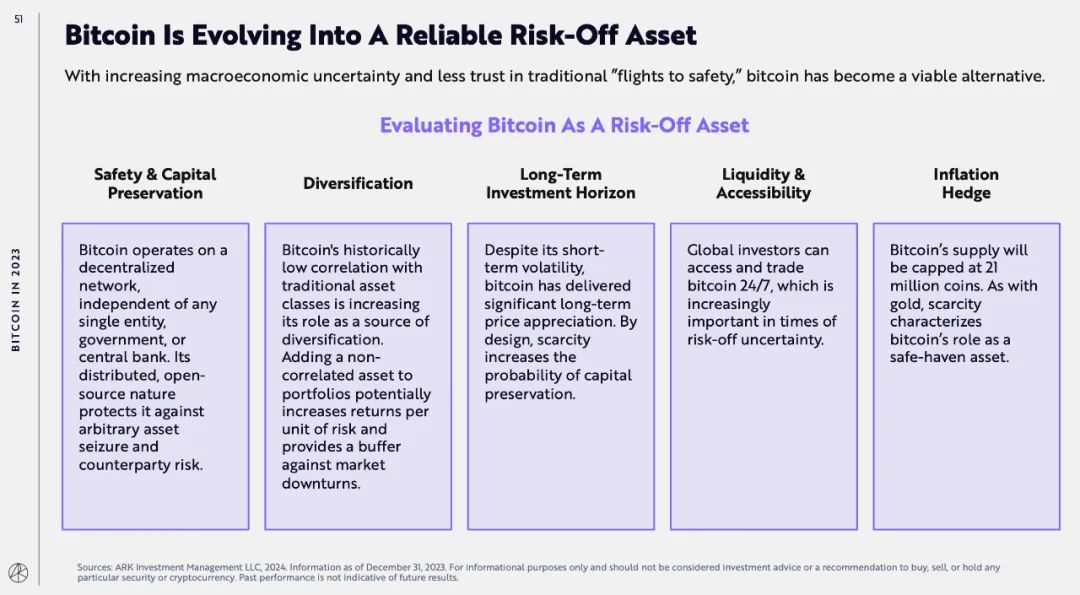
The surge in inscriptions signals Bitcoin’s expanding role beyond transaction settlement. Bitcoin inscriptions, launched in January 2023, introduced a unique numbering system for each Bitcoin.
Bitcoin’s smallest unit, the satoshi (“sat”), is identified by its position on the blockchain. Each satoshi is identifiable and immutable, allowing users to inscribe data, images, or text onto it.
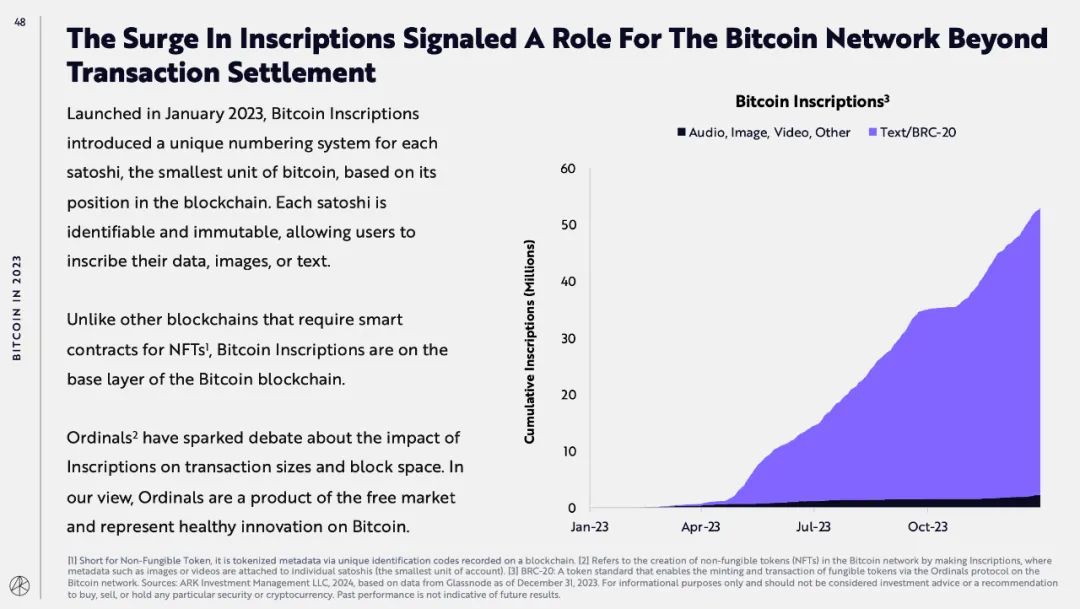
Bitcoin’s fundamentals remained unaffected by the 2022 crisis and continued rapid development throughout 2023.
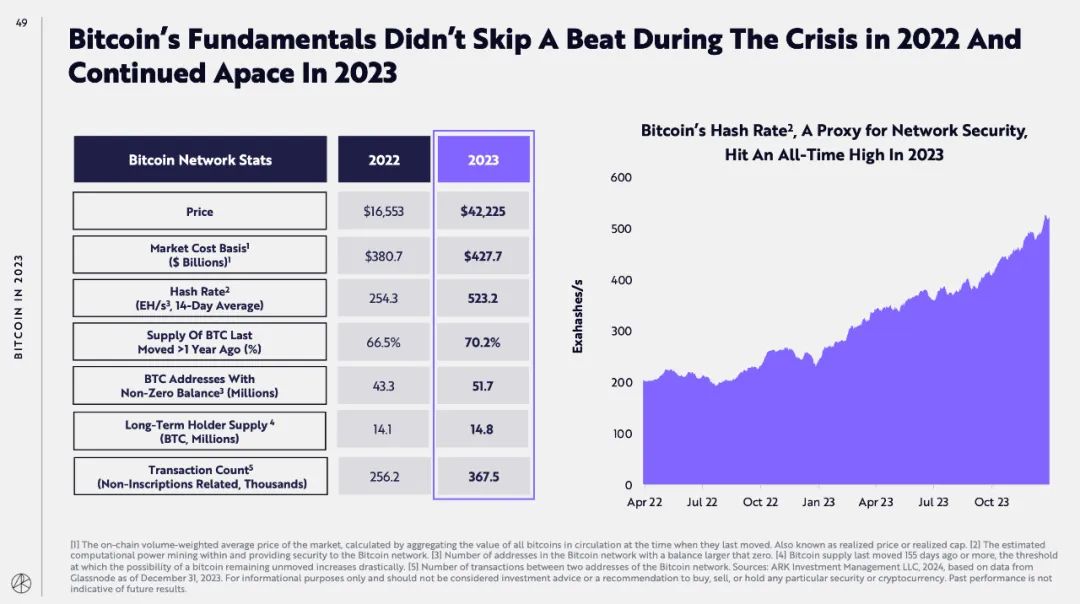
CME surpassed Binance to become the world’s largest Bitcoin futures exchange. After the 2022 turmoil, demand increased for more standardized and secure infrastructure, shifting Bitcoin market dynamics further toward the U.S. Chicago Mercantile Exchange (CME) Bitcoin futures reached a record $4.5 billion in open interest.
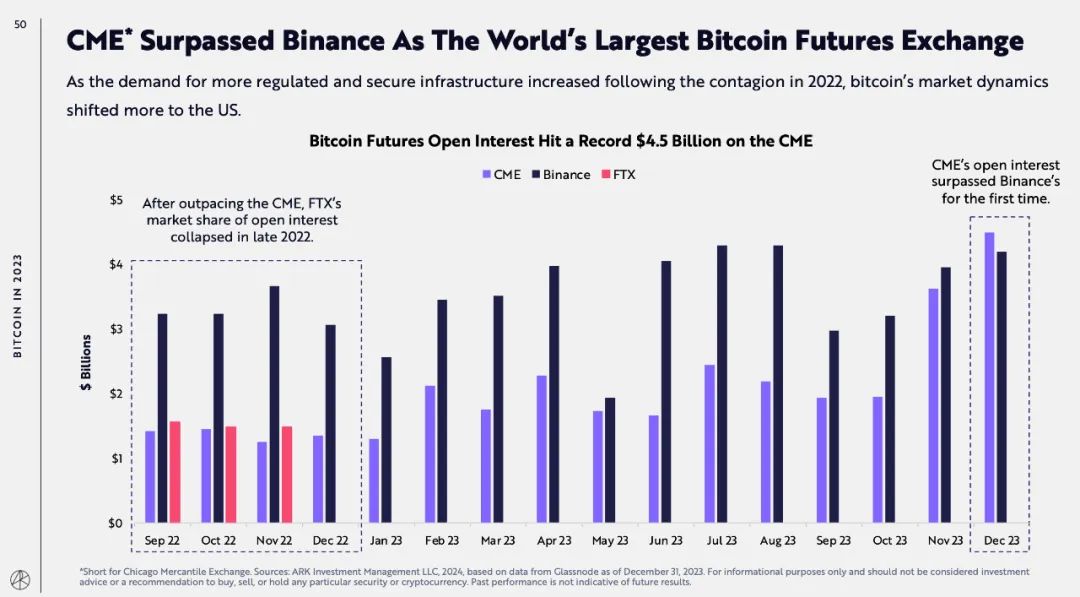
Bitcoin is evolving into a credible safe-haven asset. Amid rising macroeconomic uncertainty and declining trust in traditional “flight-to-safety” assets, Bitcoin has emerged as a viable alternative.
ARK evaluates Bitcoin as a risk asset across six dimensions: security and capital preservation, diversification, long-term investment horizon, liquidity and accessibility, and inflation hedging.
Bitcoin will face significant catalysts in 2024.
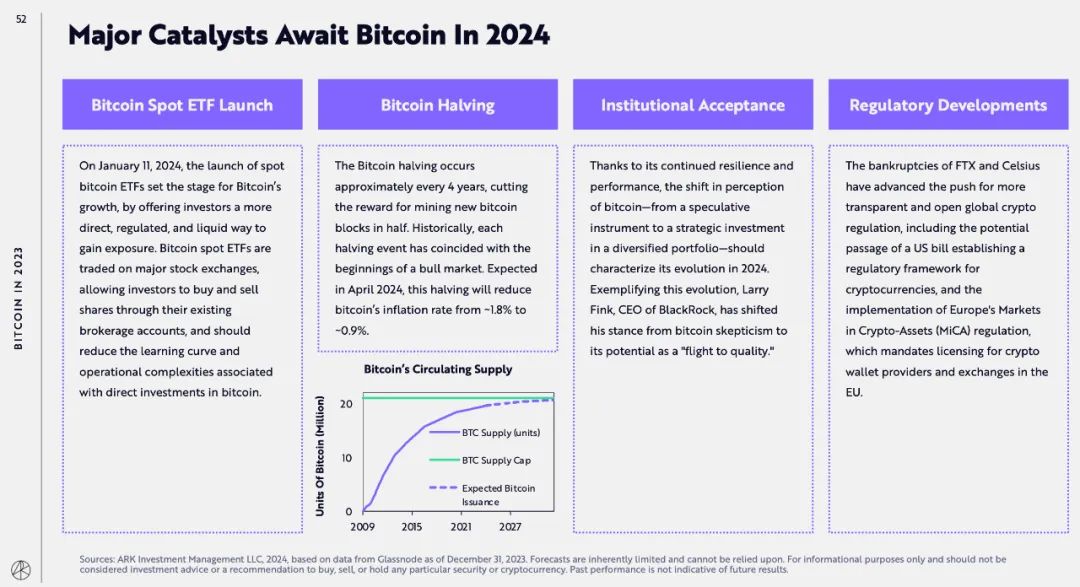
First, the launch of spot Bitcoin ETFs.
On January 11, 2024, the introduction of spot Bitcoin ETFs laid a foundation for Bitcoin’s growth, offering investors a more direct, regulated, and liquid investment vehicle. Trading on major securities exchanges, spot Bitcoin ETFs allow investors to buy and sell shares through existing brokerage accounts, reducing the learning curve and operational complexity associated with direct Bitcoin investment.
Second, the Bitcoin halving. Occurring roughly every four years, the Bitcoin halving cuts the block reward for newly mined Bitcoin in half. Historically, each halving has coincided with the beginning of a bull market. Expected in April 2024, this halving will reduce Bitcoin’s inflation rate from ~1.8% to ~0.9%.
Third, institutional adoption. Driven by Bitcoin’s sustained resilience and performance, perceptions of Bitcoin are shifting—from speculative tool to strategic investment within diversified portfolios—a defining trend expected for 2024.
BlackRock CEO Larry Fink exemplifies this evolution, having shifted his stance from skepticism about Bitcoin to recognizing its potential as a “quality investment.”
Finally, regulatory developments. The bankruptcies of FTX and Celsius have accelerated moves toward more transparent and open global cryptocurrency regulation, including possible U.S. legislation establishing a crypto regulatory framework, and the implementation of Europe’s Markets in Crypto-Assets (MiCA) regulation, which requires crypto wallet providers and exchanges in the EU to obtain licenses to operate.
Join TechFlow official community to stay tuned
Telegram:https://t.me/TechFlowDaily
X (Twitter):https://x.com/TechFlowPost
X (Twitter) EN:https://x.com/BlockFlow_News