An Analysis of 2 Reasons Behind Bitcoin's Sharp Decline
TechFlow Selected TechFlow Selected
An Analysis of 2 Reasons Behind Bitcoin's Sharp Decline
First, the approval of Bitcoin ETFs is a "sell the news" event. Second, there are issues stemming from macro-level U.S. dollar liquidity.
 Navigating Web3 tides with focused insights
Author: Qin Jin

Bitcoin has plunged! In the early hours of January 23, Bitcoin fell below $40,000 for the first time since December 4 last year, dropping over 3% during the day. This marks the second significant decline since the U.S. Securities and Exchange Commission (SEC) approved 11 Bitcoin spot ETFs on January 10. The first drop occurred the day after the SEC's approval, when Bitcoin briefly dipped below $42,000 with a daily decline exceeding 7%.
Bitcoin’s price movement hasn’t lived up to the initial optimistic expectations of a massive rally.
So why did Bitcoin plunge after the approval of Bitcoin spot ETFs? Two main factors can be identified. First, the ETF approval turned out to be a "sell-the-news" event. Second, macro-level issues related to U.S. dollar liquidity. Arthur Hayes, co-founder of BitMEX, said that the downward trend in Bitcoin may signal future problems with dollar liquidity, and this bearish trend could persist until January 31, when the U.S. Treasury releases its quarterly re-financing announcement.
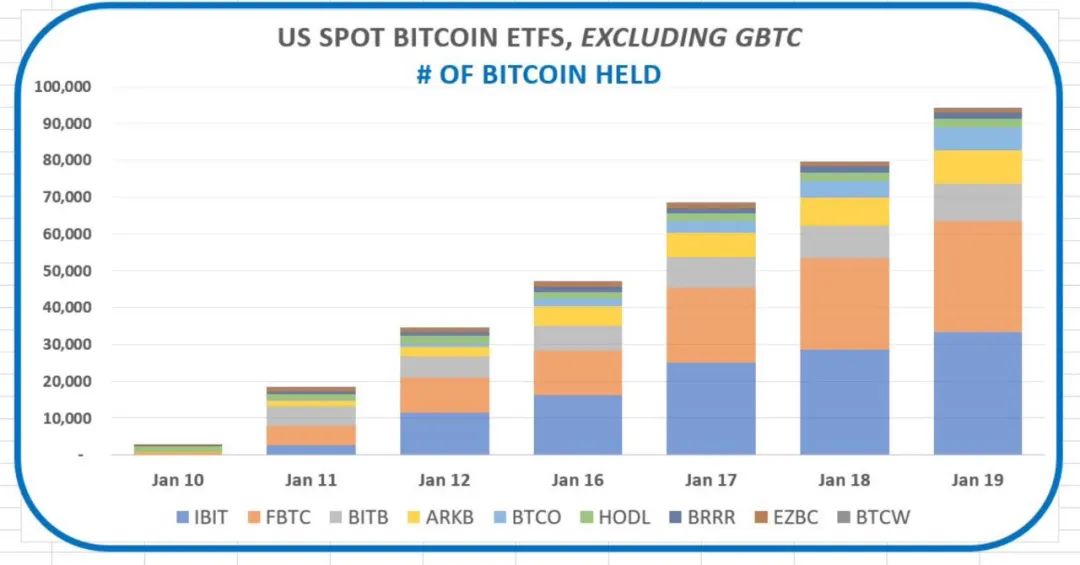
According to BitcoinNews, Grayscale's GBTC has sold approximately 60,000 BTC so far. In contrast, excluding GBTC, nine other Bitcoin ETF issuers—including BlackRock and Fidelity—have collectively purchased 72,000 BTC by January 19. Therefore, the main reason for Bitcoin's sharp drop is not due to Grayscale's selling.
CryptoQuant, a blockchain analytics firm, believes the selling pressure mainly comes from short-term traders and whales who are taking profits after last year’s rebound—not from Grayscale.
Why is Grayscale selling BTC? Grayscale's GBTC was established in 2013 and has existed for nearly 10 years. By the time the U.S. Securities and Exchange Commission approved its conversion into an ETF, it had accumulated nearly $30 billion in assets from large institutions and qualified individual investors. When Grayscale GBTC charges a relatively high fee (1.5%) compared to the other 10 Bitcoin ETF providers, some individual investors opt to redeem their shares for cash and reinvest through lower-fee alternatives. This forces Grayscale to sell BTC to meet redemptions.
Secondly, large entities like FTX directly redeemed and liquidated their holdings, contributing to Grayscale’s BTC sales. According to CoinDesk, FTX has already sold around $1 billion worth of Grayscale Bitcoin ETF shares, accounting for much of the fund's outflows.
Since the approval of Bitcoin ETFs, BTC prices have continued to fall. In theory, now that FTX has completed most of its share sales, selling pressure may ease somewhat, as bankrupt estate liquidations represent a relatively unique situation.
CoinDesk reported that since Grayscale's GBTC converted into an exchange-traded fund earlier this month, investors have dumped over $2 billion worth of the fund—much of which consisted of 22 million shares sold by FTX’s bankruptcy estate.
Nikolaos Panigirtzoglou, analyst at JPMorgan Chase, said that if the previous estimate of $3 billion in potential outflows is accurate, and $1.5 billion has already exited, another $1.5 billion could exit the BTC market via profit-taking from GBTC, potentially putting further downward pressure on prices in the coming weeks.
Of course, there are still optimists in the crypto market who remain bullish on Bitcoin in the long term. On January 21, the CEO of Galaxy Digital said on social media that although some investors may sell GBTC, we believe most of these outflows will be absorbed by other Bitcoin ETFs. This digestion period will likely end within the next six months, after which BTC will move toward higher prices.
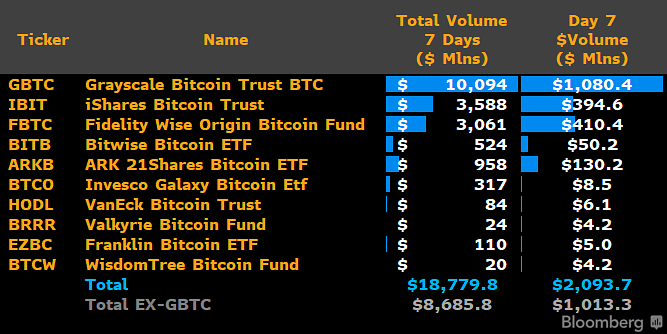
According to the latest data released by CC15Capital, within just six trading days following the launch of Bitcoin ETFs, nine new spot Bitcoin ETFs have purchased approximately 95,000 BTC worth $3.9 billion—excluding GBTC. Additionally, Bloomberg ETF analyst James Seyffart noted on social media that total trading volume over the first seven trading days was slightly under $19 billion.
Additionally, the founder of dForce mentioned on social media that Mt. Gox will unlock 200,000 bitcoins over the next two months to pay creditors, with PayPal's fiat payment channel already beginning disbursements. Moreover, the anticipated Bitcoin halving in April 2024 will reduce the annual supply by 160,000 bitcoins.
Will Bitcoin face another wave of selling pressure then? We’ll have to wait and see.
Join TechFlow official community to stay tuned
Telegram:https://t.me/TechFlowDaily
X (Twitter):https://x.com/TechFlowPost
X (Twitter) EN:https://x.com/BlockFlow_News