









Bitcoin never sleeps—will Web3's "golden age" last forever?
TechFlow Selected TechFlow Selected
Bitcoin never sleeps—will Web3's "golden age" last forever?
What we love is not "Blossoms," but that era when opportunities were everywhere.
 Navigating Web3 tides with focused insights
By Terry
The recently concluded TV series "Blossoms Shanghai" has sparked a whirlwind in the investment market and reignited public interest in 1990s Shanghai—particularly the legendary Huanghe Road and its capital markets. It wasn't just Baozong's golden era; it also mirrored the real-life struggles of ordinary individuals navigating sweeping social changes.
This phenomenon isn't unique to one industry. Many sectors have experienced similar trajectories—initially flourishing with explosive growth, abundant opportunities, and an intoxicating sense of wealth everywhere. But as the wild west phase fades, those glory days gradually become nostalgic memories, giving way to a more normalized reality.
"What we truly miss isn’t 'Blossoms,' but that era when opportunities were everywhere." In many ways, the past decade of the Web3 industry parallels the stock market boom of the 1990s. Now, with the approval of spot Bitcoin ETFs and Web3’s increasing alignment with mainstream finance, is the “blossom era” of crypto coming to an end?
The Glorious Early Days of Crypto
Many in the crypto space have probably imagined: if only we could go back ten years, how would we ride that wave of opportunity?
Accumulate BTC? Become a miner? Start another Bitmain? Or join Binance as an early employee? The options seem endless because the first chaotic decade of crypto truly was a golden age beyond imagination—one that spawned countless legends and titans.
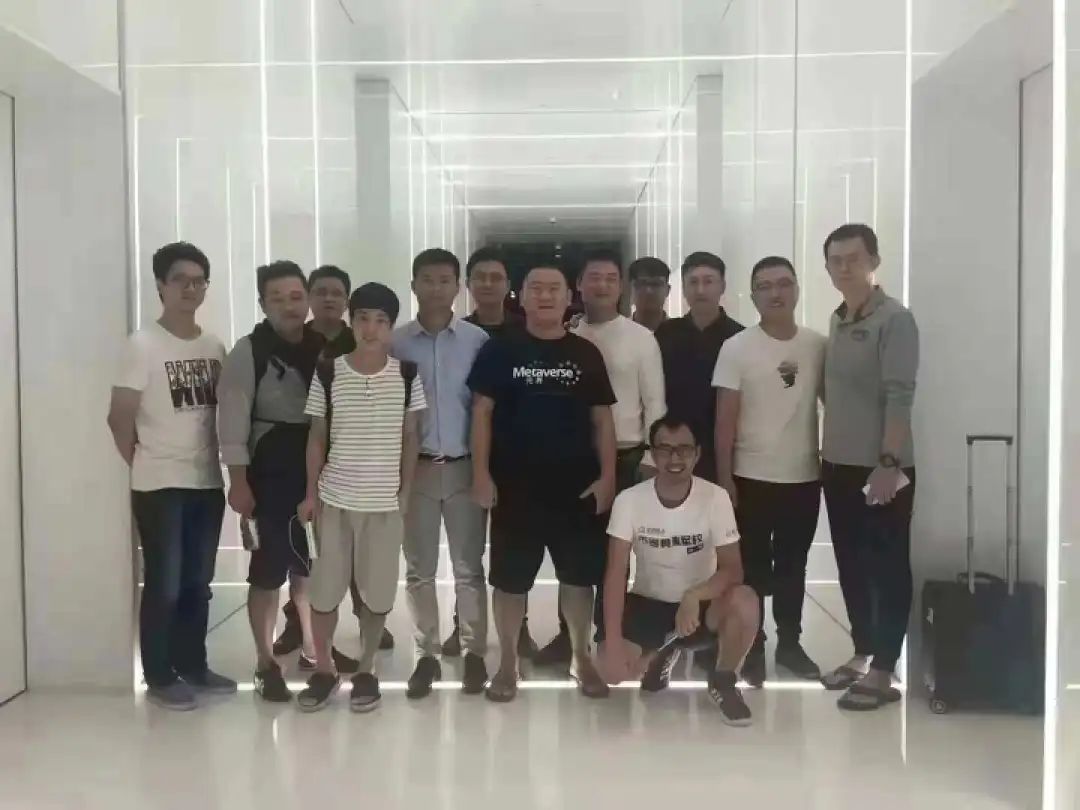
Photo: CZ (far right) with early industry pioneers
Take Binance (BN), for example—a textbook case of explosive wealth creation. Back in 2017, before its launch, BN struggled for recognition and funding. Even after launching BNB at 1 yuan in July 2017, the token quickly dropped below its IPO price, hitting a low of just 0.5 yuan.
He Yi later recalled this as the most stressful time for CZ, who reportedly lost 10 kilograms in just three weeks. Yet no one could have predicted that within half a year, BN would rise to become the world’s top exchange by trading volume—and continue its meteoric ascent.
Just four years later, during its peak in 2021, some former executives valued the company at over $300 billion—creating not only a billionaire founder but also a wave of new millionaires and billionaires.
Beyond exchanges, mining emerged as another booming sector. Take Feng Han ("Shen Yu"), founder of AntPool: starting from mining with a laptop in his dorm room, then upgrading to GPUs at home, he seized the moment in 2013 to establish AntPool. At one point, a single 500KW facility produced over 20,000 BTC and more than 100,000 ETH.
PoW mechanisms tied miners’ fortunes directly to Bitcoin’s success, turning them into the most dedicated evangelists and defenders of BTC. This symbiosis gave Bitcoin immense resilience and marked the beginning of crypto’s wild ride—most early crypto titans and leading companies originated from the mining space.
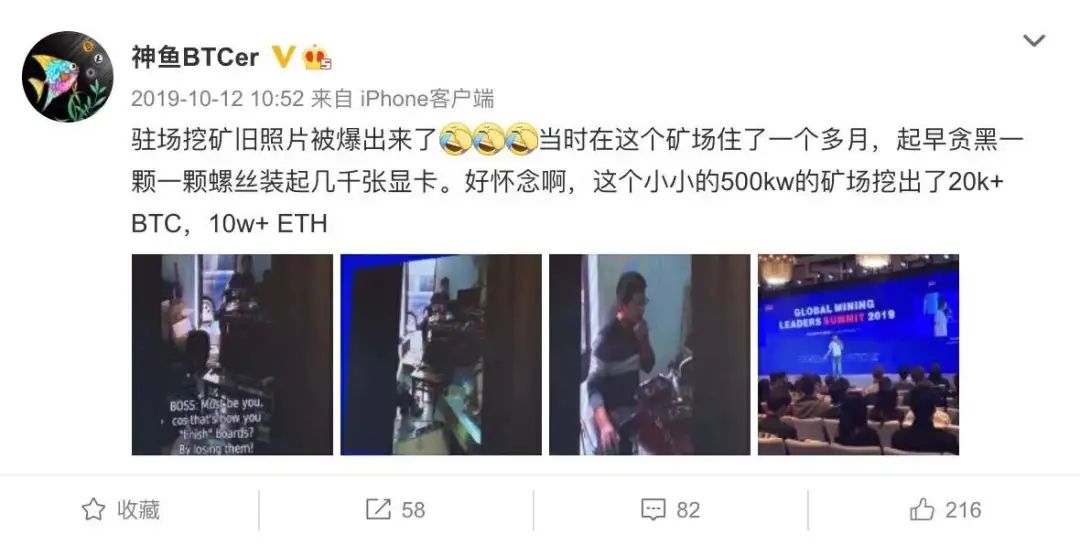
From a handful of “million-token holders” to today’s widespread “thousand-token” or even “hundred-token” holders, and from approachable blockchain pioneers (like Shen Yu) and platform founders (like CZ) six years ago to today’s “billionaire-next-door,” the landscape has changed dramatically in just a few short years.
Recently, Hurun released its 2023 Rich List, featuring several Chinese crypto figures:
Wu Jihan ranked 9th among Peking University alumni with a net worth of 10 billion yuan; Li Lin ranked 3rd among Tongji University alumni with 7 billion yuan; Xu Mingxing ranked 16th among Renmin University alumni with 5 billion yuan.
However, the entire crypto industry has now moved beyond its early frontier days. Attempting to replicate these founders' paths—by participating in block production or providing mining hardware—is likely no longer viable for getting rich quick.
Still, for ordinary investors, there remain highly rewarding opportunities within the Web3 ecosystem.
The Best Time Was Ten Years Ago—the Next Best Is Now
Most directly, since the “DeFi Summer” of 2020, airdrops have emerged as a powerful new mechanism beyond simply mining or holding tokens.
For those curious and eager to explore new projects, airdrops offer unique rewards—substantial income streams distinct from traditional token accumulation:
-
Uniswap (UNI): gifted an iPhone 12;
-
Meme (MEME): awarded a house;
-
Tokenlon (LON): treated recipients to a luxury dinner;
-
The Graph (GRT) curator program: gave away a house;
In 2023 alone, Blur distributed 360 million BLUR tokens to over 62,000 qualifying addresses. The largest single recipient received 3.2 million BLUR—worth over $1.6 million (approximately 10 million RMB) at current prices.

While individual airdrops like ARB, TIA, and JTO may offer limited riches per address, stories abound of users accumulating life-changing sums across multiple wallets.
For the past three years, actively engaging with new Web3 products hasn’t just been about fulfilling personal needs—it’s also about planting invisible seeds that might blossom into unexpected windfalls.
As depicted in "Blossoms," Zhen Zhen Garden profited from information asymmetry. Its prosperity—and that of Huanghe Road—was intrinsically linked to such gaps. As long as information disparities existed, the blossoms thrived. But with the end of the frontier era, the most visible shift is the gradual elimination of these informational advantages.
In 2023, narratives like Ordinals and memes diverged from previous VC-driven, heavily funded projects. They offered underdogs and everyday participants alike rare opportunities to leapfrog ahead—something rarely seen in traditional startup ecosystems.
The flood of inscriptions and meme coin tips across WeChat groups briefly revived memories of the old zoo market frenzy. Meanwhile, spot ETF approvals introduced a major new variable:
Long anticipated as the primary gateway for institutional capital inflow, everyone hopes ETFs will bring massive new funds, open doors for mainstream investors to access crypto, accelerate Wall Street’s adoption of Bitcoin, and broaden acceptance of digital assets in portfolios.
Consider this: Web2 giants like Taobao or Amazon serve hundreds of millions, even billions, of users. In contrast, top Web3 apps like MetaMask and ENS hover around tens of millions or fewer. And actual BTC holders among the general public remain extremely scarce.
From this perspective, the Web3 stage continues non-stop, 24/7. Even after spot ETFs are approved, the market will remain niche for years. The onboarding process still brims with opportunities. What exciting acts will unfold next? Only time will tell.
Conclusion
For me, the most memorable line from "Blossoms" comes from Uncle Ye to Baozong:
"You know New York’s Empire State Building? It takes an hour to run from the bottom to the top—but only 8.8 seconds to fall from the roof. That’s the stock market. If you want to make money, you must first learn how to lose."
Since 2017—and especially after the DeFi summer of 2020—crypto has seen a constant rotation of dominant narratives: DeFi’s pickaxes, NFTs’ astronomical JPEGs, the rise and fall of new Layer 1 chains, and most recently, the Ordinals wave.
These shifting trends continuously fuel new “rags-to-riches” tales, stirring our imaginations. This cycle is both the norm in crypto and a sign that Web3’s golden age is far from over.
Therefore, those of us in Web3 must remember: never leave the table. “If there’s an elevator, take it; if not, climb the stairs.” As long as you stay in the game and keep pushing forward, one day your own blossoming moment will come.
Join TechFlow official community to stay tuned
Telegram:https://t.me/TechFlowDaily
X (Twitter):https://x.com/TechFlowPost
X (Twitter) EN:https://x.com/BlockFlow_News
 白话区块链
白话区块链









