









Cryptocurrency Nations: The Three-Body Dilemma
TechFlow Selected TechFlow Selected
Cryptocurrency Nations: The Three-Body Dilemma
If the sole goal of cryptocurrency was to establish a non-state property system, then it has already succeeded.
 Navigating Web3 tides with focused insights
Written by: Sam Hart, Laura Lotti, Toby Shorin
Translated by: Block unicorn
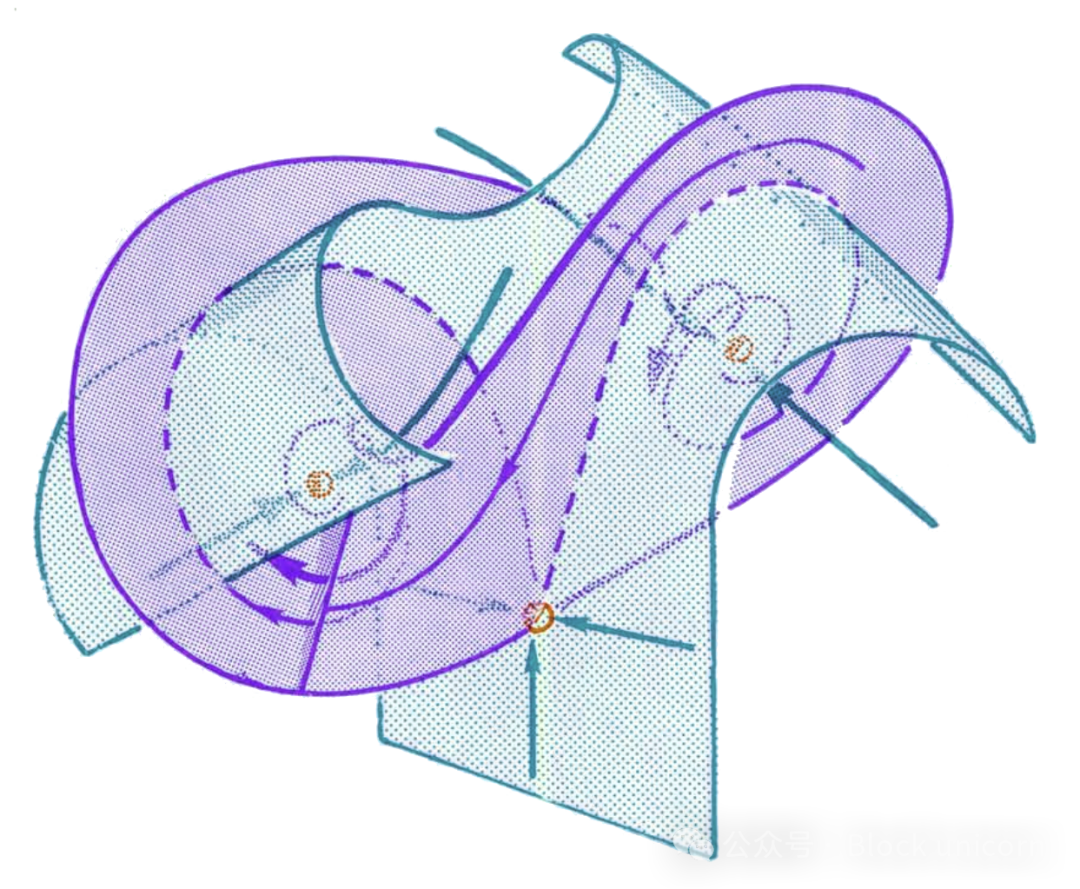
"Dynamics: The Geometry of Behavior," Ralph H. Abraham and Christopher D. Shaw (1992), illustrating interactions between systems.
The original vision for cryptocurrency was to build institutions that do not decay. Yet attempts—from DAOs to crypto-powered network states—to embed these structures into broader social frameworks have largely failed. We draw on Lawrence Lessig’s theory of legal regulation to explain why. Protocol designers work with markets and code, but frequently overlook the crucial institutional roles played by social norms and law itself. The absence of these moderating forces severely limits the forms of prosocial behavior that can be nurtured or enforced.
From Stateless Money to Crypto States
The 2008 financial crisis ushered in a new era of institutional distrust. The public was forced to confront an unsettling truth: the monetary system no longer served their interests. Occupy Wall Street expressed this discontent, while others turned to Bitcoin, hoping self-executing software could offer incorruptible money as an alternative to fiat institutions.
Yet whereas we once discussed separating money from the state, we now hear talk of crypto states and constitutions. In crypto, political rhetoric has shifted from evading the state to mimicking it, focusing on democratic voting models and public goods. Underpinning this shift is a new ideology: that crypto is the next "Leviathan," capable of enforcing immutable rights comparable to those of nation-states. Some claim blockchain will replace the state's monopoly on violence with reliable, neutralized, decentralized cryptographic infrastructure, enabling independent property rights and “network states.”
Block unicorn note: "Leviathan," originally titled "Leviathan or The Matter, Forme and Power of a Common Wealth Ecclesiastical and Civil," is Thomas Hobbes’ 1651 treatise. The term "Leviathan," drawn from a biblical sea monster, symbolizes a powerful sovereign state. This foundational text systematically presents theories of the state, human nature, social contract, and governance, profoundly influencing Western political philosophy (source: Wikipedia).

As we celebrate experiments in institutional formation via software—rehearsing 18th-century radical politics—these efforts neglect a core feature of the state: its regulatory power through law. When Silicon Valley Bank collapsed, the state unilaterally acted to guarantee deposits. Crypto lacks such mechanisms; when protocols are hacked, everyone loses money unless a majority votes to fork the network to restore funds.
Crypto’s anti-censorship immutability is both its greatest achievement and its biggest weakness. By resisting the all-encompassing reach of law, it creates a novel form of realpolitik—a space where power operates under different rules. Yet in stripping away legal oversight, crypto protocols face a three-body problem: 1) social norms, 2) markets, and 3) code, each governed by distinct regulatory logics that often conflict. On this new playing field, protocol designers’ intentions may be undermined, leading to dysfunctional institutions, moral dilemmas, and contradictory governance policies.
Interventions aiming to strengthen normative regulation show potential, but they are often overwhelmed by the primacy of hardcoded market incentives. Perhaps the answer to enhancing normative self-regulation lies within existing cultural contexts.
The Regulating State (Social Norms)
While software may be eating the world, it’s already a world consumed by law. Through law, humans become legal persons, “nature” is defined and protected, and order is maintained across land and sea. Law is omnipresent and malleable—the fundamental institutional technology of the modern state. Though the nature of law remains academically contested, its defining trait is clear: behavioral regulation. Law sets standards for upholding public values and protecting freedoms. Likewise, it deters or punishes harmful behaviors through sanctions.
In his seminal 1998 article, Lawrence Lessig argued that four forces regulate daily life: law, markets, social norms, and the architecture of built environments. 1) Regulations define socially acceptable conduct; 2) Markets regulate economic exchange through pricing; 3) Architecture shapes spaces and guides flows of people and information; 4) Finally, law regulates behavior through institutional authority and enforcement. Together, these forces determine the realm of possibility within material, social, and economic constraints. “We the people” are merely “pathetic dots” subject to these four regulatory powers.
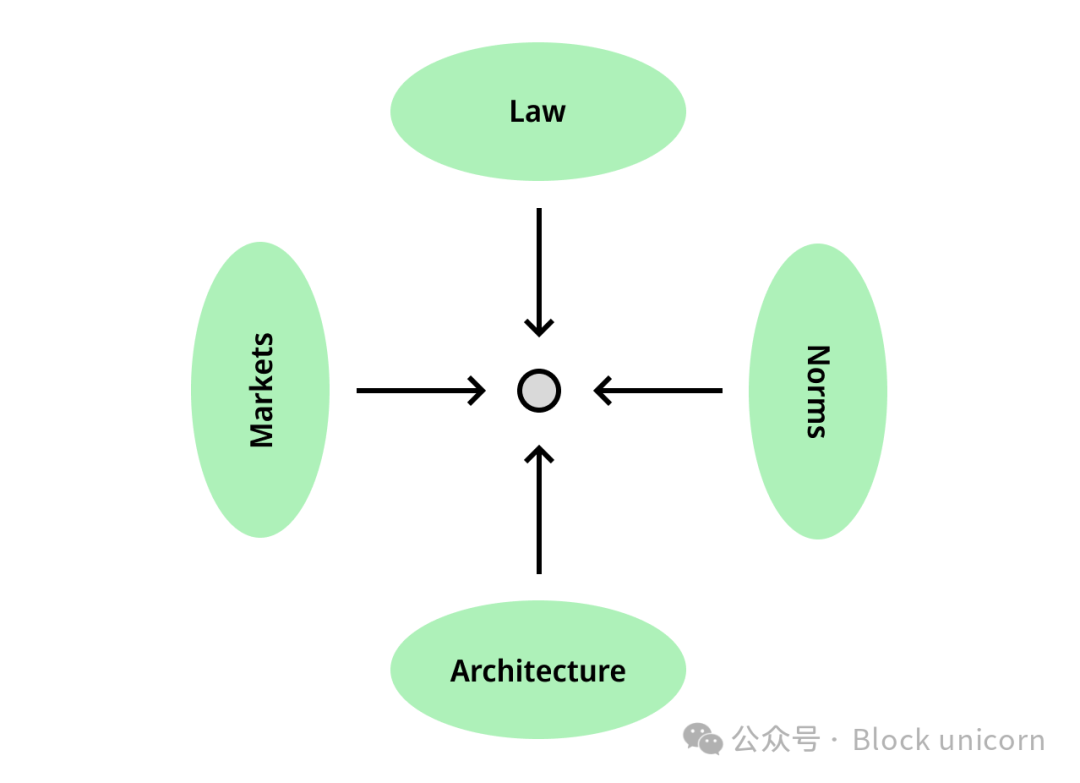
For this "pathetic dot," the four modes of regulating behavior, adapted from Lessig 1998.
Among these four forces, law holds supremacy within the state. Lessig sought to demonstrate how law achieves its regulatory goals by shaping the other three. For instance, Japan’s high tariffs on imported rice ensure consumers eat domestically grown rice—law regulating through markets. During the global pandemic, public health campaigns promoting mask-wearing and vaccination exemplified law shaping social norms. As for technology forming part of our digital “built environment,” law also seeks to regulate it.
However, the power to regulate through other forces often becomes a power to regulate everything. Consider the Digital Millennium Copyright Act (DMCA), which criminalizes circumventing digital rights management, thereby strengthening gray markets for pirated content. While controversial and ultimately ineffective, DMCA reveals law’s expansionist tendency. Law tends to grow, regulating new technologies and social phenomena even before legislators fully grasp their significance.
Social contract theorists like Grotius, Locke, and Rousseau could not foresee law permeating every aspect of life. Yet legal dominance is inevitable—not merely punitive, law also empowers and protects. Through law, minority rights are safeguarded and disputes resolved. Though law does not always advance justice, it provides a perceived neutral foundation and a clear mechanism for citizens to renegotiate societal rules. As Max Weber stated, if the state is a human community claiming a monopoly on legitimate violence, then the rule of law is the tool ensuring that monopoly. Lessig himself remains cautious about the implications of his own ideas:
This school of regulation is totalizing—an effort to serve power through culture, a “colonization of the lifeworld.” Every domain is subject to broad control; the capacity to govern every space is its aim.
But today, state sovereignty is being challenged. Though this process began before cryptocurrency emerged, blockchain escalates the struggle to a new level. Indeed, the regulatory regime composed of states, central banks, and “too big to fail” institutions is precisely what crypto disrupts. Yet to understand how blockchain introduces a new form of regulatory regime, we must turn to its foundational innovation: censorship resistance.
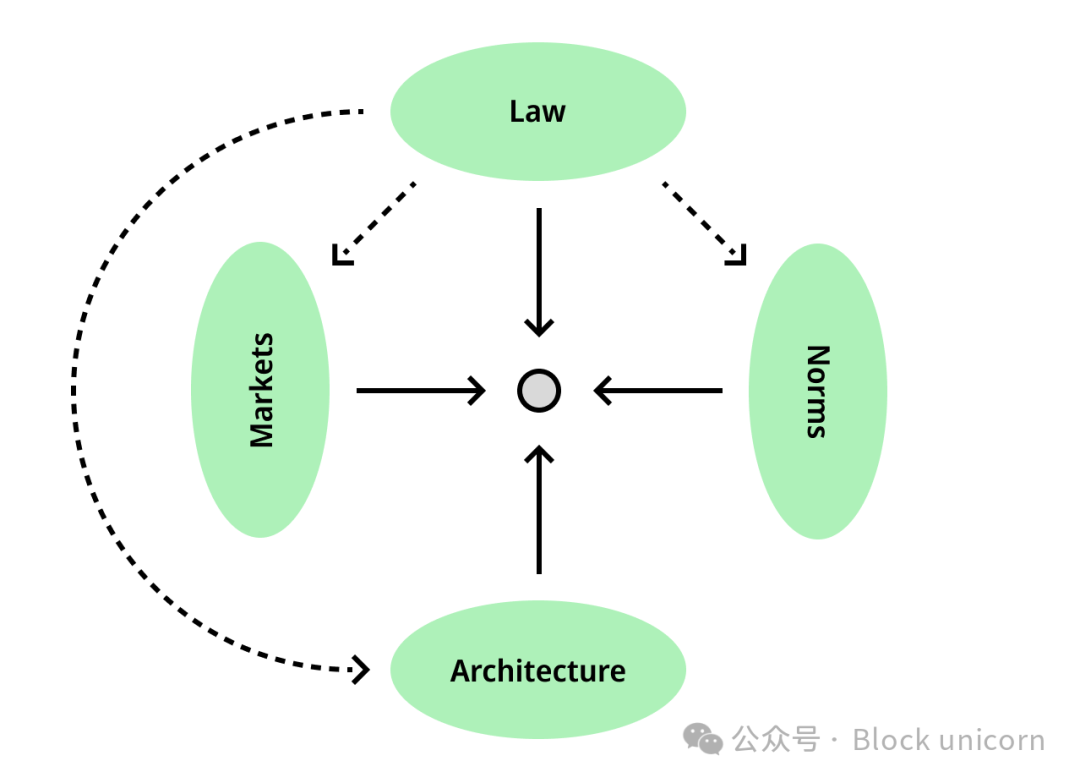
Law acts through other forces, regulating via them.
Censorship Resistance Equals Law Resistance
While the state remains the sole entity claiming legitimate regulatory authority, competing interests, technologies, and economies of scale are encroaching on law’s presumed sovereignty. International commerce increasingly relies on private arbitration rather than treaties. Meanwhile, the alliance between global finance and software challenges national market regulation; when Elizabeth Truss proposed $50 billion in tax cuts, causing UK bond markets to collapse, she resigned after only 44 days as Prime Minister. But if international finance constitutes a new regulatory force, rivaling it in power and influence is the internet.
Since its inception, the internet’s “architecture” has complicated contemporary governance. The web is not just a communication medium—it’s a transmission layer for new regulatory powers. Network computing enables new norms, markets, and architectures to emerge across multiple layers of abstraction. For example, social media platforms enforce semi-automated free speech policies independent of state laws; online communities develop their own normative systems, complete with ideologies and moral codes. Remote work enables rights arbitrage, and internet-born subcultures foster imagined communities as strong as any national identity. Even in regions where law tightly binds the internet, such as China, legal frameworks often lag behind.

Estonia’s e-Residency card, available via online application.
Fifteen years ago, a new contender entered the arena: cryptocurrency. In some ways, crypto protocols reenact the internet’s regulatory innovations. But they generalize the censorship-resistant features of earlier technologies like BitTorrent and PGP. Crypto protocols cannot be altered by intermediaries or higher authorities. While law’s long arm can compel Facebook to disclose private messages or seize pirated ebooks, Bitcoin and Ethereum assets remain accessible and inalienable as long as miners run nodes. Computational states are irreversible—in short, these protocols do not respect law. Crypto protocols are media for money and contracts that operate without or despite state validation. They create a new kind of regulator—one resistant not only to censorship but to law itself.
This is not to say crypto protocols are merely tools for crime and lawlessness. Resistance to law also drives a positive vision: building trustworthy, neutral institutions from scratch—monetary systems, banks, and public resources—that improve upon traditional organizations and solve coordination problems. Thus, so-called “law resistance” refers to Bitcoin and subsequent protocols resisting the overarching regulatory framework described in Lessig’s model. As blockchains resist state law, they establish their own regulatory regimes. Where law cannot intervene, the remaining three forces freely regulate the protocol ecosystem—with no single arbiter. Let us examine some novel institutional dynamics that arise.
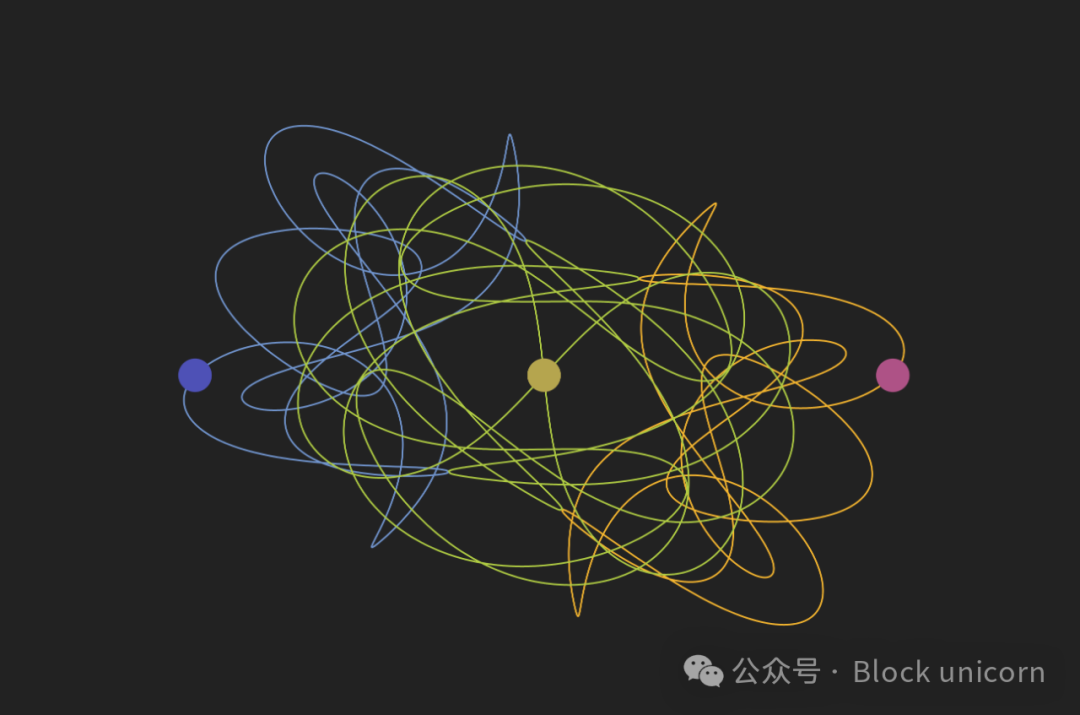
The Three-Body Regulation Problem
In the absence of law, uncontrolled interactions among software architecture, markets, and norms give rise to what we call the crypto three-body regulation problem.
1. Crypto protocols consist of technically encoded architectures with notable characteristics. They are open-source and permissionless, meaning anyone with internet access can use them. They process computations deterministically and strongly resist deviations from their replicated state. In terms of user interface, protocol architectures are highly constrained—offering only limited, narrowly defined affordances (e.g., application binary interfaces). A key to understanding crypto regulation: engaging with its system ultimately means interacting with smart contracts or blockchain code.
2. Crypto protocols are driven by global, 24/7 markets. Users interact through hard-coded market structures governed by deterministic logic—token supplies, reward functions, bonding curves, lending rates, automated market makers—all forming a second regulatory layer. Because blockchain state computation requires transaction submission, markets and architecture (e.g., Ethereum) are tightly coupled. Consequently, many crypto markets evade legal oversight, as law cannot reverse finalized transactions. The fusion of markets and programmable code explains why incentive design is the preferred method for aligning stakeholders in protocol development.
3. Finally, there is a layer of social norms formed by multi-level on-chain and off-chain communication channels—what we commonly call “spaces.” Crypto communities host diverse subcultures: cypherpunks, degenerate traders, platform cooperativists, activists, e-girls, neo-Christians, post-internet artists, new rationalists, effective altruists, accelerationists of various styles and speeds. Each group brings its own norms, and many design protocol-based projects aligned with their politics. While each microculture has unique traits, most share one thing: a spirit of self-governance and anti-institutionalism. This norm appears central to attracting diverse groups to crypto—even turning would-be bankers into advocates for P2P cash.
Because regulatory forces interact, different combinations affect dominant incentives and long-term social development. Lessig noted that regulatory forces can sometimes substitute for one another—for example, speed bumps and roundabouts can be more effective than police-issued fines. But without a unified regulatory force like law, substitution becomes far less viable.
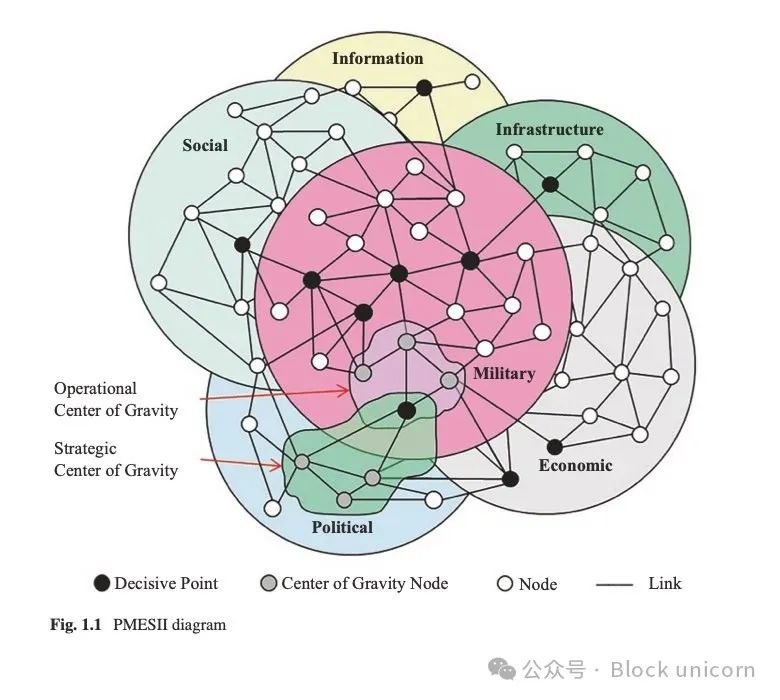
Crypto lacks this integrative force. Without a foundational legal logic to translate collective notions of fairness into cross-domain regulatory strategies, the unstable interplay of norms, markets, and architecture produces new and often surprising institutional behaviors. Let us examine how this three-body problem unfolds in several protocol contexts.
Case Study: Institutionalized Bribery at Curve
Curve is a DeFi protocol that distributes rewards at fixed intervals. Yields are allocated based on time-locked staking: a user’s tokens multiplied by lock duration determines their voting escrow (ve) power over incentives directed to specific pools.
Notably, Convex Protocol enhances rewards for CRV stakers and Curve LPs, effectively creating a secondary market for votes. Through Convex, market participants needing liquidity can pay users who’ve locked capital in Curve to direct their liquidity voting power. The community thus adopts terms like “black market” and “bribery” to describe this system—accurately reflecting the core institutional logic of Curve/Convex and setting accurate expectations for interaction.
Curve illustrates the novelty of protocols as institutional frameworks. In the absence of human management, the combination of programmed incentives and free markets introduces institutional behavior explicitly prohibited in legal contexts—bribery. Social norms are thus reoriented to validate and replicate this pattern. In other words, norms become indistinguishable from market incentives. These incentives are accepted and normalized—de facto, no one tries to restrict or change the dynamic; it’s simply allowed to function. We cite this example not to endorse bribery or validate veToken mechanics, but to highlight alignment between a protocol’s core logic and its popular understanding.
While crypto hosts many unique—and sometimes questionable—institutional logics, this case demonstrates both the convenience and limitations of protocol regulation. When all three forces align, even bribery can be deemed acceptable. But when forces conflict—as in the NFT royalty debate—tensions erupt.
Case Study: The Erosion of NFT Royalties
Many popular ERC721 NFT implementations include hardcoded royalties, paying creators a small fee on each resale. This market structure aims to satisfy a normative claim: creators should benefit from the value they generate. Major NFT platforms and protocols honor these royalties, even offering optional tips to artists. However, crypto’s open-source, permissionless architecture allows NFTs to be “wrapped” in other smart contracts, sold, and unwrapped—bypassing royalty payments.
When NFT marketplaces Sudoswap and Blur launched, their designers implemented these workarounds, disregarding established norms and undermining competitors. This competitive pressure forced OpenSea, the largest NFT marketplace, to follow suit, making royalties optional. The story ended sourly: crypto-enthusiast artists felt betrayed by the medium and dominant markets. Market structures can reflect norms—but cannot enforce them.
Protocol designers often assume markets, code, and norms will harmoniously coexist according to plan—often the opposite occurs. Unlike uniform legislation within a jurisdiction, the protocol domain is anarchic and disordered. Protocols with conflicting norms compete for resources and attention, using incentives to attack each other, collapsing during hacks or “pump-and-dump” schemes. In the rise and fall of NFT royalties, smart contracts briefly enforced fees—but ultimately succumbed to the contingencies introduced by permissionless metagaming. All contracts are incomplete, but smart contracts especially so. Here, a technical infrastructure feature proved dominant.
Without law, attempts to use state-inspired tools—constitutions, role appointments, subjective rules—usually fail. Let’s consider another case where smart contracts override other institutional designs.
ENS is a protocol with state-like features: an ENS DAO constitution, “democratic” governance, and emphasis on public goods. These tools signal greater stakeholder commitment: ENS community norms and values are reflected in the protocol’s institutional behavior.
In 2021, a hateful tweet by ENS co-founder Brantly Millegan resurfaced, sparking outrage in the crypto community. After Millegan’s homophobic views were exposed, the community sought to vote him out. Ultimately, ENS token holders voted to remove him from the ENS Foundation—a legal entity registered in the Cayman Islands. Setting aside whether the action was justified, the tension between the community’s implicit normative expectations and what the protocol mechanism allowed was stark.
A contentious aspect of the vote to remove Millegan from the Foundation board was that the proposal failed partly because Millegan himself voted against it. Without Millegan, the largest holder, opposing the motion, the majority would have passed his removal. Although many expected him to abstain, any legally binding social rule—like corporate bylaws—must reside outside the protocol. The ENS “constitution,” which airdrop recipients had to sign to claim tokens, did not account for this scenario, nor was it designed into the voting system.
That a protocol can regulate certain behaviors doesn’t mean it possesses the full regulatory capacity of a state. Legal instruments like charters, constitutions, and codes of conduct are extremely fragile without law’s retrospective enforcement. Legal institutions use such texts to infer contractual intent—protocols lack this capability.
Protocols incorporate rigid architectural features to facilitate coordination. Programmable controls enable various permissionless markets. Yet when a protocol becomes more community-driven and takes on complex managerial functions, social challenges intensify. Conflicts cannot be resolved solely by programmed economic incentives—they require discretionary logic tied to community values. In short, when these three forces inevitably clash, they cannot be settled through traditional legal means.
Back to Code
We have shown how institutions regulate behavior by configuring these forces, and how crypto’s behavioral dynamics stem from regulatory instability in law’s absence. While law may lack internal coherence, it at least offers a singular judicial surface through which all other regulatory forces can be reshaped. Compared to the state’s comprehensive regulatory system, life within the fragmented puzzle of crypto protocols is more detached and risk-laden. This hasn’t stopped brave individuals from migrating assets to digital nations—but how do crypto citizens cope with the contradictory outcomes frequently produced by this three-body system? Protocols’ ability to credibly enforce discretionary principles remains far less developed than that of the state.
Readers will notice that in the three cases discussed—Curve, NFT royalties, and ENS—institutional behavior trends toward “returning to code.” We mean that regardless of norms’ role in the protocol ecosystem, the ultimate determinants of institutional and user behavior are coded architecture and market incentives. In Curve, “greedy” behavior becomes a legitimate social norm via vote-buying mechanisms. In NFT royalties, artist-supported royalties collapse amid price wars. In ENS, the built-in token voting system overrides the community’s normative stance expecting Brantly Millegan’s resignation or abstention. When normative behavior cannot be enforced, it regresses to behaviors enabled by other regulatory forces. Then, new social norms aligned with existing architecture prevail.
Some view this regression as crypto’s de facto policy: “Any behavior permitted by a protocol’s code and market structure is legitimate.” Though rarely stated so bluntly, this view is widespread among crypto users. It surfaces when people defend hackers’ right to exploit poorly designed protocols. As the Mango Markets hacker claimed, his team merely “ran a high-profit trading strategy.”
Yet returning to code does not always yield legitimate outcomes—thus it cannot universally hold. In the cases above, the legitimacy determined by protocols is precisely the issue. Whether failing to protect artist royalties is desirable remains unclear. Many see it as an architectural flaw exploited by unethical traders, subverting designers’ good intentions.
Returning to code erodes social norms—a consequence largely explaining public aversion to crypto. Even as protocols perform vital social functions—affordable remittances, escape from inflationary regimes—outsiders perceive the space as greedy and fraudulent. Precisely for this reason, crypto seems fundamentally different from prior human institutions. It is not merely “lawless,” but a “normless” zone where morality is suspended, even as current intentions support resilient social organization.

HEX token: an early example of the new science of Ponzi economics.
Thus, the widely held belief that anything permitted by a protocol is unquestionably legitimate is clearly harmful. But the true culprit behind this damaging notion is the principle of credible neutrality. According to this principle, a protocol’s fairness implies all behavior within its scope is valid—not just controversial governance outcomes, but also hacks or scams tolerated in the name of technical permissibility, neutrality, and permissionlessness.
This is not to say we should abandon censorship resistance as a core technical feature. But safeguards must exist to prevent user harm. Invoking credible neutrality should not primarily reduce accountability or expose users to risk. Analogously, one can support net neutrality—non-discriminatory data transmission—without imposing dark UX patterns on users. The question is where and how to apply such regulatory force. Any consumer protection tools must ultimately be self-regulated by protocol participants (interfaces, relays, solvers) who bear responsibility to users.
Within debates on credible neutrality, some protocol designers and users seek to make norms part of crypto’s self-regulatory toolkit. Given the ineffectiveness of normative regulation, a small number of self-regulators have stepped forward to promote social welfare. In the Ethereum ecosystem, two entities stand out: the public goods initiative Protocol Guild and the private investigator ZachXBT.
Users who warn others about scammers or delist scam frontend interfaces act on moral grounds to protect others. ZachXBT, a prominent on-chain researcher, documents and exposes fraudsters previously ignored by the crypto community. While ZachXBT is one actor, NounsDAO’s funding vote for him represents a broader attempt at normative deterrence of malicious behavior. Effectively, NounsDAO has recognized a crypto-native “community safety officer,” reinforcing industry norms and making it harder for scammers to operate.

Conversely, Protocol Guild encourages prosocial behavior. As a public goods project, it funds core Ethereum infrastructure. Rather than self-promoting via protocol mechanisms and incentives, operators quietly build social alliances across crypto projects. Sponsoring entities collectively shoulder the cost of funding critical development they all depend on, fostering ideals of generosity and mutual benefit.
Nouns’ sponsorship of ZachXBT and Protocol Guild represents one of the few viable examples of crypto self-regulation—limiting its worst tendencies by cultivating norms of correctness: making web3 safer and supporting core Ethereum development. These norms do not stem from credible neutrality but from assertive civic virtues addressing critical ecosystem-wide issues. Moreover, Protocol Guild and NounsDAO substantively back these norms through direct control of resources and user touchpoints. In both cases, capital allocation mechanisms elevate normative commitments above quantifiable financial incentives. They show that even without law, consensus on norms can be achieved and compliance encouraged. In short, technical protocols alone aren’t the answer—they serve as foundations for broader social agreements.
Limits of the Space
Despite successes like Protocol Guild and ZachXBT in promoting positive norms, we argue they represent the limit of social contracts built on credible neutrality. This cultural desert is ill-suited for constructing new normative architectures. Both efforts are entirely voluntary, and the broader crypto “space” does not share their civic virtues.
From this perspective, we see DAOs went astray: because crypto discourse never rooted itself in a specific social agenda, creators of “DAO tools” became lost in a meta-circular language exploring institutional possibilities. “What is a DAO?” remains an unanswered question. Similarly, building a “crypto state” is an impossible fantasy. A state is a legal jurisdiction and a community sharing identity and culture; a crypto protocol is an institutional technology—this “space” is not an independent society.
Viewing crypto as a “space” to be constructed is its greatest limitation. This mindset is deeply entrenched, persisting even in aspirations to “onboard the next billion users.” As we’ve shown, today’s misaligned regulatory structures in crypto are no longer in an “early stage” incompatible with mass adoption. If crypto’s sole goal is a stateless property system, it has succeeded. But it remains far from producing stateless institutions embedded in and supportive of social life. Crypto needs to move toward people, not the reverse—and that requires a fundamental pivot.
Contrary to the trend of putting everything on blockchains, crypto must drastically narrow its scope and cultivate a richer, more vibrant social context. In other words, the root cause of crypto’s three-body regulation problem isn’t just inadequate technical infrastructure, but the separation from culture itself. Crypto is a bank run on an entire cronyistic financial sector, but this asset flight should fund local communities—not abstract digital “spaces.” From claims of “onboarding real-world assets” to regenerative finance attempts to change the world through digital abstraction alone, many in the industry misunderstand the core issue.
The problem isn’t how to add norms or social agendas to the crypto “space,” but how to integrate crypto into broader institutional ecosystems. When imagining a more socially embedded crypto, we don’t envision isolated economies accessed via screens, but non-exploitative media for exchange and real value creation—seamlessly integrated with our daily institutions, supporting the interactions, organizations, and social lives we already lead. If returning to code is the only constraint, such institutions cannot possibly flourish.
The frontier of free markets and permissionless protocols will always be ungovernable. But as law encroaches on crypto’s gray areas, the survival space for peer-to-peer digital institutions shrinks rapidly. Paradoxically, the original cypherpunk vision of reliable stateless institutions may survive only through engagement with cultures richer than crypto itself. If so, this next phase will surely require protocols beyond mere incentives and smart contracts.
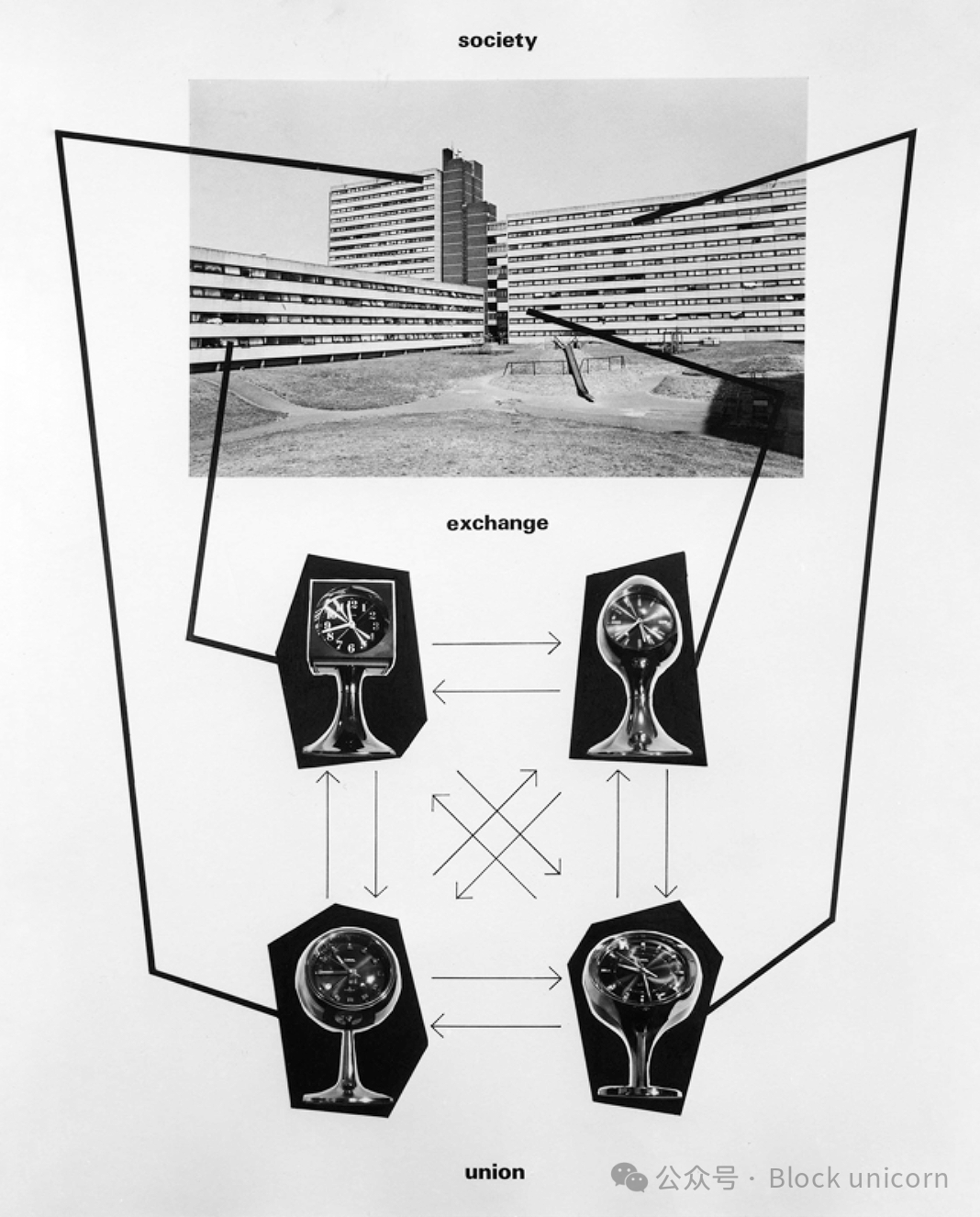
Stephen Willats—Our Interpersonal Home 1990:
In the late 1970s, while working in Berlin, I primarily engaged with people living in modern apartment blocks on the city’s western side—I began noticing objects around them that made them feel modern; “current.” These weren’t necessarily heavy design objects, but items present in their private social spaces—objects that connected them to the world they lived in, carrying personal significance—unlike the buildings housing these social spaces.
I became interested in this emerging dichotomy: “people and objects” versus “people as objects.” I started documenting these thoughts, then stumbled upon the Home Court building in Vierfeld, considered at the time the largest single residential project in Western Europe—a brutal, soulless place that fully expressed the idea of people as objects. Of course, individuals here led complex social lives, but the building’s visual language was simplified, highly institutionalized.
Meanwhile, I was creating still-life paintings using modernist objects: revisiting the debate between objects and people, and the idea of objects as immortal. Then I began a series placing objects within three different interpersonal networks, each generating a distinct way of perceiving relationships within the building—for example, conflict networks or exchange networks. The result was these three groups of works. The background shows photos of the Home Court; the foreground features clusters of clocks I found in apartments. These clocks carry built-in concepts of time and its passage: I arranged them into the three networks, demonstrating three different ways of observing life there.
Join TechFlow official community to stay tuned
Telegram:https://t.me/TechFlowDaily
X (Twitter):https://x.com/TechFlowPost
X (Twitter) EN:https://x.com/BlockFlow_News
 @otherinternet__









