









Virtual Asset ETF Beginner's Guide: A Comprehensive Analysis of the SFC License in Hong Kong
TechFlow Selected TechFlow Selected
Virtual Asset ETF Beginner's Guide: A Comprehensive Analysis of the SFC License in Hong Kong
What licenses does the Hong Kong Securities and Futures Commission (SFC) issue, and how can they be identified?
 Navigating Web3 tides with focused insights
Author: Metaer,特邀作者 at Meta Era
For the crypto industry, a tumultuous week has finally come to an end with the U.S. Securities and Exchange Commission’s final approval of spot Bitcoin ETFs. Now, investors are turning their attention to another promising market—Hong Kong.
In fact, as early as December 22, 2023, the Securities and Futures Commission (SFC) of Hong Kong issued its "Circular on SFC-authorized Funds Investing in Virtual Assets," officially announcing its readiness to accept applications for spot virtual asset ETFs. It clearly stated that licensed institutions may issue and manage spot ETFs linked to virtual assets approved for trading on licensed platforms—such as Bitcoin and Ethereum—and that subscriptions and redemptions can be conducted in-kind or in cash via licensed trading platforms or recognized financial institutions.
Previously, many investors hovered on the fringes of the virtual asset market—not only because they were unfamiliar with this emerging investment method but also due to concerns over platform reliability. Spot virtual asset ETFs allow traditional investors to enter the market through familiar channels. For spot virtual asset ETFs issued in Hong Kong, the SFC requires the use of locally licensed platforms.
So the question arises: What licenses does the Hong Kong SFC issue, and how can one identify them? Meta Era will provide an in-depth analysis in this article.
A Complete Breakdown of Licenses Issued by the Hong Kong SFC
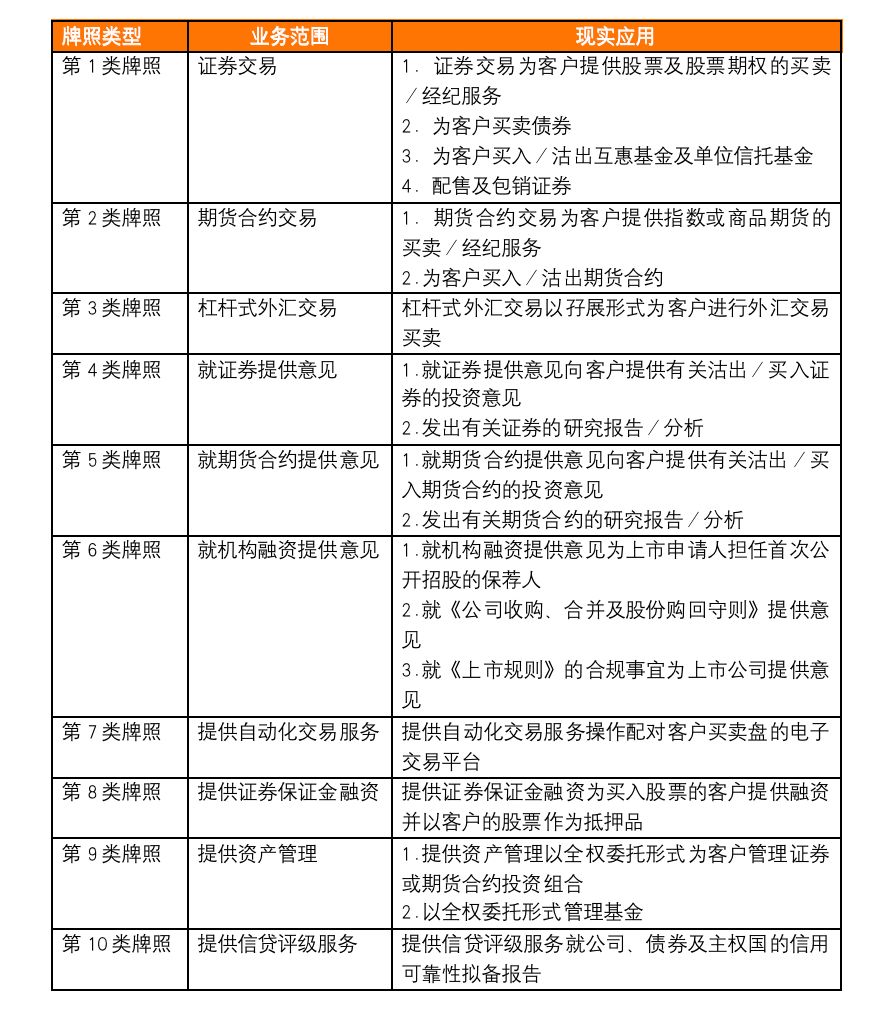
As a major offshore and onshore financial center in Asia, Hong Kong ranks among the top international financial markets in terms of regulatory maturity, developed public trading systems, and product diversity. The Hong Kong SFC oversees 10 types of licenses, each corresponding to a specific business activity. To conduct any regulated activity, one must obtain the relevant license. Refer to the following table:
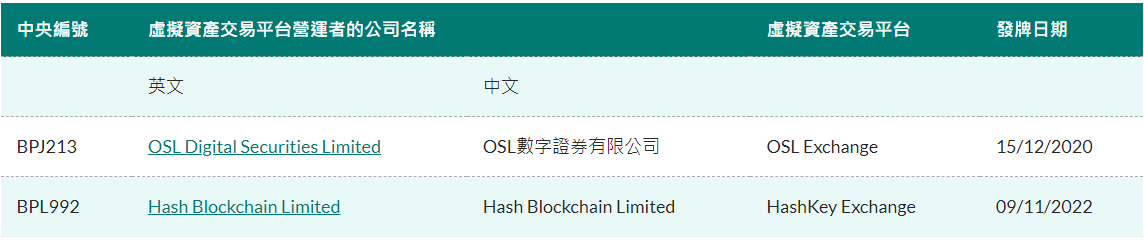
Regarding virtual asset trading platforms, the Hong Kong SFC has granted licenses to only two companies: Hash Blockchain Limited (HashKey Exchange) and OSL Digital Securities Limited (OSL Exchange). Both hold Type 1 and Type 7 licenses, authorizing them to provide securities trading services and automated trading services in Hong Kong.
For institutions aiming to launch spot virtual asset ETFs, greater attention should be paid to what is commonly referred to in the industry as the "149" license combination. As shown in the table above, the most fundamental requirement for engaging in securities trading activities in Hong Kong is holding a Type 1 license—the most common of the ten license types, held by the largest number of individuals and firms. The Type 4 license is required for firms offering securities advice in Hong Kong. Companies often apply for both Type 1 and Type 4 licenses simultaneously: the former enables securities trading, while the latter allows advisory services. Misleading investors under a Type 4 license may result in fines from the SFC, and the license can be revoked at any time.
According to public information, obtaining the "149" license in Hong Kong is no easy task—
-
First, the applicant must be a limited company incorporated in Hong Kong or a non-Hong Kong company registered with the Registrar of Companies, and must have a physical office address in Hong Kong (which must be Grade A office space);
-
Second, the company must have an experienced management team to support operations, including a sound business framework, internal control systems, and qualified responsible officers (including a risk officer). Additionally, it must have at least two licensed individuals. While the SFC imposes no restrictions on nationality, at least one responsible officer must be based in Hong Kong to directly supervise the business, and at least one must be a member of the board of directors;
-
More importantly, the SFC requires a minimum registered capital of HK$5 million, with paid-up share capital and liquid capital maintained at no less than HK$3 million at all times, and the company must open a bank account in Hong Kong.
With these prerequisites understood, applicants must next submit their application forms. Whether applying as a corporation or individual, interested parties must submit online applications through the WINGS platform—the SFC's electronic form and submission system—using either a "personal account" or a "sub-account under an advisory firm account." If the application relates to a licensed corporation, registered institution, or responsible officer, the applicant must declare on the form that the board of directors has passed a resolution approving the application. Alternatively, if the board has delegated authority to a specified committee or individual to approve the application, such approval is acceptable to the SFC.
In terms of processing time, new market entrants typically face the following waiting periods: seven business days (for provisional licensed representatives), eight weeks (for ordinary licensed representatives), ten weeks (for responsible officers), or fifteen weeks (for licensed corporations).
If applicants fail to meet statutory licensing requirements or cannot satisfy the SFC of their fitness and properness, the application will be rejected. However, before making a final decision, the SFC will provide applicants with an opportunity to present their case. If the application is still denied, the applicant may request a review from the Hong Kong Securities and Futures Appeals Tribunal within 21 days.
What Do Industry Insiders Think About When Hong Kong’s Spot Virtual Asset ETFs Will Launch?
With the U.S. SEC's approval of spot Bitcoin ETFs, more brokers may be incentivized to apply for virtual asset trading licenses in Hong Kong. On the other hand, as the number of spot virtual asset ETFs increases, investor trading activity will boost business for Hong Kong-based virtual asset brokers, expanding the overall market size and benefiting local virtual asset exchanges and brokerages. Regarding when Hong Kong’s spot virtual asset ETFs might launch, Meta Era has compiled insights from several industry insiders.
According to Owen Wong, CEO of HashKey Exchange—one of Hong Kong’s licensed virtual asset trading platforms—approximately 10 fund companies are currently preparing to launch spot virtual asset ETFs in Hong Kong, with around seven to eight already in active development. It is reported that issuers may need to rely on licensed exchanges for underlying asset custody, trading, clearing, and other services. Several issuers have already selected HashKey as their infrastructure provider, and HashKey may even co-apply with issuers for spot Bitcoin ETF licenses.
Leon Li, Global Chief Business Officer at OKX, said the U.S. approval of Bitcoin ETFs means large-scale traditional investment vehicles—including pension and retirement funds—can now directly invest in Bitcoin. This signifies broader participation from both retail and institutional investors. Moreover, since Bitcoin ETFs are physically settled, capital invested in these products will exert a more direct influence on spot Bitcoin prices, bringing positive market attention and significant capital inflows—playing a crucial role in the long-term development of the industry.
Wang Yi, Director of Quantitative Investment at CSOP Asset Management—one of Hong Kong’s virtual asset futures ETF issuers—also noted that after the U.S. SEC approved spot ETFs, traditional financial institutions can now buy Bitcoin directly through ETFs, further increasing market demand. Given Bitcoin’s fixed supply, rising demand could push up its price. Although Hong Kong was ahead of the U.S. in allowing spot ETF issuance, actual product rollouts are expected to lag slightly behind the U.S. due to overall market expectations and preparation timelines.
Chan Pui-chuen, Executive Director at Victory Securities—a licensed virtual asset broker in Hong Kong—pointed out that the U.S. regulators’ approval of spot Bitcoin ETFs is seen by the crypto community as a pivotal step linking cryptocurrencies with traditional exchanges, inevitably drawing more investors into the space. While Hong Kong-based fund companies have not yet submitted formal applications, they are actively preparing. He expects that as early as the first quarter of this year, multiple fund firms will express their intent to apply, and some may succeed.
Chung Jun, Investment Strategist at Samsung Asset Management (Hong Kong), believes that following the U.S. approval of spot ETFs, more markets are likely to follow suit, attracting additional capital into the virtual asset sector. With spot Bitcoin ETFs approved, both institutional and retail investors will find it easier to include Bitcoin in their portfolios, although investor education efforts still need strengthening.
Robin Lo, Head of Equity Products at HKEX, said the exchange is ready to seize opportunities presented by thematic investing and will work closely with issuers and stakeholders to smoothly introduce these new products into Hong Kong’s ETF market. He welcomed the SFC’s publication of the circular and policy guidance, positioning Hong Kong as the first Asian market to allow spot virtual asset ETFs, reinforcing its status as a leading digital asset hub in the region and supporting its continued growth as Asia’s preferred ETF market.
Conclusion
We know that many large asset management firms in Hong Kong already manage assets worth tens of billions of dollars. Against the backdrop of the Hong Kong SFC’s strong push for Web3.0 development, investing in spot Bitcoin ETFs is set to become a key option for asset managers, fund houses, and other financial entities—potentially channeling tens of billions of dollars into the ecosystem.
Now that the regulatory framework is in place and the SFC has provided clear licensing guidelines and procedures, everything is ready except the final push. Spot virtual asset ETFs will undoubtedly strengthen Hong Kong’s position as a leading regional virtual asset center and support its ongoing development as Asia’s premier ETF market—further enhancing its appeal and competitiveness as an international financial hub, and offering investors and the market a broader range of choices.
Join TechFlow official community to stay tuned
Telegram:https://t.me/TechFlowDaily
X (Twitter):https://x.com/TechFlowPost
X (Twitter) EN:https://x.com/BlockFlow_News










