








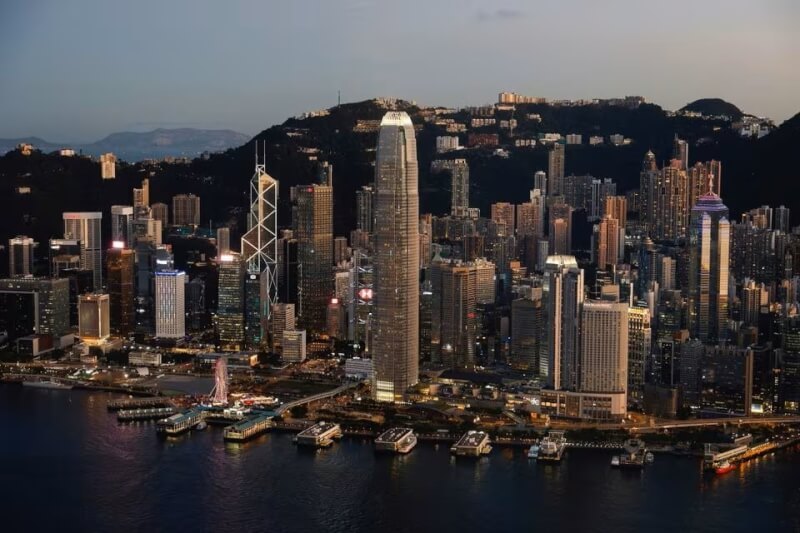
2023 Annual Review of Hong Kong's Virtual Asset Policy: A Glimmer of Hope Emerges
TechFlow Selected TechFlow Selected
2023 Annual Review of Hong Kong's Virtual Asset Policy: A Glimmer of Hope Emerges
Hong Kong,至此, has basically established a solid foothold.
 Navigating Web3 tides with focused insights
Authors: Bai Lu, Bowen, Bai Lu Salon
The year 2023 was a landmark one for Hong Kong's virtual asset market.
From 2018, when Hong Kong approached the crypto industry tentatively and superficially, to recent years—amid growing financial competition from Singapore in East Asia and within the cultural context of Chinese communities jokingly calling themselves "Crypto Jews"—Hong Kong declared in October 2022 its ambition to "compete globally as a virtual asset hub," going all-in. The Chinese-speaking world remained skeptical. Then came April 2023’s Wanxiang Blockchain Summit in Hong Kong, bustling with activity and marking the beginning of a chaotic yet vibrant celebration.
After June 2023, a series of highly concentrated virtual asset policies were implemented at an unexpectedly rapid pace—from exchange licensing and STO regulations to licensed funds, ETFs, and stablecoin oversight—creating a globally leading and favorable regulatory environment. In the second half of the year, Hong Kong-based virtual asset exchanges, brokers, asset management firms, venture capital institutions, and OTC providers gradually began operations. Despite initial infrastructure shortcomings and some losses, all business segments are now functioning.
Meanwhile, Hong Kong’s traditional financial markets have been lackluster, prompting self-deprecating jokes about being a “financial center relic.” The emerging virtual asset market may serve as a much-needed shot in the arm for Hong Kong’s financial sector, attracting traditional financial institutions from both Hong Kong and mainland China to enter rapidly.
By the end of 2023, we believe Hong Kong has firmly established itself in the global virtual asset race, having created the world’s most favorable regulatory environment. With the next crypto bull cycle and the U.S. interest rate cut cycle on the horizon, Hong Kong is poised to anchor East Asia and influence the globe, potentially leading the worldwide crypto market.
Dawn is breaking.
At this moment, Bai Lu Salon will guide you through the evolution of Hong Kong’s virtual asset policies in 2023, offering deep insights into the compliance journey from a financial regulatory perspective. On the foundation of security and compliance, we aim to help stakeholders prepare better to seize the market opportunities expected over the next two years and beyond.
Timeline of Hong Kong’s Virtual Asset Policies:
-
May 2021: The Hong Kong Monetary Authority (HKMA) and Financial Services and Treasury Bureau (FSTB) launched public consultation on legislative proposals to strengthen anti-money laundering (AML) and counter-terrorist financing (CFT) regulations, discussing a licensing regime for virtual asset service providers;
-
October 31, 2022: Release of the "Policy Statement on the Development of Virtual Assets in Hong Kong";
-
December 8, 2022: The Legislative Council passed the "Anti-Money Laundering and Counter-Terrorist Financing (Amendment) Bill 2022," formally bringing virtual asset service providers under Hong Kong law;
-
January 31, 2023: HKMA published summary of its discussion paper consultation on virtual assets and stablecoins;
-
May 16, 2023: HKMA website released results of public consultation on the "Guidelines on Anti-Money Laundering and Counter-Terrorist Financing";
-
May 31, 2023: Securities and Futures Commission (SFC) released the "Circular on the Implementation of a New Licensing Regime Specifically for Virtual Asset Trading Platforms";
-
June 1, 2023: The new licensing regime for virtual asset trading platforms took effect;
-
October 20, 2023: Joint Circular on "Virtual Asset-Related Activities of Intermediaries" issued, allowing brokers and banks to conduct retail virtual asset business under license;
-
November 2, 2023: SFC issued "Circular on Tokenized Securities-Related Activities by Intermediaries," removing the requirement that STOs be limited to professional investors; same day, "Circular on Tokenized SFC-Authorized Investment Products" also released;
-
December 22, 2023: SFC released "Notice on SFC-Authorized Funds Involving Virtual Assets," signaling readiness to accept spot virtual asset ETF applications; same day, updated version of the Joint Circular clarified distribution rules including for spot virtual asset ETFs;
-
December 27, 2023: FSTB and HKMA jointly issued a public consultation paper seeking feedback on proposed stablecoin legislation.
Implementation of the Virtual Asset Trading Platform Licensing Regime
The most significant development in Hong Kong in 2023 was the launch of compliant virtual asset trading platforms. After years of effort, the FSTB, HKMA, and SFC collaborated closely with industry stakeholders to finally implement the licensing regime for virtual asset trading platforms.
In May 2021, the FSTB and HKMA initiated public consultation on strengthening AML/CFT regulations, focusing on establishing a licensing regime for virtual asset service providers. The consultation affirmed the need for legislation, clearly defining scope, licensing conditions, and regulatory mechanisms.
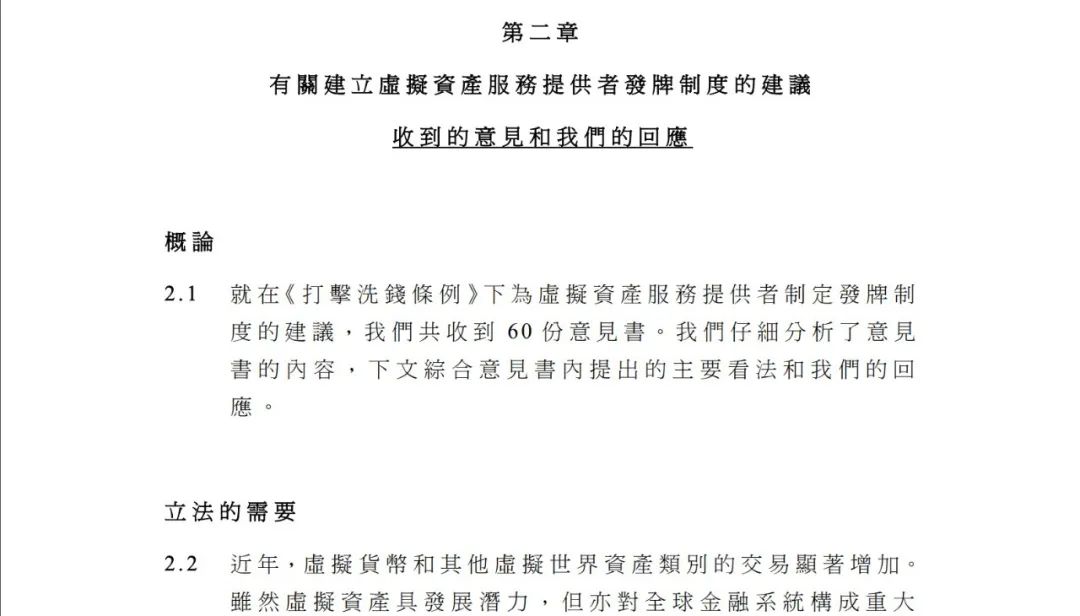
On December 8, 2022, the Legislative Council officially passed the new ordinance, bringing virtual assets under formal regulation in Hong Kong and providing a clear definition of virtual assets.
On May 31, 2023, the SFC released the "Circular on the Implementation of a New Licensing Regime Specifically for Virtual Asset Trading Platforms." The circular stated: The new licensing regime specifically designed for centralized virtual asset trading platforms under the Anti-Money Laundering and Counter-Terrorist Financing Ordinance would take effect on June 1, 2023. Under the new regime, centralized virtual asset trading platforms operating in Hong Kong must apply for licenses from the SFC under the Securities and Futures Ordinance and/or the AML Ordinance.
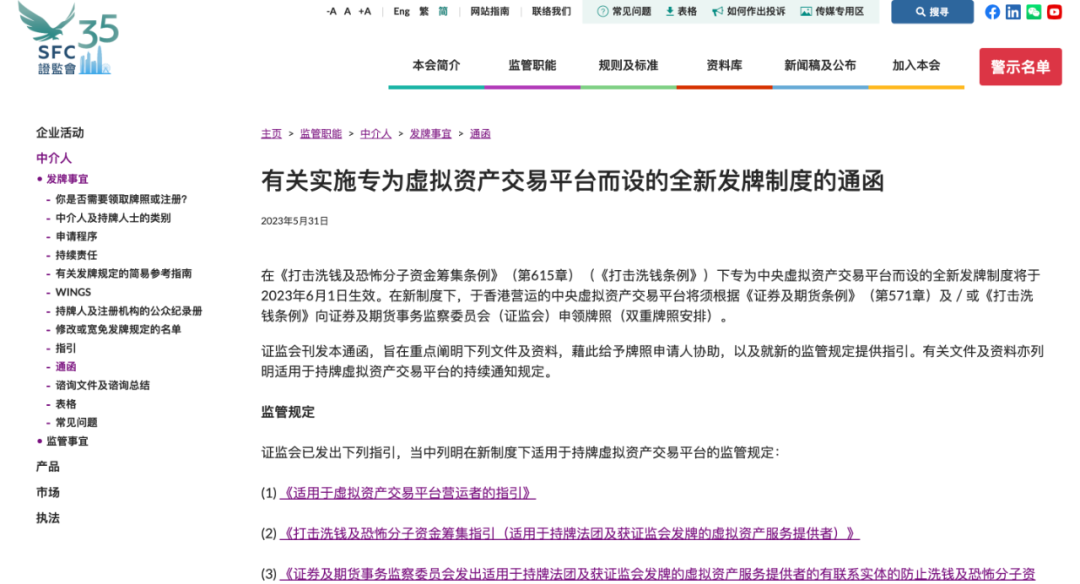
Simultaneously, the SFC released updated regulatory guidelines, including the "Guideline on Virtual Asset Trading Platform Operators," "Guidelines on Anti-Money Laundering and Counter-Terrorist Financing," "Guidelines on Anti-Money Laundering and Counter-Terrorist Financing for Licensed Corporations and Associated Entities of SFC-Licensed VASPs," and the "Licensing Handbook for Virtual Asset Trading Platform Operators."
With this, the licensing regime was officially implemented, marking the start of the battle among licensed trading platforms in Hong Kong.
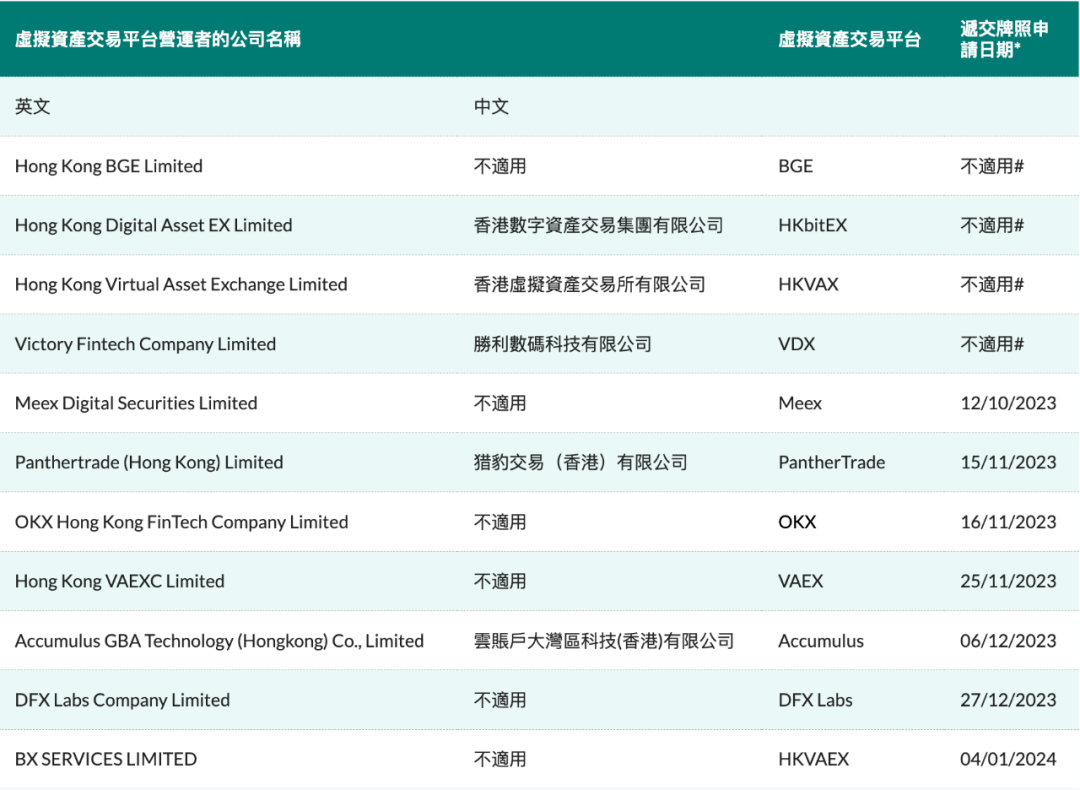
OSL and Hashkey had the longest head start. On August 3, 2023, both platforms announced they received SFC approval to offer virtual asset trading services to retail clients, ushering Hong Kong into the retail era.
As of this writing, in addition to the two licensed exchanges, a total of 11 institutions have submitted applications for virtual asset exchange licenses. This signals that Hong Kong’s virtual asset market still holds vast potential and opportunities waiting to be discovered by investors.
Trillion-Dollar Traditional Brokerages and Banks Enter Retail Market
On October 20, 2023, the SFC released the "Joint Circular on Virtual Asset-Related Activities of Intermediaries," reigniting market enthusiasm.
The circular provided new clarifications across five areas regarding virtual asset-related businesses in Hong Kong: distribution of virtual asset-related products (requiring Type 1 license), provision of virtual asset trading services (Type 7 license), asset management services related to virtual assets (Type 9 license), advice on virtual assets (Type 4 license), and implementation procedures.
Under previous regulations, only compliant exchanges could serve retail clients. With this update, brokerages or banks holding Type 1 and Type 4 virtual asset licenses can upgrade their licenses to offer virtual asset and security token offering (STO) services directly to retail customers (C-end). It was also explicitly stated that digital asset custody could be managed internally by traditional financial institutions such as banks.
This move served as a strong catalyst for further expansion of Hong Kong’s virtual asset market. Licensed compliant trading platforms lacked competitive fee structures, and due to high market volatility and steep learning curves, retail user growth had been slow. With this circular, traditional banks and brokerages are now open to entry. More traditional investors looking to diversify can now access virtual assets through trusted institutions—potentially unlocking trillions in new market value.
The impact was immediate. Take Victory Securities, the first local Hong Kong brokerage to launch retail virtual asset services, as an example. As of December 30, 2023, data disclosed by Executive Director Chen Peiquan showed that since launching its virtual asset trading service in response to policy changes, the company achieved an average monthly turnover of $10 million USD. Its virtual asset business has already turned profitable, with Bitcoin-focused investments accounting for approximately 80% of total virtual asset investments. With more traditional brokerages joining, the growth rate of virtual asset-related clients is expected to accelerate significantly in 2024.
For details, see: Trillion-Dollar Traditional Brokerages and Banks Enter Retail Market! Interpretation of Hong Kong’s New Virtual Asset Intermediary Circular
Major Shift After Four Years: STO No Longer Restricted to Professional Investors Only
On November 2, 2023, the SFC released the "Circular on Tokenized Securities-Related Activities by Intermediaries," replacing the "Statement on Security Token Offerings" issued on March 29, 2019.
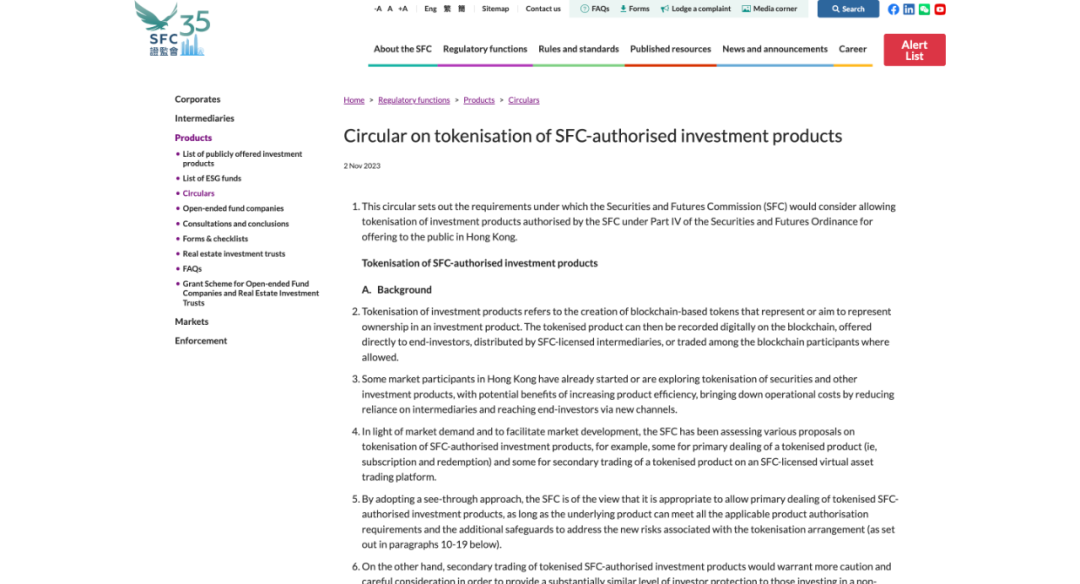
The circular provided critical clarifications on whether tokenized securities should be considered complex products and whether they should remain restricted to professional investors. According to the circular: tokenized securities no longer require a restriction limiting them to professional investors only. It also offered new interpretations on relevant terminology, the nature of tokenized securities, new risks introduced by tokenization, and factors intermediaries must consider when engaging in such activities.
On the same day, the SFC released the "Circular on Tokenized SFC-Authorized Investment Products," outlining regulatory considerations for permitting investment products authorized under Part IV of the Securities and Futures Ordinance to be tokenized and offered to the public in Hong Kong. The circular set specific requirements for primary markets covering token management, disclosure, intermediaries, and staff competency.
It had been four years since the last major policy change. With these updates, Hong Kong has laid fertile ground for financial innovation based on STOs. Market response was swift, with institutions like CSpro, Harvest Fund, and OSL quickly preparing relevant products.
From promoting the digital Hong Kong dollar to blockchain-based issuance of government green bonds, and conducting various pilot programs, to the release of new STO regulations in 2023, the government’s stance is crystal clear: Hong Kong will fully support financial innovation involving the tokenization of traditional securities and real-world assets (RWA); it also supports broader public access to STOs, paving the way for Hong Kong to become a true global Web3.0 financial hub.
For more information, refer to: Major Shift After Four Years! SFC: STO No Longer Requires Mandatory 'Professional Investors Only' RestrictionNew STO Rules in Hong Kong: Circular on Tokenized SFC-Authorized Investment Products
Spot Bitcoin/Ethereum ETFs Imminent
On December 22, 2023, the SFC released an updated version of the "Notice on SFC-Authorized Funds Involving Virtual Assets," replacing the "Circular on Virtual Asset Futures Exchange-Traded Funds" issued on October 31, 2022.
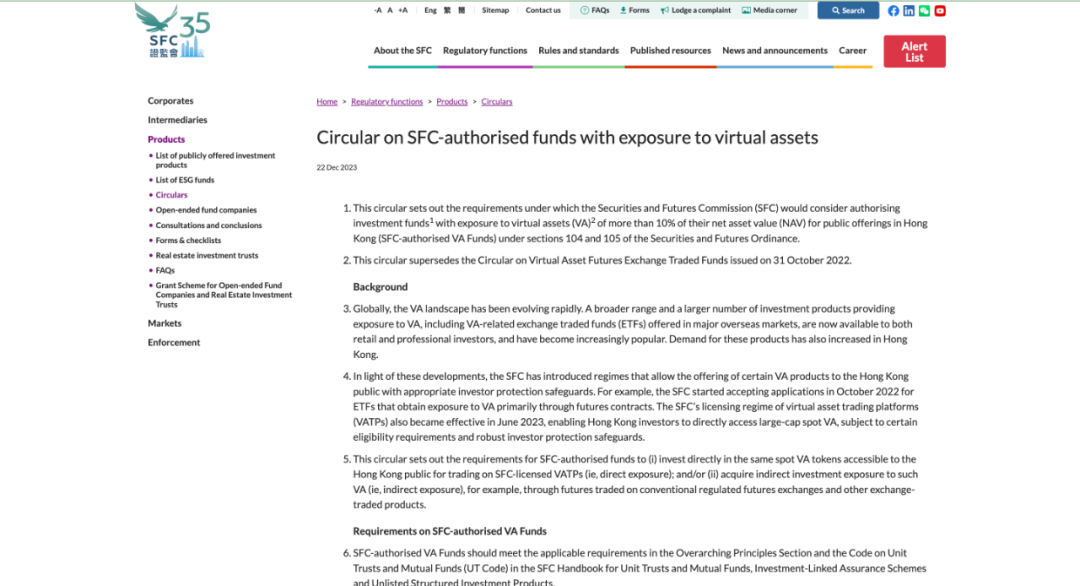
The notice made a pivotal announcement: The SFC is now ready to accept applications for spot virtual asset ETFs. For virtual assets approved for trading on licensed platforms (such as Bitcoin and Ethereum), licensed institutions may issue and manage corresponding spot ETFs, available for subscription and redemption via licensed platforms or recognized financial institutions, either in-kind or in cash.
On the same day, the SFC released an updated version of the "Joint Circular on Virtual Asset-Related Activities of Intermediaries," superseding the October 20, 2023 edition.
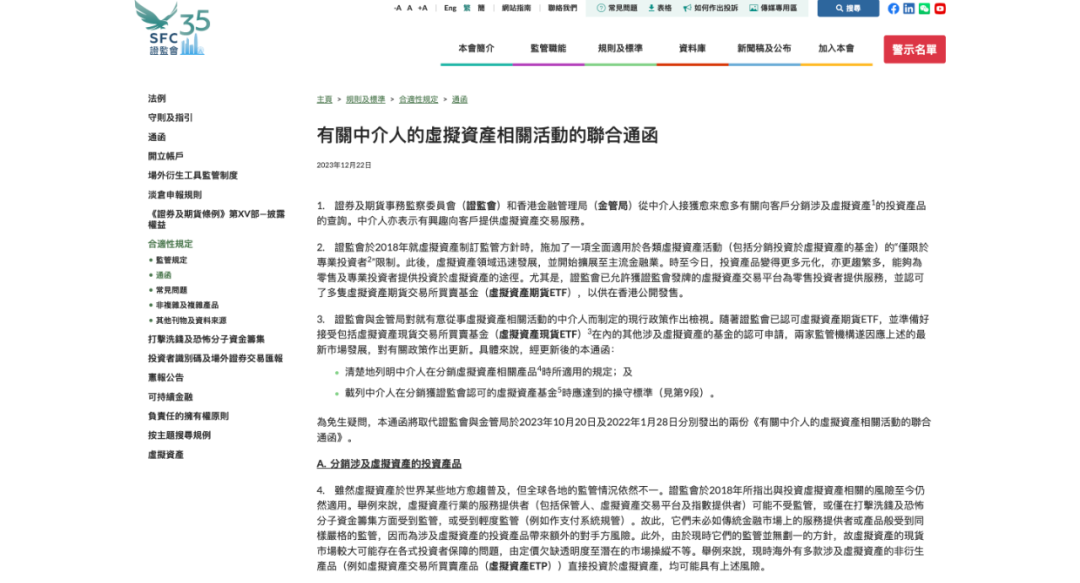
The circular clearly stated: The SFC has already authorized virtual asset futures ETFs and is now prepared to accept authorization applications for other virtual asset-related funds, including spot virtual asset exchange-traded funds and spot virtual asset ETFs. In light of these market developments, regulators updated policies, clearly specifying rules applicable to intermediaries distributing virtual asset-related products and setting conduct standards for distributing SFC-authorized virtual asset funds.
The legality of virtual assets such as Bitcoin and Ethereum has long been the biggest concern for traditional institutional capital. Bringing traditional capital into the virtual asset market through compliant channels has become the most viable method for capital inflow and market expansion. In 2023, even the mere possibility of the U.S. SEC approving spot Bitcoin ETFs triggered massive global market reactions, reviving a market stagnant for two years. This time, Hong Kong moved swiftly to keep pace with the United States.
On January 10, 2024, Livio Weng, COO of HashKey Group, revealed in an interview with Caixin that as of January 10, around ten fund companies were preparing to launch spot virtual asset ETFs in Hong Kong, with seven or eight already in active development stages. Preparations are complete—Hong Kong is becoming the first market in Asia to allow listing of spot virtual asset ETFs.
For details, see: New SFC Regulations: Hong Kong Spot Bitcoin/Ethereum ETFs Imminent!
New Stablecoin Legislation Approaching
On January 31, 2023, the HKMA summarized responses to its 2022 discussion paper on stablecoins, noting broad support for a risk-based and flexible regulatory approach.
On December 27, 2023, the Financial Services and Treasury Bureau (FSTB) and the Hong Kong Monetary Authority (HKMA) jointly issued a public consultation paper, soliciting views on legislative proposals to regulate stablecoin issuers. Another core piece of the virtual asset regulatory puzzle is expected to materialize in 2024.
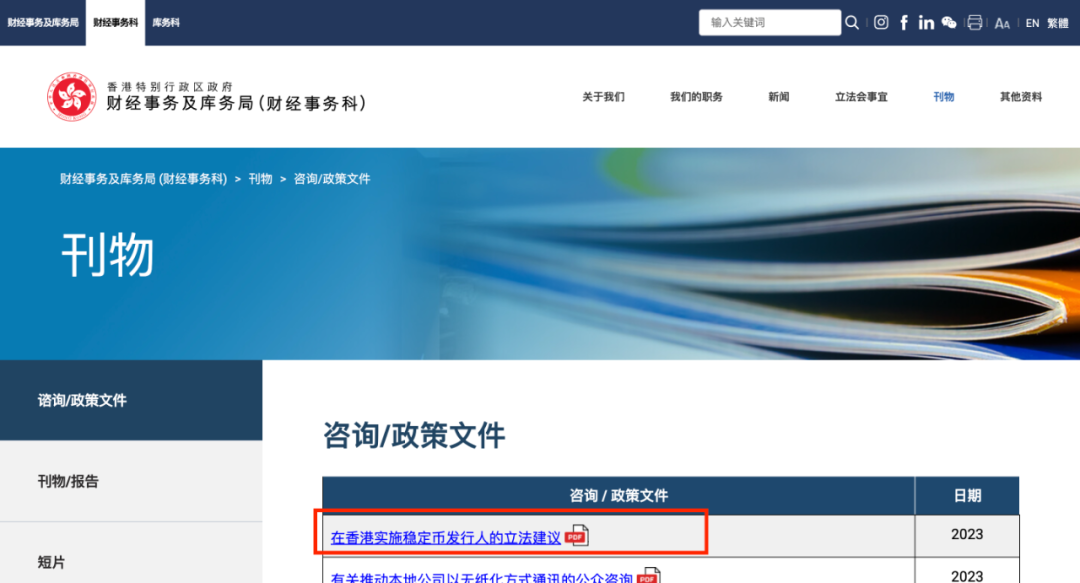
The consultation paper outlines the latest regulatory approaches and legislative recommendations, including: scope of stablecoin regulation, legislative methodology, regulatory framework for fiat-backed stablecoin issuers, custody and purchase services for fiat-backed stablecoins, supervisory powers, penalties for violations, appeals mechanisms, and transitional arrangements. A comprehensive call for input across the region aims to advance the enactment of stablecoin regulations.
A key proposal in the document is that the government plans to introduce new legislation to establish a licensing regime for fiat-backed stablecoin issuers. Key elements include: defining fiat-backed stablecoins as cryptographically secured digital representations of value that claim or appear to maintain a relatively stable value against one or more fiat currencies and possess other relevant characteristics; and requiring any entity issuing fiat-backed stablecoins in Hong Kong, issuing stablecoins pegged to the Hong Kong dollar, or actively promoting such stablecoins to the Hong Kong public to obtain a license from the Chief Executive of the HKMA. The paper also details the relevant licensing criteria and conditions.
Stablecoins remain one of the most profitable businesses in the crypto industry and a key lever controlling the pulse of the virtual asset ecosystem. Tether’s $1.5 billion profit in Q1 2023 and its continuously rising market cap—repeatedly hitting new highs—have proven to global markets that a thriving virtual asset market cannot exist without stablecoins as a cornerstone. The current dominance of U.S. dollar-denominated stablecoins needs to be challenged. In 2024, we look forward to Hong Kong finalizing its stablecoin regulatory framework and to institutions like Circle, HashKey, and ZA Bank making strides to solidify Hong Kong’s stablecoin market.
Full consultation document available at: New Stablecoin Regulations Coming Soon! Overview of FSTB & HKMA Legislative Proposals
Hong Kong 2024: Dawn Breaking, Light Awaits
For Hong Kong’s virtual asset market, 2023 was filled with hope. Led by the government and through extensive consultations with various institutions, Hong Kong crafted what is currently the world’s most favorable virtual asset regulatory framework with unprecedented proactiveness. In 2024, it will be up to institutions and teams to carry the torch—driving technological and commercial innovation to create greater market value.
This oriental pearl is rising once again. Ahead lies a future illuminated by extraordinary chapters yet to unfold.
Join TechFlow official community to stay tuned
Telegram:https://t.me/TechFlowDaily
X (Twitter):https://x.com/TechFlowPost
X (Twitter) EN:https://x.com/BlockFlow_News










