








Delphi Digital: 4 Areas in NFTs and Digital Luxury Worth Watching
TechFlow Selected TechFlow Selected
Delphi Digital: 4 Areas in NFTs and Digital Luxury Worth Watching
Luxury brands have extremely high profit margins, even surpassing those of the technology and software industries.
 Navigating Web3 tides with focused insights
Written by: Teng Yan
Translated by: Mars Finance, MK
A few weeks ago, while walking around Marina Bay Sands, a single comment from my girlfriend sparked a deep interest in financial intelligence:
"Did you know?" she mused. "Chanel bags aren't just fashion statements—they’re actually solid investments. Their value increases by 10% annually."
This made me pause and reflect. Could an ordinary-looking handbag really deliver returns higher than the S&P 500? After verifying, I found it was indeed true.
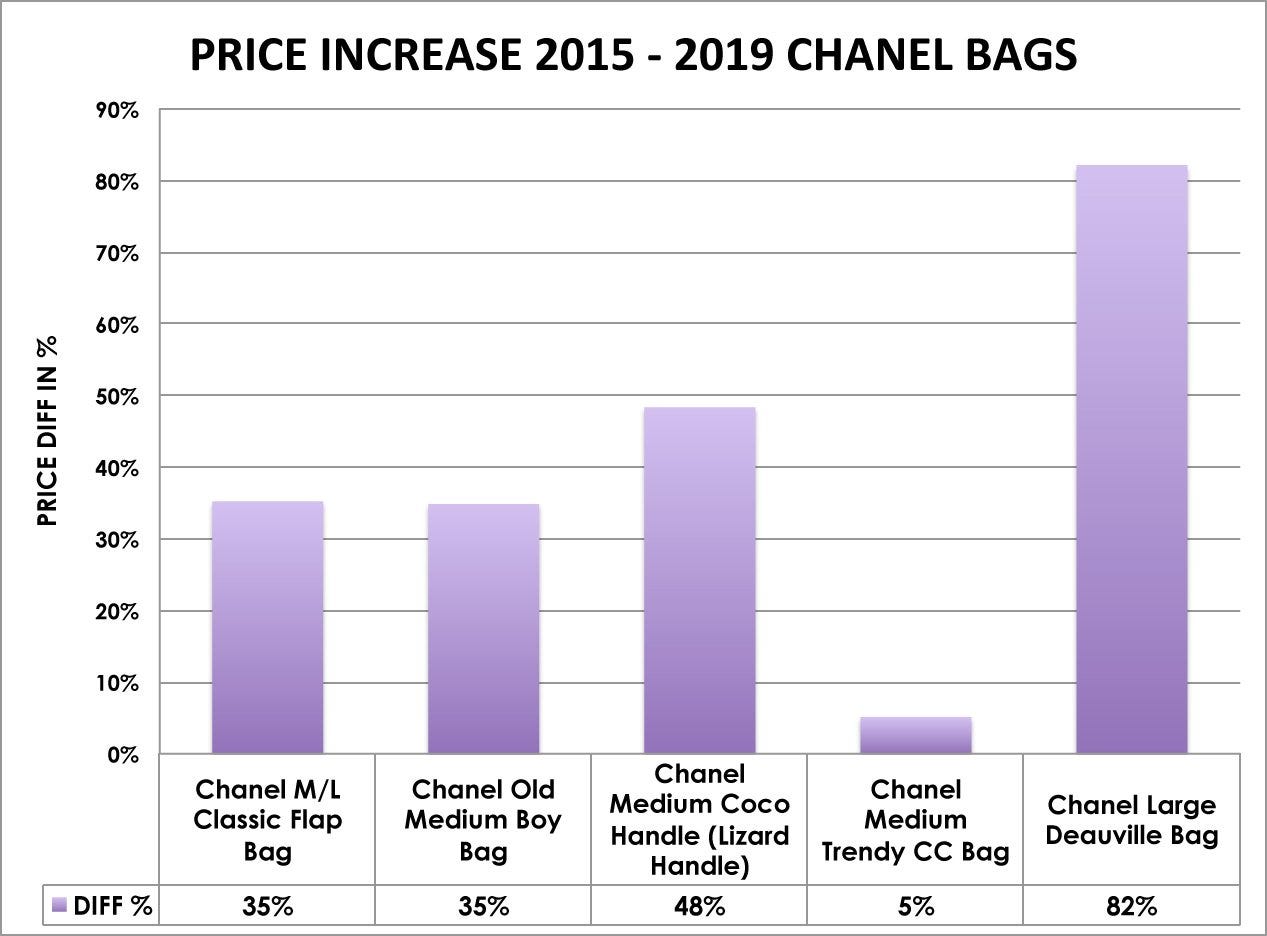
Chanel bags are in high demand. Source: bragmybag.com
What’s the secret behind this? Is it “practicality,” or the allure of “scarcity”? This prompted me to dive deeper into the luxury industry. The key insight is this:
Luxury brands enjoy extremely high profit margins—higher even than those in tech and software industries.
Current Industry Landscape
I analyzed the landscape of the world's top luxury brands.
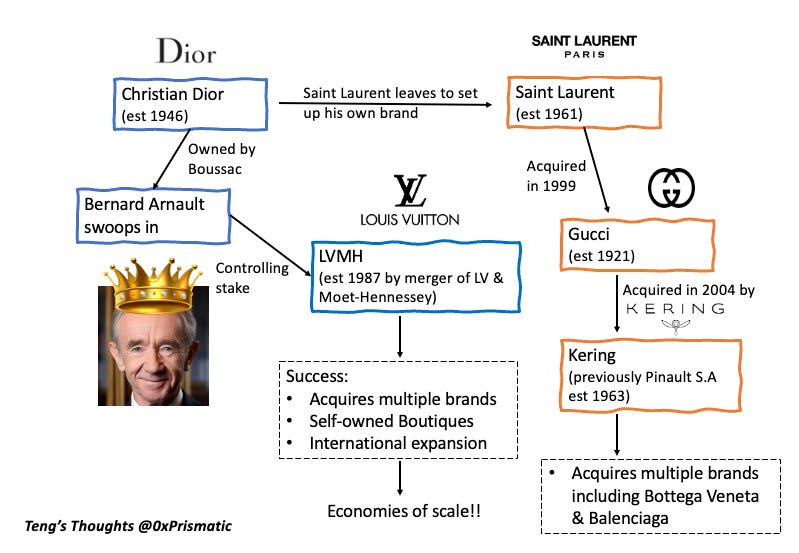
High-end luxury splits into two main camps: brand conglomerates and secretive family-owned enterprises. Let’s examine them closely:
First, the brand conglomerates, dominated by giants such as LVMH, Richemont, and Kering:
-
LVMH, based in France, oversees about 60 subsidiaries and manages 75 luxury brands—from Louis Vuitton to Dior. Its massive scale owes much to its chairman (and world’s richest man) Bernard Arnault’s shrewd strategy. I highly recommend an episode of Acquired that dives deep into LVMH’s growth story, which provided significant inspiration for this article.
-
Kering, the global luxury group founded by François Pinault in 1962, began as a timber trading company before pivoting into luxury, acquiring controlling stakes in Gucci Group and Saint Laurent. Today, its portfolio includes other renowned names like Bottega Veneta and Balenciaga.
-
Richemont, based in Switzerland, owns brands such as Cartier and Van Cleef & Arpels. It operates independently, ensuring each brand maintains its unique identity without being overshadowed by the parent company.
The appeal of these conglomerates lies in their ability to achieve economies of scale—an unusual feat in an industry proud of craftsmanship and exclusivity.
Even though design and production remain tailored to individual brands, LVMH achieves economies of scale in raw material procurement, marketing, and advertising deals.
They’ve perfected this art, building a “machine” that not only enhances the value of their brands but also sustains gross margins of around 30%, all while using a hands-off management approach that preserves each brand’s distinct charm.
Now consider family-run luxury houses like Hermès, Versace, and Prada.
In these brands, heritage and tradition are paramount. They serve as fortresses of craftsmanship and exclusivity, upholding the legacy and values of their founding families. Typically resistant to rapid expansion, they strictly protect brand identity. This more conservative approach cultivates loyal customer bases and unparalleled perceptions of exclusivity.
So What Exactly Is Luxury?
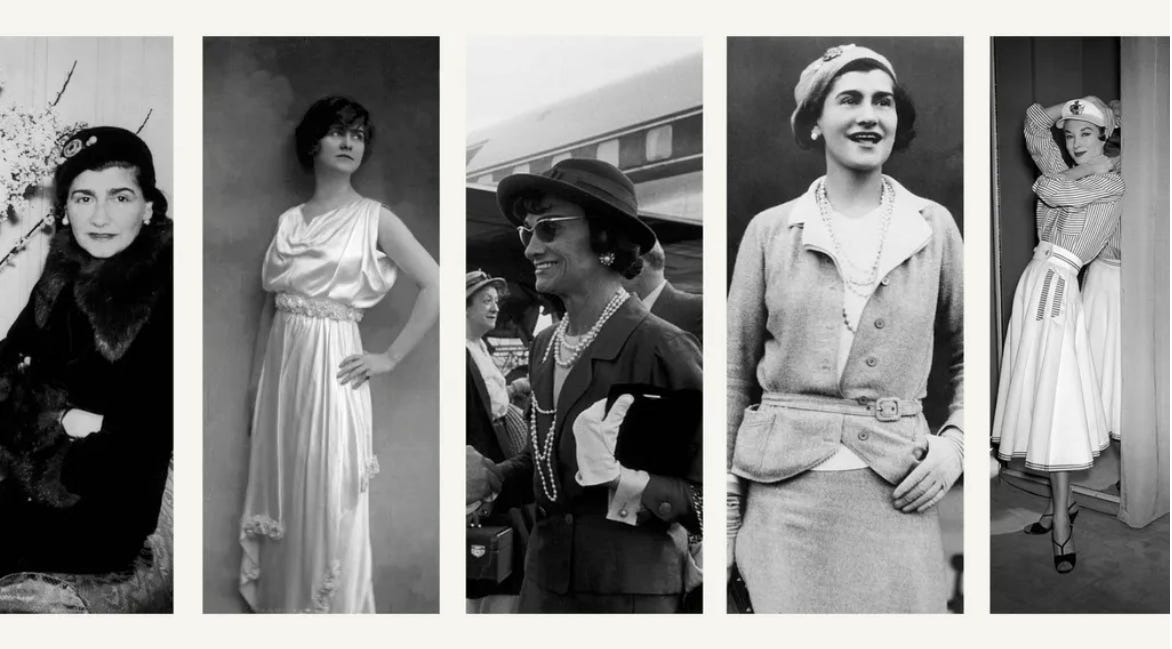
Coco Chanel, visionary of luxury. Source: Getty Images
Coco Chanel defined luxury as “necessities at the point where necessity ends.”
In other words, luxury transcends utility and direct functionality. Luxury brands sell dreams, aspirations, and exclusive lifestyles. It represents prestige and status—it’s symbolic ownership, both a display and a fashion statement.
Contrast this with standard and premium goods, whose prices are ultimately determined by practicality.
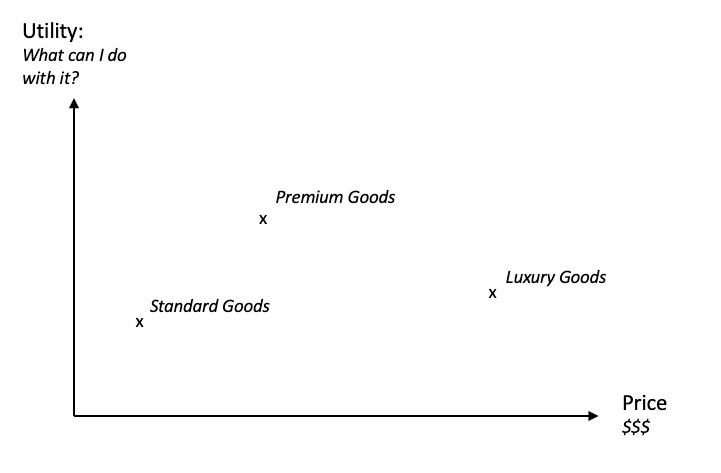
Commodity vs Premium vs Luxury
Designer Handbags as the Epitome of Luxury
With the rise of automobiles in the 20th century and women's growing presence in the workforce, demand for traditional fashion items like hats and gloves declined. After all, hats aren’t ideal for driving.
Handbags became one of the few female fashion items to thrive, evolving from utilitarian objects into symbols of fashion and status.
Handbags exemplify high-profit-margin businesses.
Take Hermès, for example. As of June 2023, Hermès achieved a net profit margin of 33% across the entire company—rivaling Meta, a star among FAANG companies, and 1.5 times that of Netflix. This demonstrates profitability approaching that of software companies, far exceeding typical consumer goods. By comparison, Nike’s net profit margin is about 11%.
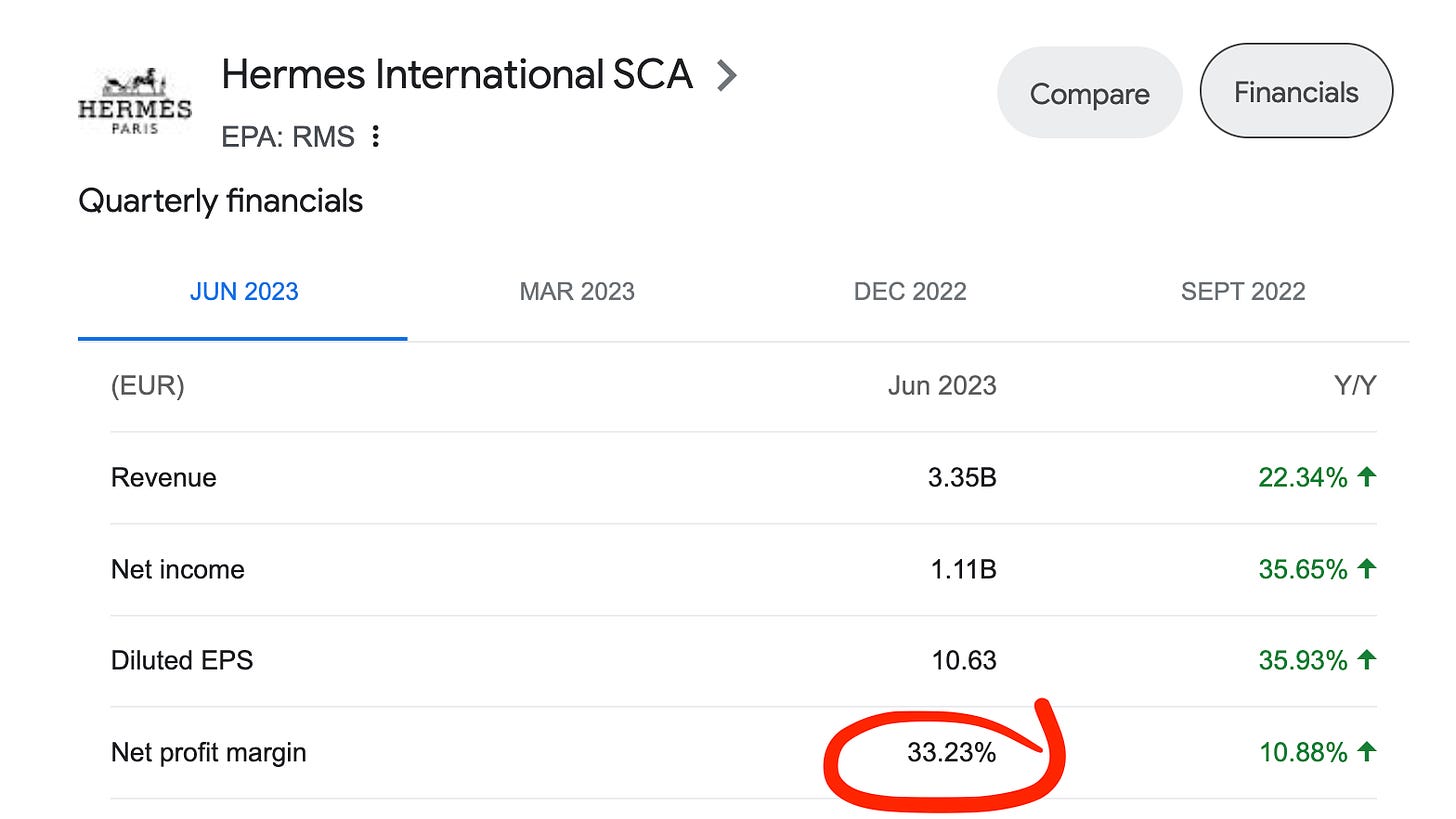 Source: Google Finance
From a product perspective, the situation is even more striking. Given the wide availability of leather and the five-digit price tags on Hermès bags, marginal profit margins could reach an astonishing 80–90%, vastly exceeding production costs.
Did you know? The average American woman owns between 6 and 11 handbags (from various sources) and purchases 2 to 3 new ones annually.
Here lie two key terms: recurring revenue.
Key Observations
The natural evolution of the luxury industry will be from traditional physical luxury to digital exclusivity.
If the Birkin bag represents the pinnacle of physical luxury,
could CryptoPunks NFTs represent the peak of digital luxury?
Why can a single CryptoPunk NFT be worth over $100,000, or a Fidenza sell for $250,000? These digital assets, like their physical counterparts, offer limited practical utility yet command strong market demand—the hallmark of luxury.
These luxury empires, once dominant in the physical realm, are now entering the digital space, particularly drawn to the high-margin potential of NFTs.
For instance, LVMH launched the Via luggage NFT priced at $39,000, which includes a physical suitcase. It is also a key member of the Aura Alliance, using blockchain for authenticity verification and customer engagement. Since 2021, LVMH has been exploring the NFT space.
In Web3, we often ask who will become the next Disney. Ambitious teams sell this dream, aiming to be the next big thing. But what interests me more is: who will become the LVMH of Web3—a powerhouse in luxury, commanding ultra-high margins in vertical markets?
Regarding the “LVMH of Web3,” I believe several areas deserve attention:
1. Dynamic NFTs: Beyond Static Monkey JPEGs
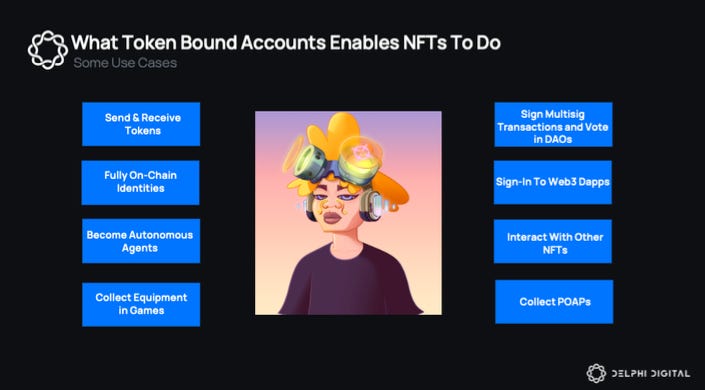
Source: The Future of NFTs in 2024, Delphi Research
Beyond traditional static digital images, the future of NFTs lies in dynamic, interactive experiences.
For example:
ERC-6551 (or Token Bound Accounts) is a new standard allowing each NFT to have its own wallet. NFTs can now perform various on-chain actions—own assets, execute transactions, and interact with applications. This opens infinite possibilities for innovative digital consumer experiences.
2. Loyalty Programs: But Make Them Exciting
We all know those old-fashioned loyalty punch cards stuffed into wallets and forgotten. Or meaningless points earned from online shopping. But what if loyalty programs were genuinely exciting?
Web3 and NFTs breathe new life into this concept. Go beyond the mundane—exclusive access, special perks, and interconnected open-world experiences across different loyalty programs. Blockchain’s inherent interoperability fosters collaboration and expands consumer benefits.
Examples include:
-
Loyalty+ is an open, interconnected rewards ecosystem powered by smart tokens.
-
TYB is a “play-to-earn” platform helping brands build meaningful connections with customers.
3. Talking Fashion
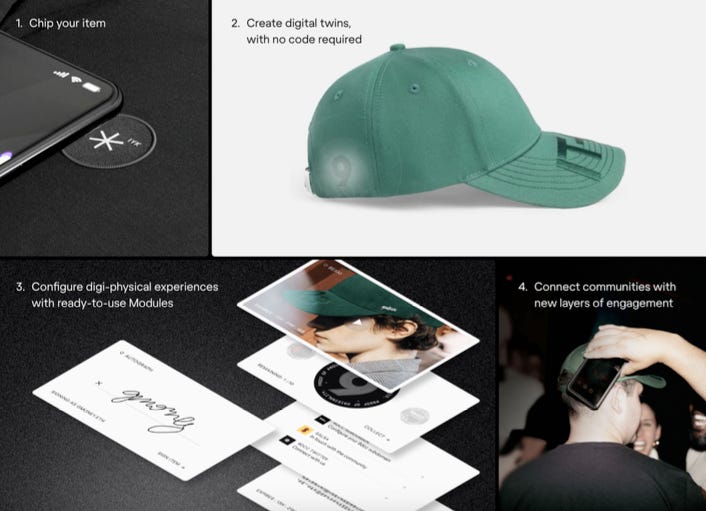
Technology is transforming traditional clothing into interactive experiences.
For example:
-
IYK embeds special NFC chips into garments, turning clothes into more than just fabric—they become platforms for unique digital-physical experiences.
-
Using IYK, 9dcc launched a series of luxury T-shirts as “networked products.” Wear one, let your friends scan the NFC chip, and see how it weaves stories based on your real-world interactions. Fashion items now possess connectivity and functionality.
4. Earn While You Wear
Imagine getting rewarded simply for wearing and sharing your favorite brands. Showcase your style on social media and earn tokens. This is “earn while you wear.”
It’s a win-win—brands gain authentic engagement, consumers are rewarded for expressing their style. This could be a better use of marketing budgets than investing in crowded digital ads that often miss customer purchase intent.
For example:
-
BNV is a pioneer of this model, experimenting with new marketing strategies in digital spaces.
In summary, today’s most compelling businesses lie at the intersection of technology and luxury. Combining them unlocks thrilling possibilities for the future.
Join TechFlow official community to stay tuned
Telegram:https://t.me/TechFlowDaily
X (Twitter):https://x.com/TechFlowPost
X (Twitter) EN:https://x.com/BlockFlow_News
 Delphi Digital









